

 Français (France)
  Nederlands (nl-NL)
 The Old Palace of Junga, located in Himachal Pradesh, India, is a historic royal residence now in ruins. Once used by the princely family of Keonthal, it reflects a bygone era and the political and cultural importance of the region. This site remains of interest for its role in local history and the preservation efforts it encourages.

Shimla • Old Palace in Junga

Shimla • Old Palace in Junga
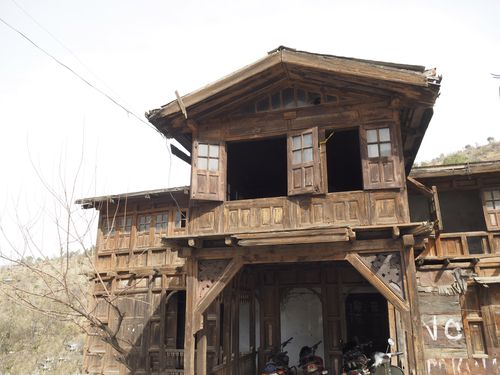
Shimla • Old Palace in Junga
Monument profile
Old Palace
Monument category: Palace
Monument family: Palace and Annexes
Monument genre: Residential
Cultural heritage: Hindu
Geographic location: Junga • Himachal Pradesh • India
Construction period: Unknown era
• Links to •
• Dynasties that contributed to the construction of the monument •

• List of videos about Shimla on this site •
Shimla, Himalayan Capital • Himachal Pradesh, India
The Old Palace of Junga: A Historical and Cultural Landmark
Political and Social Motivations and Construction Period
The Old Palace of Junga, located in Himachal Pradesh, India, was built as the principal royal residence of the princely state of Keonthal. Estimated to have been constructed between the 17th and 18th centuries, the palace served as a symbol of the dynasty’s authority and its central role in regional governance. Its construction was driven by the need for a secure, functional, and imposing administrative and residential center, reflective of the socio-political dynamics of the time.
The palace was not merely a residence; it was also a hub for administrative activities and ceremonial events. It symbolized the political stability and cultural richness of the Keonthal dynasty, which played a vital role in maintaining local governance and fostering community ties.
Major Historical Events and Regional Influence
Throughout its history, the Old Palace witnessed several pivotal events that shaped the political and social landscape of the region. During the colonial era, Keonthal, like many other princely states in India, had to navigate the complexities of maintaining autonomy while cooperating with British authorities. This period saw the consolidation of princely power even as external influences began to permeate the cultural and administrative fabric of the state.
Following India’s independence in 1947, the political role of the princely states diminished, leading to the gradual abandonment of many royal residences, including the Old Palace. This shift marked the end of its administrative and residential function, leaving it as a relic of a bygone era.
Global Context and Comparisons
During the time of its construction, princely states worldwide were building grand residences to assert their power and influence. The Old Palace of Junga can be compared to medieval castles in Europe or palaces in Southeast Asia, which similarly combined defensive and administrative functions with an emphasis on grandeur.
Its architecture and purpose reflect broader global trends where regional rulers sought to establish themselves as key players in their respective geopolitical landscapes. Like its counterparts elsewhere, the palace served as both a symbol of power and a practical center of governance.
Transformations Over the Centuries
The Old Palace underwent significant changes over time. Initially, it functioned as a vibrant royal residence and administrative hub, but its role diminished with the construction of the Chaurni Palace in the 19th century. This newer palace became the principal residence of the Keonthal dynasty, relegating the Old Palace to secondary status.
Over the years, natural wear and neglect led to its current state of ruin. Despite this, remnants of its structure, including stone foundations and fragments of intricate wooden carvings, still offer a glimpse into its former grandeur.
Cultural Significance and Current State
The Old Palace holds immense cultural value as a representation of the architectural and political history of the Himachal Pradesh region. It remains a focal point for local heritage, attracting historians and visitors interested in exploring the legacy of the Keonthal dynasty.
Today, the palace is in a state of disrepair, with much of its original structure lost to time and weather. However, its historical significance continues to resonate, making it a vital part of regional identity.
Preservation Challenges
Natural Deterioration: Exposure to the elements has significantly eroded the structure, particularly its wooden and stone components.
Limited Documentation: The lack of detailed historical records hampers efforts to accurately restore or understand the palace’s original design and function.
Modern Development: Urban expansion in the surrounding area poses a threat to the preservation of the site’s historical ambiance.
Resource Constraints: Financial and logistical challenges limit the scope of restoration and conservation initiatives.
Conclusion
The Old Palace of Junga stands as a testament to the political, cultural, and architectural heritage of the Keonthal dynasty. Despite its current state of disrepair, it remains a vital historical site that offers insights into the governance and lifestyle of regional rulers during its time. Addressing the challenges of its preservation through documentation, restoration, and community engagement could help secure its legacy for future generations.
The Architecture of the Old Palace of Junga: A Testament to Regional Innovation
Technological Advancements and Innovations of the Time
The Old Palace of Junga, situated in Himachal Pradesh, India, exemplifies the architectural ingenuity of the 17th and 18th centuries. Built during a period when the princely state of Keonthal was asserting its regional dominance, the palace reflects an understanding of both functional and aesthetic design principles suited to its mountainous terrain.
The palace’s architecture incorporated advanced techniques for its time. The use of local stone for robust foundations ensured stability, while wooden beams and panels, intricately carved by skilled artisans, added both structural support and artistic elegance. The sloping roofs, crafted to manage heavy monsoon rains and snowfall, demonstrated an adaptive approach to the region’s challenging climate.
Materials and Construction Techniques
The choice of materials was rooted in practicality and artistic tradition. Stone was extensively used for walls and base structures, providing durability and protection. The palace’s wooden features, including ceilings, doors, and windows, were adorned with floral and geometric motifs, showcasing the craftsmanship of Himachali artisans.
A hallmark of the palace’s construction was its natural insulation, achieved through the strategic placement of wooden panels that regulated indoor temperatures. The integration of open courtyards within the layout enhanced ventilation and natural light, further underlining the functional aspects of its design.
Unique Architectural Characteristics and Aesthetic Blend
The architecture of the Old Palace of Junga is a harmonious blend of local traditions and external influences. The central courtyard, a defining feature of Indian palatial architecture, created a focal point for both ceremonial gatherings and administrative activities. Surrounding rooms were arranged hierarchically, with private areas for the royal family located in the innermost sections.
The influence of neighboring architectural styles, including Moghul and Pahari traditions, is evident in the arched windows and carved columns. These elements highlight the cultural exchanges that occurred during the palace’s construction. The symmetrical design, combined with intricate detailing, reflected the grandeur and sophistication expected of a royal residence.
Notable Structure and Layout
The palace’s multi-level design was both functional and symbolic. Positioned on an elevated slope, it offered strategic visibility over the surrounding terrain. The upper levels housed the royal quarters, while the lower sections were dedicated to administrative and logistical purposes. This tiered layout ensured a clear demarcation of space, reinforcing the authority of the ruling family.
Anecdotes and Historical Significance
Historical accounts suggest that the palace served as a retreat and a fortified administrative center during times of conflict. While precise records of its construction timeline are scarce, it is believed to have been commissioned to consolidate the Keonthal dynasty’s political influence in the region. Local folklore also attributes the palace’s intricate designs to a team of master artisans who were brought in from neighboring kingdoms.
Recognition and UNESCO World Heritage Potential
The Old Palace of Junga, while not yet inscribed on the UNESCO World Heritage list, holds significant cultural and historical value as a representation of the Himachal Pradesh region’s architectural legacy. Its inclusion in such a list could bring international recognition to its unique design and historical importance, potentially attracting global attention to the lesser-known heritage sites of the Himalayas.
Conservation and Preservation Challenges
Weather-related deterioration: The palace’s exposure to harsh climatic conditions has led to the gradual decay of its wooden and stone structures.
Limited documentation: The lack of comprehensive historical records hinders restoration efforts and complicates the understanding of its original design.
Modern encroachments: Urban development in the surrounding areas risks overshadowing the palace’s historical significance.
Resource constraints: Insufficient funding and prioritization pose significant challenges to its long-term preservation.
Conclusion
The Old Palace of Junga stands as a remarkable testament to the architectural and cultural achievements of its time. Its innovative construction techniques, artistic detailing, and strategic design make it an invaluable piece of regional heritage. Addressing the challenges of its preservation through focused efforts in restoration and global recognition can ensure that this architectural gem continues to inspire and educate future generations.