

 Français (France)
  Nederlands (nl-NL)
 The temples of Wat Phra Chetuphon, also known as Wat Pho, are among the most renowned in Bangkok, Thailand. Located near the Grand Palace, this expansive complex is recognized for its religious, cultural, and educational significance. It houses the famous Reclining Buddha, a monumental statue symbolizing parinirvana, and serves as a center for preserving Thai traditions, including traditional medicine and massage. With its numerous sacred structures and its role in local spiritual life, Wat Phra Chetuphon is a key site for devotion and a hub for cultural exploration.

Bangkok • Wat Phra Chetuphon Temples

Bangkok • Wat Phra Chetuphon Temples
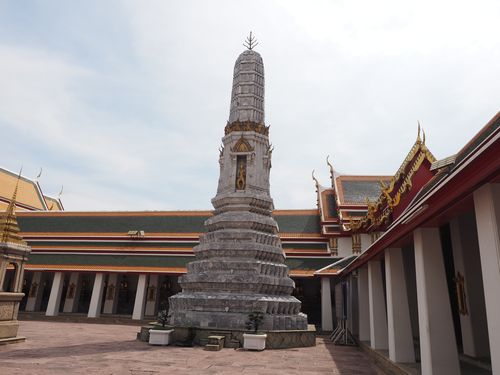
Bangkok • Wat Phra Chetuphon Temples
Wat Phra Chetuphon Temples
The Temples of Wat Phra Chetuphon: Historical, Political, and Social Legacy
The temples of Wat Phra Chetuphon, also known as Wat Pho, hold a significant place in the cultural and spiritual history of Bangkok, Thailand. Constructed during a transformative era, the site reflects the interplay of political ambition, social cohesion, and religious devotion. This article examines the motivations behind its establishment, its historical evolution, and its enduring importance in the modern world.
Political and Social Motivations Behind Its Construction
The construction of Wat Phra Chetuphon dates back to the late 18th century during the reign of King Rama I (1782–1809), founder of the Chakri dynasty. Following the establishment of Bangkok as the new capital of Siam in 1782, the king sought to consolidate political power and cultural identity through monumental projects. The temple was designed to serve as a spiritual center for the city, anchoring Buddhist principles at the heart of the emerging capital.
Socially, the temple was envisioned as a unifying force for a diverse and expanding population. It provided a place of worship and learning that underscored the central role of Theravada Buddhism in Thai society. During the reign of King Rama III (1824–1851), Wat Pho underwent significant expansions, transforming it into a center of education, particularly in traditional medicine and religious studies. This initiative demonstrated the monarchy's commitment to public welfare and cultural preservation.
Key Historical Events and Their Impact
Several pivotal events have shaped the history and role of Wat Phra Chetuphon:
- Foundation and Early Development: Under King Rama I, the temple was initially constructed to house important Buddhist relics and scriptures. It became a symbol of Bangkok’s spiritual renewal and political stability.
- Expansion Under Rama III: The temple’s transformation into a public learning center during the 19th century marked a shift in its role from a purely religious site to an educational hub. Inscriptions related to medicine, astronomy, and literature were engraved on its walls, making knowledge accessible to the public.
- Modernization and Tourism: As Thailand modernized in the 20th century, Wat Pho adapted to become a key tourist destination while retaining its spiritual essence. The recognition of Thai traditional massage, practiced and taught at the temple, further enhanced its global reputation.
These milestones reflect the evolving relationship between religion, education, and governance in Thai society, solidifying Wat Pho’s place as a cultural and spiritual landmark.
Global Context and Comparisons
The establishment and development of Wat Pho can be contextualized within a broader global framework. In the late 18th and early 19th centuries, other regions were also investing in monumental projects to consolidate political power and cultural identity. For example:
- In Europe, the Enlightenment era saw the construction of institutions like libraries and museums aimed at democratizing knowledge.
- In Asia, other Buddhist kingdoms, such as those in Myanmar and Laos, were building or renovating temples to affirm their religious and cultural heritage.
What sets Wat Pho apart is its dual role as a spiritual sanctuary and an educational institution, a rare combination that exemplifies the Thai approach to integrating religion with public service.
Major Transformations Over the Centuries
Wat Phra Chetuphon has undergone several significant changes, each reflecting shifts in political priorities and cultural influences:
- Architectural Expansions: Additional pavilions, stupas, and statues were added over the centuries, showcasing a blend of Thai, Khmer, and Chinese artistic influences.
- Educational Role: The temple became a repository of knowledge, with over 1,000 inscriptions on subjects ranging from traditional medicine to Buddhist philosophy. This earned it recognition as a UNESCO Memory of the World site.
- Tourism and Modernization: Efforts to accommodate international visitors have introduced modern amenities, while restoration projects aim to preserve its historical integrity.
Current Conservation Status and Challenges
Wat Pho remains well-preserved but faces several challenges:
- Tourism Impact: The heavy influx of visitors contributes to wear and tear on its structures and decorative elements.
- Environmental Threats: Pollution, humidity, and urban expansion pose risks to the site’s longevity.
- Balancing Tradition and Modernity: Ensuring that the temple retains its spiritual and educational roles while catering to modern demands requires careful management.
Regular restoration and maintenance efforts, supported by local and international organizations, help mitigate these challenges.
Cultural Significance and Enduring Legacy
Wat Phra Chetuphon continues to be a symbol of Thailand’s spiritual and cultural identity. Its role as a center for traditional Thai massage and its extensive educational contributions underscore its unique position in both local and global contexts. By bridging the past and the present, it remains a dynamic testament to the enduring relevance of Thai culture and Buddhism.
As Bangkok evolves, Wat Pho stands as a reminder of the importance of preserving cultural heritage while adapting to the needs of a changing world. Through its storied history and ongoing conservation, the temple ensures that its legacy as a beacon of knowledge and spirituality will endure for generations to come.
The Architecture of Wat Phra Chetuphon: Innovation and Cultural Synthesis
The temples of Wat Phra Chetuphon, or Wat Pho, in Bangkok, Thailand, exemplify architectural ingenuity and cultural fusion. Built during the early days of Bangkok’s establishment as the capital, this iconic site reflects the advanced construction techniques and artistic sophistication of its time. Its structures and decorative elements seamlessly blend local Thai traditions with foreign influences, making it a testament to the dynamic cultural exchanges of the region.
Technological Advancements and Construction Materials
The construction of Wat Pho showcases the innovative use of materials and techniques that were groundbreaking for the late 18th and early 19th centuries:
- Primary Materials: The temple structures were predominantly built using bricks covered with stucco, a common yet versatile material in Thai architecture. Decorative elements include gilded surfaces, mother-of-pearl inlays, and porcelain tiles imported from China.
- Techniques: The use of intricate tiling and reflective surfaces demonstrated the artisans’ ability to manipulate light and texture, enhancing the temple's visual impact. The application of gold leaf and embedded semi-precious stones further underscored the grandeur of the era.
The Reclining Buddha, a key feature of Wat Pho, is an architectural marvel in itself. Constructed using a core of brick and plaster and finished with gold leaf, it exemplifies the precision and scale achievable during the Chakri dynasty.
Architectural Features and Decorative Motifs
Wat Pho’s architecture incorporates a unique combination of structural elements and artistic details that highlight its cultural significance:
- Chedis and Stupas: The temple complex is dotted with numerous chedis, or stupas, each adorned with intricate floral patterns crafted from Chinese porcelain. These structures serve as reliquaries, symbolizing spiritual enlightenment and devotion.
- Pavilions and Galleries: The temple houses open pavilions and long galleries, which are lined with over 1,000 statues of the Buddha. These spaces are designed for meditation and reflection, emphasizing the importance of mindfulness in Buddhist practice.
- The Reclining Buddha: Measuring 46 meters in length and 15 meters in height, the Reclining Buddha is Wat Pho’s most iconic feature. The soles of the Buddha’s feet, inlaid with mother-of-pearl, depict 108 auspicious symbols, blending religious iconography with exquisite craftsmanship.
The symmetry and spatial organization of the complex reflect a deliberate effort to harmonize function and aesthetics, embodying principles central to both Thai and Buddhist architectural traditions.
Cultural Influences and Artistic Integration
The design of Wat Pho reflects a blend of regional and foreign artistic influences:
- Thai Traditions: The temple’s layout and overall aesthetic are rooted in classical Thai architecture, emphasizing harmony, spirituality, and intricate detail.
- Chinese Elements: Decorative porcelain tiles and motifs were imported from China, adding vibrant colors and a sense of exoticism to the complex.
- Khmer and Indian Inspirations: The stupas and their symmetrical arrangements are reminiscent of Khmer and Indian architectural styles, highlighting the temple’s connection to broader Buddhist traditions across Asia.
This fusion of styles demonstrates the openness of Thai culture to external influences while maintaining a distinct identity.
Notable Design and Structural Layout
Wat Pho’s layout is notable for its careful organization and symbolic intent. The temple is divided into distinct zones for worship, education, and meditation. The central shrine area is surrounded by smaller structures, creating a sense of progression and reverence. The inclusion of galleries and courtyards encourages movement and contemplation, reinforcing the spiritual purpose of the site.
The Reclining Buddha occupies a specially designed hall that accommodates its immense scale while allowing visitors to appreciate its intricate details. This thoughtful integration of space and form underscores the architects’ expertise in balancing functionality and artistry.
Statistics and Anecdotes
- Largest Reclining Buddha in Bangkok: The statue is one of the largest in Thailand, making it a key draw for both pilgrims and tourists.
- UNESCO Recognition: The temple’s inscriptions on traditional Thai medicine and massage, engraved on stone tablets, are part of the UNESCO Memory of the World program. This highlights the temple’s dual role as a spiritual and educational center.
- Number of Buddha Statues: Wat Pho houses over 1,000 Buddha statues, many of which were collected from other regions of Thailand and restored to preserve their historical value.
Global Recognition and Conservation Efforts
Wat Pho’s architectural and cultural significance has earned it international acclaim. Its recognition by UNESCO underscores its importance as a repository of Thai heritage. This status has helped secure funding and expertise for ongoing conservation efforts.
Key conservation challenges include:
- Tourism Impact: The high volume of visitors places strain on the site’s physical infrastructure and decorative elements.
- Environmental Factors: Urban pollution and humidity accelerate the degradation of materials, requiring meticulous restoration efforts.
- Cultural Preservation: Ensuring that traditional practices, such as Thai massage, remain integral to the site’s identity is essential for its authenticity.
Restoration projects aim to balance the demands of modern tourism with the need to preserve the temple’s historical and spiritual essence.
A Global Symbol of Thai Heritage
The architecture of Wat Phra Chetuphon exemplifies the ingenuity and artistry of its creators while serving as a beacon of Thailand’s cultural and spiritual identity. Its innovative use of materials, fusion of artistic traditions, and commitment to education and religion make it a unique and enduring symbol of Bangkok’s history. Through ongoing conservation and international recognition, Wat Pho continues to inspire admiration and reverence as a masterpiece of Southeast Asian architecture.