Français (France)
  Nederlands (nl-NL)
 Islam is a monotheistic religion that emerged in the 7th century CE in the Arabian Peninsula. It is based on the teachings of the Prophet Muhammad, regarded by believers as the last in a long line of prophets. The Qur’an, revealed in Arabic, is its central sacred text. Core principles include belief in one God (Allah), prayer, fasting, almsgiving, and pilgrimage to Mecca. Following Muhammad’s death in 632, Islam quickly spread throughout the Middle East, North Africa, Central and South Asia, and later to Southeast Asia. It has played a significant role in shaping the political, intellectual, and cultural history of many regions. Islamic religious architecture, especially mosques with their minarets and decorative calligraphy, reflects its lasting influence in a wide range of contexts, including India, Central Asia, Anatolia, and the Malay Archipelago.

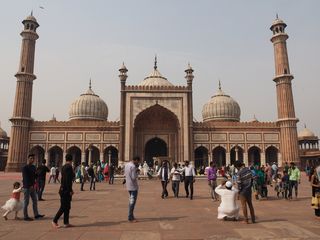
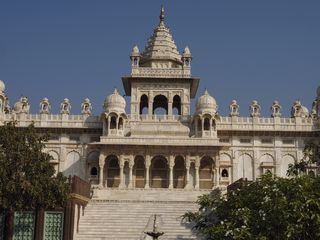
Islam: Origins, Spread, Doctrinal Currents, and Fundamental Practices
Historical Context of Emergence
Islam is a monotheistic religion that emerged in the early 7th century CE in the Arabian Peninsula, particularly in the city of Mecca (present-day Saudi Arabia). At the time, the region was characterized by tribal societies, polytheistic cults, and trade networks that also facilitated contact with monotheistic traditions such as Judaism and Christianity.
Muhammad, born around 570 CE in Mecca, is regarded by Muslims as the final prophet in a long line of messengers including Abraham, Moses, and Jesus. Around 610 CE, he began receiving what Muslims believe to be divine revelations through the angel Gabriel. These revelations were eventually compiled into the Qur’an, the holy book of Islam.
After facing strong opposition in Mecca, Muhammad and his followers migrated to Medina in 622 CE, an event known as the Hijra, which marks the beginning of the Islamic calendar. There, he established a religious and political community. By the time of his death in 632 CE, most of the Arabian Peninsula had come under Islamic rule.
Geographic Expansion
Following Muhammad’s death, the rapid expansion of Islam continued under the leadership of the first caliphs, known as the “Rightly Guided” (al-Khulafā’ al-Rāshidūn). Through military campaigns, diplomacy, and trade, the Islamic realm extended across the Middle East, North Africa, and into parts of Europe and Asia within a century.
Over time, Islam spread well beyond its original territories:
- In North Africa, Islam became dominant after the Arab conquests of the 7th and 8th centuries.
- In Sub-Saharan Africa, it was introduced through trans-Saharan trade routes and later via Islamic empires such as Mali and Songhai.
- In South Asia, Islam arrived through invasions, trade, and Sufi missionaries from the 8th century onwards, flourishing under the Delhi Sultanate and the Mughal Empire.
- In Southeast Asia, Muslim traders and preachers from India and the Middle East played a major role in the Islamization of Indonesia, Malaysia, and the southern Philippines between the 13th and 17th centuries.
- In Central Asia and China, Islam spread gradually through the Silk Road and imperial networks.
Today, Islam is the second-largest religion in the world, with an estimated 1.9 billion adherents, predominantly in Asia and Africa.
Major Currents
Islam is not monolithic; it encompasses multiple doctrinal, legal, and spiritual traditions.
Sunni Islam
Sunni Islam represents approximately 85% of the global Muslim population. Sunnis recognize the legitimacy of the first four caliphs and rely on both the Qur’an and the Sunnah (the teachings and practices of Muhammad) as foundational texts. Sunni jurisprudence is divided into four main legal schools: Hanafi, Maliki, Shafi‘i, and Hanbali.
Shia Islam
Shia Islam emerged from a dispute over the rightful successor to Muhammad. Shi‘ites believe that leadership should have remained within the Prophet’s family, starting with his cousin and son-in-law ‘Ali. The largest branch of Shia Islam is the Twelvers, who recognize a line of twelve imams. Other Shia groups include the Ismailis and Zaydis. Shia Islam is the dominant sect in Iran and has significant populations in Iraq, Lebanon, Azerbaijan, and parts of the Gulf.
Other Movements
- Sufism emphasizes spiritual union with God through mystical practices, meditation, and devotion. Sufi brotherhoods often play a significant cultural and social role.
- Ibadi Islam, a distinct branch with its own theology and legal system, is primarily practiced in Oman and parts of North Africa.
These various currents differ in theology, law, ritual, and organization, but they all recognize the fundamental message of the Qur’an and the prophecy of Muhammad.
Core Beliefs and Practices
Islam is structured around five pillars, which constitute the basic framework of religious life:
- Shahada (Profession of Faith): The declaration that there is no god but Allah and that Muhammad is His messenger.
- Salat (Prayer): Five daily prayers performed at prescribed times while facing Mecca.
- Zakat (Almsgiving): Mandatory charity given to support the needy and promote social equity.
- Sawm (Fasting during Ramadan): Abstention from food, drink, and other physical needs from dawn to sunset during the ninth month of the Islamic calendar.
- Hajj (Pilgrimage to Mecca): An obligation for all Muslims who are physically and financially able, to be performed at least once in a lifetime.
In addition to these pillars, believers are encouraged to read the Qur’an, practice ethical behavior, observe religious festivals like Eid al-Fitr and Eid al-Adha, and follow dietary laws, including the prohibition of pork and alcohol.
Political Dimensions and Identity
From its inception, Islam has been linked to governance. Muhammad was both a religious prophet and a political leader. This dual function was inherited by his successors, particularly during the early caliphates (Umayyad, Abbasid, Fatimid, Ottoman), where the caliph held both spiritual and temporal authority.
Throughout history, Islam has played varying roles in the formation of legal systems, governance models, and cultural identities:
- In countries such as Saudi Arabia, Iran, and Pakistan, Islam serves as the state religion, influencing legislation and social norms.
- In others, such as Egypt, Turkey, or Indonesia, Islam functions as a major cultural and identity marker, even within secular constitutions.
- In modern contexts, Islamist movements have sought to redefine political life according to Islamic principles, with varying degrees of influence and success.
Islamic law (Sharia), derived from the Qur’an and Hadith, serves as a moral and legal guide for many Muslims, though its application differs significantly depending on local contexts and interpretations.
Death, the Afterlife, and Commemorative Practices
Islam teaches that life is a test and that the soul continues after death. The deceased await the Day of Judgment (Yawm al-Qiyāmah), when they will be resurrected and judged by God. Those deemed righteous are admitted to paradise (Jannah), while others are sent to hell (Jahannam). The afterlife is a central concept in Islamic theology and eschatology.
Islamic funerary rites are simple and standardized:
- The body is washed and wrapped in a white shroud (kafan),
- A special prayer (salat al-janazah) is performed,
- Burial takes place as soon as possible, typically within 24 hours,
- Graves are oriented toward Mecca, and monuments are usually modest.
In Sunni Islam, tomb visitation is accepted but discouraged as a place of veneration. In contrast, Shia Muslims and Sufi communities often maintain the tradition of visiting the shrines of saints (wali) and imams. These sites may serve as locations for pilgrimage (ziyarat), supplication, and communal gatherings.
In countries with strong Sufi or Shia traditions, large mausoleums and commemorative rituals—such as the mourning of Husayn during Ashura—play a significant role in religious and cultural life. While not universally practiced, these commemorative forms reveal the diversity of Muslim engagement with death and memory.
The Influence of Islam on Architecture: Forms, Functions, and Symbolism in Religious and Funerary Structures
Islamic architecture encompasses a diverse yet coherent set of built forms shaped by religious prescriptions, ritual practices, and conceptions of community and the afterlife. From mosques and prayer halls to schools and mausoleums, Islamic religious architecture developed distinct typologies and symbolic systems while adapting to various cultural and environmental contexts. This article examines the historical and spatial logic behind Islamic architectural expressions, focusing on their cultic and funerary manifestations.
Origins and Religious Foundations of Architectural Forms
The foundational texts of Islam—the Qur’an and the hadiths (sayings of the Prophet Muhammad)—do not prescribe a specific architectural style but define a set of religious obligations and spatial orientations that strongly influence architectural development. The requirement for daily prayer (salat), the need to face Mecca (qibla), the ritual purification through ablutions (wudu), and the importance of communal gathering all necessitate functional architectural responses.
These requirements gave rise to spatial configurations that accommodate worship, learning, ritual practices, and commemoration, forming the basis of religious and funerary architectural typologies within the Islamic world.
Typologies and Uses of Religious and Ritual Buildings
The mosque (masjid) is the central building type in Islamic religious architecture. Designed primarily as a place of communal prayer, the mosque typically includes:
- a prayer hall, often with a flat or vaulted roof,
- a mihrab, a niche indicating the direction of Mecca,
- a minbar, a pulpit for the sermon,
- a courtyard (sahn) for congregational overflow and ablution facilities,
- and one or more minarets used to call the faithful to prayer.
Other functional structures developed around the mosque:
- madrasas, or religious schools, combining classrooms, libraries, and living quarters;
- zawiyas and other spaces for spiritual retreat or instruction;
- and ceremonial enclosures for religious events, festivals, or processions.
Funerary architecture, although approached with restraint in early Islamic thought, evolved into a significant category. It includes:
- mausoleums, built as covered tomb structures, often featuring domes and enclosures;
- cenotaphs, serving as commemorative markers without containing human remains;
- and cemeteries, which may range from simple gravesites to walled complexes organized by family or lineage.
While early Islamic teachings emphasized modesty in burial, actual practice allowed for monumental commemorations, particularly for scholars, rulers, or spiritual figures.
Integrated Symbolism: Forms, Orientation, Decoration, and Spatial Design
Islamic architecture integrates a rich vocabulary of symbolism, reflecting cosmological, spiritual, and ethical values.
- Orientation is a constant: all mosques are aligned toward Mecca. This orientation is physically expressed through the qibla wall, distinguished by the mihrab niche.
- Domes often symbolize the celestial realm and divine presence, appearing prominently in both mosques and mausoleums.
- Decoration is aniconic, favoring geometric patterns, calligraphic inscriptions, and arabesques, which convey infinity, unity, and divine transcendence.
- The use of open, undivided prayer spaces supports collective worship, while internal symmetry and proportionality foster a sense of order and spiritual discipline.
In funerary contexts, architecture often incorporates gardens, water features, and enclosed chambers—symbolizing paradise, transition, and remembrance.
Materials and Construction Techniques
Islamic architecture employs materials and techniques that vary according to geography and availability, yet shares some common construction principles.
- In arid regions, structures are often built from sun-dried brick, adobe, or rammed earth, which provide insulation and ease of construction.
- In areas with access to stone or timber, cut stone, wood, and marble are used for structural and decorative purposes.
- Domes, vaults, and arches are prevalent structural elements, used both for aesthetic and acoustic functions.
- Finishing materials such as plaster, glazed tile, and mosaic serve decorative and didactic roles, often integrating religious texts or complex visual rhythms.
The use of modular geometric systems allows for scalable, repeatable, and harmoniously proportioned designs that can adapt to different building programs and sizes.
Geographic Spread and Local Adaptations
As Islam expanded across the Middle East, North Africa, sub-Saharan Africa, Central and South Asia, and Southeast Asia, Islamic architecture developed a wide range of regional expressions. While adhering to shared religious functions, buildings were adapted to local climates, materials, and artistic traditions.
In desert environments, mosques take on compact, thick-walled forms with minimal ornamentation. In humid or forested areas, mosques may feature raised wooden floors and tiered roofs. In East Asia, mosque façades sometimes reflect local temple forms, while in West Africa, mud-brick structures with wooden reinforcements dominate the built landscape.
Funerary monuments also vary: some are minimalist and earth-bound, while others integrate domed chambers, ornamental façades, or garden layouts—each reflecting local customs, aesthetic conventions, and doctrinal interpretations.
This adaptability reflects a core strength of Islamic architecture: the ability to accommodate regional diversity while maintaining liturgical integrity.
Intercultural Interactions and Architectural Exchange
Islamic architecture did not evolve in isolation. From its inception, it engaged in ongoing dialogue with pre-Islamic, Christian, Byzantine, Persian, Hindu, Buddhist, and later Western traditions.
- Architectural features such as domes, hypostyle halls, and columned courtyards were adapted from earlier civilizations and reinterpreted within an Islamic framework.
- In return, Islamic decorative arts, spatial planning, and structural techniques influenced religious and secular architecture in border regions and colonial contexts.
- Cross-cultural exchange was facilitated by itinerant craftsmen, patronage networks, religious scholars, and the circulation of architectural manuscripts and diagrams.
This exchange contributed to the plurality and richness of Islamic architectural expressions, reinforcing its place within global architectural heritage.
Conclusion
Islamic architecture has developed through the intersection of religious function, symbolic meaning, and technological practice. Whether in the form of a community mosque, a learning institution, or a funerary complex, Islamic buildings express a consistent concern for orientation, spatial clarity, ritual utility, and aesthetic discipline.
Rooted in shared religious principles, but shaped by geographic, cultural, and historical conditions, Islamic architecture offers a compelling model of how sacred space can be both universally meaningful and locally responsive.
This page organises the dynasties related to Islamic religion, according to a chronological structure based on millennia and centuries. The associated maps indicate the present-day location of the relevant states and link to the detailed pages.
2nd millennium
13th century

Dominant religion: Islam
Supported or encouraged religions, depending on the period: Hinduism, Buddhism, Jainism.
( Bihar, Delhi (NTC), Gujarat, Karnataka, Madhya Pradesh, Maharashtra, Punjab, Rajasthan, Tamil Nadu, Telangana, Uttar Pradesh, West Bengal, Haryana, Jharkand and Uttarakhand )
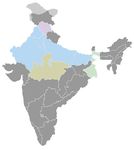
Dominant religion: Islam
( Bihar, Delhi (NTC), Himachal Pradesh, Madhya Pradesh, Punjab, Rajasthan, Uttar Pradesh, West Bengal and Haryana )
14th century
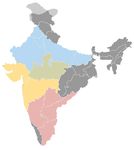
Dominant religion: Islam
( Bihar, Delhi (NTC), Goa, Gujarat, Karnataka, Madhya Pradesh, Maharashtra, Odisha, Punjab, Rajasthan, Tamil Nadu, Telangana, Uttar Pradesh, West Bengal, Andhra Pradesh, Chhattisgarh and Haryana )
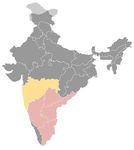
Dominant religion: Islam
Supported or encouraged religion: Hinduism.
( Goa, Karnataka, Maharashtra, Tamil Nadu, Telangana and Andhra Pradesh )
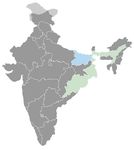
15th century
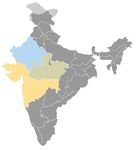
Dominant religion: Islam
Supported or encouraged religion: Hinduism.
( Gujarat, Madhya Pradesh, Maharashtra and Rajasthan )
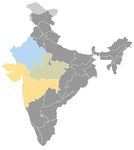
Dominant religion: Islam
Supported or encouraged religions, depending on the period: Hinduism, Jainism.
( Gujarat, Madhya Pradesh, Maharashtra and Rajasthan )

Dominant religion: Islam
Supported or encouraged religion: Hinduism.
( Delhi (NTC), Madhya Pradesh, Punjab, Rajasthan, Uttar Pradesh and Haryana )

Dominant religion: Islam
( Delhi (NTC), Uttar Pradesh and Haryana )
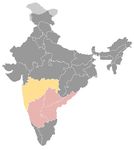
16th century
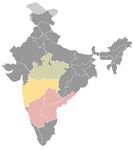
Dominant religion: Islam
( Karnataka, Madhya Pradesh, Maharashtra, Telangana and Andhra Pradesh )

Dominant religion: Islam
Supported or encouraged religions, depending on the period: Hinduism, Jainism, Christianity, zoroastrianism.
( Assam, Bihar, Delhi (NTC), Gujarat, Himachal Pradesh, Karnataka, Ladakh, Madhya Pradesh, Maharashtra, Odisha, Punjab, Rajasthan, Telangana, Uttar Pradesh, West Bengal, Andhra Pradesh, Chhattisgarh, Haryana, Jammu & Kashmir, Jharkand and Uttarakhand )
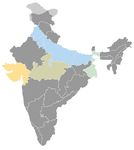
Dominant religion: Islam
Supported or encouraged religion: Hinduism.
( Bihar, Delhi (NTC), Gujarat, Madhya Pradesh, Punjab, Uttar Pradesh, West Bengal and Haryana )
18th century
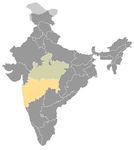
Dominant religions, depending on the period: Hinduism, Islam
( Madhya Pradesh and Maharashtra )
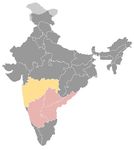
Dominant religion: Islam
Supported or encouraged religion: Hinduism.
( Karnataka, Madhya Pradesh, Maharashtra, Telangana and Andhra Pradesh )

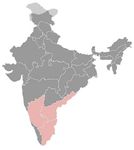
Dominant religion: Islam
Supported or encouraged religions, depending on the period: Hinduism, Christianity.
( Karnataka )
 Links to the main sections of the site