

 Français (France)
  Nederlands (nl-NL)
 Map of places or practices featured in a video published on this site
• Use the markers to explore the content •
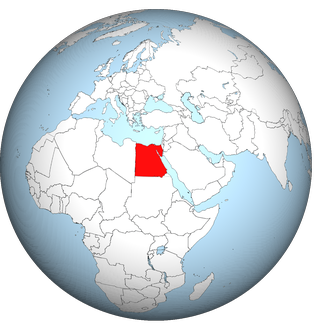
Egypt Through the Ages: The Historical Evolution of a Civilization of the Nile
Prehistoric Egypt and the First Human Settlements
The history of Egypt begins long before the emergence of pharaohs, pyramids and monumental temples. Archaeological evidence indicates that human groups occupied parts of present-day Egypt during the Paleolithic period, when climatic conditions in North Africa were considerably wetter than they are today. Large areas of what is now desert consisted of grasslands, lakes and savannahs that supported hunting and gathering communities.
During the Neolithic period, beginning around the seventh millennium BCE, the gradual desiccation of the Sahara forced populations to migrate toward the Nile Valley, where the annual flooding of the river provided fertile agricultural land. This concentration of populations along the Nile laid the foundations for one of the world's earliest river civilizations.
Several prehistoric cultures developed in Egypt during this period, including the Faiyum, Merimde and Badarian cultures. These communities practiced agriculture, animal husbandry and pottery production and established increasingly complex settlements.
By the fourth millennium BCE, the Naqada culture had become dominant in Upper Egypt. Growing social stratification, long-distance trade and technological developments contributed to the emergence of centralized political structures that would eventually lead to state formation.
The Unification of Egypt and the Birth of the Pharaonic State
Around 3100 BCE, the kingdoms of Upper Egypt in the south and Lower Egypt in the Nile Delta were unified under a ruler traditionally identified as Narmer, often associated with the legendary king Menes.
The unification of Egypt created one of the earliest centralized territorial states in human history. The pharaoh occupied a unique position as political ruler, military leader and religious figure responsible for maintaining Ma'at, the principle of cosmic order, justice and harmony that formed the foundation of Egyptian political and religious thought.
The development of hieroglyphic writing, an organized bureaucracy and a sophisticated taxation system enabled the state to administer a long and narrow territory stretching along the Nile Valley. The river itself functioned as the country's main transportation route and economic lifeline.
The Old Kingdom and the Age of the Pyramids
The period known as the Old Kingdom, approximately between 2686 and 2181 BCE, is often regarded as the classical age of ancient Egyptian civilization.
During this era, royal authority became highly centralized and the state possessed sufficient administrative and economic resources to undertake ambitious construction projects. The Step Pyramid of Djoser at Saqqara, designed by the architect Imhotep, represented a major architectural innovation and marked the beginning of large-scale stone monument construction.
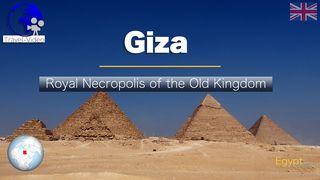
The Fourth Dynasty witnessed the construction of the great pyramids of Giza by Khufu, Khafre and Menkaure. These monuments demonstrated the remarkable organizational capacities of the Egyptian state and reflected complex religious beliefs concerning kingship and the afterlife.
Egyptian society during the Old Kingdom relied heavily on agriculture supported by the predictable flooding of the Nile. Trade networks connected Egypt with Nubia, the Sinai Peninsula and the Levant, providing access to gold, copper, timber and luxury goods.
Toward the end of the Old Kingdom, the authority of the central government weakened as provincial governors gained increasing autonomy. Environmental pressures and political fragmentation eventually led to the collapse of centralized rule.
The Middle Kingdom and Political Reunification
The First Intermediate Period that followed was characterized by political division and competition between regional rulers.
Around 2055 BCE, Mentuhotep II of Thebes reunified Egypt and inaugurated the Middle Kingdom. This period is frequently regarded as one of political stability, administrative efficiency and cultural achievement.
The rulers of the Middle Kingdom strengthened the state bureaucracy and expanded agricultural production, particularly in the Faiyum region. Trade routes extended southward into Nubia and eastward toward the Red Sea and the Near East.
Egyptian literature flourished during this era, producing works of wisdom literature, political instruction and narrative storytelling that became central components of Egyptian cultural identity.
The expansion of Egyptian influence into Nubia allowed access to valuable gold resources and reinforced Egypt's economic and strategic position.
The Hyksos and the Second Intermediate Period
During the seventeenth century BCE, groups originating from the Levant gradually established themselves in the eastern Nile Delta. These populations, collectively known as the Hyksos, eventually gained control over northern Egypt.
The Hyksos introduced important military technologies, including horse-drawn chariots and new forms of weaponry. Their rule represented the first major foreign domination of Egypt in recorded history.
The rulers of Thebes in Upper Egypt eventually expelled the Hyksos around 1550 BCE. The experience of foreign occupation profoundly influenced Egyptian political thought and contributed to the emergence of a more militarized and expansionist state.
The New Kingdom and the Egyptian Empire
The New Kingdom, lasting approximately from 1550 to 1070 BCE, represented the height of Egyptian political, military and territorial power.
Under rulers such as Ahmose I, Thutmose III, Amenhotep III and Ramesses II, Egypt expanded into Nubia and the Levant, becoming one of the great powers of the Late Bronze Age.
Imperial Expansion and International Relations
Egyptian military campaigns established control over important trade routes in Syria and Palestine and secured access to valuable resources and tribute from neighboring regions.
Egypt maintained diplomatic relations with major contemporary powers, including the Hittites, Babylonians, Mitanni and Assyrians. The diplomatic correspondence preserved in the Amarna Letters provides valuable insight into the international political system of the period.
The peace treaty concluded between Ramesses II and the Hittite Empire following the Battle of Kadesh is often regarded as one of the earliest known international treaties.
Akhenaten and Religious Transformation
One of the most remarkable episodes in Egyptian history occurred during the reign of Amenhotep IV, later known as Akhenaten.
Akhenaten promoted the worship of Aten, represented by the solar disk, and attempted to reduce the influence of the powerful priesthood of Amun. He established a new capital at Akhetaten, modern Amarna, and introduced significant artistic and religious innovations.
Although some scholars have described this reform as an early form of monotheism, traditional religious practices were restored shortly after Akhenaten's death under Tutankhamun and subsequent rulers.
Decline and Fragmentation
From the twelfth century BCE onward, Egypt faced growing internal and external pressures. Economic difficulties, political fragmentation and invasions by the Sea Peoples weakened central authority.
By the end of the New Kingdom, Egypt had lost much of its imperial territory and entered another period of political division.
Foreign Rule During the Late Period
The Late Period of Egyptian history was marked by repeated foreign interventions and conquests.
During the eighth century BCE, rulers from the Kingdom of Kush in Nubia established the Twenty-Fifth Dynasty and temporarily reunified Egypt. Their rule was followed by Assyrian invasions and later by Persian domination under the Achaemenid Empire.
Despite political subordination to foreign powers, Egyptian religious traditions, artistic forms and administrative institutions demonstrated remarkable resilience and continuity.
Alexander the Great and the Hellenistic Kingdom
In 332 BCE, Alexander the Great conquered Egypt with little resistance and was welcomed as a liberator from Persian rule.
Alexander founded the city of Alexandria, which rapidly became one of the leading centers of commerce, scholarship and intellectual life in the Mediterranean world.
After Alexander's death, his general Ptolemy established the Ptolemaic dynasty, which ruled Egypt for nearly three centuries.
The Ptolemaic Period
The Ptolemies were of Macedonian Greek origin but adopted many aspects of traditional Egyptian kingship to legitimize their authority.
Alexandria became famous for its library and museum, attracting scholars from across the Mediterranean world. Greek and Egyptian cultural traditions interacted closely, creating a distinctive Hellenistic civilization that combined elements of both traditions.
The last ruler of the dynasty, Cleopatra VII, sought to preserve Egyptian independence through alliances with Julius Caesar and later Mark Antony. Her defeat by Octavian marked the end of Ptolemaic rule.
Roman and Byzantine Egypt
Following the Battle of Actium in 31 BCE, Egypt became a province of the Roman Empire.
The country occupied a vital economic position as a major supplier of grain to Rome and later to Constantinople. Egyptian agriculture continued to depend heavily on the Nile and remained central to imperial food security.
The Spread of Christianity
Christianity reached Egypt during the first century CE and rapidly gained followers, particularly in Alexandria, which became one of the principal centers of Christian theology and scholarship.
The Coptic Church emerged as a distinctive religious institution with its own theological traditions and liturgical language derived from ancient Egyptian.
Egypt also played a decisive role in the development of Christian monasticism through figures such as Anthony the Great and Pachomius, whose influence spread throughout the Christian world.
The Arab Conquest and the Islamization of Egypt
Arab armies under the command of Amr ibn al-As conquered Byzantine Egypt between 639 and 642 CE.
The conquest initiated profound cultural and social transformations. Arabic gradually replaced Greek and Coptic as the dominant administrative and cultural language, while Islam spread progressively throughout the population.
The process of Islamization occurred over several centuries rather than through immediate conversion, and substantial Christian communities continued to exist.
Egypt became one of the wealthiest provinces of the Islamic world due to its agricultural productivity and strategic location linking the Mediterranean with the Indian Ocean trade routes.
Medieval Islamic Dynasties
Several dynasties governed Egypt during the medieval Islamic period, including the Tulunids, Ikhshidids, Fatimids, Ayyubids and Mamluks.
The Foundation of Cairo and the Fatimid Era
In 969, the Fatimids founded Cairo, which would become one of the most important political and intellectual centers of the Islamic world.
The establishment of Al-Azhar Mosque and later Al-Azhar University transformed the city into a major center of Islamic scholarship that continues to exert influence today.
Saladin and the Crusades
The Kurdish military leader Saladin overthrew the Fatimids in the twelfth century and established the Ayyubid dynasty.
By uniting Egypt and Syria, Saladin created a powerful regional state capable of confronting the Crusader kingdoms. His recapture of Jerusalem in 1187 elevated Egypt's political significance throughout the Islamic world.
The Mamluk Sultanate
Between the thirteenth and sixteenth centuries, the Mamluks transformed Egypt into a major commercial and military power.
Cairo became one of the largest cities in the world and a crucial center connecting trade routes between Europe, Africa and Asia.
Ottoman Rule and Early Modern Egypt
In 1517, Sultan Selim I incorporated Egypt into the Ottoman Empire, ending Mamluk political independence.
Although Egypt became an Ottoman province, local elites retained considerable influence over internal affairs. Cairo remained an important commercial and cultural center, although the opening of maritime trade routes around Africa gradually reduced Egypt's traditional role in global commerce.
Muhammad Ali and the Emergence of Modern Egypt
The rise of Muhammad Ali in the early nineteenth century marked the beginning of modern Egyptian statehood.
Muhammad Ali implemented ambitious reforms in administration, agriculture, education and the military. Industrial development, irrigation projects and the expansion of cotton cultivation transformed the Egyptian economy.
The construction of the Suez Canal, completed in 1869, dramatically increased Egypt's strategic importance within global trade networks.
British Occupation and the National Movement
Growing financial dependence on European creditors eventually led to British military intervention in 1882.
Although Egypt formally remained under Ottoman sovereignty until the First World War, British authorities exercised effective control over the country for decades.
Egyptian nationalism developed rapidly during this period, culminating in the Revolution of 1919 and increasing demands for self-government.
Britain recognized Egyptian independence in 1922, although significant British influence remained in political and military affairs.
Revolution, Republic and Contemporary Egypt
In 1952, the Free Officers Movement led by Mohamed Naguib and Gamal Abdel Nasser overthrew King Farouk and abolished the monarchy.
The establishment of the republic in 1953 transformed Egypt's political system and social structure. Nasser pursued policies of economic modernization, land reform and Arab nationalism.
The nationalization of the Suez Canal in 1956 triggered the Suez Crisis and significantly enhanced Egypt's standing in the Arab world despite military confrontation with Britain, France and Israel.
Under Anwar Sadat, Egypt reoriented its foreign policy toward cooperation with the United States and became the first Arab state to sign a peace treaty with Israel in 1979.
Hosni Mubarak governed the country from 1981 until 2011, when mass demonstrations during the Arab Spring led to his resignation. The subsequent years witnessed political instability, the election of Mohamed Morsi, and the return of military influence under Abdel Fattah el-Sisi.
Modern Egypt reflects the accumulation of multiple historical layers, including pharaonic, Hellenistic, Christian, Islamic, Ottoman and modern influences. These successive periods have shaped a national identity that combines continuity with adaptation and remains central to Egypt's position in Africa, the Middle East and the Mediterranean world.
Contemporary Egypt: Geography, Society and the Challenges of a Regional Power
A Strategic Crossroads Between Africa, the Middle East and the Mediterranean
Egypt occupies a unique geographical position at the junction of North Africa, the Middle East and the Mediterranean basin. The country extends across northeastern Africa while the Sinai Peninsula lies in Asia, making Egypt a transcontinental state linking two continents.
Egypt shares land borders with Libya to the west, Sudan to the south, and Israel and the Gaza Strip to the northeast. It is bordered by the Mediterranean Sea to the north and the Red Sea to the east. This strategic location has shaped Egypt's historical development and continues to influence its political and economic importance in regional and global affairs.
One of Egypt's most significant geographical assets is the Suez Canal, which connects the Mediterranean Sea with the Red Sea and provides one of the world's most important maritime routes between Europe and Asia. The canal plays a central role in international trade and contributes substantially to the Egyptian economy.
The Nile and the Geography of Settlement
The Nile River remains the defining feature of Egypt's landscape and human geography. Flowing from south to north for more than 1,500 kilometres within Egyptian territory, the river forms a fertile valley that widens into a vast delta before reaching the Mediterranean Sea.
Although Egypt covers more than one million square kilometres, most of its population lives within the narrow Nile Valley and Delta, which together represent only a small proportion of the national territory. This concentration of population and economic activity along the river has characterized Egyptian civilization for thousands of years.
Beyond the Nile Valley, much of the country consists of desert landscapes. The Western Desert forms part of the Sahara and occupies most of the national territory west of the Nile. The Eastern Desert lies between the Nile and the Red Sea and contains mountainous areas rich in mineral resources. The Sinai Peninsula is characterized by rugged mountains in the south and more open desert areas in the north.
Egypt also includes several important natural environments, including Mediterranean coastal wetlands, Red Sea coral reefs and desert oases such as Siwa, Bahariya and Kharga.
Climate and Environmental Conditions
Egypt has a predominantly arid desert climate characterized by extremely low rainfall and high temperatures during much of the year. Coastal regions along the Mediterranean experience milder temperatures and receive more precipitation than inland areas.
Seasonal variations remain significant, particularly between the cooler winter months and the very hot summers experienced throughout much of the country. Sandstorms, including the seasonal khamsin winds, occasionally affect large parts of Egypt during the spring.
Water scarcity represents one of Egypt's most important environmental challenges. The country's dependence on the Nile makes water management a critical issue for agriculture, industry and urban development. Climate change, population growth and increasing water demand place additional pressure on available resources.
Population and Demographic Characteristics
Egypt is the most populous country in the Arab world and one of the largest population centres in Africa and the Middle East. The population has grown rapidly over recent decades, creating both economic opportunities and significant social challenges.
The overwhelming majority of Egyptians live in urban areas or in the densely populated agricultural regions along the Nile. Large sections of the desert remain sparsely inhabited.
The population consists predominantly of Arabic-speaking Egyptians, although smaller communities with distinct cultural identities also exist. Nubian communities continue to live in southern Egypt, particularly around Aswan, while Bedouin populations inhabit parts of Sinai and the desert regions.
Urbanization continues to reshape Egyptian society, with major cities expanding rapidly and new urban developments being constructed to accommodate population growth.
Languages, Religion and Cultural Identity
Arabic is the official language of Egypt and serves as the language of government, education, administration and the media. In daily life, however, most Egyptians speak Egyptian Arabic, a distinct dialect that has become one of the most widely understood forms of spoken Arabic throughout the Middle East due to the influence of Egyptian cinema, television and music.
English plays an important role in business, higher education, tourism and international relations. French also retains a presence in certain educational institutions and professional sectors.
Islam, predominantly Sunni Islam, is the religion of the vast majority of the population and occupies an important place in public life and cultural traditions. Islamic holidays and religious practices continue to shape the rhythm of social life across the country.
Egypt is also home to one of the largest Christian communities in the Middle East, primarily represented by the Coptic Orthodox Church. The Coptic community preserves religious traditions that date back to the earliest centuries of Christianity and maintains the Coptic language as a liturgical language derived from ancient Egyptian.
The coexistence of Islamic and Christian traditions forms an important component of Egypt's cultural identity and historical continuity.
Major Cities and Administrative Organization
Cairo serves as the political, administrative and cultural capital of Egypt. The Greater Cairo metropolitan area is among the largest urban agglomerations in Africa and the Middle East and functions as the country's principal centre for government, education, finance and media.
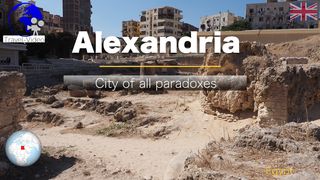
Alexandria, located on the Mediterranean coast, is Egypt's second-largest city and its principal maritime port. The city remains an important industrial, commercial and cultural centre with a long historical connection to Mediterranean trade.
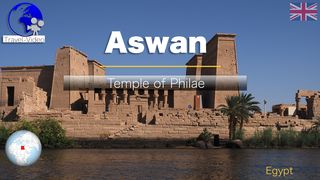
Other significant urban centres include Giza, which forms part of the Cairo metropolitan area, Port Said at the northern entrance of the Suez Canal, Suez on the Red Sea coast, and Aswan and Luxor in Upper Egypt, both of which are important centres for tourism and regional commerce.
Administratively, Egypt is divided into governorates that manage local administration and public services under the supervision of the central government.
Transport and Infrastructure
Egypt possesses one of the most extensive transportation networks in Africa and the Middle East. Major highways connect Cairo with Alexandria, the Suez Canal region, Upper Egypt and the Red Sea coast.
The Egyptian railway system is among the oldest in Africa and continues to play a significant role in passenger and freight transportation. Rail connections between Cairo, Alexandria and the cities of Upper Egypt remain particularly important.
The Nile also serves as a transportation corridor for both tourism and commercial activities. River transport remains an important component of the country's internal logistics system.
Cairo International Airport functions as the country's principal aviation hub, while airports in Alexandria, Luxor, Aswan, Hurghada and Sharm El Sheikh support both domestic and international travel.
A Diverse Economy with Strategic Assets
Egypt possesses one of the largest and most diversified economies in Africa and the Arab world. Services account for a substantial proportion of economic activity, particularly in finance, communications, trade and public administration.
The Suez Canal represents one of the country's most important sources of foreign currency revenue through transit fees paid by international shipping companies.
Agriculture remains essential despite the limited amount of cultivable land. Major agricultural products include wheat, maize, rice, sugar cane, citrus fruits, dates and cotton. Egyptian cotton has historically enjoyed an international reputation for quality and continues to represent an important export product.
Egypt also possesses significant reserves of natural gas and petroleum, particularly in the eastern Mediterranean, where recent discoveries have strengthened the country's position as an emerging regional energy producer.
Industrial production includes textiles, food processing, chemicals, fertilizers, cement and steel manufacturing.
Tourism remains one of the country's most important economic sectors. Visitors are attracted by Egypt's archaeological heritage, Islamic and Coptic monuments, Mediterranean and Red Sea resorts, and opportunities for desert tourism and diving.
Education, Culture and Intellectual Life
Egypt has long played a leading cultural role in the Arab world. Egyptian cinema, literature, music and television have influenced Arabic-speaking societies for much of the twentieth and twenty-first centuries.
The country hosts several major universities and research institutions. Cairo University and Alexandria University are among the most important centres of higher education in the region, while Al-Azhar University remains one of the leading institutions of Islamic scholarship worldwide.
Traditional arts and crafts continue to be practiced throughout the country, including carpet weaving, metalworking, wood carving, pottery and textile production.
Religious festivals such as Eid al-Fitr, Eid al-Adha and Coptic Christmas remain central elements of social life and cultural expression.
Contemporary Challenges and Regional Influence
Egypt faces a number of important challenges in the twenty-first century. Rapid population growth places increasing pressure on housing, healthcare, education and employment opportunities.
Water management has become one of the country's most pressing strategic concerns, particularly in relation to developments within the wider Nile basin and negotiations over shared water resources.
Economic modernization, inflation control, job creation and infrastructure expansion remain central government priorities. Large-scale projects, including the construction of new cities and transportation networks, aim to reduce pressure on existing urban centres.
Regionally, Egypt remains one of the most influential countries in the Arab world and Africa. Its strategic position, demographic weight, military capabilities and control of the Suez Canal give it an important role in regional diplomacy and security issues.
Egypt's contemporary identity reflects the interaction of multiple historical traditions, including ancient Egyptian, Greek, Roman, Christian, Islamic, Ottoman and modern influences. These layers of history continue to shape a society that combines deep historical continuity with the demands and opportunities of the modern world.