

 Français (France)
  Nederlands (nl-NL)
 Map of places or practices featured in a video published on this site
• Use the markers to explore the content •
From Taíno Chiefdoms to a Socialist State: The Historical Evolution of Cuba
The First Inhabitants and Pre-Columbian Societies
Human settlement in Cuba began several millennia before the arrival of Europeans. Archaeological evidence suggests that the island was first populated between approximately 5000 and 3000 BCE by groups migrating from Central America and northern South America. These early inhabitants were hunter-gatherers and fishermen who lived in small communities along the coasts and rivers.
Archaeological sites discovered throughout western and central Cuba reveal the existence of cultures that developed stone tools, shell implements and fishing technologies adapted to the island environment. Over time, these early populations were joined by agricultural peoples arriving from the mainland.
By the first millennium CE, Arawakan-speaking groups originating in the Orinoco basin had settled in Cuba and introduced agriculture and more complex social structures. Their descendants became known as the Taíno, the dominant population encountered by Europeans at the end of the fifteenth century.
Taíno communities cultivated cassava, maize, sweet potatoes, beans and tobacco. Villages were governed by hereditary chiefs known as caciques, who exercised political and religious authority over local communities. Society was hierarchical but relatively decentralized, with several regional chiefdoms spread across the island.
Religion occupied an important place in Taíno life. Spiritual beliefs centered on the worship of supernatural beings known as zemis, represented by carved figures made of wood, stone or shell. Ceremonial dances, oral traditions and ritual practices formed essential components of social life.
Alongside the Taíno lived smaller groups, including the Ciboney peoples, who occupied parts of western Cuba and maintained a more traditional hunter-gatherer lifestyle.
The Arrival of Europeans and the Spanish Conquest
Christopher Columbus reached Cuba in October 1492 during his first voyage across the Atlantic. Believing he had arrived near Asia, he claimed the island for the Crown of Castile, initiating more than four centuries of Spanish rule.
Permanent conquest began in 1511 under the leadership of Diego Velázquez de Cuéllar. During the following years, the Spanish established settlements that would become some of Cuba's oldest cities, including Baracoa, Bayamo, Trinidad, Santiago de Cuba and Havana.
The consequences for the indigenous population were catastrophic. European diseases such as smallpox, measles and influenza spread rapidly among communities that possessed no natural immunity. Forced labor under the encomienda system, warfare and displacement accelerated demographic collapse.
Within only a few decades, the indigenous population had largely disappeared as a distinct demographic group, although elements of Taíno culture survived within the emerging colonial society.
One of the earliest figures of indigenous resistance was Hatuey, a Taíno leader who had fled from Hispaniola to Cuba to warn local populations about the Spanish advance. Captured after organizing resistance against the invaders, he was executed in 1512 and later became a symbol of anti-colonial struggle in Cuban historical memory.
Cuba within the Spanish Empire
During the sixteenth and seventeenth centuries, Cuba occupied an important strategic position within the Spanish Empire. Located at the entrance to the Gulf of Mexico, the island became an essential stop for fleets transporting silver and other valuables from Mexico and South America to Europe.
Havana gradually emerged as one of the most important ports in the Americas. The city served both military and commercial purposes and became heavily fortified against attacks from pirates and rival European powers. Fortresses such as El Morro and La Cabaña reflected Havana's growing strategic importance.
Unlike Mexico or Peru, Cuba possessed no major deposits of precious metals. Consequently, its economy initially depended on cattle ranching, tobacco cultivation and trade with other parts of the empire.
Catholicism spread rapidly through missionary activity and colonial institutions. The Church played an important role in education, administration and social organization, contributing to the cultural Hispanicization of the island.
The Rise of Plantation Agriculture and Slavery
The eighteenth century transformed Cuba from a relatively peripheral colony into one of the world's most important sugar-producing regions.
A turning point came with the British occupation of Havana between 1762 and 1763 during the Seven Years' War. Although brief, British control opened Cuban trade to wider Atlantic markets and dramatically increased the importation of enslaved Africans.
After Spain regained control of the island, local elites continued expanding plantation agriculture. The Haitian Revolution, which began in 1791 and devastated the Caribbean's leading sugar producer, created new opportunities for Cuban producers to dominate international markets.
Sugar plantations expanded rapidly across the island, creating enormous wealth for plantation owners but relying heavily on enslaved labor.
Between the late eighteenth century and the middle of the nineteenth century, hundreds of thousands of Africans were transported to Cuba through the transatlantic slave trade. By the nineteenth century, enslaved Africans and their descendants constituted a substantial portion of the island's population.
African Influences and Cultural Transformation
The enslaved population originated primarily from West and Central Africa, including regions corresponding to present-day Nigeria, Benin, Angola and the Congo basin.
Despite the brutality of slavery, African communities preserved important elements of their religious beliefs, languages and cultural practices. These traditions profoundly shaped Cuban society and eventually merged with European influences.
One of the most enduring examples of this cultural fusion is Santería, a syncretic religion combining Yoruba spiritual traditions with Roman Catholic saints and rituals. Other Afro-Cuban religious traditions, including Palo Monte and Abakuá, also became important elements of Cuban culture.
African influences transformed Cuban music, dance, cuisine and oral traditions, contributing to the emergence of one of the most distinctive cultural identities in the Caribbean.
Independence Movements in the Nineteenth Century
While most Spanish colonies in Latin America achieved independence during the early nineteenth century, Cuba remained under Spanish rule much longer. The profitability of sugar production and fears of slave uprisings similar to those in Haiti contributed to the preservation of colonial authority.
Throughout the nineteenth century, however, economic changes and political developments encouraged growing nationalist sentiment.
The abolition of the transatlantic slave trade and increasing pressure for social reform weakened the foundations of colonial society. Slavery itself was gradually dismantled before being formally abolished in 1886.
The Ten Years' War
The first major independence struggle began in 1868 when plantation owner Carlos Manuel de Céspedes issued the Grito de Yara, proclaiming Cuban independence and freeing his slaves.
The resulting Ten Years' War lasted until 1878 and represented the first large-scale attempt to achieve national liberation. Although the conflict ended without independence, it contributed significantly to the development of Cuban national identity.
The war brought together individuals from different social and racial backgrounds and established many of the symbols and ideals associated with Cuban nationalism.
José Martí and the Final War for Independence
The most influential figure in Cuban nationalism was José Martí, a writer, journalist and political activist whose ideas continue to shape Cuban identity.
Martí envisioned an independent, democratic and socially inclusive Cuba. He also warned against the possibility that political independence from Spain could be replaced by economic or political dependence on the United States.
In 1895, Martí helped organize a new war for independence alongside military leaders such as Máximo Gómez and Antonio Maceo. Martí was killed early in the conflict, but his writings and political philosophy transformed him into the principal intellectual hero of the Cuban nation.
The Spanish-American War and the Birth of the Republic
The war for independence entered a new phase in 1898 following the explosion of the American battleship USS *Maine* in Havana harbor.
The United States declared war on Spain, initiating the Spanish-American War. The conflict was brief, and Spain suffered a decisive defeat.
Under the Treaty of Paris signed in December 1898, Spain relinquished control over Cuba after more than four centuries of colonial rule.
Although Cuban independence fighters had played a major role in defeating Spain, the island entered a period of American military occupation that lasted until 1902.
The Republic of Cuba was officially established on 20 May 1902. However, Cuban sovereignty remained limited by the Platt Amendment, which granted the United States the right to intervene in Cuban affairs and secured a permanent naval base at Guantánamo Bay.
This arrangement became a lasting source of nationalist resentment.
The Republican Era and American Influence
During the first half of the twentieth century, Cuba experienced considerable economic growth driven largely by sugar exports and American investment.
Havana became one of the most prosperous and cosmopolitan cities in Latin America, attracting tourists, investors and migrants. Modern infrastructure, luxury hotels and entertainment industries flourished.
Yet economic prosperity remained highly uneven. Rural poverty persisted, and Cuba's dependence on sugar exports made the economy vulnerable to international price fluctuations.
Political instability characterized much of the republican period. Corruption, electoral manipulation and military intervention undermined democratic institutions.
The Rise of Fulgencio Batista
Fulgencio Batista first emerged as a political figure during the Sergeants' Revolt of 1933. After exercising influence behind the scenes, he served as president from 1940 to 1944 before temporarily leaving politics.
In 1952, Batista returned to power through a military coup that canceled scheduled elections. His authoritarian government maintained close relations with the United States but faced increasing domestic opposition.
Economic inequality, corruption and political repression created fertile conditions for revolutionary movements.
The Cuban Revolution
The revolutionary movement led by Fidel Castro emerged during the early 1950s. Following the failed attack on the Moncada Barracks in 1953, Castro was imprisoned and later exiled to Mexico.
There he organized the July 26 Movement and prepared a return to Cuba. In December 1956, Fidel Castro, his brother Raúl Castro, Ernesto "Che" Guevara and other revolutionaries landed aboard the yacht *Granma*.
After suffering heavy losses, the surviving rebels established a guerrilla campaign in the Sierra Maestra mountains.
Over the following years, growing public dissatisfaction with Batista's government enabled the revolutionaries to expand their support among peasants, students and urban activists.
On 1 January 1959, Batista fled the country and revolutionary forces entered Havana.
The Establishment of a Socialist State
The new government introduced sweeping reforms, including agrarian redistribution, nationalization of foreign-owned businesses and expansion of education and healthcare.
Relations with the United States deteriorated rapidly as American-owned assets were nationalized. Diplomatic tensions intensified following the failed Bay of Pigs invasion in 1961, when Cuban exiles supported by the United States attempted to overthrow Castro's government.
The failure of the invasion strengthened the revolutionary leadership and accelerated Cuba's alignment with the Soviet Union.
Later that same year, Fidel Castro formally declared the socialist character of the revolution.
The Cuban Missile Crisis
Cuba became one of the central battlegrounds of the Cold War in 1962 when the Soviet Union deployed nuclear missiles on the island.
The resulting Cuban Missile Crisis brought the world dangerously close to nuclear war as the United States and the Soviet Union confronted each other over the issue.
The eventual withdrawal of Soviet missiles in exchange for American concessions ended the crisis but firmly established Cuba as a key geopolitical actor despite its relatively small size.
Cuba during the Cold War
For the next three decades, Cuba maintained close political and economic ties with the Soviet Union, receiving financial support, energy supplies and favorable trade agreements.
The Cuban government also pursued an active foreign policy, supporting revolutionary movements and sending military forces abroad, particularly to Angola and Ethiopia.
Domestically, the government invested heavily in healthcare, education and literacy campaigns. These programs contributed to significant improvements in social indicators and became central elements of Cuba's international image.
At the same time, political opposition remained restricted under the one-party system, and large numbers of Cubans emigrated, particularly to the United States.
The Special Period and Contemporary Developments
The collapse of the Soviet Union in 1991 created a severe economic crisis known as the Special Period. Cuba suddenly lost its principal trading partner and major source of financial assistance.
The government responded by introducing limited market reforms, encouraging tourism and permitting certain forms of private enterprise.
During the twenty-first century, Fidel Castro gradually transferred authority to his brother Raúl Castro, who implemented additional economic reforms while preserving the country's socialist political framework.
Relations with the United States experienced a period of normalization beginning in 2014 before deteriorating again in subsequent years.
Miguel Díaz-Canel succeeded Raúl Castro as president in 2018, marking the first transfer of power to a leader outside the Castro family since the revolution.
Historical Legacies and Contemporary Identity
Modern Cuba is the product of multiple historical influences. Indigenous heritage, Spanish colonial traditions, African cultures, American economic influence and Soviet political models have all contributed to shaping the country.
These influences remain visible in the Spanish language spoken throughout the island, in religious practices combining Catholicism with African spirituality and in musical traditions such as son, rumba and salsa.
The struggles against colonialism, the revolutionary experience and the long confrontation with the United States continue to influence political discourse and national identity.
Cuba's history is therefore not merely a succession of conquests, wars and governments. It is the story of a society repeatedly transformed by migration, cultural exchange, foreign influence and political experimentation, creating one of the most distinctive historical trajectories in the Caribbean and Latin America.







Cuba in the Twenty-First Century: Society, Economy and Culture in the Caribbean's Largest Island State
A Strategic Island at the Crossroads of the Americas
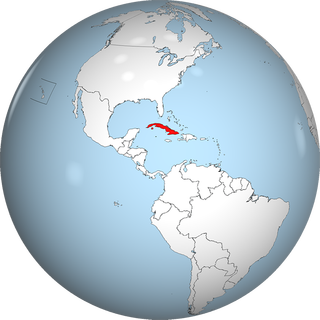
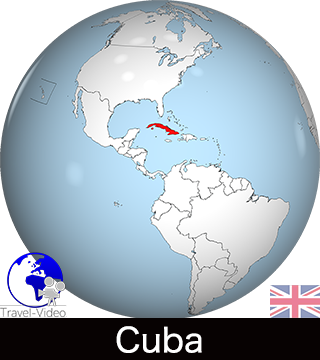
Cuba is the largest island nation in the Caribbean and occupies a strategic position between North America, Central America and South America. The country consists primarily of the island of Cuba itself, the Isle of Youth and more than four thousand smaller islands, islets and cays that form the Cuban archipelago.
The country lies south of the United States and the Bahamas, west of Haiti and the Dominican Republic, east of Mexico's Yucatán Peninsula and north of Jamaica and the Cayman Islands. Its position at the entrance to the Gulf of Mexico has given Cuba considerable geopolitical importance throughout its history and continues to influence its international relations and maritime trade.
The Cuban landscape is dominated by plains and rolling hills, which cover much of the territory and support agricultural activities. Mountain ranges occupy several regions of the country, including the Sierra Maestra in the southeast, where Pico Turquino rises to nearly 2,000 metres and forms the highest point in Cuba. Other significant mountain systems include the Escambray Mountains in central Cuba and the Sierra de los Órganos in the west, an area famous for its limestone formations and tobacco-growing valleys.
Rivers are generally short because of the elongated shape of the island. The Cauto River, the longest in the country, flows through eastern Cuba before reaching the Gulf of Guacanayabo. Coastal wetlands, mangrove forests and coral reefs are important features of the Cuban environment and contribute to the country's rich biodiversity.
Climate and Natural Environment
Cuba experiences a tropical climate moderated by maritime influences and trade winds. Temperatures remain relatively warm throughout the year, with average annual values ranging between 22 and 28 degrees Celsius depending on altitude and season.
The year is generally divided into a dry season from November to April and a rainy season from May to October. Rainfall patterns vary regionally, with mountainous areas receiving larger amounts of precipitation.
Like many Caribbean countries, Cuba is exposed to tropical storms and hurricanes during the Atlantic hurricane season. These events can have significant consequences for agriculture, infrastructure and coastal settlements. Over the decades, Cuba has developed highly organized evacuation and disaster management systems that are frequently regarded as among the most effective in the region.
The country possesses numerous protected areas, including national parks, wetlands and marine reserves. The Zapata Swamp in southern Cuba is one of the largest wetland ecosystems in the Caribbean and supports a wide variety of endemic species. Environmental protection and adaptation to climate change have become increasingly important public policy priorities due to rising sea levels and coastal erosion.
Population and Demographic Trends
Cuba has a population of slightly under eleven million inhabitants, making it one of the most populous countries in the Caribbean. The population is highly urbanized, with the majority of Cubans living in cities and towns.
The country is characterized by a long history of ethnic and cultural mixing. Most Cubans descend from combinations of Spanish settlers, African populations brought to the island during the centuries of slavery and, to a lesser extent, indigenous peoples and later immigrants from Europe, China and the Middle East.
One of the most important demographic challenges facing contemporary Cuba is population ageing. Low birth rates combined with sustained emigration, particularly among younger generations, have contributed to a gradual increase in the average age of the population.
Migration continues to play a major role in Cuban society. Significant Cuban communities exist in the United States, especially in Florida, as well as in Spain and several Latin American countries. These diasporic communities maintain strong social, cultural and economic links with the island.
Languages, Religion and Cultural Identity
Spanish is the official language and the principal language of communication throughout the country. Cuban Spanish possesses distinctive vocabulary, pronunciation and expressions that reflect historical influences from African languages, indigenous terminology and contact with other Caribbean societies.
English is increasingly important in sectors linked to international tourism and foreign trade. Knowledge of Russian also remains present among some older generations as a legacy of the close relationship with the Soviet Union during the Cold War.
Religion occupies a more visible place in public life than during the early decades following the Cuban Revolution. Roman Catholicism remains the largest religious tradition, although regular religious practice varies considerably among individuals and regions.
Afro-Cuban religions continue to play an important role in national culture. Santería, which combines elements of Yoruba spirituality with Catholic traditions, is particularly influential and forms an important component of Cuban cultural identity. Other traditions such as Palo Monte and Spiritism are also practiced in various parts of the country.
A substantial proportion of the population identifies as non-religious while continuing to participate in cultural practices that possess religious origins.
Major Cities and Territorial Organization
Havana dominates Cuba's urban landscape. As the capital and largest city, it serves as the country's political, economic and cultural centre. The city hosts national government institutions, major universities, industrial facilities and the country's principal port. Its historic centre, with its colonial architecture and public squares, remains one of the most important heritage sites in the Caribbean.
Santiago de Cuba is the country's second largest city and possesses a strong Afro-Caribbean identity shaped by centuries of migration and cultural exchange. It is widely regarded as one of the birthplaces of many Cuban musical traditions.
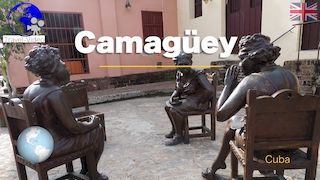
Other important urban centres include Camagüey, known for its historic urban layout, Santa Clara, associated with the Cuban Revolution, Holguín in eastern Cuba and Cienfuegos on the southern coast.
Administratively, Cuba is divided into provinces and municipalities. Although local institutions exercise certain responsibilities, political and economic decision-making remains strongly centralized at the national level.
Transport and Infrastructure
Road transport constitutes the backbone of the national transport system. The country's principal highway network connects Havana with the major cities of western, central and eastern Cuba, although infrastructure quality varies considerably between regions.
The railway system, one of the oldest in Latin America, was originally developed to support sugar exports. Rail services continue to operate for both freight and passenger transport, although modernization remains necessary in many areas.
Several ports play important roles in international trade, including Havana, Santiago de Cuba, Cienfuegos and Mariel. The Port of Mariel, located west of Havana, has become one of the country's most significant economic development projects and is intended to serve as a major logistics and industrial hub.
International air transport is centred around José Martí International Airport in Havana, while airports in Varadero, Holguín and Santiago de Cuba provide important links with Europe, North America and Latin America.
An Economy in Transition
The Cuban economy remains characterized by a significant role for the state in planning and managing economic activity. However, gradual reforms introduced since the 1990s have allowed limited private enterprise and expanded opportunities for self-employment and small businesses.
Tourism has become one of the country's most important sources of foreign currency. Visitors are attracted by Cuba's beaches, colonial cities, music, architecture and natural landscapes. Destinations such as Varadero, Viñales and Trinidad rank among the country's most important tourist centres.
Agriculture continues to play an important role despite its reduced contribution to national output compared with earlier periods. Sugar production, once the foundation of the Cuban economy, has declined substantially in relative importance. Tobacco cultivation remains economically significant, particularly in western Cuba, where some of the world's most famous cigars are produced.
Coffee, citrus fruits and various food crops are also cultivated, although food imports remain necessary to meet domestic demand.
Industrial activity includes food processing, pharmaceuticals, biotechnology, mining and energy production. Cuba has invested heavily in medical research and biotechnology and has developed internationally recognized expertise in vaccine development and pharmaceutical production.
Nickel mining remains one of the country's most important extractive industries and represents a significant source of export revenue.
Education, Healthcare and Scientific Research
Education occupies a central place in Cuban society and public policy. Literacy rates are among the highest in Latin America, and access to education is widespread throughout the country.
The University of Havana, founded in 1728, is one of the oldest institutions of higher education in the Americas and remains a major academic centre. Other universities and research institutions operate in Santiago de Cuba, Santa Clara and other cities.
The healthcare system is similarly regarded as one of the defining features of modern Cuba. Universal access to healthcare and a high ratio of medical professionals to population are often highlighted as important achievements of the country's social policies.
Cuba has also developed extensive programmes of international medical cooperation, sending doctors and healthcare professionals to numerous countries around the world.
Cultural Life and Contemporary Challenges
Cuban culture enjoys international recognition, particularly in music, dance and literature. Musical genres such as son, rumba, mambo, bolero and salsa have influenced artistic traditions far beyond the Caribbean region.
Festivals and public celebrations remain important aspects of community life. The carnival of Santiago de Cuba and numerous local festivities combine Spanish, African and Caribbean influences that reflect the country's multicultural heritage.
At the same time, Cuba faces considerable economic and social challenges. Inflation, shortages of consumer goods, infrastructure limitations and energy supply difficulties affect daily life for many citizens.
The long-standing United States embargo continues to shape economic conditions and international relations, although internal economic structures and policy choices also influence the country's development trajectory.
Population ageing, outward migration and the modernization of infrastructure represent major long-term challenges. In response, Cuban authorities continue to seek new forms of international cooperation and economic diversification while preserving the country's social and political model.
Contemporary Cuba therefore presents a complex combination of historical continuity and gradual transformation, where revolutionary institutions coexist with economic reforms and where a strong cultural identity continues to shape one of the Caribbean's most distinctive societies.