

 Français (France)
  Nederlands (nl-NL)
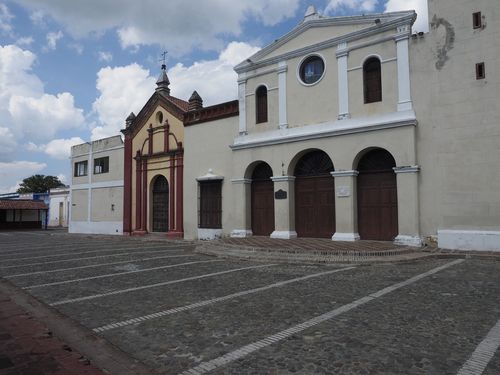
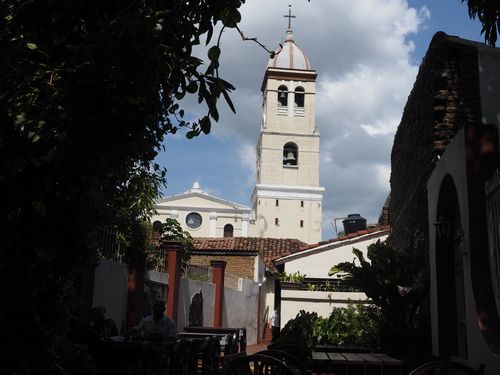
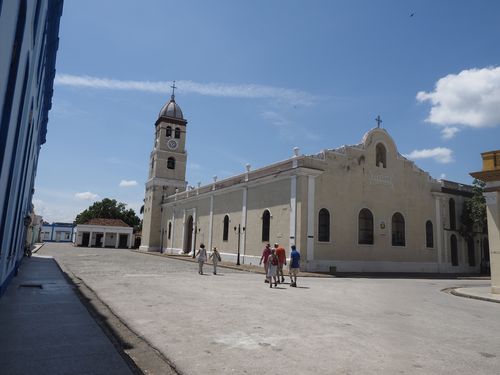
 The Cathedral of the Holy Saviour is one of the main religious landmarks in Bayamo, located in the eastern region of Cuba. It is among the oldest Catholic institutions founded on the island during the colonial period. Rebuilt several times over the centuries, it continues to serve as an active place of worship and holds a prominent symbolic role in the religious and civic life of the city. Its position on a central square makes it a well-known reference point for both residents and visitors.
Monument profile
Cathedral of the Holy Saviour
Monument category: Cathedral
Monument family: Church, cathedral, basilica, chapel
Monument genre: Religious
Cultural heritage: Christian
Geographic location: Bayamo • Cuba
Construction period: 16th century AD
• Links to •
• List of videos about Bayamo on this site •
Bayamo, city in the center of the island • Cuba
History of the Cathedral of the Holy Saviour in Bayamo, Cuba
Political and Social Context of Construction
The Cathedral of the Holy Saviour in Bayamo is one of Cuba’s earliest religious monuments. Its initial construction dates back to 1516, just a few years after the foundation of Bayamo by Spanish conquistador Diego Velázquez de Cuéllar. Bayamo was one of the seven original “villas” established by the Spanish on the island and quickly became an important settlement in the early colonial structure.
The erection of a religious building in this newly founded town had a clear ideological and political purpose. The Spanish Crown and the Catholic Church were closely linked in the colonial enterprise. As Spain extended its rule across the Caribbean and the Americas, the establishment of churches served not only religious missions, such as converting indigenous populations like the Taínos, but also symbolized political authority and imperial permanence.
Religious architecture also played a social role by acting as a center for local governance, education, and community organization. Building a church in Bayamo was therefore part of a broader imperial strategy to implant Hispanic and Christian values through both spiritual and material means.
Key Historical Events and Impacts on the Site
Over its long history, the cathedral has experienced multiple episodes of destruction, damage, and reconstruction. Its original wooden structure, like many early colonial churches, was vulnerable to the island's harsh weather and seismic activity. Earthquakes in 1551, 1624, and 1766 caused considerable damage to the building, leading to successive reconstructions using stronger, more durable materials such as limestone and coral rock.
The most significant event affecting the cathedral occurred during the Ten Years' War (1868–1878), the first major Cuban war for independence. In January 1869, the residents of Bayamo, refusing to allow the city to fall into Spanish hands, deliberately set it on fire. The cathedral, along with much of the city, was consumed in the blaze. This dramatic act linked the church to the narrative of national resistance, infusing the site with symbolic significance beyond its religious function.
It was not until between 1916 and 1919 that the church was fully rebuilt. This version of the cathedral retained elements of the original plan but incorporated structural improvements reflecting early 20th-century building techniques. Additional restorations took place in 1982, 1988–1989, and 2004, each aimed at preserving the building against environmental degradation and reinforcing its cultural status.
Global Context at the Time of Construction
The construction of the original church occurred during a period of intense global change. The early 16th century saw the beginning of European overseas expansion, particularly by Spain and Portugal. Churches were among the first permanent buildings erected in newly colonized territories and served as cultural and spiritual anchors in towns like Bayamo.
The cathedral's construction can be understood as part of a broader movement of ecclesiastical monument building in the Americas, comparable to developments in Santo Domingo, Lima, and Mexico City. These churches often reflected Renaissance and early Baroque architectural ideals while adapting to local conditions. In this respect, the Bayamo cathedral is representative of a larger trend in the material and symbolic consolidation of colonial power through monumental religious architecture.
Transformations and Modifications Over Time
The cathedral has undergone multiple transformations, each reflecting the historical moment in which it was restored or rebuilt. The current structure retains few elements of the original 16th-century building, but it does incorporate some preserved sections and stylistic references. The chapel of Nuestra Señora de los Dolores, dating to 1720, is one of the oldest surviving parts of the complex.
The post-1919 reconstruction adopted a simplified neoclassical style, consistent with contemporary trends in Cuban ecclesiastical architecture. Later restorations introduced modern conservation techniques while maintaining the church’s overall stylistic integrity.
The building's function also evolved. Originally a parish church, it was elevated to cathedral status in 1995 with the establishment of the Diocese of Bayamo-Manzanillo. This change reflected not only its historical importance but also its renewed religious and administrative relevance.
Urban changes around the cathedral further affected its spatial role. Originally situated in a modest colonial plaza, the building now stands adjacent to the Plaza del Himno Nacional, where Cuba’s national anthem was first sung—an association that deepens its cultural resonance.
Contemporary Role and Cultural Significance
Today, the Cathedral of the Holy Saviour is both a religious center and a symbol of civic pride in Bayamo. It continues to host weekly masses, religious celebrations, and special diocesan events. It also attracts Cuban and foreign visitors interested in colonial history and national heritage.
Its position as a central landmark makes it a key part of Bayamo’s historical narrative. The cathedral represents continuity through Cuba’s colonial past, its wars of independence, and the post-revolutionary redefinition of religious life. It remains one of the most recognizable and revered religious sites in eastern Cuba.
Public events such as processions for the Feast of the Assumption and celebrations tied to Cuban independence days often involve gatherings in or around the cathedral, reaffirming its dual identity as a spiritual and civic space.
Conservation Status and Preservation Challenges
While the cathedral is structurally stable thanks to several 20th- and 21st-century restoration campaigns, it faces ongoing conservation challenges. The tropical climate, marked by high humidity, heavy rains, and the occasional cyclone, poses a constant threat to its materials, especially the stonework and wooden elements.
Urban development in Bayamo presents further complications, as increased tourism and traffic impact the surrounding area. Although protected as a national heritage site, the cathedral has not yet been proposed for UNESCO World Heritage status. Such recognition could provide additional resources and international support for its long-term preservation.
Efforts to maintain the building include regular monitoring of structural integrity, community involvement in cleaning and maintenance, and partnerships between the Church and local authorities. Nevertheless, funding remains limited, and preventive conservation often competes with other public priorities.
Conclusion
The Cathedral of the Holy Saviour in Bayamo is more than a religious monument. It embodies the spiritual, historical, and cultural evolution of a city that has played a key role in Cuba’s national narrative. From its colonial origins to its symbolic destruction during the wars of independence, and from its architectural rebirth to its modern-day role as a living center of faith, the cathedral stands as a testament to resilience and continuity. It remains one of the most eloquent witnesses of Cuban history in built form.
Architecture of the Cathedral of the Holy Saviour in Bayamo, Cuba
The Cathedral of the Holy Saviour (Catedral del Santísimo Salvador) in Bayamo, Cuba, is a notable example of colonial ecclesiastical architecture that has undergone multiple phases of destruction and reconstruction. The current structure, completed in the early 20th century following the devastating fire of 1869, reflects both continuity with earlier forms and adaptations to local conditions and evolving architectural sensibilities. It is a building that embodies historical memory, practical engineering, stylistic syncretism, and climatic adaptation.
Technological and Architectural Innovations of the Time
The original church, constructed in 1516, was likely a modest structure built with wood and other perishable materials, common in early Spanish settlements. Over the centuries, technological improvements were introduced in response to natural disasters, most notably earthquakes and hurricanes. The version of the building we see today, rebuilt between 1916 and 1919, reflects early 20th-century construction principles with colonial inspiration, adapted to a Caribbean context.
Innovations were primarily practical rather than stylistic. One key feature is the building’s relatively low profile, intended to minimize vulnerability to cyclonic winds. Natural ventilation was also a crucial consideration. High-set windows, oculi, and the use of an open nave with an unobstructed central axis facilitate air circulation, reducing interior heat and humidity—an essential adaptation in Cuba's tropical climate.
The cathedral’s footprint adheres to traditional basilican layouts but incorporates simplified geometries. This allowed local builders, often trained through apprenticeships rather than formal academies, to execute a structurally sound yet aesthetically balanced building using available technologies and resources.
Materials and Construction Methods
The cathedral was reconstructed with an emphasis on durability. Builders used locally sourced limestone and coral rock for the walls—materials known for their breathability and resilience to humidity. These were bonded with lime-based mortar, which allows for slight movements in the structure and prevents cracking, a key advantage in a seismically active region.
Wood plays an essential role in the cathedral’s construction, particularly in the roof trusses and interior finishes. Durable tropical hardwoods such as cedar and mahogany were used due to their resistance to rot and insects. The timber-framed roof is covered with red clay tiles laid at a steep pitch, allowing rainwater to flow off quickly during tropical storms.
Construction techniques combined traditional masonry with local vernacular skills. For example, rubble-filled stone walls provided excellent thermal mass while remaining cost-effective. The project relied on a combination of ecclesiastical funding and community labor, reflecting the hybrid character of religious construction in post-colonial Cuba.
Architectural and Artistic Influences
Architecturally, the cathedral blends elements from multiple traditions. The overall composition adheres to a simplified neoclassical idiom, popular in early 20th-century Latin American ecclesiastical design, especially under the influence of Spanish academic models. The façade is symmetrical and formal, with Tuscan pilasters, a central pediment, and arched doors. A single bell tower rises to the right of the main portal, structured in three levels, with minimal ornamentation.
Inside, the design is equally restrained but dignified. Rounded arches supported by square piers define the spatial rhythm of the nave. The sanctuary is slightly elevated and framed by a semi-circular apse. Wooden ceiling panels feature decorative moldings that imitate more expensive European designs, adapted here with local craftsmanship and resources.
Artistic decoration is relatively sparse but meaningful. The chapel of Nuestra Señora de los Dolores, preserved from the 18th century, contains remnants of original frescoes with stylized floral motifs and Christian iconography. These details reflect both Baroque religious traditions and Afro-Caribbean aesthetic influences seen in the ornamentation of peripheral altars.
Spatial Organization and Notable Features
The cathedral follows a longitudinal plan typical of Latin cross layouts, although the transepts are understated. The central nave is flanked by shallow lateral chapels, each with its own altar, and separated by piers rather than full columns—likely a choice dictated by material economy and structural simplicity.
One of the most distinctive elements is the open parvis in front of the main entrance, which creates a transitional space between the secular public square and the sacred interior. This design facilitates outdoor liturgies and religious processions, particularly during major feast days.
The bell tower, though modest in height compared to European models, is proportionally significant within Bayamo’s low-rise cityscape. Its upper tier is open to allow the bell’s sound to carry across the town. The tower also serves as a symbolic marker of Catholic presence in the city, visible from key surrounding streets.
Inside, the altar features carved wooden panels and a central crucifix, flanked by side niches for statuary. The original flooring, a mix of stone and terracotta tile, has been partially restored in recent decades to match archival records and remnants found during maintenance work.
Dimensions and Historical Anecdotes
While the cathedral’s dimensions are relatively modest—approximately 35 meters in length, 12 meters in width, and 10 meters in interior height—the building’s scale is appropriate to Bayamo’s urban context. The bell tower rises to approximately 20 meters, providing vertical emphasis without overwhelming the façade.
One curious detail is the incorporation of stones from the earlier 18th-century church into the walls of the rebuilt structure. Some of these stones bear chisel marks or carved inscriptions that date from previous construction phases, giving the building a palimpsestic character.
Local tradition holds that the original altar cross, saved from the 1869 fire, is housed in the sacristy—a symbolic link between the past and present. Oral histories also suggest that during certain storms, townspeople gathered in the cathedral, believing it offered spiritual and physical refuge.
Architectural Significance and Preservation Issues
The architectural significance of the Cathedral of the Holy Saviour lies in its synthesis of colonial heritage, local construction wisdom, and climate adaptation. While it does not feature the grandeur of Havana’s baroque churches, it stands as a powerful example of regional ecclesiastical architecture grounded in history and community identity.
Currently, the cathedral is recognized as a national heritage site by Cuban authorities. This status ensures baseline protection, but challenges persist. The building remains vulnerable to humidity-related deterioration, salt intrusion, and minor seismic activity. Urban encroachment and increased foot traffic due to tourism pose additional management concerns.
Restoration efforts have focused on waterproofing the roof, reinforcing structural joints, and conserving interior finishes. However, budget constraints and material scarcity limit the frequency and scope of interventions. Greater visibility, possibly through international heritage designation, could help secure the resources necessary for long-term preservation.