Français (France)
  Nederlands (nl-NL)
 00:00 • intro | 00:43 • Santa Cruz de la Parra | 02:49 • in the streets of Baracoa | 04:19 • walk along the sea
Personal creation from visual material collected during my trip Cuba (2015)
Map of places or practices in Baracoa on this site
• Use the markers to explore the content •
Baracoa, Cuba’s First Capital Between Sea and Historical Memory
A Historic Town on Cuba’s Eastern Edge
At the eastern end of Cuba, Baracoa holds a distinctive place in the country’s history. Founded in the early sixteenth century, it is generally regarded as the oldest permanent Spanish settlement on the island and the first capital of Cuba. Long isolated by mountains and distance from major routes, the town has preserved a strong identity shaped by colonial heritage, local traditions and a dramatic coastal setting.
The video explores Baracoa through its streets, its seafront and one of its most symbolic religious treasures. It presents a modest-sized town whose historical importance far exceeds its scale, facing the Caribbean Sea and surrounded by powerful natural landscapes.
Santa Cruz de la Parra and the Earliest Colonial Era
One of the principal highlights is the Santa Cruz de la Parra, an ancient cross preserved in the local cathedral. According to tradition, it is linked to the first years of Spanish presence in the region and remains one of the most emblematic historical objects in Cuba.
Its importance goes beyond religion. It is also a rare material witness to the earliest phase of European colonization on the island. Its presence in Baracoa underlines the pioneering role played by the town in the formation of Cuban history.
The connection with the Cathedral of Our Lady of the Assumption further strengthens the heritage value of the historic centre.
Streets of Baracoa and Urban Character
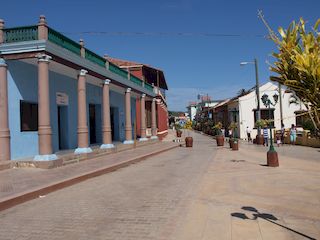
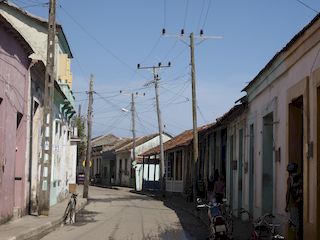
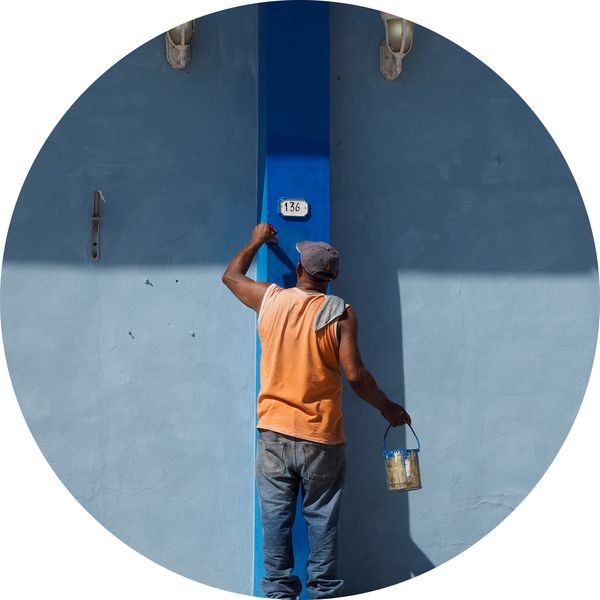
The scenes filmed in the streets reveal a town on a human scale, marked by low houses, colourful façades and a relatively simple urban layout. Baracoa does not rely on the grand monumental character found in some larger colonial cities, but instead offers a more intimate fabric shaped by peripheral history and gradual development.
This urban atmosphere is part of its appeal. The town preserves building forms adapted to the tropical climate, with openings designed for ventilation, shaded porches and a close relationship between domestic life and the street.
The streets also reflect everyday rhythms in which local commerce, walking and neighbourhood interaction still play an important role.
The Seafront and Natural Setting
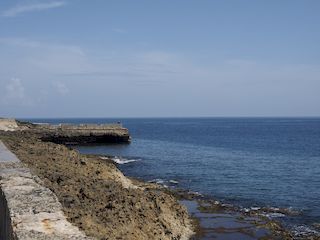
The promenade along the sea reminds viewers that Baracoa developed in constant relation with the coast. For centuries, the shoreline was its principal connection to the rest of Cuba and to the wider Caribbean. Before modern roads improved access, maritime links remained essential.
Even today, the sea strongly defines the image of the town. The contrast between the urban frontage, the open horizon and nearby mountains gives Baracoa a landscape identity unlike most other Cuban towns. The humid climate, surrounding vegetation and nearby highlands make this region clearly distinct within the island.
What the Video Makes Especially Clear
Videos created from carefully selected and animated photographs are especially effective for a place such as Baracoa. They allow a gradual transition from historical detail to wider atmosphere: a heritage object, quiet streets, rows of houses and then the openness of the coast.
Image transitions also help explain the relationship between the old town and its natural environment. Viewers can better perceive the modest scale of the urban fabric, the nearness of the shoreline and the way the settlement lies between mountains and sea.
This format also highlights textures, colours and perspectives that contribute to Baracoa’s understated charm.
A Foundational Town with Preserved Identity
Baracoa brings together memory of Cuba’s earliest colonial period, a distinctive urban character and a remarkable natural setting. Once the island’s first capital and later a remote provincial town, it has retained a strong historical personality. The video offers a clear introduction, while the related detailed pages provide deeper insight into its monuments and local heritage.
Links to related pages







Audio Commentary Transcript
- A cross (Cruz de Parra) would have been planted there by Christopher Columbus when he discovered the island of Cuba on December 1, 1492.
This is of course a reproduction, but it underlines the historical importance of Baracoa.
What is considered the original (carbon-14 dating indicates that it dates from the 15th century) is in the Cathedral of Nuestra Señora da la Asunción (Our Lady of the Ascension) in the center of Baracoa. If it is proven that this cross dates well from the time, nothing proves on the contrary the role of Christopher Columbus, the wood of this cross being of Cuban origin.
Baracoa was the first capital of the new Spanish colony during the 16th century.
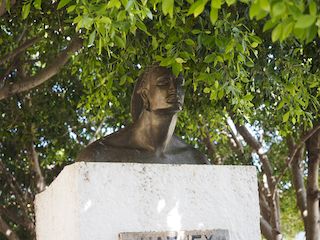
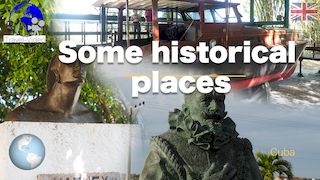
- Hatuey was a hero of the Indian people who occupied the island before the arrival of the conquistadors. He organized the resistance and was condemned to the stake after his capture.
The missionaries wanted to convert him to Catholicism before his death to assure him "eternal salvation".
Hatuey asked if there were any Spaniards in Heaven as well and after a positive response from the missionary, he declined the offer of salvation ...
Music:
- - YouTube video library - Carol of the Bells
- - YouTube video library - Clouds
Disclaimer: Despite its appropriateness, copyright issues prevent the use of cuban traditional music in "Baracoa, former capital • Cuba", hence the use of royalty-free music. Despite our careful selection, some might regret this decision, which is necessary to avoid potential lawsuits. Although difficult, this decision is the only viable solution.