Français (France)
  Nederlands (nl-NL)
 La Galerie Martha Jiménez et les sculptures urbaines de Camagüey illustrent une forme originale de création artistique intégrée à l’espace public. Ce lieu est associé au travail de l’artiste cubaine Martha Jiménez, connue pour ses œuvres figuratives inspirées de la vie quotidienne, des relations humaines et de l’identité locale. Plusieurs sculptures installées sur les places et dans les rues participent à l’ambiance culturelle du centre historique. Elles rapprochent l’art du passant et transforment la promenade urbaine en expérience visuelle accessible. L’ensemble contribue à l’image contemporaine de Camagüey, où patrimoine bâti et expression artistique dialoguent avec naturel.
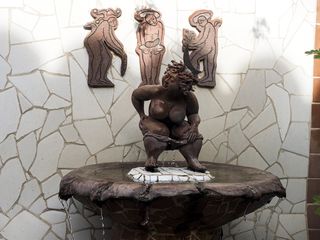
Camagüey • Martha Jiménez Gallery and Urban Sculptures
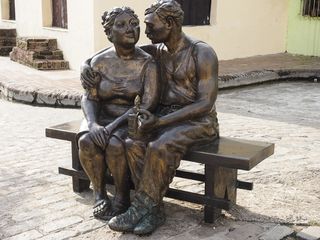
Camagüey • Martha Jiménez Gallery and Urban Sculptures
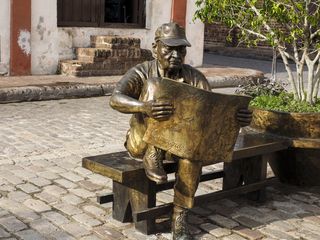
Camagüey • Martha Jiménez Gallery and Urban Sculptures
Tradition profile
Martha Jiménez Gallery and Urban Sculptures
Tradition category: Craftsmanship
Tradition family: Crafts and professions
Tradition genre: Trade and Local Creativity
Geographic location: Camagüey • Cuba
• Links to •
• List of videos about Camagüey on this site •
Camagüey • small town in Cuba
Martha Jiménez Gallery and Urban Sculptures in Camagüey: History of a Contemporary Cultural Tradition
Origins within Revolutionary Cuba
The tradition associated with the Martha Jiménez Gallery and the urban sculptures of Camagüey is modern rather than ancient, yet it has become deeply rooted in the city’s identity. Its emergence must be understood within the political and cultural transformations that followed the Cuban Revolution of 1959. The new state placed strong emphasis on literacy, education and cultural participation, presenting the arts as a public good rather than an elite privilege. National institutions promoted artistic training, regional cultural centres and access to exhibitions outside Havana.
In this context, artists working in provincial cities gained new opportunities. Camagüey, already an important inland city with a notable intellectual and architectural heritage, became fertile ground for local artistic initiatives. Martha Jiménez developed her work during a period when Cuban culture sought to combine professional artistic standards with social accessibility. The placement of sculpture in streets and squares corresponded to the broader aim of bringing art into everyday life.
Political and Social Conditions of Development
The rise of this tradition reflected several political and social priorities. First, decentralisation of culture was important. Cuban authorities wished to avoid excessive concentration of prestige and resources in the capital. Provincial cities were therefore encouraged to develop museums, schools, workshops and cultural programming.
Second, public art served educational and civic functions. Sculptures installed in visible spaces could reach residents who might never enter galleries. They also contributed to beautification of urban areas and to a sense of collective pride.
Third, Camagüey possessed a historic centre with plazas, churches and walkable streets suitable for public sculpture. Municipal authorities, cultural administrators and heritage planners all played a role in allowing artistic installations in such spaces. This was not simply private initiative, but a negotiated relationship between artist, city and institutions.
Religious issues were less central than in older traditions, though many sculptures coexisted with spaces historically shaped by Catholic churches and convents. The key framework was civic rather than devotional.
Major Historical Phases
The first phase was artistic formation and institutional recognition during the later twentieth century, when Cuban provincial artists increasingly received visibility. A second phase came during the severe economic crisis of the 1990s, known as the Special Period, after the collapse of the Soviet bloc. Material shortages affected artistic production, yet culture also became economically valuable through tourism. Historic cities such as Camagüey sought to attract visitors through heritage and creativity.
During this period, urban sculpture gained additional significance. It enriched public spaces without requiring large new infrastructure and offered memorable imagery for visitors. What began as cultural policy increasingly intersected with urban branding and tourism.
A third phase followed the strengthening of Camagüey’s heritage status in the twenty-first century. As recognition of the city’s historic urban fabric grew, the sculptures became part of its visual identity. They were no longer only contemporary artworks but landmarks integrated into the city’s narrative.
Global Context of Emergence
The development of public sculpture in Camagüey paralleled wider international trends. Throughout the twentieth century, many cities in Europe, Latin America and North America invested in public art programs. Municipal sculpture parks, commemorative statues, modern installations and artist-led urban renewal became common.
Yet the Cuban case differed in notable ways. In capitalist cities, public art was often tied to private sponsorship, commercial redevelopment or elite philanthropy. In socialist Cuba, it was more closely linked to state cultural policy, educational ideals and public accessibility.
There were also parallels with Latin American traditions of socially engaged art, muralism and figurative public expression. However, the Camagüey sculptures developed a quieter tone. Rather than monumental ideological imagery, they often depicted ordinary people, domestic scenes and moments of daily life.
Forms, Themes and Transformation
One of the most distinctive features of the tradition is its human scale. Many sculptures represent seated figures, readers, couples, women or workers placed at eye level and often in direct relation to benches, pavements or plazas. This encourages interaction rather than distant admiration.
Over time, the role of the viewer changed. Initially, sculpture in public space was largely contemplative. Later, residents and tourists began sitting beside the figures, touching them and photographing themselves with them. The works thus entered the age of participatory image culture.
Digital media amplified this transformation. Images of Camagüey’s sculptures circulated widely online, giving the city recognisable symbols beyond Cuba. The tradition adapted from physical urban presence to virtual visibility.
Social Role and Cultural Meaning Today
Today, the Martha Jiménez Gallery and associated sculptures occupy an important place in Camagüey’s civic life. They function as meeting points, orientation markers and popular photographic settings. They also soften the monumental atmosphere of historic plazas by introducing humour, intimacy and everyday humanity.
Locally, they express pride in a city capable of producing significant cultural figures outside Havana. Regionally, they reinforce Camagüey’s reputation as more than a preserved colonial centre. Nationally, they demonstrate how Cuban artistic identity includes provincial voices and contemporary creators.
Unlike many official monuments, these sculptures do not primarily celebrate military heroes or political leaders. Their cultural message lies in recognition of ordinary life, conversation, reading, companionship and shared public space.
Preservation and Modern Challenges
The principal preservation issues are material and economic. Outdoor sculptures in a tropical climate face humidity, heat, corrosion and constant physical contact. Maintenance requires technical expertise and regular funding.
A second challenge concerns meaning. As tourism expands, artworks can become reduced to decorative photo backdrops. Sustaining public understanding of their artistic intention and historical context remains important.
A third challenge is continuity. Traditions centred on living or recent artists must consider succession: documentation, conservation of archives, training of restorers and institutional support for galleries and collections.
At the same time, opportunities exist. Heritage tourism, municipal pride and international interest in Cuban urban culture can all support preservation efforts when carefully managed.
A Recent Tradition with Lasting Significance
Although recent in origin, the tradition of the Martha Jiménez Gallery and urban sculptures has achieved genuine heritage status. It shows that traditions need not be ancient to become meaningful. In Camagüey, the meeting of artist, city and society produced a lasting cultural language in which contemporary sculpture entered daily urban life. Through this process, public art became part of local memory and an enduring symbol of the city.
Martha Jiménez Gallery and Urban Sculptures in Camagüey: Characteristics of a Local Cultural Tradition
Origins and Conditions of Emergence
The tradition associated with the Martha Jiménez Gallery and the urban sculptures of Camagüey belongs to the field of modern civic culture rather than ancient folklore. It emerged in the second half of the twentieth century within the broader cultural policies of post-1959 Cuba, when art, education and public participation were strongly promoted. The state encouraged artistic training, regional cultural institutions and access to culture beyond elite circles.
Camagüey offered favourable local conditions for such a development. It was already a major historic city with plazas, churches, walkable streets and a strong sense of regional identity. Its urban fabric provided natural settings for sculpture integrated into daily life. The initial social function of this tradition was to make art visible and accessible while strengthening local pride. Instead of confining creativity to museums or private collections, artistic expression entered the street and became part of ordinary experience.
Within the cultural history of the region, this movement also reflected the long importance of Camagüey as a provincial centre of education, literature and civic life. The sculptures therefore extended an existing urban culture into new visual forms.
Constituent Elements and Practices
This tradition combines two interconnected spaces: the gallery as a place of creation and exhibition, and the city as an open-air extension of the artistic process. The gallery functions as workshop, display venue and cultural reference point. Public spaces then become a second stage where sculptures interact with residents and visitors.
The works are generally figurative and human in scale. Common subjects include seated couples, readers, women, workers, musicians or scenes of conversation. Many pieces are designed to be approached closely, often placed beside benches, fountains or pedestrian routes.
The practical structure involves several participants. Artists and assistants handle design, modelling and finishing. Metalworkers or foundry specialists may participate in casting. Municipal authorities or heritage managers approve placement in historic zones. Citizens and tourists become final participants through observation, photography and physical interaction.
No fixed costume or music defines the tradition, unlike ceremonial customs. Instead, the recurring objects are benches, newspapers, chairs, domestic items and elements of urban furniture that make sculptures appear integrated into everyday life.
Skills transmitted through generations include drawing, modelling, bronze casting, patination, restoration techniques and knowledge of how sculpture functions in public space.
Symbolism and Cultural Meanings
The symbolic language of these works is based on proximity, familiarity and dignity of ordinary life. Unlike monumental statues celebrating rulers or military victories, these sculptures often represent common people engaged in simple actions. Reading, resting, talking or waiting become worthy of artistic attention.
This carries an important social message: public space belongs not only to authority, but also to citizens. Human-scale figures invite identification rather than distance.
Materials also matter symbolically. Bronze suggests durability, continuity and permanence, while worn surfaces created by touch indicate popular acceptance. The repeated physical contact of hands, shoulders or seats transforms sculpture into shared civic experience.
Colour is generally restrained, with dark or warm metallic tones. Meaning therefore comes more from posture and gesture than from bright decoration. A seated couple may symbolise companionship; a reader may evoke education and reflection; a maternal figure may suggest continuity and care.
Local variations can also appear according to neighbourhood setting. In a religious square, a sculpture may contrast with ecclesiastical architecture. In a secular plaza, the same human figure may emphasise civic life.
Evolution and External Influences
The tradition has changed significantly over time. In its earlier phase, sculpture in public space mainly served educational and beautification purposes. Later, it became strongly linked to tourism, city branding and visual identity.
Foreign influences can be observed in wider twentieth-century traditions of public art, urban sculpture and socially accessible figurative works found in Latin America and Europe. Yet Camagüey developed a distinctive tone: intimate rather than grandiose, humorous rather than ideological, and deeply tied to local streets rather than monumental boulevards.
Economic changes also shaped the tradition. During periods of scarcity, durable public works had to balance artistic ambition with material constraints. In the digital era, photographs shared online gave these sculptures international visibility and renewed relevance.
Social Organisation and Community Impact
The sculptures now play several community roles. They act as landmarks, meeting points and symbols of neighbourhood pride. They also soften formal historic environments by adding warmth and human presence.
Intergenerationally, they create shared references. Older residents may remember installations when new, while younger generations grow up with them as familiar elements of city life. This continuity helps transform contemporary art into local tradition.
Politically, the works can be read as examples of accessible civic culture. Socially, they encourage interaction across age and class lines because anyone may approach them freely.
They are also present in festivities and public life. Squares containing sculptures often host gatherings, celebrations or daily social activity, giving the artworks a living context rather than isolated museum status.
Statistics, Anecdotes and Notable Figures
Exact numbers vary according to definitions, but multiple public works associated with Martha Jiménez have become recognised features of Camagüey’s central districts. Some are among the city’s most photographed attractions.
A common anecdotal feature is the way visitors sit beside sculptures as if joining real companions. This repeated behaviour has become part of the tradition itself. What began as static artwork evolved into participatory urban theatre.
The most significant personality in the tradition is Martha Jiménez herself, whose artistic vision shaped the recognisable style of these works. Local cultural institutions, municipal authorities and heritage bodies have also contributed to their placement and continuity.
Recognition and Preservation Challenges
Today the tradition enjoys strong local and national recognition as part of Camagüey’s cultural image. It is indirectly reinforced by the international prestige of the city’s historic centre. Even where sculptures are not separately protected, they benefit from the heritage value of their surroundings.
Main threats include corrosion, tropical climate, accidental damage, budget limitations and overuse through constant touching or climbing. Another challenge is symbolic dilution: artworks risk becoming mere tourist props if their cultural meaning is forgotten.
Preservation requires regular maintenance, documentation, restoration training and thoughtful urban management. Educational programs, gallery exhibitions and inclusion in cultural routes can strengthen understanding of their significance.
A Contemporary Tradition with Lasting Value
The Martha Jiménez Gallery and urban sculptures demonstrate that traditions need not be ancient to become meaningful. Through the combination of workshop practice, public placement and collective adoption, Camagüey transformed contemporary sculpture into civic heritage. The result is a living tradition in which art, memory and everyday urban life remain closely connected.
 Links to the main sections of the site