Français (France)
  Nederlands (nl-NL)
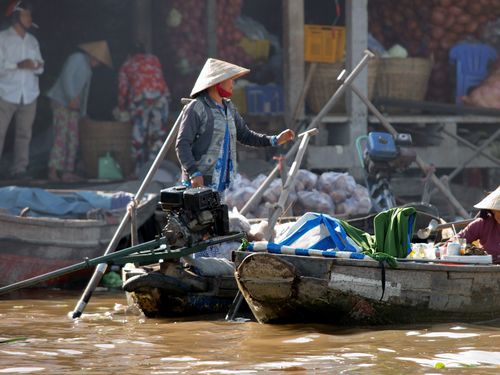
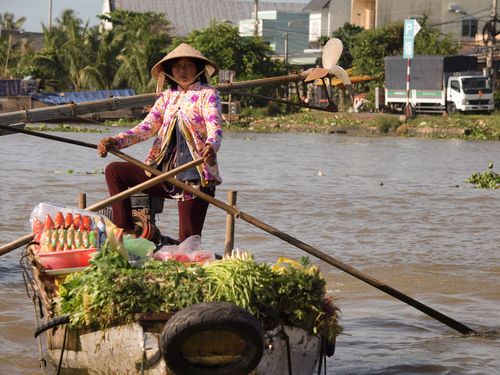
 The floating market of the Mekong Delta in Cần Thơ represents a distinctive form of river-based commerce adapted to the dense network of waterways that structure the region. Trade takes place directly between boats loaded with agricultural products, fruits, vegetables and other goods originating from surrounding rural areas. Vendors and buyers move along the river channels, turning the waterways into active commercial spaces. This type of market reflects the importance of river transport in the economic organization of the Mekong Delta. It also serves as a meeting point for producers, traders and local residents who participate in the daily circulation of goods within the region.

Tradition profile
Floating market Mekong Delta
Tradition category: Floating market
Tradition family: Traditional markets and fairs
Tradition genre: Trade and Local Creativity
Geographic location: Mekong Delta, Can Tho • Vietnam
• Links to •
• List of videos about Mekong Delta, Can Tho on this site •
Mekong Delta, Can Tho • Vietnam
History of the Floating Market Tradition in the Mekong Delta at Cần Thơ (Vietnam)
Political and Social Context of Emergence
The tradition of floating markets in the Mekong Delta, particularly around the city of Cần Thơ, developed within a distinctive geographical and historical context shaped by the dense network of rivers, canals, and distributaries that characterize southern Vietnam. For centuries, waterways functioned as the principal infrastructure for transportation and communication in the delta. Before the widespread development of roads and bridges, rivers served as the main arteries connecting rural settlements, agricultural fields, and emerging urban centers.
Floating markets emerged as a practical response to these environmental conditions. Agricultural communities established along riverbanks produced large quantities of rice, fruits, vegetables, and fish. Because the movement of goods by water was far more efficient than land transport in the delta’s marshy landscape, commerce naturally took place on boats. Markets formed at strategic points where waterways converged, creating mobile commercial hubs where producers and traders could exchange goods directly.
The origins of this practice are closely linked to the historical southward expansion of the Vietnamese state, often referred to as the Nam Tiến, beginning in the seventeenth century. During this period, Vietnamese settlers gradually moved into territories previously inhabited by Khmer populations. The Nguyễn lords, who governed southern Vietnam before the establishment of the Nguyễn dynasty, encouraged agricultural colonization and canal construction in order to exploit the fertile lands of the delta. These policies stimulated rice cultivation and facilitated river-based trade.
Local economic networks involved multiple communities, including Vietnamese settlers, Khmer farmers, and Chinese merchants who had migrated to the region. Chinese traders played an important role in organizing regional trade routes and establishing commercial connections between rural production zones and larger trading centers. Floating markets developed within this multicultural environment as flexible trading platforms where different groups could exchange goods.
Major Historical Events Influencing the Tradition
The evolution of floating markets in the Mekong Delta was shaped by several major political and economic transformations. During the nineteenth century, the region became part of French colonial Indochina. Colonial authorities reorganized agricultural production in the delta, transforming it into one of the most important rice-exporting regions in Southeast Asia.
To facilitate the export of rice and other agricultural products, the French administration expanded the canal system and improved river navigation. These infrastructural changes reinforced the importance of waterborne trade. Floating markets became central nodes in the distribution network, enabling merchants to collect agricultural products from rural areas and transport them to larger ports and urban centers.
The twentieth century brought further changes. During periods of conflict in Vietnam, particularly during the wars of the mid-twentieth century, economic life in many parts of the delta was disrupted. However, the reliance on waterways for local trade allowed floating markets to continue functioning in many areas, albeit sometimes on a reduced scale.
After the reunification of Vietnam in 1975, the country adopted a centrally planned economic system that reorganized agricultural production and distribution. In some areas, commercial activities were regulated by state-controlled mechanisms. Nevertheless, informal market exchanges persisted in the Mekong Delta, and floating markets remained part of the regional economic landscape.
A significant turning point occurred with the economic reforms known as Đổi Mới, initiated in 1986. These reforms introduced market-oriented policies and stimulated private enterprise and agricultural productivity. As economic activity expanded, floating markets regained vitality as centers of rural trade, although their role gradually changed as road infrastructure improved.
Global Context at the Time of Emergence
The emergence of floating markets in the Mekong Delta can be understood within a broader global context of river-based commerce. Throughout history, societies living in riverine environments have developed trading systems adapted to waterways. In regions where rivers function as primary transportation corridors, markets often form directly on water or along riverbanks.
Comparable systems have existed in several parts of Southeast Asia, including Thailand and Indonesia, where floating markets developed in areas characterized by extensive canal networks and limited land-based transportation. These markets similarly allowed producers to bring goods directly from rural areas to trading points accessible by boat.
More broadly, floating markets reflect a pattern observed in many historical societies in which commercial activities adapted to local environmental conditions. They represent an example of how economic systems evolve in response to geographic constraints and opportunities, particularly in regions where river transport is more efficient than land routes.
Transformations of the Tradition
Over time, the floating markets of the Mekong Delta have undergone significant transformations. During the twentieth and early twenty-first centuries, the expansion of road networks and motorized transportation reduced reliance on waterways for commercial distribution. Trucks and motorcycles increasingly replaced boats for transporting agricultural products to urban markets.
These infrastructural developments contributed to a gradual decline in the number of traditional floating markets in some parts of the delta. Many smaller markets disappeared or shifted toward land-based trading. However, several major markets, including those near Cần Thơ, continued to operate because of their established trading networks and their strategic position along major waterways.
At the same time, floating markets began to attract attention as cultural symbols of the Mekong Delta. Tourism played an increasing role in shaping their contemporary form. Visitors from both Vietnam and abroad travel to observe the distinctive commercial practices that take place on the water. As a result, some markets have adapted their activities to accommodate tourism while continuing to serve local trading functions.
Role of the Tradition in Contemporary Society
Today, floating markets remain closely associated with the identity of the Mekong Delta. They represent a visible reminder of the region’s historical dependence on waterways and its long-standing agricultural economy. Markets such as the one near Cần Thơ continue to facilitate the exchange of agricultural products, particularly fruits and vegetables cultivated in nearby rural districts.
In addition to their economic function, these markets serve as social spaces where traders, farmers, and boat operators interact on a daily basis. The repeated encounters among participants help sustain networks of trust and cooperation that support local commerce.
Floating markets also contribute to regional cultural identity. They are frequently depicted in media, tourism materials, and cultural representations as emblematic of the delta’s way of life. For many inhabitants, they symbolize the adaptability and resilience of communities living in a river-based environment.
Current Preservation and Modern Challenges
Despite their cultural significance, floating markets face several contemporary challenges. Rapid urbanization and the expansion of road infrastructure have altered traditional patterns of trade. Younger generations may be less inclined to pursue livelihoods based on river commerce, preferring employment opportunities in urban areas or modern sectors of the economy.
Globalization and the integration of Vietnam into international markets have also influenced agricultural distribution systems. Large-scale supply chains and modern retail networks increasingly compete with traditional trading practices.
In response to these pressures, local authorities and cultural organizations have begun promoting floating markets as elements of intangible cultural heritage. Efforts to support tourism and cultural preservation aim to maintain these markets as living expressions of the Mekong Delta’s historical relationship with its waterways.
The future of the floating market tradition will likely depend on its ability to adapt to changing economic conditions while preserving the practices and knowledge that have sustained it for generations. As both a commercial institution and a cultural symbol, it continues to reflect the long history of human settlement and economic life in the Mekong Delta.
Characteristics of the Floating Market Tradition in the Mekong Delta at Cần Thơ (Vietnam)
Origins and Context of Emergence
The floating market tradition of the Mekong Delta, particularly around the city of Cần Thơ, developed in response to the distinctive environmental and economic conditions of southern Vietnam. The delta is formed by a vast network of rivers, distributaries, and canals created by the Mekong River as it approaches the sea. For centuries, these waterways served as the primary routes for transportation, communication, and trade. In regions where roads were scarce and the terrain was frequently flooded or marshy, navigation by boat became the most efficient means of movement.
Within this geographical setting, floating markets emerged as a practical system for organizing commercial exchange. Farmers living along riverbanks cultivated rice, tropical fruits, vegetables, and other agricultural products. Because boats were essential for transport, trade naturally took place directly on the water. Boats carrying goods gathered at strategic junctions of rivers and canals, forming temporary trading zones where buyers and sellers could meet.
The initial function of these markets was therefore primarily economic. They facilitated the distribution of agricultural produce and connected rural production areas with regional trading centers. Floating markets also allowed merchants to purchase goods in bulk and transport them to urban markets or to other regions of the delta.
This form of commerce developed during periods of agricultural expansion in southern Vietnam, when Vietnamese settlers moved into the Mekong Delta and began cultivating the fertile alluvial lands. Canal construction and river navigation supported the development of a trade network based on waterways, making floating markets a logical and efficient solution for commercial exchange.
Constitutive Elements and Practices
Floating markets are defined by their distinctive organization, in which boats function simultaneously as transport vehicles, storage spaces, and sales platforms. Traders navigate to designated areas of the river where commercial activity takes place, forming clusters of boats that create a temporary marketplace.
One of the most recognizable features of these markets is the use of tall bamboo poles attached to the boats. Vendors hang samples of the goods they are selling—such as pineapples, melons, pumpkins, or other produce—on these poles. This system allows buyers to identify available products from a distance without needing to approach every boat individually.
The daily rhythm of the market follows a well-established pattern. Activity typically begins before sunrise, when traders arrive with freshly harvested produce from nearby villages. Transactions take place during the early morning hours, when navigation conditions are calm and the temperature is relatively cooler. By mid-morning, many boats begin to disperse as traders return to their villages or continue transporting goods along the waterways.
Several categories of participants take part in the market. Farmers bring their harvests directly to the trading area, while wholesale merchants purchase large quantities of produce for redistribution. Smaller vendors may sell prepared food, beverages, or household items to traders and visitors. The market therefore combines wholesale trade with everyday commercial interactions.
Knowledge related to this tradition includes skills in navigation, boat handling, and cargo management. Boats must be carefully balanced to accommodate large quantities of produce without compromising stability. Traders also develop negotiation techniques and long-term commercial relationships with other participants.
These practical skills are frequently transmitted within families, where children learn navigation and trading practices from parents or relatives involved in the river economy.
Symbolism and Cultural Meanings
Floating markets represent more than a commercial system; they symbolize the relationship between the inhabitants of the Mekong Delta and the waterways that shape their environment. The rivers function not only as transportation routes but also as living spaces where economic and social life unfolds.
The boats filled with agricultural produce reflect the fertility of the delta, which is one of Vietnam’s most productive agricultural regions. The circulation of goods on the water embodies cooperation between rural communities that depend on agriculture and fishing for their livelihoods.
Interactions among traders also reinforce social ties within the region. Negotiations, exchanges of news, and daily encounters contribute to the market’s role as a social gathering place as well as a commercial center.
Different floating markets within the Mekong Delta display variations according to local agricultural production. Some markets specialize in fruit trading, while others focus more heavily on vegetables, rice, or fish products. These variations reflect the diversity of agricultural activities across the delta’s districts.
The markets also illustrate the cultural diversity of the region, where Vietnamese, Khmer, and Chinese communities historically participated in trade networks and contributed to the development of commercial practices along the waterways.
Evolution and External Influences
Over time, the floating market tradition has undergone significant transformation. During the twentieth century, improvements in land transportation gradually reduced dependence on waterways. Roads, bridges, and motorized vehicles made it easier to transport goods directly to urban markets without relying exclusively on river navigation.
These changes led to a decline in some floating markets, as traders shifted toward land-based commerce. Nevertheless, several markets—particularly those near Cần Thơ—continued to function because of their established commercial networks and their location along major river routes.
In recent decades, tourism has also influenced the character of these markets. Visitors are drawn to the distinctive visual and cultural atmosphere of boats trading on the river. As a result, some markets have adapted to accommodate tourism while maintaining their traditional trading activities.
Comparable forms of river-based commerce can be found in other parts of Southeast Asia, including Thailand and Indonesia, where floating markets developed under similar geographic conditions. These parallels demonstrate how societies living in river-dominated landscapes often develop comparable commercial systems.
Social Organization and Community Impact
Floating markets contribute to the organization of economic and social relationships within the Mekong Delta. They provide opportunities for farmers to sell their products directly without relying on large intermediary distribution networks. This direct exchange supports a flexible and locally oriented economic structure.
Commercial relationships within the market often depend on long-term trust between traders who meet regularly. These repeated interactions strengthen networks of cooperation that support agricultural trade.
The markets also function as spaces where knowledge and experience are passed between generations. Younger participants learn practical skills related to navigation, commerce, and logistics from older traders who have spent many years working on the waterways.
In addition, floating markets serve as meeting points where different communities interact. They contribute to regional cohesion by bringing together producers and merchants from various villages throughout the delta.
Statistics, Anecdotes, and Notable Observations
Some floating markets in the Mekong Delta can host several hundred boats during peak activity periods. Traders arrive with cargoes of fruits, vegetables, rice, and other agricultural products harvested from nearby farms.
A characteristic aspect of these markets is the presence of boats dedicated to preparing simple meals or beverages. These floating kitchens provide food for traders who spend long hours on the river.
Another notable feature is the efficiency with which traders manage large quantities of produce within relatively small boats. Carefully arranged cargoes allow traders to transport and display goods while maintaining the balance necessary for safe navigation.
Recognition and Preservation Challenges
Today, floating markets are widely recognized as an important element of the cultural identity of the Mekong Delta. They represent a form of commercial organization closely linked to the historical role of rivers in shaping the region’s economy.
However, this tradition faces several challenges. Urban development, modernization of transport systems, and changing economic structures have reduced the central role of river-based trade. Younger generations may prefer occupations outside the traditional river economy.
In response, local authorities and cultural organizations have begun promoting floating markets as part of the region’s cultural heritage. Tourism initiatives and cultural preservation programs aim to maintain these markets as living expressions of the Mekong Delta’s historical relationship with its waterways.
The continued existence of floating markets will likely depend on their ability to adapt to modern economic conditions while preserving the practices and knowledge that define this distinctive tradition of river-based commerce.
 Links to the main sections of the site