

 Français (France)
  Nederlands (nl-NL)
 Callejón de Hamel is an artistic alley located in the Centro Habana district of Havana, Cuba. The narrow street is widely known for its colorful murals, sculptures, and installations that transform the entire space into an open-air artistic environment. Since the late twentieth century, the site has developed into a place for cultural expression where visual art, music, and public performances regularly take place. Callejón de Hamel also reflects the strong presence of Afro-Cuban cultural influences within Havana’s urban life. Today the alley attracts residents, artists, and visitors who come to experience a distinctive space dedicated to creativity and community activity.
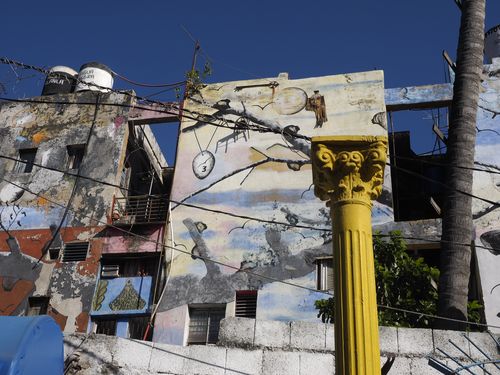
Havana • Callejon de Hamel
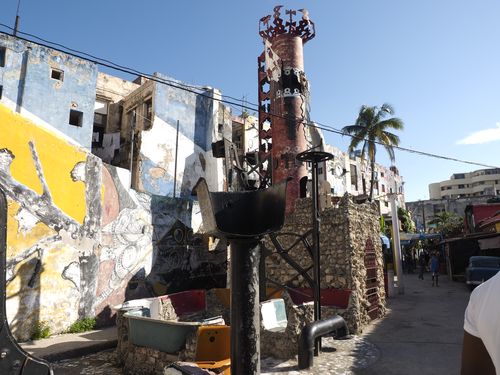
Havana • Callejon de Hamel
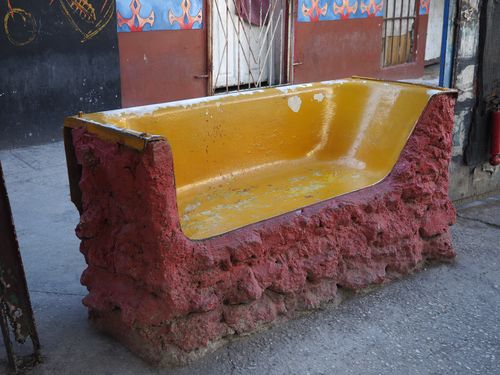
Havana • Callejon de Hamel
Monument profile
Callejon de Hamel
Monument category: Museum
Monument family: Museum, remarkable architecture or group of buildings
Monument genre: Cultural or scientific
Geographic location: Havana • Cuba
Construction period: 20th century AD
• Links to •
• List of videos about Havana on this site •
Havana, the capital • Cuba
History of Callejón de Hamel in Havana
Origin of the Alley and Early Urban Development
Callejón de Hamel is located in the district of Centro Habana, within a densely built urban sector developed mainly during the nineteenth century. The alley forms part of a network of narrow passages and secondary streets that appeared as Havana expanded beyond the colonial core of the city. Its layout corresponds to a linear corridor connecting adjacent residential blocks in a neighborhood characterized by compact housing and limited open space.
The name of the alley derives from Fernando Belleau Hamel, a Franco-Cuban industrialist active in Havana during the nineteenth century. Hamel was associated with commercial and industrial ventures in the area, including facilities linked to sugar processing and related trade activities. His surname became attached to the alley, which served primarily as a functional passage between properties rather than a formally planned public space.
During the late nineteenth and early twentieth centuries, the surrounding neighborhood developed as a residential zone populated largely by working-class families. Buildings constructed along the alley consisted mainly of modest urban housing. The passage itself remained architecturally simple, functioning as a utilitarian corridor between residential structures. No distinctive cultural or artistic role was associated with the location during this early phase of its history.
Transformation Initiated by Salvador González Escalona
The transformation of Callejón de Hamel began in 1990 when Cuban artist Salvador González Escalona initiated an artistic intervention that fundamentally altered the appearance and identity of the alley. González, who lived and worked in the surrounding neighborhood, began painting murals on the walls of the passage and installing sculptural elements made from recycled materials. His intention was to create an open artistic environment reflecting Afro-Cuban cultural traditions.
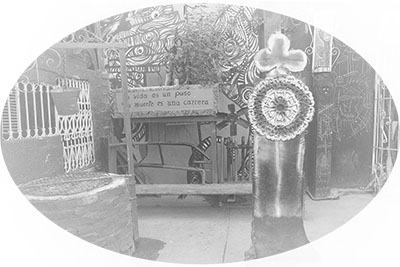
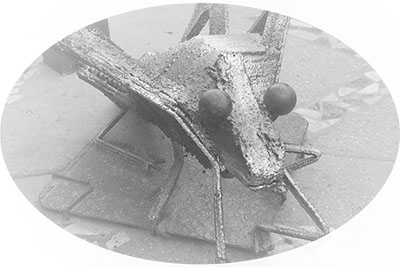
The project developed gradually through a series of artistic interventions carried out directly within the existing urban space. Walls that had previously served as blank architectural surfaces were covered with colorful compositions depicting symbolic figures, abstract forms, and references to Afro-Cuban religious traditions such as Santería and Yoruba spirituality. Sculptural installations constructed from discarded mechanical parts, metal fragments, and industrial objects were added to the walls and to the ground.
These interventions were not implemented through official urban planning programs but emerged as a community-oriented artistic initiative. Residents of the surrounding buildings gradually participated in the maintenance and development of the space. The alley evolved from a simple passage into a visually distinctive environment in which painting, sculpture, and urban space became closely integrated.
Development of a Cultural and Community Space
Following the initial artistic transformation, Callejón de Hamel began to function as a cultural gathering place. The artistic installations created by González Escalona attracted visitors from other parts of Havana, and the site gradually became associated with public cultural activities. Musical performances, poetry readings, and artistic events began to take place within the alley, often organized by local residents and artists.
One of the most visible developments was the regular organization of Afro-Cuban music performances, particularly percussion and rumba sessions. These events introduced a performative dimension to the space and reinforced the connection between the visual imagery of the murals and Afro-Cuban cultural traditions. The alley thus evolved into a space where artistic expression, music, and community interaction intersected.
The physical environment of the alley facilitated these activities. The narrow corridor formed by the surrounding buildings created an intimate setting in which audiences and performers could gather in close proximity. Sculptural elements and painted surfaces provided a distinctive visual background for cultural events. Over time, the Callejón became widely known within Havana as a location associated with Afro-Cuban cultural expression and community-based artistic activity.
Cultural Recognition and Current Role
During the early twenty-first century, Callejón de Hamel gained increasing recognition as a cultural landmark within Havana’s urban landscape. The murals and sculptures created in the alley became an identifiable artistic environment linked closely to the work of Salvador González Escalona. The site attracted both local residents and visitors interested in experiencing an active cultural space outside the institutional museum framework.
The murals and sculptural elements require periodic maintenance due to the effects of tropical weather and continuous public use of the space. Sections of wall painting are periodically restored or repainted, while some sculptural installations are repaired or reinforced when necessary. These interventions ensure that the alley remains visually active while preserving the core artistic identity established during the early phases of the project.
Today the Callejón continues to function as an open cultural venue where artistic production and community participation remain closely connected. The space is regularly visited by musicians, artists, residents, and tourists. Its role as a place of artistic expression has become an established part of Havana’s contemporary cultural landscape.
Callejón de Hamel itself is not individually listed as a UNESCO World Heritage site. However, it lies within the broader urban area of Havana, whose historic center, Old Havana and its Fortification System, was inscribed on the UNESCO World Heritage List in 1982.
Global Historical Context
The artistic transformation of Callejón de Hamel in 1990 occurred during a period when urban art and mural movements were gaining visibility in cities around the world. Public walls increasingly became sites for artistic expression linked to community identity and cultural heritage. In Latin America, similar initiatives appeared in urban neighborhoods where artists used murals and installations to reinterpret local traditions. The emergence of the Callejón de Hamel project corresponds to this broader international context of artistic interventions in public urban space.
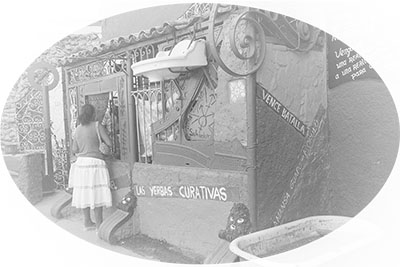
Architecture of Callejón de Hamel in Havana
Urban Setting and Spatial Configuration
Callejón de Hamel occupies a narrow linear passage located in the Centro Habana district of Havana, between the streets of Aramburu and Hospital. The alley forms part of a dense urban block developed during the late nineteenth and early twentieth centuries. Its configuration reflects the compact structure typical of working-class residential neighborhoods in central Havana, where buildings were constructed closely together and secondary passages connected adjacent streets.
The alley extends as a straight corridor enclosed by the lateral walls of adjoining residential buildings. These buildings generally rise two or three stories above ground level and form continuous vertical surfaces along both sides of the passage. The resulting architectural space resembles an elongated corridor with limited openings toward the surrounding structures.
The width of the passage varies slightly along its length but remains narrow enough to prevent vehicular circulation. The ground plane functions as a pedestrian route linking two streets while simultaneously serving as a small public space. At certain points the corridor widens slightly, creating localized expansions where sculptural installations and gatherings can occur. These enlargements interrupt the linear rhythm of the alley and introduce small nodes within the passage.
The vertical boundaries formed by the adjacent buildings create an enclosed architectural environment that strongly shapes the perception of the space. The walls act as the principal architectural surfaces of the site, while the relatively narrow sky opening above reinforces the sense of spatial enclosure.
Construction Materials and Structural Surfaces
The built structures defining Callejón de Hamel consist mainly of masonry walls constructed from brick or stone blocks and covered with plaster or cement render. These walls belong to the residential buildings that border the passage and were originally designed as simple structural surfaces without decorative treatment on their lateral elevations.
The surfaces display irregular textures resulting from successive repairs and layers of plaster applied over time. In several sections the underlying masonry remains visible where the render has deteriorated. These surfaces later became the primary support for the artistic interventions that now characterize the alley.
The pavement consists mainly of concrete and stone surfaces applied during different periods of maintenance and renovation. Some sections display smoother concrete layers, while others preserve more irregular surfaces corresponding to earlier phases of construction. Drainage channels along the edges of the alley manage rainwater in this confined urban space.
Metal elements appear frequently in installations attached to the walls and ground. These include recycled mechanical parts, pipes, wheels, and fragments of industrial equipment. Their presence introduces varied textures and forms that contrast with the flat plastered surfaces of the masonry walls.
Paint is another essential component of the site. Layers of acrylic or enamel paint applied directly to the plaster create continuous surfaces of color. These coatings resist tropical weather conditions, although periodic repainting remains necessary.
Spatial Organization of Sculptural and Architectural Elements
The architectural character of Callejón de Hamel derives largely from the integration of sculptural installations and painted surfaces within the existing urban structure. The walls serve as continuous supports for mural compositions that extend along the length of the alley, creating a visual framework that unifies the passage.
Sculptural elements are distributed at intervals and frequently project from the wall surfaces. Many consist of welded metal components assembled into abstract or figurative forms. These structures are attached to the masonry using metal anchors or brackets, allowing them to extend outward from the vertical planes.
Some installations are located directly on the ground as freestanding structures. These may include metal frameworks, sculptural figures, or assemblages composed of recycled materials. Their placement interrupts the linear circulation path and creates localized focal points.
Concrete benches and platforms are also integrated into the layout. These elements function as seating areas and gathering points while simultaneously serving as sculptural bases or supports for painted surfaces. Their forms often incorporate curved or geometric shapes that contrast with the rectilinear walls of the surrounding buildings.
The sequence of murals, sculptures, and seating structures produces a rhythmic alternation between flat painted surfaces and projecting volumes. This spatial rhythm guides movement through the alley and encourages pauses at different points along the route.
Integration of Murals and Architectural Surfaces
Murals constitute the dominant visual component of the architectural environment of Callejón de Hamel. These paintings cover large portions of the walls and extend from ground level to the upper edges of the buildings. Strong color contrasts transform the appearance of the masonry surfaces.
The painted imagery frequently adapts to architectural features of the walls. Irregularities in the plaster, structural joints, and existing openings influence the placement and orientation of painted motifs. In some areas the murals extend across corners or around protruding masonry elements, creating continuous visual fields that follow the geometry of the built surfaces.
Metal relief elements attached to the walls interact with the painted backgrounds. These reliefs cast shadows across the painted surfaces, introducing variations in depth and texture that change with the angle of sunlight. The combination of two-dimensional painting and three-dimensional sculpture alters the perception of the walls as purely structural elements.
Several installations combine painted surfaces with sculptural additions that partially detach from the wall plane. In these cases the painted imagery extends onto metal forms or sculptural structures, blurring the distinction between mural and object. This hybrid configuration produces layered compositions in which color, texture, and volume interact simultaneously.
The continuity of mural surfaces along the passage creates a unified visual environment. Despite numerous individual compositions, the repetition of colors and motifs maintains coherence across the alley.
Architectural Modifications, Maintenance, and Preservation
The present architectural appearance of Callejón de Hamel results from successive phases of artistic intervention and maintenance since the early 1990s. Each phase introduced additional murals, sculptures, or modifications to the installations. The architectural surfaces therefore reflect an evolving process rather than a single moment of construction.
The tropical climate of Havana subjects painted surfaces and metal installations to constant exposure to sunlight, humidity, and rain. Periodic restoration is therefore required to maintain the clarity of the murals and the structural stability of the sculptures. Repainting campaigns refresh the colors while preserving the original compositions.
Metal structures require regular inspection to prevent corrosion and ensure that their attachments to the masonry remain secure. Some components have been replaced or reinforced as materials deteriorated. These interventions maintain the stability of the installations without altering the spatial organization of the alley.
The surrounding residential buildings continue to function as dwellings, which influences the preservation of the site. Maintenance of structural walls, drainage systems, and pavements contributes indirectly to the conservation of the artistic installations. Repairs to plaster surfaces or structural elements occasionally require adjustments to the murals.
Through these ongoing interventions, the architectural environment of Callejón de Hamel remains active while preserving the spatial structure that defines the passage. The combination of masonry walls, painted surfaces, sculptural elements, and pedestrian circulation continues to shape the distinctive architectural character of this urban space.