Français (France)
  Nederlands (nl-NL)
 00:00 • intro | 01:00 • some nice american cars | 02:34 • the Cathedral of the Immaculate Conception | 04:19 • Plaza de la catedral | 04:48 • famous pubs | 06:58 • Buena Vista Social Club | 15:16 • Havana Club rum museum | 16:32 • art and culture in the streets of Havana
Personal creation from visual material collected during my trip Cuba (2015)
Map of places or practices in Havana on this site
• Use the markers to explore the content •
Havana, a Capital of Heritage, Music and Urban Memory
A Caribbean capital with a distinctive identity
Havana holds a central place in the history and cultural identity of Cuba. As the country’s capital, principal historic port and one of its leading artistic centers, it combines colonial heritage, modern influences and a strong urban character. This video offers a broad introduction to the city through its streets, monuments, classic American cars, famous cafés, music traditions and lively public spaces.
Havana is remarkable because it can be read on several levels at once. It is a historic city shaped by Spanish colonial rule, a twentieth-century metropolis marked by political change, and a living cultural center where music, social life and street creativity remain highly visible. Grand squares, churches, arcaded streets, faded facades, restored landmarks and animated neighborhoods all contribute to a complex and memorable urban landscape.
The historic center, inscribed on the UNESCO World Heritage List in 1982 as Old Havana and its Fortification System, preserves one of the most significant colonial ensembles in the Caribbean. Yet Havana is more than preserved architecture. It is also defined by movement, sound, daily interaction and a public life that continues to give the city a powerful identity.
Major places and themes visible in the video
The journey begins with several beautiful American classic cars. Often known locally as almendrones, these vehicles have become one of Havana’s most recognizable images. Many date from the 1940s and 1950s and survive through decades of local mechanical adaptation. They are not only nostalgic symbols but also part of the city’s transport culture.
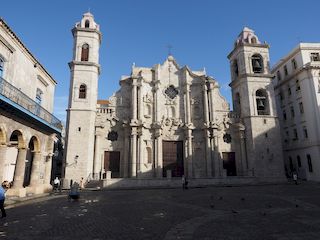
The Cathedral of the Immaculate Conception introduces one of Havana’s most important religious monuments. Located on Plaza de la Catedral, it is noted for its baroque character, elegant proportions and asymmetrical towers. The cathedral square itself is equally significant, illustrating the colonial tradition of organizing urban life around monumental public spaces framed by churches, residences and civic buildings.
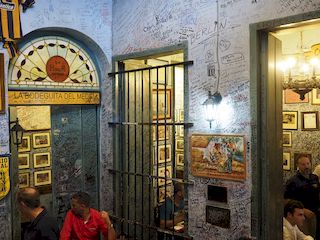
The famous cafés shown in the video represent another essential dimension of Havana. For generations, cafés and bars have served as meeting places for residents, writers, musicians, travelers and intellectual life. They belong to the social geography of the city as much as streets and monuments do.
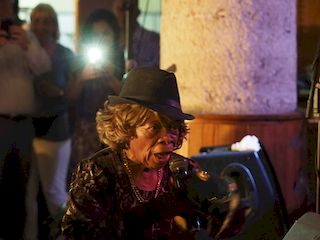
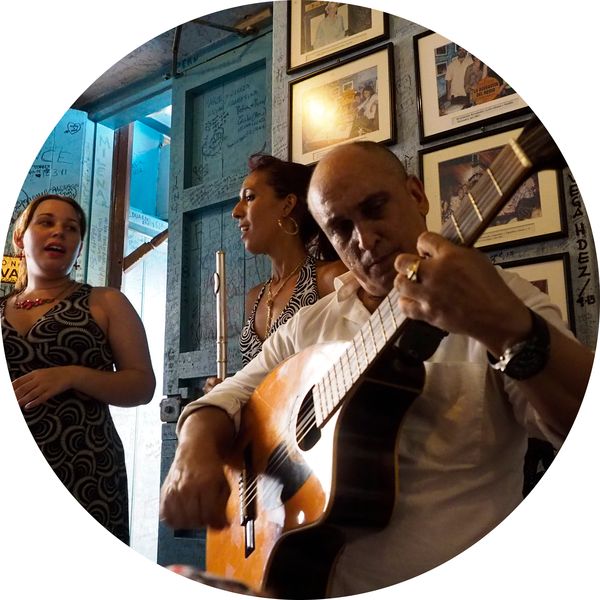
The reference to Buena Vista Social Club evokes Havana’s worldwide musical reputation. Beyond the famous recording project that popularized the name internationally, it points to deeper traditions of son cubano, bolero and urban popular music. Havana has long been one of the main creative centers of Cuban music, where local rhythms gained national and global influence.
The Havana Club Rum Museum highlights the historical role of sugar cane production and rum making in Cuba’s economy and identity. It also shows how an agricultural and commercial product became part of national symbolism and international image.
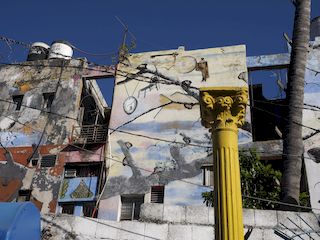
Finally, art and culture in Havana’s streets reveal the city’s everyday creativity. Murals, musicians, improvised performances, artisan spaces and places such as Callejón de Hamel demonstrate how culture is often expressed directly in public space rather than confined to formal institutions.
Historical and urban background
Founded by the Spanish in the early sixteenth century, Havana quickly became one of the most strategic ports in the Americas. Its location made it essential for Atlantic trade routes linking Spain with its colonies. This maritime importance encouraged the construction of fortifications, churches, warehouses, administrative buildings and elite residences.
During the eighteenth and nineteenth centuries, Havana expanded significantly through trade, especially sugar and tobacco. Prosperity transformed the city physically. New neighborhoods developed beyond the earliest core, while architecture diversified from colonial forms to neoclassical, eclectic and later modern styles.
The twentieth century brought further change. Havana became a large cosmopolitan city marked by tourism, entertainment industries, social contrasts and growing automobile culture. After the Cuban Revolution of 1959, the capital retained its political importance while undergoing major economic and institutional transformations. Some districts declined through lack of maintenance, while others later became priorities for restoration.
Today Havana remains a city where several historical periods remain visible side by side. Restored squares, weathered apartment blocks, elegant colonial facades, twentieth-century avenues and active street life all coexist within the same urban fabric.
What the videos on this site make especially clear
The videos on travel-video.info are often created from carefully selected photographs animated with fluid transitions. This approach is particularly effective for a city such as Havana, where atmosphere depends as much on visual detail and spatial continuity as on rapid movement.
The viewer can move gradually from a broad city scene to the façade of the cathedral, then from a square to a street lined with old cars, or from a café frontage to nearby architectural details. This helps reveal the relationships between monuments, streets and daily life.
Such a format is also valuable for reading Havana’s architectural diversity. Colonial arcades, baroque stonework, decorative balconies, painted walls and aging surfaces become easier to observe when the image pauses long enough to let details emerge. The city’s textures are an important part of its identity, and they benefit from a slower visual rhythm.
Public spaces are equally well suited to this method. Squares, terraces, sidewalks and street corners are not isolated sights but connected stages of urban life. Gradual transitions make it easier to understand how Havana functions as a lived city rather than a sequence of attractions.
Cultural scenes gain clarity as well. Musicians, social gatherings, classic cars, murals and market life all appear as parts of a shared environment. The viewer sees how heritage and everyday activity overlap continuously.
Finally, this style of presentation preserves something essential about Havana: the sense that history is present not only in monuments, but also in movement, sound, vehicles, façades and collective memory.
A capital where the past remains visible
Discovering Havana through this video means approaching a city where colonial heritage, modern history and popular culture remain closely linked in the urban landscape. Few capitals combine architecture, music, social life and visual identity with such immediate force. The related pages dedicated to its landmarks and traditions offer an opportunity to explore this remarkable Cuban city in greater depth.
Links to related pages







Audio Commentary Transcript
Havana, the capital of Cuba, a sun-drenched city, has a charm that is probably unique in the world. The splendours of the past, once reserved for a wealthy elite, have been preserved by the socialist power, constrained and forced by the American embargo. These splendors are the old buildings, for many reassigned and transformed into social housing, as well as the old American cars patched up for more than half a century and which today form part of the decor so typical of this city which was once more important than New-York or Boston.
The Cathedral of the Virgin Mary of the Immaculate Conception, sometimes also called Catedral San Cristobal de la Habana, was built from 1748 on the plans of the Italian architect Francesco Borromini. It is one of the oldest cathedrals in America.
The construction of the railway in Cuba dates back to 1836, 12 years before the first train circulated in Spain. The train was mainly used to transport sugar cane to ports for export. The rum museum has a very nice model of trains transporting sugar cane.
Music:
- - YouTube video library - Chances
- - YouTube video library - Hot hot coffee
Disclaimer: Despite its appropriateness, copyright issues prevent the use of cuban traditional music in "Havana, the capital • Cuba", hence the use of royalty-free music. Despite our careful selection, some might regret this decision, which is necessary to avoid potential lawsuits. Although difficult, this decision is the only viable solution.