Français (France)
  Nederlands (nl-NL)
 00:00 • intro | 00:43 • Ruben Martinez Villena Provincial Library | 02:11 • the Parroquial Mayor | 02:49 • Streets and buildings of Sancti Spiritus
Personal creation from visual material collected during my trip Cuba (2015)
Map of places or practices in Sancti Spiritus on this site
• Use the markers to explore the content •
Sancti Spíritus, Colonial Heritage in Central Cuba
One of the Oldest Colonial Cities in Cuba
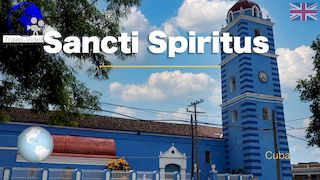
Founded in the early sixteenth century, Sancti Spíritus is one of the earliest European settlements established in Cuba during the first decades of Spanish colonisation in the Caribbean. Located in the central part of the island, the city has preserved much of its historic urban structure, with narrow streets, colonial houses and religious buildings reflecting several centuries of architectural evolution.
This video explores Sancti Spíritus through a selection of urban spaces and historical buildings that illustrate the city’s cultural and architectural identity. Rather than focusing only on major monuments, the images also highlight everyday streets, façades, perspectives and public spaces that contribute to the atmosphere of one of Cuba’s oldest colonial towns.
Religious Architecture and Cultural Institutions
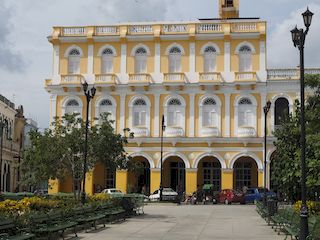
Among the buildings presented in the video is the Provincial Library Rubén Martínez Villena, housed in a historic colonial structure representative of Cuban urban architecture. The building illustrates how older constructions have gradually been adapted to modern cultural and educational functions while preserving many elements of their original design. Arcades, interior courtyards and thick masonry walls remain characteristic features of this architectural heritage.
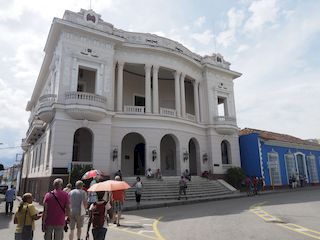
Another important landmark shown in the video is the Parroquial Mayor church, one of the oldest churches in Cuba. Like many religious buildings established during the Spanish colonial period, it played a central role in the organisation of urban and social life. Its architecture reflects multiple phases of construction and restoration, combining colonial influences with later modifications introduced over several centuries. The church remains one of the main historical reference points within the city.
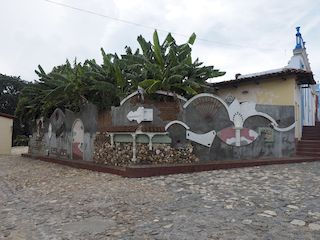
The sequences dedicated to the streets and buildings of Sancti Spíritus reveal many elements typical of colonial Cuban towns: low-rise houses, shaded walkways, wrought-iron window grilles and streets adapted to tropical climatic conditions. These urban forms illustrate the combination of Spanish architectural traditions and local environmental adaptations.
Urban Development and Colonial History
Sancti Spíritus developed during the period when Spain was consolidating its control over Cuba and establishing administrative, religious and commercial centres throughout the island. The city benefited from its position within regional trade networks linked to agriculture, livestock and communication routes connecting different parts of colonial Cuba.
Despite modern transformations introduced during the twentieth century, the historic centre has retained a relatively coherent architectural character. The colours of the façades, the scale of the streets and the continuity of colonial buildings create an urban landscape that differs noticeably from the larger and more modernised Cuban cities.
The video also conveys the rhythm of everyday life within this historical setting, where contemporary uses coexist with centuries-old architectural forms. This coexistence gives Sancti Spíritus a distinctive atmosphere shaped both by history and by the continuity of urban life.
What the Videos on This Site Make Easier to Observe
The videos published on travel-video.info are often constructed from carefully selected and animated photographs combined with visual transitions that encourage detailed observation. This approach allows viewers to explore architectural details, urban perspectives and spatial relationships progressively rather than through rapid editing.
Slow movements within the images help reveal textures, proportions and decorative elements that may be less visible in conventional moving footage. In the case of Sancti Spíritus, this visual method makes it easier to understand the relationship between churches, public spaces and residential streets within the colonial urban fabric.
A Historical Perspective on Urban Cuba
Through its streets, religious buildings and preserved colonial architecture, Sancti Spíritus offers valuable insight into the urban history of Cuba. The video presents a city where traces of the Spanish colonial period remain strongly visible in the modern landscape. The detailed pages dedicated to related monuments provide an opportunity to continue exploring the architectural and cultural heritage of this historic Cuban city.
Links to related pages








Audio Commentary Transcript
The city of Sancti Spiritus is one of the oldest cities founded by the Spanish colonizer in Cuba. The city is located in the center of the Island.
It has the oldest church in the country, the Parroquial Mayor, built in the 16th century. The city has about 135,000 inhabitants.

Music:
- - YouTube video library - AchillesIn Memory of Jean Talon - The Mini Vandals, (© Alchemists Tower - Strings by Kevin MacLeod is licensed under a Creative Commons Attribution 4.0 license. https://creativecommons.org/licenses/by/4.0/
- Source: http://incompetech.com/music/royalty-free/index.html?isrc=USUAN1100632
- Artist: http://incompetech.com/)
- - YouTube video library - Argonne - Zachariah Hickman
- - YouTube video library - Bus Da Blockbuster
Disclaimer: Despite its appropriateness, copyright issues prevent the use of cuban traditional music in "Sancti Spiritus, oldest European colony • Cuba ", hence the use of royalty-free music. Despite our careful selection, some might regret this decision, which is necessary to avoid potential lawsuits. Although difficult, this decision is the only viable solution.