

 Français (France)
  Nederlands (nl-NL)
 The Ernest Hemingway House, located in San Francisco de Paula, Cuba, was the former residence of the American writer during an important period of his life. It is now a heritage site dedicated to his memory, literary career, and Cuban years. The property helps visitors understand the everyday setting in which several major works were created. Preserved with many personal belongings, it attracts researchers, readers, and travellers interested in twentieth-century literature. The house also holds a distinctive place in the cultural connections between Cuba and the English-speaking world.
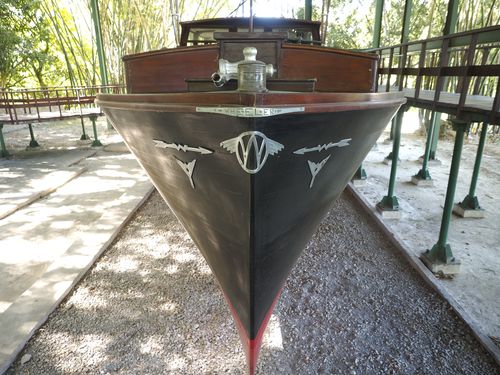
San Francisco de Paula • Ernest Hemingway House
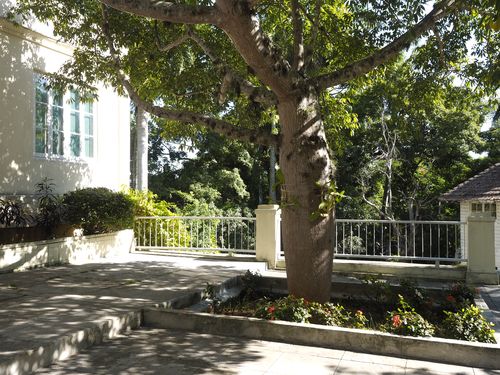
San Francisco de Paula • Ernest Hemingway House
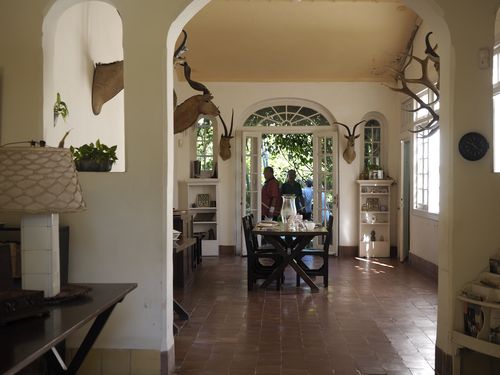
San Francisco de Paula • Ernest Hemingway House
Monument profile
Ernest Hemingway House
Monument category: Historic house
Monument family: Historic or traditional habitat
Monument genre: Residential
Geographic location: San Francisco de Paula • Cuba
Construction period: 19th century AD
• Links to •
• List of videos about Bay of Pigs, Baracoa, Santiago de Cuba on this site •
Some historical places • Cuba
Ernest Hemingway’s House in the History of San Francisco de Paula
Construction of the Residence and Early Ownership
Ernest Hemingway’s House in San Francisco de Paula, widely known as Finca Vigía, was built in the late nineteenth century as a country residence outside Havana. Its elevated position and spacious grounds reflected the suburban expansion of affluent residential zones beyond the dense urban core of the Cuban capital. The property was conceived as a private villa rather than a ceremonial or institutional building.
Before its association with Hemingway, the house passed through private ownership and functioned as a residential estate. Its size, gardens and relative isolation made it attractive to residents seeking distance from the city while remaining connected to Havana’s economic and cultural life.
The property’s original domestic character remained fundamental even after later changes in use. Unlike monuments designed for public symbolism, the house entered history through the lives of its occupants.
Hemingway’s Acquisition and Years of Residence
Ernest Hemingway began using the property in the 1930s and purchased it in 1940. The house became his principal home in Cuba for roughly two decades. During this period, Finca Vigía evolved into both a residence and a working environment closely linked to the writer’s literary production.
Several important works were written or completed while Hemingway lived there, including For Whom the Bell Tolls and The Old Man and the Sea. The house also served as a social setting where writers, journalists, artists and visitors were received. Its rooms accumulated books, hunting trophies, manuscripts, artworks and personal objects, many of which remained in place after his departure.
The estate was not limited to private domestic life. Hemingway organised fishing expeditions from Cuba, maintained contacts within Havana’s cultural circles and used the house as a retreat combining solitude and activity. Its identity became inseparable from his public image.
Political Change and Transfer to the Cuban State
The Cuban Revolution of 1959 altered the political environment in which Hemingway had lived for years. Although he briefly returned after the revolutionary victory, he left Cuba in 1960. The house soon ceased to function as a private residence.
After Hemingway’s departure, the property was transferred to Cuban state care and preserved substantially with its contents intact. This transition was significant: instead of being dispersed or remodelled, the estate was maintained as a historic place associated with literature and twentieth-century cultural history.
The preservation of furniture, books and everyday objects gave the site unusual documentary value. Many historic houses survive only as shells; Finca Vigía retained much of the atmosphere of active occupation.
Museum Function and International Recognition
The house was gradually organised as a museum dedicated to Hemingway’s life and work. It became one of the most visited literary heritage sites in Cuba and an important destination for researchers, readers and cultural tourism.
Its significance extends beyond national history. The property documents the long relationship between Cuba and one of the twentieth century’s most internationally known authors. It also preserves evidence of daily life, working habits and transnational cultural networks centred on Havana during the mid-century period.
The house is not individually inscribed on the UNESCO World Heritage List. However, it is widely recognised as a site of major literary heritage and has benefited from cooperative conservation efforts involving Cuban and international specialists.
Global Historical Context
The main period of Hemingway’s residence at Finca Vigía ran from the 1930s to 1960. This era included the Spanish Civil War, the Second World War and the early Cold War. In Latin America, political nationalism and social reform movements reshaped many states. In the United States, mass media expanded the global fame of major writers and public figures. Cuba itself moved from republican politics to revolutionary transformation.
Architectural Configuration of Ernest Hemingway’s House in San Francisco de Paula
Site Position and General Spatial Organisation
Ernest Hemingway’s House, commonly known as Finca Vigía, occupies an elevated plot in San Francisco de Paula, southeast of Havana. Its higher position gives the residence broad views over the surrounding landscape while providing privacy, ventilation and a sense of openness uncommon in denser urban districts.
The estate is organised around a principal house set within extensive gardens and outdoor areas. Rather than forming a compact city parcel, the property functions as a dispersed residential ensemble where architecture and landscape are closely linked. Paths, terraces, vegetation zones and secondary structures extend daily life beyond the enclosed rooms.
The main building presents itself as a low horizontal composition adapted to climate and terrain. Its proportions favour width over height, reinforcing the relationship between interior rooms and exterior grounds. The residence appears less as a monumental object than as a comfortable inhabited environment shaped by movement, light and outdoor access.
Exterior Form, Volumes and Climatic Design
The house consists primarily of one main level with limited vertical emphasis. Rooflines remain restrained, allowing the building to merge with the site rather than dominate it. This low massing reduces solar exposure on upper walls and supports thermal stability.
Verandas, covered passages and shaded transition zones play an important role in the composition. These semi-open spaces mediate between enclosed rooms and the tropical climate, offering protection from sun and rain while maintaining air circulation. They create several thresholds rather than a single formal entrance sequence.
Openings are numerous and carefully placed. Doors, windows and French openings permit cross-ventilation, essential in Cuba’s warm climate before widespread air-conditioning. The façade privileges practicality over symmetry. Elevations respond to room functions, views and airflow rather than ceremonial balance.
Exterior surfaces remain comparatively sober. The house relies on proportion, setting and comfort rather than dense ornament, confirming its domestic purpose.
Interior Layout and Functional Character
The internal arrangement reflects long-term residential use rather than rigid formal planning. Rooms connect in a practical sequence suited to daily life, reading, writing, receiving visitors and domestic service. The plan appears cumulative and lived-in, shaped by occupation over time.
Living rooms and common areas are relatively generous, allowing furniture, bookshelves and circulation without congestion. Bedrooms and private rooms are integrated into the wider domestic layout while maintaining separation from reception spaces. The organisation suggests a balance between sociability and retreat.
One notable interior characteristic is the close relationship between rooms and collections. Books, artworks, trophies and personal objects were distributed throughout the house, giving storage and display unusual prominence. Shelving, wall surfaces and furniture placement became part of the effective spatial design.
The writer’s working areas illustrate another functional layer. Spaces used for reading and writing depended on light quality, ventilation and quietness. Interior architecture therefore supported intellectual work through environmental comfort rather than specialised study rooms.
Materials, Construction and Architectural Atmosphere
The residence employs conventional masonry construction suited to Cuban conditions, likely combining load-bearing walls with timber and reinforced elements added over time. Solid walls provide thermal mass, helping moderate indoor temperature during the day.
Floors, plastered surfaces and timber joinery contribute to a domestic rather than ceremonial atmosphere. Materials were selected for durability and habitability rather than display. Interior finishes support a sense of permanence consistent with a long-occupied private home.
Natural light is a defining architectural material within the house. Openings frame gardens and sky while bringing changing daylight into rooms. Because many interiors contain books and objects, light enters in varied intensities rather than through a single dramatic gesture. Shadows and filtered brightness help shape the character of the spaces.
The surrounding vegetation is inseparable from the architecture. Trees, lawns and planted areas soften built edges, provide shade and create visual depth from inside the rooms.
Alterations, Preservation and Museum Adaptation
After Hemingway’s departure, the house was transformed from private residence into a preserved historic site. This required structural stabilisation while retaining the appearance of lived occupation. Unlike many restored houses that are emptied and later refurnished, Finca Vigía conserved much of its original contents.
Maintenance has focused on roofing, moisture control, wall preservation and protection against tropical weathering. The Cuban climate presents recurring challenges including humidity, biological growth and material ageing, affecting both the building and the objects housed inside.
Visitor management has also shaped interventions. Because interiors contain fragile furnishings and documents, access is often visually controlled rather than fully open. The building must therefore function simultaneously as architecture, container and museum exhibit.
Today the house retains its residential scale and atmosphere. Its architectural significance lies not in grandeur, but in the successful union of climate-responsive design, landscaped setting and the preserved traces of an exceptional twentieth-century occupant.