Français (France)
  Nederlands (nl-NL)
 Santería is an Afro-Cuban religious tradition found throughout many parts of Cuba, including the region of Viñales in Pinar del Río Province. It developed through the interaction between Yoruba beliefs brought by enslaved African populations during the colonial period and elements of Spanish Catholicism. The religion is centered on the worship of orishas, spiritual entities associated with natural forces and human activities. Today, Santería remains an important component of Cuban cultural life through ritual ceremonies, divination practices, offerings, music, and domestic or community-based religious activities. Its influence extends beyond religion into aspects of social identity, oral traditions, and popular cultural expression in contemporary Cuba.
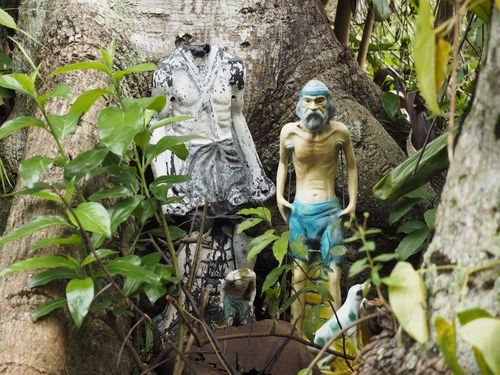
Vinales • Santeria
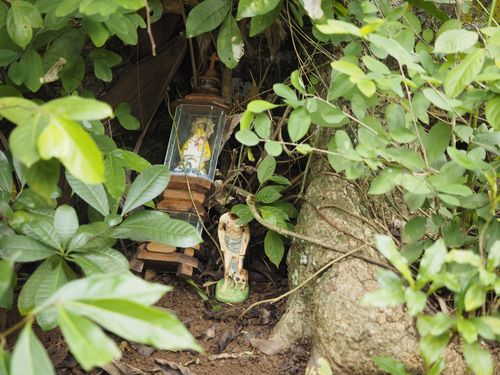
Vinales • Santeria

Vinales • Santeria
Tradition profile
Santeria
Tradition category: Syncretic Celebrations
Tradition family: Religious traditions
Tradition genre: Religious Festivals and Celebrations
Cultural heritages: Christian, Animist
Geographic location: Vinales • Cuba
• Links to •
• List of videos about Vinales on this site •
Pinar del Rio. Vinales and surroundings • Cuba
Santería in Cuba: Origins, Development, and Cultural Role
African Origins and Religious Syncretism
Santería, also known as Regla de Ocha, developed in Cuba through the interaction between West African Yoruba religious traditions and Spanish Catholicism during the colonial period. Enslaved Africans transported to Cuba between the sixteenth and nineteenth centuries brought with them systems of belief centered on the worship of orishas, spiritual entities associated with natural forces, human activities, and ancestral power.
Under Spanish colonial rule, Catholicism was officially imposed on enslaved populations. In response, many African communities adapted their religious practices by associating orishas with Catholic saints. This process of religious syncretism allowed traditional beliefs to continue while outwardly conforming to colonial religious expectations. Over time, these combined practices evolved into a distinct Afro-Cuban religious tradition.
Expansion Within Cuban Society
During the nineteenth century, Santería expanded in urban centers, port districts, and agricultural regions where Afro-Cuban communities were concentrated. Religious networks formed around priests, initiates, and ritual households that organized ceremonies, initiations, healing practices, and spiritual consultations.
Although the religion remained socially marginalized for long periods, especially among colonial and republican elites, it continued to occupy an important place in everyday life for many Cubans. Rituals connected to family protection, illness, fertility, and spiritual guidance contributed to the persistence of these practices across generations.
The religion also absorbed influences from broader Cuban society while preserving important Yoruba-derived elements, including ritual languages, musical structures, and ceremonial symbolism. This combination contributed to the formation of a specifically Cuban religious identity rooted in African cultural heritage.
Religious Structure and Community Functions
Santería is organized around relationships between practitioners and individual orishas, each associated with specific attributes such as warfare, rivers, fertility, thunder, healing, or the sea. Religious life involves ceremonies, offerings, divination practices, initiations, and collective rituals directed by priests and priestesses known as santeros and santeras.
Initiation occupies a central place in the structure of the religion. Religious knowledge is transmitted gradually through ritual instruction, participation in ceremonies, and long-term relationships between initiates and spiritual elders.
In regions such as Viñales and western Cuba, Santería often coexists with popular Catholicism and other local spiritual traditions. Domestic altars, household rituals, and community ceremonies remain important aspects of religious practice outside formal institutional settings.
Music and ritual performance also reinforce social cohesion within religious groups. Ceremonial gatherings frequently serve both spiritual and communal functions, strengthening ties between families and religious networks.
Political Changes and Contemporary Developments
Following the Cuban Revolution of 1959, religious activities were subjected to periods of political restriction within the officially atheist framework of the Cuban state. Despite these limitations, Santería continued to function through private and community-based religious structures.
From the 1980s onward, restrictions gradually decreased, and Afro-Cuban religious traditions received greater public recognition as part of Cuban cultural heritage. Academic studies, artistic movements, and international interest contributed to the wider visibility of Santería both inside and outside Cuba.
Today, the religion remains an important component of Cuban cultural identity. Its influence extends into music, dance, visual culture, and social practices. At the same time, the growing international visibility of Afro-Cuban religions has created new challenges related to commercialization, simplified representations, and the transmission of ritual knowledge.
Despite these transformations, Santería continues to function as a living religious system maintained through community participation, ceremonial continuity, and the preservation of long-established spiritual traditions within Cuban society.
Ritual Practices and Visible Expressions of Santería in Cuba
General Structure of Ceremonial Practices
Santería ceremonies are usually organized inside private homes, community spaces, or ritual houses directed by priests and priestesses known as santeros and santeras. Religious activities may honor a specific orisha, accompany an initiation, request spiritual protection, or respond to personal and family concerns.
Ceremonial spaces commonly contain altars arranged with candles, fabrics, bowls, symbolic objects, flowers, and offerings. Each orisha is associated with particular colors, foods, numbers, and ritual attributes that help identify the spiritual presence invoked during ceremonies.
Ritual gatherings often begin with prayers, invocations, and the preparation of offerings. Participants assemble around central ceremonial areas while musicians and religious leaders coordinate the different phases of the event. Some ceremonies extend over several hours and involve successive ritual sequences linked to music, dance, divination, and offerings.
Ritual Objects, Clothing, and Symbolic Elements
White clothing occupies an important place in many Santería ceremonies, particularly for recently initiated practitioners. Other garments may incorporate colors associated with particular orishas, such as blue, yellow, red, or green. Head coverings, necklaces, bracelets, and ritual fabrics are frequently worn during religious events.
Beaded necklaces known as elekes are among the most recognizable ritual objects. Their color combinations correspond to specific orishas and indicate spiritual affiliations established during initiation processes. Certain participants also carry symbolic objects linked to individual deities, including staffs, fans, gourds, or metal implements.
Altars often contain ceramic containers, candles, shells, images of Catholic saints, sacred stones, and offerings of fruit, cooked food, drinks, or flowers. Some ritual spaces include covered containers or vessels reserved for the spiritual representation of particular orishas.
Objects used for divination occupy a separate ritual function. Cowrie shells, chains, wooden trays, and ritual powders may be employed during consultations directed by experienced religious specialists.
Music, Chanting, and Ceremonial Rhythms
Music plays a central role in Santería ritual practice. Ceremonies frequently involve sacred percussion performed on batá drums, whose rhythms are associated with particular orishas and ritual sequences. The drumming patterns follow established structures transmitted through specialized musical knowledge.
Singing generally follows a call-and-response format in which a lead singer alternates with collective responses from participants. Some chants preserve words and expressions derived from Yoruba ritual language traditions maintained within Afro-Cuban religious practice.
The musical atmosphere evolves progressively during ceremonies. Rhythmic intensity, repetition, and vocal participation contribute to the organization of ritual phases and collective interaction within the ceremonial space.
Dance movements are closely connected to the music and often reproduce symbolic gestures associated with specific orishas. Certain movements imitate characteristics linked to thunder, rivers, warfare, maternity, or the sea, depending on the deity honored during the ceremony.
Ritual Actions and Ceremonial Sequences
Santería rituals include purification practices, offerings, blessings, spiritual consultations, and initiation ceremonies. Participants may light candles, place offerings on altars, wash ritual objects, or perform gestures directed toward sacred spaces and symbolic objects.
Divination constitutes an important visible aspect of many ceremonies. Religious specialists interpret combinations of shells or ritual instruments in order to provide spiritual guidance, identify ritual obligations, or determine offerings associated with particular orishas.
Some ceremonies involve trance states or possession experiences interpreted within the religious framework as manifestations of spiritual presence. During these moments, ritual specialists supervise movements, music, and ceremonial order.
Initiation ceremonies may include periods of ritual isolation, dietary restrictions, symbolic cleansing, and instruction in ceremonial practices. These processes establish long-term spiritual relationships between initiates, religious elders, and specific orishas.
Participants and Ceremonial Spaces
Ceremonies generally involve religious families composed of initiates, musicians, assistants, relatives, and invited participants. Priests and priestesses direct ritual activities, supervise offerings, and maintain ceremonial order throughout the event.
Most ritual spaces remain integrated into domestic environments rather than monumental religious buildings. Altars may occupy dedicated rooms inside private homes, while courtyards or larger interior spaces accommodate music, dancing, and collective gatherings.
In rural regions such as Viñales, Santería ceremonies often coexist with ordinary domestic and community activities. Religious practices therefore remain closely connected to everyday social life and local family networks.
Distinctive Features of Cuban Santería
One of the most distinctive characteristics of Santería is the visible combination of Yoruba-derived ritual traditions with elements of Cuban Catholic practice. This syncretic structure appears in altar arrangements, symbolic colors, saint imagery, and ceremonial objects.
The strong presence of percussion, collective chanting, ritual dancing, and domestic altars also distinguishes Santería from more institutionalized religious traditions. Ceremonies combine music, symbolic gestures, offerings, and spiritual consultation within a highly structured ritual environment that remains an important component of Afro-Cuban religious culture.
 Links to the main sections of the site