Français (France)
  Nederlands (nl-NL)
 Tuna fishing in Vendicari, Sicily, refers to a historical maritime activity that played a significant role in the economic life of the southeastern coast of the island. For centuries, specialized installations were used to capture migratory tuna during seasonal movements in Mediterranean waters. The activity involved organized fishing crews and contributed to supplying regional markets with seafood products. It also supported commercial networks related to the processing and preservation of fish. Although no longer practiced today, tuna fishing at Vendicari remains an important part of the maritime and cultural heritage of the region.
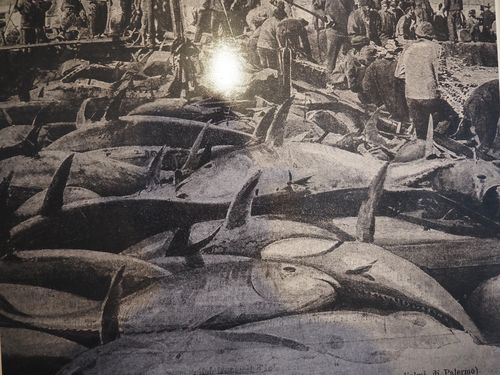
Vendicari • Tuna fishing: Photo exhibited at the Vendicari museum
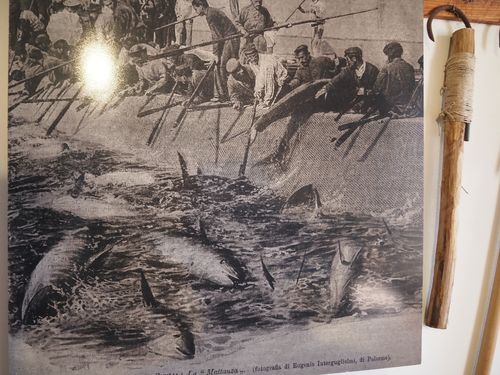
Vendicari • Tuna fishing: Photo exhibited at the Vendicari museum
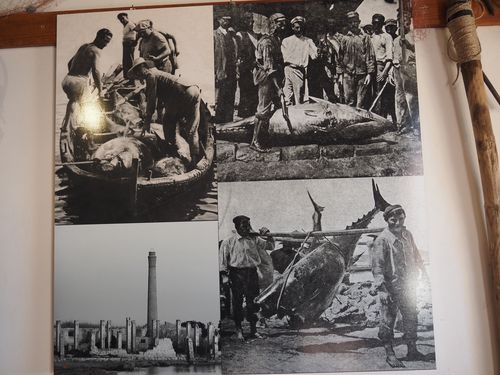
Vendicari • Tuna fishing: Photo exhibited at the Vendicari museum
Tradition profile
Tuna fishing
Tradition categories: Craftsmanship, Traditional fishing
Tradition family: Crafts and professions
Tradition genre: Trade and Local Creativity
Geographic location: Vendicari, Marzamemi • Sicily • Italy
• Links to •
• List of videos about Vendicari, Marzamemi on this site •
Vendicari and Marzamemi, Sicily • Italy
History of the Tuna Fishing Tradition in Vendicari (Sicily, Italy)
The tuna fishing tradition once practiced at Vendicari, on the southeastern coast of Sicily, formed part of a broader Mediterranean system of organized coastal fisheries structured around the tonnara. This system, based on fixed nets designed to intercept migrating tuna, represented a highly coordinated economic activity that combined technical expertise, collective labor, and regional trade integration. Over several centuries, the practice at Vendicari reflected the interaction between environmental conditions, political authority, and maritime culture.
Political and Social Context of Emergence
The emergence of organized tuna fishing in Sicily must be understood within the geographical and historical framework of the central Mediterranean. Sicily occupies a strategic maritime position between the western and eastern Mediterranean basins, directly along the migratory routes of Atlantic bluefin tuna entering the Mediterranean for spawning. This ecological factor created favorable conditions for the development of fixed coastal fishing systems.
The institutionalization of tuna fisheries, including the establishment of tonnare, became more structured during the medieval and early modern periods. Political authorities, including feudal lords and later centralized administrations, recognized the economic value of these fisheries. As a result, fishing rights were often granted through concessions or leases, placing the exploitation of tuna under regulated control.
The social organization surrounding the tonnara was hierarchical and collective. Fishing crews were composed of specialized workers operating under the authority of a leader responsible for coordinating operations. These groups formed distinct maritime communities, often tied to specific coastal settlements.
Religious influences also shaped the context of this activity. In Catholic Sicily, certain aspects of maritime labor were associated with ritual practices, including blessings and invocations intended to ensure a successful fishing season. The organization of work and seasonal cycles sometimes aligned with religious calendars.
Competition for access to productive fishing zones contributed to the structuring of the system. Rivalries between different coastal sites or concession holders reflected the economic importance of tuna fisheries, while alliances between landowners, merchants, and fishing communities helped stabilize operations.
Major Historical Events
The tuna fishing tradition at Vendicari evolved through successive political regimes that governed Sicily. During the period of Arab influence, the island experienced increased integration into Mediterranean trade networks, which contributed to the development of maritime activities and food preservation techniques.
Under Norman and later Spanish rule, the economic organization of Sicily became more centralized. Tuna fisheries were incorporated into broader systems of taxation and resource management. The tonnara at Vendicari operated within this framework, contributing to both local subsistence and commercial export.
During the Bourbon period, tuna fishing remained an important economic activity, supported by administrative structures that regulated coastal resources. The nineteenth century, marked by the unification of Italy, introduced new political and economic conditions, including changes in property rights and administrative organization.
The twentieth century brought decisive transformations. Industrialization, changes in market demand, and the emergence of new fishing technologies altered the viability of traditional tonnare. These developments led to the gradual decline of tuna fishing at Vendicari, culminating in its abandonment.
Global Context at the Time of Emergence
The tuna fishing tradition of Vendicari belongs to a wider Mediterranean pattern of organized fisheries based on seasonal migration cycles. Similar systems existed along the coasts of Spain, North Africa, and other parts of Italy, particularly in regions where tuna migration routes approached the shore.
Globally, comparable forms of collective fishing developed in areas where marine resources followed predictable patterns. While the techniques differed, the underlying principle of intercepting migrating species was widely shared. In northern Europe, for example, large-scale fisheries targeted species such as herring using coordinated methods, while in parts of Asia, coastal communities developed systems adapted to local marine environments.
The Mediterranean tonnara system was distinctive in its level of organization and its integration into broader economic and social structures. It combined technical knowledge, labor coordination, and commercial distribution in a way that reflected the interconnected nature of Mediterranean societies.
Transformations of the Tradition
Over time, the tuna fishing tradition at Vendicari underwent several transformations. Technical improvements were made to the design and placement of nets, increasing efficiency and adapting to changing environmental conditions. Methods of processing and preserving tuna, including salting and curing, also evolved to support wider distribution.
However, the most significant changes occurred during the twentieth century. The introduction of industrial fishing methods, including mobile fishing gear and large-scale operations, reduced the competitiveness of fixed-net systems. Economic pressures, including fluctuating market prices and rising labor costs, further contributed to the decline of traditional fisheries.
These transformations led to a gradual reduction in activity, followed by the eventual cessation of tuna fishing at Vendicari. The disappearance of the tonnara system marked the end of a long-standing tradition that had structured coastal life for generations.
Contemporary Role and Cultural Significance
Although tuna fishing is no longer practiced at Vendicari, its historical importance remains evident in the cultural identity of the region. The remains of the tonnara infrastructure serve as tangible evidence of a once-central economic activity.
The tradition is remembered as a defining element of maritime heritage, reflecting a way of life based on collective labor and close interaction with the marine environment. It also illustrates the integration of local communities into wider Mediterranean economic networks.
Cultural memory of the tuna fishery persists through narratives, local knowledge, and representations of traditional practices. These elements contribute to a broader understanding of regional history and identity.
Preservation Status and Modern Challenges
The preservation of the tuna fishing tradition at Vendicari presents several challenges. As the activity has ceased, much of the associated knowledge risks being lost due to the absence of direct transmission between generations. The physical remains of the tonnara also require conservation to prevent deterioration.
Urban development and changing coastal landscapes can further threaten the integrity of historical sites. At the same time, efforts have been made to recognize the cultural value of these remains within broader heritage frameworks.
Local and regional initiatives aim to preserve and interpret the history of tuna fishing through educational programs and cultural projects. These efforts focus on maintaining awareness of the tradition rather than restoring it as an active economic practice.
In the context of global economic and environmental change, the case of Vendicari illustrates the transition from traditional resource-based activities to new forms of economic organization. The former tuna fishing tradition remains a significant example of how maritime communities historically adapted to ecological conditions, structured labor, and integrated their activities into regional and transregional networks.
Characteristics of the Tuna Fishing Tradition at Vendicari (Sicily, Italy)
The tuna fishing tradition formerly practiced at Vendicari on the southeastern coast of Sicily formed part of a broader Mediterranean system of organized coastal fisheries based on the tonnara. This system relied on fixed nets designed to intercept migrating tuna along predictable maritime routes. For several centuries, the practice structured the economic life of coastal communities and represented a complex combination of technical knowledge, collective organization, and maritime culture.
Origin and Context of Emergence
The development of tuna fishing at Vendicari was closely linked to the geographical position of Sicily within the Mediterranean basin. The island lies along important migratory routes used by Atlantic bluefin tuna entering the Mediterranean Sea to reproduce. These seasonal movements created predictable opportunities for coastal populations to intercept large schools of fish.
Political and economic conditions also favored the establishment of organized tuna fisheries. Coastal resources in Sicily were historically regulated by authorities that granted concessions to individuals or families responsible for managing fishing installations. The tonnara system required substantial investment in equipment and labor, which encouraged the involvement of landowners, merchants, and administrative authorities.
The original function of the tuna fishery was primarily economic. Tuna represented a valuable resource because it could be consumed fresh or preserved through salting and other techniques that allowed for long-distance trade. The fishing installations therefore served both local subsistence needs and broader commercial networks across the Mediterranean.
Within the cultural framework of the region, the tuna fishery became embedded in the seasonal rhythms of coastal life. Fishing operations were closely connected to the annual migration cycles of the species and required careful coordination between fishermen, boat crews, and workers responsible for processing the catch.
Constituent Elements and Practices
The tuna fishing tradition at Vendicari was organized around a system of fixed nets forming a complex maritime structure placed near the coast. These nets were arranged in successive chambers designed to guide migrating tuna gradually toward a final enclosure where the capture took place.
The installation and maintenance of the nets required specialized knowledge of currents, seabed conditions, and fish behavior. Teams of fishermen were responsible for deploying and adjusting the system before the fishing season began.
The capture itself followed a coordinated sequence involving several boats and numerous fishermen. Under the direction of a designated leader, the crew manipulated the nets and controlled the movement of the fish until they were concentrated within the final enclosure.
Each participant in the operation had a specific role. Some fishermen managed the boats and navigational aspects of the operation, while others controlled the nets or coordinated the movements of the crew. This division of tasks ensured efficiency and safety during the capture.
The techniques used in the tonnara were transmitted across generations. Younger members of fishing communities learned the skills required for navigation, net handling, and teamwork through observation and practical training. This process of transmission helped preserve the technical knowledge necessary for maintaining the system.
Symbolism and Meanings
Beyond its economic function, tuna fishing carried important symbolic significance for coastal communities in Sicily. The activity represented a direct relationship between human labor and the marine environment, highlighting the dependence of local populations on the sea.
The coordinated movements of fishermen during the capture often followed rhythmic patterns accompanied by vocal expressions or work chants. These practices served both practical and social functions by maintaining coordination and reinforcing collective identity.
Objects associated with the tuna fishery, including boats, tools, and nets, became symbols of maritime life. Their presence along the coast contributed to the visual identity of fishing settlements and reflected the importance of the sea in shaping local culture.
In certain contexts, fishing activities were also associated with religious beliefs and protective rituals intended to ensure favorable conditions during the fishing season.
Evolution and External Influences
Over the centuries, the tuna fishing tradition at Vendicari evolved in response to changing economic and technological conditions. Improvements in the design and arrangement of the nets allowed fishermen to increase the efficiency of the capture process.
Contacts with other Mediterranean fishing regions contributed to the circulation of technical knowledge. Similar tuna fishing systems existed along the coasts of Spain, North Africa, and other parts of Italy, allowing for the exchange of methods and organizational practices.
However, the twentieth century introduced significant transformations. Industrial fishing techniques, including the use of mobile gear and large-scale vessels, altered the balance between traditional and modern fishing methods. These developments reduced the economic viability of fixed-net fisheries such as the tonnara.
As a result, the traditional tuna fishing operations at Vendicari gradually declined and eventually ceased, reflecting broader changes in Mediterranean fishing practices.
Social Organization and Community Impact
The tuna fishery functioned as a central element of social organization in coastal communities. Fishing operations required large crews and a structured hierarchy to coordinate the work.
At the top of this hierarchy stood the leader responsible for managing the fishing season and directing the activities of the crew. Below this figure, fishermen and assistants performed specialized tasks related to navigation, net handling, and processing the catch.
The seasonal nature of the activity influenced the rhythms of community life. Fishing seasons brought periods of intense labor followed by intervals dedicated to maintenance, preparation, and other economic activities.
The economic importance of the tuna fishery extended beyond the fishermen themselves. Workers involved in processing, preserving, and transporting the fish formed part of a wider network of maritime labor that contributed to the regional economy.
Statistics, Anecdotes, and Notable Narratives
Tuna fishing operations at Vendicari could involve dozens of participants working together over several weeks during the migration season. The quantity of fish captured varied significantly depending on environmental conditions and the size of migrating schools.
In years when tuna migrations were particularly abundant, the fishery could produce substantial catches that supported the local economy. These events became part of the collective memory of coastal communities and were often remembered as periods of prosperity.
Families involved in tuna fishing frequently maintained long-standing connections with the activity. Knowledge of fishing techniques and organizational roles was passed down through generations, reinforcing the continuity of the tradition.
Recognition and Preservation Challenges
Although tuna fishing is no longer practiced at Vendicari, the remains of the historical tonnara installations continue to illustrate the importance of this activity in the past. These structures form part of the cultural landscape of the Sicilian coast and serve as evidence of traditional maritime practices.
The preservation of this heritage faces several challenges. Changes in coastal development, environmental conditions, and economic priorities have transformed the region, reducing the visibility of the historical fishing system.
Efforts to preserve the memory of the tuna fishery focus on documenting the techniques, social organization, and cultural significance associated with the tradition. Educational initiatives and heritage programs contribute to maintaining awareness of this historical activity.
In contemporary Sicily, the tuna fishing tradition of Vendicari is recognized as an important element of maritime history. It represents a historical example of how coastal societies organized collective labor, managed natural resources, and integrated local practices into broader Mediterranean economic networks.
 Links to the main sections of the site