

 Français (France)
  Nederlands (nl-NL)
 The Serapeum of Alexandria in Egypt is a significant archaeological site from the Greco-Egyptian period, dedicated to the cult of Serapis. Built in the 3rd century BCE, the temple reflects a blend of Egyptian and Greek traditions, with remarkable remains that reveal Alexandria’s rich religious and cultural heritage.

Alexandria • Serapeum of Alexandria
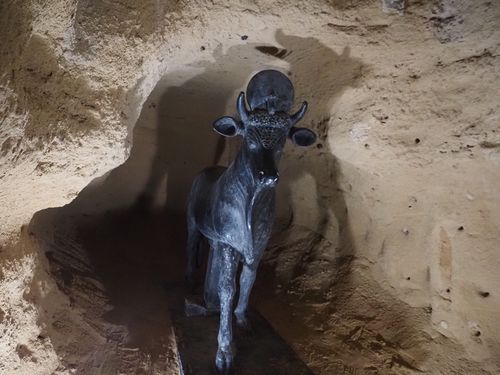
Alexandria • Serapeum of Alexandria
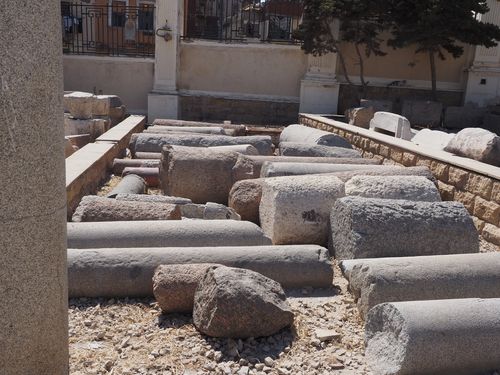
Alexandria • Serapeum of Alexandria
Serapeum of Alexandria

The Serapeum of Alexandria: Political, Social Motivations, and Evolution Through the Ages
The Serapeum of Alexandria, built during the reign of the Ptolemaic dynasty in the 3rd century BCE, was more than a temple; it was a political and social statement. Dedicated to the Greco-Egyptian god Serapis, this temple reflected the Ptolemaic strategy of consolidating their rule over a culturally diverse Egypt by blending Greek and Egyptian beliefs and traditions. This article explores the underlying motivations, historical events, and transformations that have marked the Serapeum, placing it within a broader global context and examining the modern challenges of its preservation.
Political and Social Motivations Behind Its Construction
The Serapeum’s construction arose from a political need to unify the Greek and Egyptian populations under Ptolemaic rule. Alexander the Great’s conquest had introduced Greek culture to Egypt, and his successors, the Ptolemies, were determined to create a harmonious society blending Egyptian and Hellenistic elements. To solidify their legitimacy, they fostered the worship of Serapis, a deity combining Greek and Egyptian features. By building a grand temple in Alexandria, the Ptolemies not only encouraged a shared religious identity but also cemented their authority.
Socially, the Serapeum served as a gathering place for worship and cultural exchange. The temple’s architecture and decor were designed to appeal to both Greeks and Egyptians, promoting a unified society. This blending of customs, symbolized by the Serapeum, was key to maintaining stability in a city as cosmopolitan as Alexandria, where Greek, Egyptian, Jewish, and other communities coexisted.
Major Historical Events and Their Influence on the Region
Over the centuries, the Serapeum became central to Alexandria’s social and religious life. However, it was not immune to regional upheavals. In the 4th century CE, the rise of Christianity in Egypt and the Roman Empire led to significant changes. The temple was destroyed in 391 CE under the orders of Emperor Theodosius I, who had declared Christianity the official religion. This event symbolized a shift in Alexandria’s religious and political landscape, as pagan practices gave way to Christianity.
The destruction of the Serapeum marked a significant point in Alexandria’s history, with the temple’s remnants serving as a reminder of the earlier religious syncretism and the now-fading influence of Hellenistic culture in Egypt. Its fall also exemplified a broader transformation occurring across the Mediterranean, where traditional religions were increasingly replaced by monotheistic faiths, changing the social fabric and political structures of the era.
Global Context: Comparisons with Other Regions
The 3rd century BCE was an era of cultural blending and empire-building worldwide. Similar to the Ptolemaic strategy in Egypt, rulers in other parts of the world were also integrating diverse populations. In India, for example, the Mauryan Empire under Emperor Ashoka promoted Buddhism as a unifying force across diverse ethnic and cultural groups. In the Mediterranean, Rome expanded and absorbed various local deities and practices into its pantheon, fostering loyalty and cohesion within its empire.
Unlike other regions, however, Alexandria’s Serapeum was a deliberate fusion of two distinct religious traditions, designed specifically to create a sense of unity between the ruling Greeks and the native Egyptians. This unique aspect of Alexandrian culture underscored the Ptolemies’ diplomatic approach in governing Egypt and helped solidify the city’s reputation as a center of learning and cultural exchange.
Major Transformations Over the Centuries
The Serapeum underwent significant transformations, particularly in terms of how it was perceived. After its destruction in 391 CE, its remains were partially repurposed by local communities, while parts of the temple became buried under the sands of Alexandria. During the Middle Ages, travelers and scholars who visited Alexandria documented the ruins, rekindling interest in the city’s ancient heritage.
In the 19th and 20th centuries, archaeological efforts uncovered portions of the Serapeum, and it became a subject of renewed interest among Egyptologists and historians. This interest reflects a broader trend in rediscovering and preserving ancient sites as symbols of human history and cultural heritage, rather than solely as religious structures.
Cultural Importance and Current Conservation Status
Today, the Serapeum holds significant cultural value, symbolizing Alexandria’s ancient role as a melting pot of Egyptian and Hellenistic traditions. Though its original structure has largely been lost, the remaining ruins continue to attract scholars and tourists, contributing to Alexandria’s standing as a site of historical importance.
The current state of conservation is a mix of preserved ruins and exposed relics, which remain vulnerable to environmental factors. Alexandria’s humid climate, coupled with urban development, poses ongoing risks to the site, highlighting the need for robust conservation measures.
Modern Preservation Challenges
Preserving the Serapeum involves several challenges. The environmental conditions of Alexandria, such as high humidity and occasional flooding, accelerate the degradation of the ruins. Additionally, urban expansion has put pressure on archaeological sites, threatening to encroach upon the historical landscape of the city.
To protect the Serapeum, local and international organizations have been working to monitor and stabilize the site. Conservation efforts include managing visitor access to prevent physical damage and using new technologies to document and analyze the site’s remaining features. Educational initiatives are also crucial to raise public awareness of the importance of preserving Alexandria’s ancient monuments.
Conclusion
The Serapeum of Alexandria stands as a testament to the political ingenuity and cultural vision of the Ptolemaic dynasty. Originally conceived to bridge the Greek and Egyptian communities, the temple has survived centuries of change, reflecting shifts in religious, social, and political ideologies. Despite the challenges of preservation, the Serapeum continues to remind the world of Alexandria’s rich and complex heritage, capturing the spirit of a city that once stood at the crossroads of civilizations.
Architectural Innovation and Cultural Fusion in the Serapeum of Alexandria
The Serapeum of Alexandria, built during the Ptolemaic Dynasty, showcases the architectural ingenuity and cultural integration characteristic of its time. This temple complex, dedicated to the Greco-Egyptian god Serapis, was designed not only as a religious site but also as a statement of the dynasty’s rule over a multicultural Egypt. Its construction illustrates the technological advancements, artistic skill, and diplomatic strategy of the Ptolemies in blending Greek and Egyptian traditions.
Technological and Construction Innovations of the Ptolemaic Era
Constructed in the 3rd century BCE, the Serapeum demonstrated advanced building techniques and materials that reflected the grandeur and ambitions of the Ptolemaic rulers. The temple was built using local limestone and sandstone, materials chosen for their durability and ability to withstand Alexandria’s coastal climate. In particular, granite from Aswan was employed for the larger pillars and columns, ensuring both strength and visual impact.
The complex is known for its use of subterranean passageways and chambers, which housed the sacred Apis bull and other religious relics. This underground structure was an impressive feat, requiring precise engineering to ensure stability. The Ptolemaic architects were skilled in carving and transporting massive stone blocks, showcasing their technical prowess. The grand staircase leading to the temple, which once spanned over 100 steps, symbolized a pathway to the divine and displayed the grandeur of the structure.
Architectural Style: A Fusion of Greek and Egyptian Elements
The Serapeum’s architectural design is a blend of Greek and Egyptian influences, embodying the dual heritage promoted by the Ptolemaic rulers. The temple complex included Greek-style columns and capitals, yet the overall layout and decorative elements retained a distinctly Egyptian character. This fusion is evident in the combination of traditional Egyptian motifs, such as lotus and papyrus decorations, alongside classical Greek architectural orders like Doric and Ionic columns.
The statue of Serapis, central to the complex, was sculpted in a Hellenistic style, illustrating Greek artistic techniques. However, its iconography combined features of the Egyptian gods Osiris and Apis, symbolizing the Ptolemies' efforts to create a unified religious symbol. This unique architectural and artistic style made the Serapeum a pioneering example of cross-cultural influence in the ancient Mediterranean world.
Noteworthy Architectural Layout and Symbolism
The layout of the Serapeum was designed to convey both religious sanctity and political authority. The temple was situated on an elevated platform, giving it a commanding presence over Alexandria and reinforcing its role as a spiritual and administrative center. The elevated position also provided a direct visual connection to the nearby Great Library of Alexandria, signifying the Serapeum’s role as a place of knowledge and learning.
A distinctive feature was the inclusion of a library within the Serapeum complex, which served as an extension of Alexandria's intellectual influence. This connection to the Great Library and the scholarly community of the time elevated the Serapeum’s status, making it not just a religious structure but also a cultural hub.
Anecdotes and Historical Significance
One notable historical account highlights that the Serapeum housed a cult statue of Serapis that was said to “speak” through concealed tubes used by priests. This feature added an element of mystery, strengthening the spiritual experience of worshipers. Additionally, the destruction of the Serapeum in 391 CE marked a pivotal moment in the decline of ancient religious practices, as it symbolized the triumph of Christianity over pagan religions in Alexandria.
Contribution to Global Recognition and Conservation Status
Although not formally inscribed as a UNESCO World Heritage site, the Serapeum’s historical and cultural significance is widely recognized internationally. Scholars and tourists alike view it as a symbol of Alexandria’s rich heritage and its role as a meeting point of civilizations. The architectural elements of the Serapeum have drawn considerable academic interest, especially its role in illustrating the Ptolemies’ diplomatic approach to cultural integration.
Conservation efforts focus on protecting the remaining structures from Alexandria’s humid climate and urban encroachment. Preservation projects aim to stabilize the foundation and maintain the remaining pillars and staircases, ensuring that the Serapeum continues to bear witness to the grandeur of Alexandria’s ancient past.
Conclusion
The Serapeum of Alexandria stands as a testament to Ptolemaic innovation and cross-cultural architectural style. Its construction required advanced engineering, its design reflected a blend of Greek and Egyptian artistry, and its influence extended beyond religious significance to intellectual heritage. Despite centuries of change, the Serapeum’s remains continue to captivate and educate, preserving a unique chapter of ancient history in Alexandria.