

 Français (France)
  Nederlands (nl-NL)
 The Mammisi at the Temple of Edfu, located in the town of Edfu in Egypt, is a structure dedicated to the divine birth rites in ancient Egyptian religion. These buildings symbolized the birth of deities, particularly Horus, the falcon god worshipped in Edfu. Built during the Ptolemaic period, the Mammisi features reliefs and inscriptions illustrating myths and ceremonies associated with divine birth. This structure highlights the significance of religious traditions and ritual practices in ancient Egyptian culture.
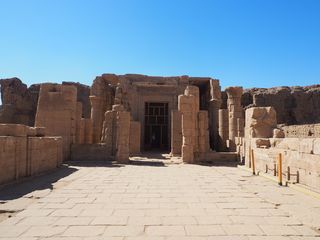
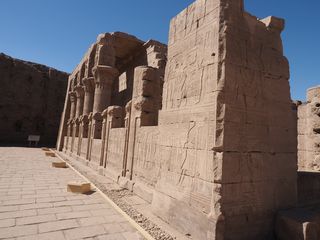

Monument profile
Mammisi of Edfu temple
Monument category: Egyptian temple
Monument family: Temple
Monument genre: Religious
Cultural heritage: Ancient Egypt
Geographic location: Edfu • Egypt
Construction period: 3rd century BC
• Links to •
• Dynasties that contributed to the construction of the monument •

• List of videos about Edfu on this site •
Edfu • Temple of Horus, a Treasure of Ancient Egypt
The Mammisi of the Temple of Edfu: Political Motivations, Historical Transformations, and Modern Challenges
Political and Social Motivations Behind Its Construction
The Mammisi of the Temple of Edfu, constructed in the 3rd century BCE during the Ptolemaic period, was deeply rooted in the socio-political strategies of the time. The Ptolemies, Greek rulers of Egypt following the conquests of Alexander the Great, sought to legitimize their rule by integrating themselves into the religious and cultural fabric of ancient Egypt. The Mammisi, dedicated to the divine birth of Horus, symbolized the continuity of the pharaoh’s divine lineage and reinforced the sacred bond between the monarchy and the gods. This strategy aimed to unite the local population under the rule of foreign sovereigns by aligning with their deeply ingrained religious traditions.
Historical Events and Their Impact on the Region
Edfu, located in Upper Egypt, was a significant religious and economic center during the Ptolemaic era. The construction of the Mammisi and the main temple of Edfu solidified the city’s status as a hub of worship and political power. Key historical events, such as the Roman annexation of Egypt in 30 BCE, shifted the religious and administrative focus of the region. While Roman authorities respected Egyptian temples, the gradual spread of Christianity in the later centuries led to the decline of these traditional religious sites, including the Mammisi. Many temples were repurposed or abandoned, reflecting the broader transition from polytheistic to monotheistic worship in the region.
Global Context of the 3rd Century BCE
The 3rd century BCE was a period of significant transformation globally. In the Mediterranean region, the Hellenistic kingdoms, including Ptolemaic Egypt, were at their peak, showcasing a unique blend of Greek and local traditions. Concurrently, the Maurya Empire in India under Emperor Ashoka was promoting Buddhism and undertaking significant infrastructure projects. In China, the Warring States period had recently concluded, giving rise to the unification under the Qin Dynasty and the construction of early sections of the Great Wall. These global developments highlight the interconnectedness of cultural and political shifts, paralleling the integration strategies seen in Egypt during the Ptolemaic era.
Architectural Transformations and Cultural Influences
Over the centuries, the Mammisi underwent various transformations that mirrored the changing power dynamics and cultural influences in Egypt. During the Roman period, while the site remained respected, its ritual significance diminished. The advent of Christianity further altered the monument's use, with some sections repurposed or defaced due to differing religious ideologies. The Islamic period saw the decline of temple maintenance as newer urban developments and mosques took precedence.
Despite these changes, the Mammisi retained much of its architectural integrity. Its intricate reliefs depicting the mythological birth of Horus and its columns adorned with floral motifs remain significant examples of Ptolemaic religious architecture, reflecting both Egyptian traditions and Greek artistic influences.
Current State of Conservation
The Mammisi of the Temple of Edfu is one of the best-preserved examples of its kind, largely due to the extensive restoration efforts initiated in the 19th and 20th centuries. Its current state showcases detailed carvings and structural stability, making it a critical resource for understanding ancient Egyptian religious practices. However, challenges such as environmental degradation, rising groundwater levels, and the pressures of modern tourism pose threats to its preservation.
Modern Challenges and Preservation Efforts
Preserving the Mammisi involves addressing both natural and human-induced threats. The erosion caused by sand, wind, and groundwater salinity requires ongoing structural reinforcement and protective measures. Additionally, the growing influx of tourists, while economically beneficial, necessitates careful management to prevent physical wear on the monument. Digital documentation, including 3D imaging and detailed recording of the reliefs, has become essential for safeguarding its legacy.
Cultural Significance and Global Recognition
Although the Temple of Edfu, including the Mammisi, is not individually listed as a UNESCO World Heritage Site, it enjoys global recognition as a masterpiece of ancient Egyptian architecture. This acknowledgment has elevated its status as a site of cultural tourism and academic study, reinforcing its importance as a symbol of the fusion between religion, politics, and art in ancient Egypt.
The Mammisi of Edfu continues to captivate historians and visitors alike, serving as a testament to the ingenuity, adaptability, and enduring cultural significance of the Ptolemaic era.
Architectural Mastery of the Mammisi at the Temple of Edfu: Innovations, Techniques, and Cultural Fusion
Technological Advancements and Construction Techniques
The Mammisi at the Temple of Edfu, constructed during the 3rd century BCE under the Ptolemaic dynasty, stands as a testament to the advanced construction methods and technological innovations of its time. The primary material used in its construction was sandstone, quarried locally from Gebel el-Silsila. This durable stone was carefully cut, transported, and assembled using sophisticated tools and techniques. Builders employed ramps and lever systems to position large stone blocks with remarkable precision, showcasing their engineering expertise. The polished surfaces and precisely interlocked blocks eliminated the need for mortar, a technique perfected over centuries of architectural practice in ancient Egypt.
A Unique Blend of Regional Traditions and Foreign Influences
The architectural and decorative elements of the Mammisi illustrate a distinctive synthesis of Egyptian traditions and Hellenistic influences. The structure features typical Egyptian columns adorned with papyrus and lotus motifs, symbolizing fertility and renewal. At the same time, the decorative style reflects Greek aesthetic sensibilities, evident in the proportionality and intricate details of the carvings.
The reliefs adorning the Mammisi depict the mythological story of Horus’s divine birth, a theme deeply rooted in Egyptian religious traditions. However, the artistic execution reflects a subtle shift towards Hellenistic techniques, with more dynamic and naturalistic depictions of figures compared to earlier, more rigid styles. This fusion demonstrates the cultural exchange facilitated by the Ptolemies, who sought to harmonize their Greek heritage with the deeply entrenched traditions of Egypt.
Structural Design and Layout
The Mammisi’s architectural layout follows a compact yet symbolically rich plan. It is rectangular, with a central hall surrounded by columns that support a flat roof. The central space was designed to host rituals and ceremonies associated with divine birth, emphasizing its religious significance. The symmetrical arrangement and orientation of the structure reflect the Egyptians’ advanced understanding of geometry and symbolism in sacred architecture.
Notable Facts and Anecdotes
One noteworthy aspect of the Mammisi is the collaboration between the Ptolemaic rulers and the local priesthood during its construction. Historical records suggest that significant funding and resources were allocated by Ptolemy IX to ensure the structure’s grandeur, underlining its political and religious importance. Anecdotes from ancient texts highlight the elaborate rituals performed at the Mammisi, further solidifying its role as a cultural and spiritual focal point.
Contribution to International Recognition
While the Mammisi itself is not individually inscribed as a UNESCO World Heritage Site, its inclusion within the broader Temple of Edfu complex has elevated its status on the global stage. The intricate carvings, remarkable preservation, and its role in illustrating the fusion of Greek and Egyptian cultures make it a significant point of interest for scholars and tourists alike. This recognition has spurred conservation efforts and academic research, ensuring its legacy endures.
Challenges and Conservation
Modern threats to the Mammisi include environmental factors such as rising groundwater, erosion, and the impact of tourism. Conservation projects have focused on stabilizing the structure and preserving its intricate reliefs through techniques such as desalination and protective barriers. Digital documentation, including 3D imaging, has become a vital tool in capturing the monument’s details for future study and restoration.
Conclusion
The Mammisi at the Temple of Edfu epitomizes the ingenuity, artistry, and cultural integration of the Ptolemaic era. Its advanced construction techniques, combined with its symbolic and aesthetic elements, reflect the grandeur and complexity of ancient Egyptian architecture. Today, it continues to captivate the world as a timeless link between the past and present, preserving the legacy of a civilization that mastered the art of blending innovation with tradition.