

 Français (France)
  Nederlands (nl-NL)
 Map of places or practices featured in a video published on this site
• Use the markers to explore the content •
Nepal Between the Himalayas and the Ganges: The Historical Formation of a Himalayan State
The Earliest Settlements and Prehistoric Cultures
The territory of present-day Nepal has been inhabited for tens of thousands of years. Archaeological discoveries in the Kathmandu Valley, the Himalayan foothills and the plains of the Terai indicate human activity dating back to the Paleolithic period.
Stone tools found in several regions suggest that early hunter-gatherer communities exploited the forests, rivers and mountain environments of the Himalayas. During the Neolithic period, agriculture gradually spread through the valleys and lower elevations, leading to permanent settlements and the domestication of animals.
Nepal's location between the Tibetan Plateau and the Gangetic plains made it a natural corridor for migration and trade. This geographical position would become one of the defining elements of the country's historical development.
The interaction between populations originating from the Indian subcontinent and communities linked to the Tibetan cultural sphere created an exceptional degree of ethnic and linguistic diversity that remains characteristic of Nepal today.
Early Peoples and Legendary Dynasties
Before the emergence of organized states, the region was inhabited by numerous ethnic groups belonging primarily to Tibeto-Burman and Indo-Aryan linguistic families.
Nepalese historical traditions attribute a prominent role to the Kirata peoples, who are believed to have ruled parts of eastern Nepal and the Kathmandu Valley for several centuries before the Common Era.
Although historical evidence concerning the Kirata period remains limited, these early rulers occupy an important place in Nepalese historical memory and cultural identity.
The fertile Kathmandu Valley gradually became one of the principal centres of settlement and political development due to its favourable climate and agricultural potential.
Nepal During the Age of the Buddha and Ancient India
The Birthplace of Buddhism
One of the most significant events in world religious history occurred within the borders of present-day Nepal: the birth of Siddhartha Gautama at Lumbini in the Terai during the sixth century BCE.
Born into the ruling Shakya clan, Siddhartha later abandoned his privileged life in search of spiritual enlightenment, eventually becoming the Buddha and founding Buddhism.
The presence of Lumbini has given Nepal a unique position within the Buddhist world and continues to attract pilgrims from across Asia and beyond.
Mauryan Influence and Ashoka
During the third century BCE, the Mauryan emperor Ashoka extended his influence into parts of southern Nepal.
According to inscriptions and historical tradition, Ashoka visited Lumbini and erected a commemorative pillar marking the birthplace of the Buddha. This monument remains one of the most important archaeological sites in Nepal.
Mauryan influence contributed to the spread of Buddhism while also introducing administrative practices and cultural traditions associated with the great empires of northern India.
The Licchavi Period: Nepal's Classical Age
Between the fourth and ninth centuries CE, the Licchavi dynasty ruled much of the Kathmandu Valley and presided over what is often regarded as Nepal's classical period.
The Licchavi era witnessed the emergence of strong political institutions, flourishing trade networks and significant artistic achievements.
A Cultural Synthesis of Hinduism and Buddhism
One of the defining characteristics of the Licchavi period was the peaceful coexistence and interaction between Hinduism and Buddhism.
Rulers supported both traditions, funding temples, monasteries and religious ceremonies. This religious coexistence became a lasting feature of Nepalese society and distinguishes Nepal from many neighbouring regions.
Sanskrit inscriptions from the period demonstrate the influence of Indian culture while also revealing the development of local traditions and artistic styles.
Trade Between India and Tibet
The Kathmandu Valley occupied a strategic position along important trade routes linking India with Tibet and Central Asia.
Merchants transported salt, wool, metals and luxury goods across the Himalayas, contributing to the prosperity of Nepalese cities and strengthening their role as intermediaries between two major cultural worlds.
The Malla Period and the Golden Age of Art
Following a period of political fragmentation, the Malla dynasty emerged as the dominant power in the Kathmandu Valley from the twelfth century onward.
The Malla era is widely regarded as the golden age of Nepalese art, architecture and urban culture.
The Rival Kingdoms of the Kathmandu Valley
Over time, the valley became divided among the competing kingdoms of Kathmandu, Patan and Bhaktapur.
Rather than hindering development, this rivalry encouraged rulers to invest heavily in public architecture, temples, palaces and urban planning in order to demonstrate their prestige and legitimacy.
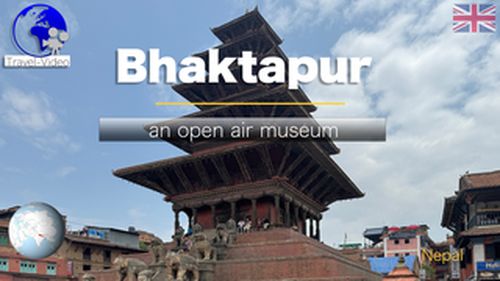
The magnificent Durbar Squares that survive today in Kathmandu, Patan and Bhaktapur largely date from this period.
Newar Civilization and Himalayan Trade
The Newar people of the Kathmandu Valley became renowned merchants, craftsmen and artists whose influence extended far beyond Nepal.
Newar artisans contributed significantly to the development of Tibetan Buddhist art and architecture and were active throughout the Himalayan region, including Tibet, Bhutan and even Mongolia.
Nepal thus became an important cultural bridge between the Indian and Tibetan worlds.
The Rise of Gorkha and the Unification of Nepal
By the eighteenth century, the territory corresponding to modern Nepal consisted of numerous small kingdoms and principalities.
Prithvi Narayan Shah and National Unification
The decisive turning point came with Prithvi Narayan Shah, ruler of the small hill kingdom of Gorkha.
Beginning in the 1740s, he launched a series of military campaigns aimed at unifying the Himalayan principalities under a single authority.
In 1768 and 1769, his forces captured Kathmandu, Patan and Bhaktapur, bringing the Malla kingdoms to an end and creating the foundations of modern Nepal.
For this reason, Prithvi Narayan Shah is widely regarded as the founder of the Nepalese state.
Nepal Between Two Giants
Prithvi Narayan Shah famously described Nepal as "a yam between two boulders," referring to China and India.
This metaphor captured the geopolitical reality that would shape Nepalese foreign policy for centuries: maintaining independence while balancing relations with two powerful neighbours.
Expansion and Conflict with British India
Following unification, the Gorkha rulers expanded Nepalese territory westward, eastward and southward.
At its greatest extent, Nepal controlled regions that now belong to India as well as large areas of the western Himalayas.
The Anglo-Nepalese War
Expansion eventually brought Nepal into conflict with the British East India Company.
The Anglo-Nepalese War of 1814-1816 ended with the Treaty of Sugauli, which established many of Nepal's present-day borders.
Nepal lost significant territories but retained its sovereignty, unlike much of the Indian subcontinent that came under British rule.
The conflict also led to the recruitment of Gurkha soldiers into the British Army, a tradition that continues to the present day and contributed significantly to Nepal's international reputation.
The Rana Regime
A major political turning point occurred in 1846 with the Kot Massacre.
Following this violent struggle for power, Jung Bahadur Rana established a hereditary prime ministership that effectively transferred authority from the Shah kings to the Rana family.
An Isolated but Stable State
The Rana regime lasted from 1846 until 1951.
During this period, Nepal remained relatively isolated from external influences and political reforms were limited. Education and infrastructure developed slowly, while political power remained concentrated in a small aristocratic elite.
Relations with British India remained generally positive, particularly because of the important role played by Gurkha soldiers in British military campaigns and both World Wars.
The Restoration of Royal Authority and Political Reform
Following Indian independence in 1947, democratic movements within Nepal gained momentum.
In 1951, with support from King Tribhuvan and the Indian government, the Rana regime was overthrown.
The king regained political authority, and Nepal entered a new era of political reform and gradual modernization.
The Panchayat Era
In 1960, King Mahendra dissolved the elected government and introduced the Panchayat system, a partyless political structure centred on the monarchy.
The Panchayat period lasted for three decades and combined political centralization with gradual economic development and infrastructure expansion.
At the same time, political freedoms were limited and opposition movements increasingly challenged royal authority.
The Return of Multiparty Democracy
In 1990, widespread demonstrations known as the People's Movement forced King Birendra to accept constitutional reforms and the restoration of multiparty democracy.
Nepal became a constitutional monarchy with elected governments and greater political freedoms.
However, social inequalities, poverty and regional disparities continued to generate dissatisfaction in many parts of the country.
The Maoist Insurgency
In 1996, the Communist Party of Nepal (Maoist) launched an armed insurgency against the state.
The rebels demanded radical social reform, the abolition of the monarchy and greater political representation for marginalized communities.
The conflict lasted ten years and resulted in more than 13,000 deaths while profoundly affecting Nepalese society and politics.
The Royal Massacre of 2001
One of the most traumatic events in modern Nepalese history occurred in June 2001, when King Birendra, Queen Aishwarya and several members of the royal family were killed during the royal palace massacre.
The circumstances surrounding the event remain controversial and deeply emotional within Nepalese society.
King Gyanendra succeeded to the throne during a period of increasing political instability and armed conflict.
The End of the Monarchy and the Birth of the Republic
In 2006, a second People's Movement forced King Gyanendra to restore parliament and relinquish many of his powers.
A peace agreement with the Maoists ended the civil war and initiated a process of political transformation.
On 28 May 2008, the Constituent Assembly formally abolished the monarchy and declared Nepal a federal democratic republic.
This decision ended more than two centuries of Shah monarchy and marked one of the most significant political changes in Nepalese history.
Federalism and the Contemporary State
The new republic embarked upon an ambitious programme of political restructuring.
The Constitution adopted in 2015 established a federal system composed of seven provinces with substantial regional authority.
Federalism sought to address long-standing demands from ethnic and regional groups for greater representation and political participation.
At the same time, debates over identity, autonomy and resource distribution continue to shape Nepalese politics.
Earthquakes and National Reconstruction
In April 2015, Nepal experienced one of the most devastating earthquakes in its history.
Thousands of people lost their lives, and many historic monuments in the Kathmandu Valley suffered severe damage.
The disaster highlighted both Nepal's vulnerability to natural hazards and the resilience of its population during reconstruction efforts.
Historical Legacies and National Identity
Modern Nepal is the product of centuries of interaction between the civilizations of India and Tibet, between Hinduism and Buddhism, and between mountain societies and lowland cultures.
Religious coexistence, ethnic diversity and geographic isolation have all contributed to shaping a distinctive national identity.
The artistic heritage of the Newar civilization, the memory of the Himalayan kingdoms, the legacy of the monarchy and the experience of democratic transformation continue to influence contemporary Nepal.
Today, Nepal remains a country where ancient traditions and modern political institutions coexist, and where the Himalayas continue to shape both the physical landscape and the national imagination.
Contemporary Nepal: A Himalayan Republic Between Tradition, Diversity and Development
A Landlocked Country Between India and China
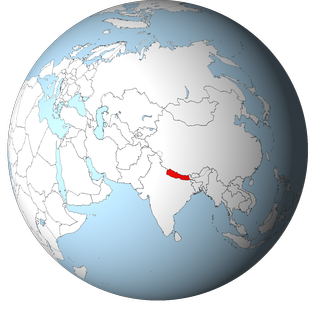
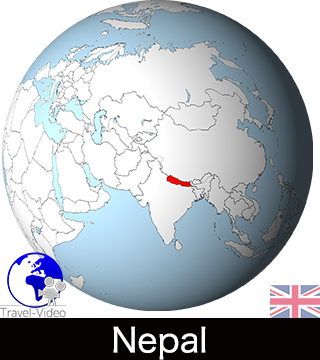
Nepal occupies a strategic position between the two Asian giants, India and China. The country is entirely landlocked and shares a long southern, eastern and western border with India, while its northern frontier follows the high mountain ranges separating it from the Tibet Autonomous Region of China.
Covering approximately 147,500 square kilometres, Nepal stretches for nearly 900 kilometres from east to west but only between 150 and 250 kilometres from north to south. Despite its relatively modest size, the country contains some of the greatest variations in altitude found anywhere in the world.
Nepal has historically served as a bridge between the Indian subcontinent and the Tibetan cultural sphere, a position that continues to influence its economy, diplomacy and society.
Geography and Natural Landscapes
Nepal is generally divided into three major geographical regions.
The southern Terai consists of fertile plains that form the northern extension of the Indo-Gangetic Plain. This region contains some of the country's most productive agricultural land and supports a large share of the national population.
North of the Terai lies the Hill Region, which includes the Kathmandu Valley and many of Nepal's principal urban centres. These hills have historically formed the political and cultural heart of the country.
The northern part of Nepal is dominated by the Himalayas, including eight of the world's fourteen mountains higher than 8,000 metres. Among them is Mount Everest, known locally as Sagarmatha, which rises to 8,849 metres and represents the highest point on Earth.
This extraordinary variation in altitude creates an exceptional diversity of ecosystems, climates and landscapes ranging from subtropical forests to permanent snowfields and glaciers.
Rivers, Climate and Environmental Conditions
Nepal's major rivers originate in the Himalayas before flowing southward into the Ganges basin in India. The Karnali, Gandaki and Koshi river systems are among the most important waterways in the country.
These rivers provide water for agriculture, hydroelectric production and domestic use, but they also create significant flood risks during the monsoon season.
Climate varies dramatically according to altitude. The Terai experiences a subtropical climate with hot summers and mild winters, while the hill regions enjoy more temperate conditions. The Himalayan zone is characterised by alpine and polar climates.
The summer monsoon, which usually arrives between June and September, delivers most of the country's annual rainfall and plays a crucial role in agricultural production.
Climate change has become one of Nepal's major environmental challenges. Glacier retreat, changing rainfall patterns, floods and landslides increasingly affect both mountain communities and lowland populations.
Population and Ethnic Diversity
Nepal has a population of approximately 30 million inhabitants in the mid-2020s. Nepalese society is characterised by remarkable ethnic, linguistic and cultural diversity.
Major communities include the Chhetri, Bahun, Newar, Magar, Tamang, Gurung, Rai, Limbu and Tharu populations, as well as the Sherpas who inhabit the high Himalayan regions.
This diversity reflects centuries of interaction between Indo-Aryan populations from the south and Tibeto-Burman peoples from the Himalayan regions.
Urbanisation has accelerated in recent decades, although a large proportion of the population still lives in rural areas and depends directly or indirectly on agriculture.
Languages and Religious Life
Nepali is the official language and serves as the principal means of communication between the country's many ethnic groups. It is used in administration, education and national media.
However, Nepal is one of the most linguistically diverse countries in Asia, with more than one hundred languages spoken throughout the country. Maithili, Bhojpuri, Tharu, Tamang and Nepal Bhasa are among the most widely used regional languages.
English also plays an important role in higher education, tourism and international business.
Hinduism is the majority religion, but Buddhism occupies a central place in Nepalese cultural life. Nepal is, after all, the birthplace of the Buddha at Lumbini in the southern plains.
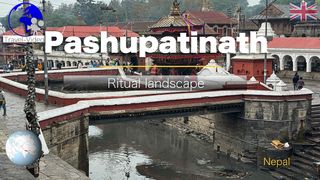
One of Nepal's most distinctive features is the long coexistence and interaction between Hinduism and Buddhism. Temples and sacred sites are often shared by followers of both religions, and many cultural traditions reflect this historical interconnection.
Muslim, Christian and indigenous religious communities are also present in various parts of the country.
Kathmandu and Nepal's Major Cities
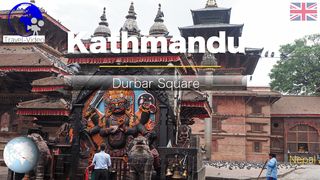
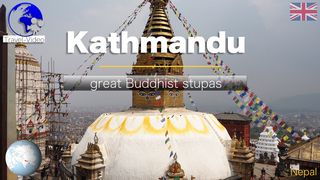
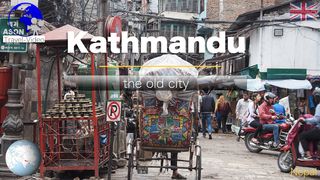
Kathmandu, the capital and largest city, serves as Nepal's political, economic and cultural centre. Located in a fertile valley surrounded by hills, it contains government institutions, universities, businesses and the country's main international airport.
The neighbouring cities of Lalitpur, commonly known as Patan, and Bhaktapur form together with Kathmandu the historic urban core of the Kathmandu Valley, renowned for its temples, palaces and traditional architecture.
Pokhara, situated near the Annapurna mountain range, has become one of Nepal's principal tourism centres and a gateway for trekking and mountaineering expeditions.
Biratnagar, Birgunj and Nepalgunj play important roles in trade and industrial activity, particularly through their close connections with India.
Since the adoption of the 2015 Constitution, Nepal has been organised as a federal republic consisting of seven provinces with significant regional responsibilities.
Transportation and Infrastructure
Nepal's mountainous terrain makes the construction and maintenance of infrastructure particularly difficult and expensive.
Road transport remains the backbone of domestic communications, although landslides and seasonal weather conditions can disrupt connections in remote regions.
Air transportation plays a particularly important role in linking isolated mountain communities with the rest of the country. Tribhuvan International Airport in Kathmandu serves as Nepal's main gateway to the world, while numerous domestic airports connect smaller cities and Himalayan districts.
Railway infrastructure remains limited, although several projects involving India and China aim to improve future connectivity.
Hydroelectric development and improvements in road networks continue to be major priorities for national development policies.
An Economy in Transition
Nepal remains a developing economy, although significant progress has been achieved during recent decades.
Agriculture continues to employ a large share of the labour force. Rice, maize, wheat, millet, tea and vegetables are among the principal agricultural products.
Industrial activity remains relatively modest and focuses mainly on food processing, textiles, handicrafts, cement and construction materials.
The service sector has grown rapidly and now represents the largest component of the national economy.
Remittances sent by Nepalese workers employed abroad, particularly in the Gulf states, Malaysia and India, constitute one of the country's most important sources of foreign income and play a crucial role in supporting household economies.
Tourism and Natural Heritage
Tourism is one of Nepal's most important economic sectors.
The Himalayas attract climbers and trekkers from around the world, while Mount Everest remains one of the country's most powerful international symbols.
The Kathmandu Valley offers a remarkable concentration of temples, palaces and historical monuments, while Lumbini attracts Buddhist pilgrims from across Asia and beyond.
National parks such as Chitwan and Bardia provide opportunities for wildlife tourism, including the observation of rhinoceroses, elephants and Bengal tigers.
Adventure tourism, mountaineering, trekking and cultural tourism together form one of the main pillars of Nepal's international image.
Culture, Festivals and Traditional Arts
Nepalese culture reflects the country's role as a meeting point between South Asia and the Himalayan world.
Traditional architecture, wood carving, metalwork and religious sculpture remain important artistic traditions, particularly in the Kathmandu Valley.
Festivals occupy a central place in social life. Dashain, Nepal's largest Hindu festival, and Tihar, the festival of lights, are celebrated throughout the country. Buddhist communities observe festivals such as Buddha Jayanti, commemorating the birth of the Buddha.
Traditional music, dance and handicrafts continue to coexist with modern cultural influences and growing urbanisation.
Education, Development and Contemporary Challenges
Education has expanded considerably since the second half of the twentieth century. Tribhuvan University remains the country's largest and most important institution of higher learning, while several newer universities contribute to research and professional training.
Despite progress, Nepal continues to face significant challenges. Poverty reduction, infrastructure development, employment creation and regional inequality remain major concerns.
The effects of the devastating 2015 earthquake continue to influence reconstruction policies and heritage preservation efforts.
On the international stage, Nepal seeks to maintain balanced relations with both India and China, whose economic influence and strategic interests play an important role in Nepalese development.
A Country Balancing Tradition and Modernity
Contemporary Nepal combines extraordinary cultural diversity with one of the world's most dramatic natural environments.
Its position between India and China, its coexistence of Hindu and Buddhist traditions and its remarkable ethnic and linguistic diversity give the country a unique identity within Asia.
While facing considerable economic and environmental challenges, Nepal continues to build its future upon a rich historical heritage shaped by the Himalayas and by centuries of cultural exchange between the civilizations of South and Central Asia.