

 Français (France)
  Nederlands (nl-NL)
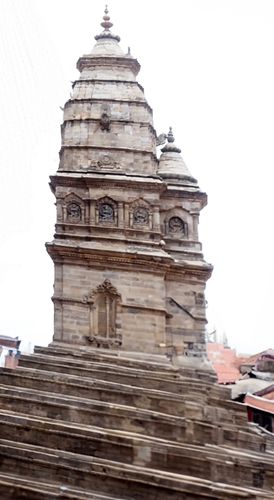
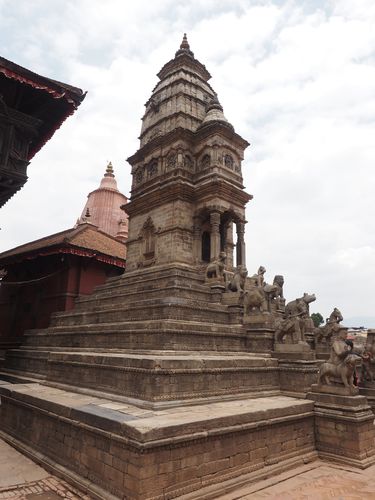
 The Siddhi Lakshmi Temple in Bhaktapur, Nepal, is a religious structure built in the shikhara style. It is part of the UNESCO World Heritage Site within the Kathmandu Valley. Constructed from brick and adorned with carvings, it represents the region’s architectural and artistic heritage. The staircase, lined with statues, highlights its cultural significance. Restoration efforts have been undertaken to maintain its original appearance and historical value. It remains a site of interest for those passionate about history and architecture.

Monument profile
Siddhi Lakshmi temple
Monument category: Hindu Temple
Monument family: Temple
Monument genre: Religious
Cultural heritage: Hindu
Geographic location: Bhaktapur • Nepal
Construction period: 17th century AD
This monument in Bhaktapur is inscribed on the UNESCO World Heritage List since 1979 and is part of the serial property "Kathmandu Valley".See the UNESCO monuments featured on this site
• Links to •
• Dynasties that contributed to the construction of the monument •

• List of videos about Bhaktapur on this site •
Bhaktapur • A Journey Through Nepal’s Historic Wonder
History of the Siddhi Lakshmi Temple in Bhaktapur
The Siddhi Lakshmi Temple, also known as Lohan Dega or the Stone Temple, stands as a testament to the rich cultural and religious heritage of Bhaktapur, Nepal. Erected in the 17th century, this temple is a remarkable example of Newar architecture and artistry. Its history is intertwined with the political dynamics of the Malla dynasty, natural calamities, and the enduring devotion of the local populace. This article delves into the historical context, significant events, global architectural trends of the era, transformations over time, and the temple's contemporary cultural significance.
Political and Social Context of Construction
Rivalries and Religious Devotion
During the 17th century, the Kathmandu Valley was divided among three rival city-states: Bhaktapur, Kathmandu, and Patan. Each was governed by the Malla kings, who were not only political leaders but also patrons of art and architecture. The construction of grand temples served as a means to display both piety and power. King Jagat Prakash Malla, who reigned over Bhaktapur, commissioned the Siddhi Lakshmi Temple to honor the goddess Lakshmi, symbolizing wealth and prosperity. This initiative was partly driven by the desire to surpass neighboring kingdoms in architectural grandeur and religious significance.
Architectural Ambitions
The decision to construct the temple using stone, a material less commonly employed in the predominantly brick and timber architecture of the region, underscores King Jagat Prakash Malla's ambition to create a lasting monument. The temple's intricate carvings and unique design elements reflect a blend of local craftsmanship and influences from neighboring regions, showcasing Bhaktapur's openness to artistic exchange.
Major Historical Events Impacting the Site
Natural Calamities and Restoration Efforts
The Siddhi Lakshmi Temple has withstood several natural disasters, most notably earthquakes that have periodically struck the Kathmandu Valley. The earthquake of 1934 caused significant damage to many structures in Bhaktapur; however, the temple sustained only minor impairments, a testament to its robust stone construction. In contrast, the devastating earthquake of 2015 inflicted considerable internal damage. This necessitated a meticulous deconstruction of the temple in 2017 to address structural issues, followed by a comprehensive reconstruction that concluded in late 2018. These restoration efforts were guided by a commitment to preserve the temple's original design and employed traditional building techniques to maintain its historical authenticity.
Dynastic Changes and Cultural Continuity
Throughout various dynastic transitions, the temple has remained a focal point of religious activity in Bhaktapur. Its resilience and continued use underscore the cultural continuity and the community's dedication to preserving their heritage, despite political upheavals and changes in leadership.
Global Context During the Time of Construction
Architectural Parallels Worldwide
The 17th century was a period marked by significant architectural endeavors across the globe. In Europe, the Baroque style flourished, characterized by elaborate ornamentation and grandeur. Simultaneously, the Mughal Empire in India saw the construction of monumental structures like the Taj Mahal, completed in 1653, exemplifying intricate artistry and engineering prowess. The Siddhi Lakshmi Temple's construction during this era places it within a global movement of monumental architecture, reflecting a universal human desire to create enduring symbols of cultural and religious identity.
Transformations Over Time
Architectural Modifications and Usage Changes
While the temple's primary structure has remained largely intact, it has undergone various modifications, especially following natural disasters. The post-2015 earthquake restoration not only addressed structural damages but also reinforced the temple to withstand future seismic events. These efforts ensured that the temple retained its original aesthetic and functional aspects, allowing it to continue serving as a place of worship and cultural gatherings.
Urban Development and Environmental Challenges
The urban landscape surrounding the Siddhi Lakshmi Temple has evolved, with modern constructions emerging in proximity to this historic site. This juxtaposition presents challenges in preserving the temple's historical ambiance. Additionally, environmental factors such as pollution pose threats to the stone carvings, necessitating ongoing conservation measures to protect the temple's intricate details from deterioration.
Contemporary Role and Cultural Importance
Religious Significance and Community Engagement
Today, the Siddhi Lakshmi Temple continues to be an active site of worship. Devotees regularly visit to pay homage to the goddess Lakshmi, seeking blessings for prosperity and well-being. The temple also plays a central role during local festivals, serving as a hub for communal activities and traditional ceremonies that reinforce social cohesion and cultural identity.
Tourism and Educational Value
As part of the Bhaktapur Durbar Square, a UNESCO World Heritage Site, the temple attracts numerous tourists and scholars. Visitors are drawn to its architectural beauty and historical significance, contributing to the local economy and fostering a broader appreciation for Nepalese heritage. Educational programs and guided tours often include the temple, highlighting its role in the region's history and the evolution of Newar architecture.
Current Conservation Status and Preservation Challenges
Environmental and Human-Induced Threats
The temple faces several preservation challenges, including environmental degradation due to air pollution, which accelerates the weathering of stone surfaces. The influx of tourists, while economically beneficial, also raises concerns about potential physical damage and the need for sustainable visitor management practices to protect the site.
Restoration Policies and Heritage Designation
Inclusion within the UNESCO World Heritage framework has facilitated access to resources and expertise for the temple's conservation. Collaborative efforts between local authorities, international organizations, and the community have led to the implementation of restoration policies that respect traditional methods while incorporating modern conservation science. These initiatives aim to ensure the temple's preservation for future generations, maintaining its structural integrity and cultural relevance.
Conclusion
The Siddhi Lakshmi Temple stands as a symbol of Bhaktapur's rich historical tapestry, embodying the artistic brilliance, religious devotion, and resilience of its people. From its inception in the 17th century amidst political rivalries to its survival through natural disasters and its role in contemporary society, the temple's journey reflects the dynamic interplay between tradition and change.
The Architecture of Siddhi Lakshmi Temple in Bhaktapur
The Siddhi Lakshmi Temple in Bhaktapur, Nepal, is a remarkable example of Newar stone architecture, representing the artistic and engineering prowess of the Malla period. Built in the 17th century under the patronage of King Jagat Prakash Malla, it is an exceptional temple in a city where brick and wood structures dominate. This temple, often referred to as the "Lohan Dega" (Stone Temple), stands out for its unique construction, its sculptural intricacies, and its synthesis of indigenous and foreign architectural influences. In this article, we will explore the technological and artistic innovations embodied in this structure, its construction materials and techniques, its spatial organization, and its contemporary significance.
Technological and Architectural Innovations of the Time
Structural Stability and Seismic Resistance
Bhaktapur, like the rest of the Kathmandu Valley, is situated in a seismically active region. The builders of Siddhi Lakshmi Temple employed techniques that improved its resilience against earthquakes. Unlike many other temples in Bhaktapur that rely heavily on wood and brick, this temple was built primarily from intricately carved stone blocks. The use of stone in a tiered structure allowed for better weight distribution, enhancing its stability.
One of the key structural elements contributing to the temple’s stability is its stepped pyramidal base. This base helps in dispersing seismic forces, reducing the likelihood of total collapse. The interlocking stone blocks, meticulously placed without visible mortar, provide additional flexibility to withstand tremors. This technique is similar to dry-stone masonry used in ancient temples across the Indian subcontinent.
Ventilation and Urban Integration
Despite being a dense stone structure, the temple integrates elements that allow for passive ventilation. The open niches and sculpted recesses on its façade prevent heat accumulation inside, which is particularly important in the hot summer months of Nepal. Additionally, the temple’s placement within Bhaktapur Durbar Square follows a harmonious urban planning tradition, where religious structures were integrated with civic spaces, making them both functional and symbolic elements of the city’s layout.
Materials and Construction Methods
Choice of Materials
The Siddhi Lakshmi Temple is one of the rare fully stone-built temples in Bhaktapur, setting it apart from the predominant brick and timber structures. The stone, sourced from local quarries, was chosen for its durability, resistance to weathering, and the precision it allows for sculptural detailing.
Unlike wood, which deteriorates over time due to humidity and termites, stone provides a long-lasting framework that ensures the temple’s survival for centuries. The smooth yet intricately carved surfaces demonstrate the skill of Newar artisans, who were adept at working with stone as well as with wood.
Construction Techniques
Dry stone masonry: The interlocking stone technique, without the use of visible mortar, increases the flexibility of the structure.
Carved relief panels: The exterior is adorned with finely chiseled stone sculptures depicting deities and mythical creatures, reflecting the high level of craftsmanship during the Malla era.
Stepped platforms: The temple’s tiered structure allows for a gradual elevation, reinforcing stability while creating a monumental appearance.
The use of these techniques showcases a synthesis of indigenous construction practices and influences from northern India, where similar stone temples had been built.
Architectural and Artistic Influences
Fusion of Local and Foreign Traditions
The temple of Siddhi Lakshmi is a hybrid of Indian and Nepalese styles. While its stone construction and shikhara-like profile reflect North Indian influences, its intricate Newar carvings and animal guardians align with traditional Nepali temple design.
The influence of Indian shikhara architecture is evident in the temple’s verticality and pyramid-like form, resembling structures found in Odisha and Rajasthan. However, the presence of Newar elements such as intricate toranas (decorative door lintels) and guardian sculptures firmly situates it within the artistic traditions of the Kathmandu Valley.
Sculptural Motifs and Symbolism
The temple is richly adorned with high-relief stone carvings, featuring:
Hindu deities such as Lakshmi, Vishnu, and Shiva.
Animal figures including lions, elephants, and griffins, which serve both protective and symbolic functions.
Mythological scenes depicting episodes from Hindu epics, reinforcing the temple’s spiritual significance.
The placement of these figures follows a structured iconographic program, guiding worshippers through layers of symbolic meaning.
Organization and Spatial Design
Spatial Arrangement
The temple follows a rectangular ground plan with a stepped elevation, leading to a sanctum at the top. The approach to the temple is marked by a steep flight of stone steps, flanked by animal guardians—a common feature in Newar temples.
Unlike pagoda-style temples prevalent in Bhaktapur, Siddhi Lakshmi Temple lacks multiple roofs, emphasizing its solid, monolithic character. This distinction enhances its austere and powerful visual presence, making it one of the most striking landmarks in the city.
Notable Architectural Elements
Massive stone pillars supporting the entrance platform.
Symmetrically placed guardian statues, providing both spiritual and structural reinforcement.
Highly detailed relief carvings, portraying celestial beings and floral motifs.
These elements collectively contribute to the temple’s grandeur and its distinct identity within Nepalese temple architecture.
Statistics and Notable Anecdotes
Dimensions and Structural Scale
Estimated height: ~10 meters (33 feet) from base to pinnacle.
Built upon a multi-tiered stone plinth, reinforcing stability and enhancing its monumentality.
Historical Anecdotes
The temple is believed to have been commissioned by King Jagat Prakash Malla as part of his devotion to Siddhi Lakshmi, a powerful form of the Goddess Lakshmi.
Legends suggest that specially trained artisans from India were invited to work alongside local Newar craftsmen, contributing to the temple’s unique artistic blend.
International Recognition and Conservation Challenges
Global Importance
The Siddhi Lakshmi Temple is recognized as part of the UNESCO-listed Bhaktapur Durbar Square, underscoring its global significance. Its unusual stone architecture, compared to the surrounding brick-and-timber buildings, makes it a unique study subject for art historians and conservationists.
Preservation and Challenges
Seismic vulnerability: Despite its robust construction, the 2015 earthquake caused significant internal damage, leading to extensive restoration efforts.
Tourism impact: The increasing footfall poses risks to the delicate carvings, requiring conservation measures.
Pollution and erosion: The stone surfaces face gradual wear due to environmental pollution and weathering.
Efforts to preserve the temple focus on using traditional materials and techniques, ensuring that it retains its historical authenticity while being reinforced against future seismic activity.
Conclusion
The Siddhi Lakshmi Temple stands as one of the finest stone temples of Bhaktapur, distinguished by its unique construction techniques, artistic brilliance, and symbolic importance. Its design represents a harmonious blend of Newar and Indian influences, while its seismic resilience and artistic craftsmanship highlight the ingenuity of Malla-period builders. Today, the temple remains a revered religious site and an architectural marvel, continuing to inspire scholars, devotees, and visitors alike.
Despite urbanization and natural disasters, ongoing conservation efforts strive to preserve its grandeur for future generations, ensuring that this exceptional monument retains its place as a cornerstone of Nepal’s architectural and cultural heritage.