

 Français (France)
  Nederlands (nl-NL)
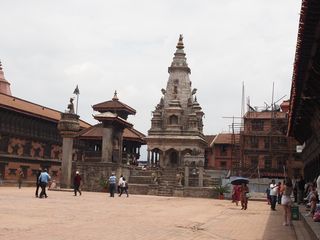
 The Taleju Bell, located in Durbar Square in Bhaktapur, Nepal, is an important part of the city’s religious and cultural heritage. Erected in 1737 by King Ranajit Malla, it stands in front of the Golden Gate of the Palace of 55 Windows. Used to announce religious ceremonies and gatherings, this imposing bell reflects the influence of the Malla dynasty and the significance of Hindu traditions. It is often associated with rituals dedicated to the goddess Taleju and remains a symbolic element of Bhaktapur’s spiritual life.


Monument profile
Taleju bell
Monument category: Bell tower
Monument family: Royal and ceremonial monuments
Monument genre: Religious
Cultural heritage: Hindu
Geographic location: Bhaktapur • Nepal
Construction period: 18th century AD
This monument in Bhaktapur is inscribed on the UNESCO World Heritage List since 1979 and is part of the serial property "Kathmandu Valley".See the UNESCO monuments featured on this site
• Links to •
• Dynasties that contributed to the construction of the monument •

• List of videos about Bhaktapur on this site •
Bhaktapur • A Journey Through Nepal’s Historic Wonder
The Taleju Bell: A Historical Analysis
The Taleju Bell, located in Bhaktapur Durbar Square, Nepal, is a significant architectural and cultural monument that dates back to the 18th century. Built under the reign of King Ranajit Malla in 1737, the bell was an important instrument in religious and civic life, closely tied to the worship of Taleju Bhawani, the protective goddess of the Malla kings. This historical analysis explores the political, social, and architectural context of its construction, major historical events that shaped its existence, its global relevance at the time of its construction, and its current significance in Nepalese heritage.
Political and Social Context of the Bell’s Construction
During the early 18th century, the Kathmandu Valley was divided into three rival Malla kingdoms: Bhaktapur, Kathmandu, and Patan. These kingdoms were frequently in competition for religious, economic, and military dominance, each striving to outdo the others in temple-building, urban development, and trade expansion.
King Ranajit Malla (reigned 1722–1769) of Bhaktapur, the last ruler of his dynasty before the Gorkha conquest, commissioned the Taleju Bell as part of his efforts to reinforce Bhaktapur’s spiritual and political status. The bell was strategically placed in front of the Golden Gate and the Palace of 55 Windows, close to the Taleju Temple, the most sacred shrine of the royal court.
The primary purpose of the bell was to summon devotees for prayers and to announce religious ceremonies dedicated to Taleju Bhawani. It also functioned as an instrument for public communication—residents were allowed to ring the bell to seek justice or to report grievances, making it an integral part of civic life.
However, beyond its religious significance, the Taleju Bell was also a symbol of Malla power. At a time when the Malla rulers were embroiled in political conflicts, monumental constructions such as this bell were intended to affirm their divine legitimacy and reinforce their rule over the valley.
Major Historical Events Affecting the Taleju Bell
Gorkha Conquest (1769)
In 1769, Bhaktapur fell to Prithvi Narayan Shah, the King of Gorkha, who unified Nepal under his rule. The fall of Bhaktapur marked the end of Malla rule, but despite the political change, the Taleju Bell remained intact. Unlike some temples and palaces that were repurposed or destroyed, the bell continued to serve its original religious function.
Earthquakes and Restorations
The Taleju Bell has withstood multiple earthquakes, the most significant being those of 1833, 1934, and 2015. The 1934 earthquake devastated much of Bhaktapur Durbar Square, causing extensive damage to temples and monuments. The bell’s supporting structure was affected but later restored using traditional Newar construction techniques.
The 2015 earthquake, which caused severe destruction across Nepal, once again tested the resilience of the Taleju Bell. Although the bell itself survived, its supporting structure needed reinforcement and conservation efforts, which were subsequently carried out as part of broader heritage restoration programs in Bhaktapur.
The Taleju Bell in a Global Context (18th Century)
The construction of the Taleju Bell in 1737 occurred at a time of significant global transformations in architecture and religious symbolism.
- In Europe, the Baroque period was at its peak, with grand religious and civic buildings being erected to symbolize power and faith, much like Bhaktapur’s own urban expansion under the Mallas.
- In China, the Qing Dynasty was engaged in large-scale projects, such as the expansion of the Forbidden City and the construction of religious sites that integrated Buddhist, Confucian, and Taoist elements.
- In India, the Mughal Empire was declining, but monumental projects such as the Red Fort in Delhi and the Shah Jahan Mosque reflected a continued emphasis on grand architectural expression.
The Taleju Bell, therefore, aligns with a broader global movement of monumental religious structures, where rulers used architecture to reinforce divine legitimacy and governance.
Structural and Architectural Evolution of the Taleju Bell
Materials and Construction
The Taleju Bell is cast from bronze, a material commonly used for bells due to its durability and resonance. Bronze allows for a rich, deep sound that can travel long distances, which was essential for its use in religious and civic functions.
The bell is suspended from a stone and wooden framework, supported by four intricately carved stone pillars. These pillars reflect the Newar craftsmanship of the time, adorned with religious symbols and mythological motifs.
Design and Symbolism
The ornate carvings on the supporting pillars depict Hindu deities and protective symbols, reinforcing its sacred purpose.
The placement of the bell near Taleju Temple and the Golden Gate underscores its role in royal and religious rituals.
Unlike Western bells, which are often enclosed in towers, the Taleju Bell is open-air, allowing the sound to spread across the square more effectively.
The Role of the Taleju Bell Today
In contemporary Bhaktapur, the Taleju Bell remains a living monument.
It is still rung during daily rituals in honor of Taleju Bhawani.
During major Hindu festivals, particularly Dashain, the bell plays a crucial role in ceremonial worship and public celebrations.
It continues to attract pilgrims, historians, and tourists, serving as a link between Nepal’s past and present.
Beyond its religious and cultural function, the Taleju Bell also contributes to Bhaktapur’s heritage tourism, which is vital for the city’s economy.
Conservation Challenges and Preservation Efforts
Although the Taleju Bell has survived earthquakes, regime changes, and modernization, it faces several contemporary threats:
- Environmental Damage: Pollution and exposure to the elements contribute to bronze corrosion and erosion of the stone structure.
- Urban Expansion: The growing urbanization of Bhaktapur places pressure on historical sites, necessitating careful planning to maintain authenticity.
- Tourism Impact: While tourism brings economic benefits, it also increases wear and tear on heritage structures.
To address these challenges, UNESCO and local conservation organizations have implemented heritage restoration programs, ensuring that traditional methods and materials are used in repairs and reinforcements.
Conclusion
The Taleju Bell stands as a remarkable testament to the architectural ingenuity, political ambitions, and religious devotion of the Malla rulers. From its construction in 1737 under King Ranajit Malla, through the Gorkha conquest, natural disasters, and modern conservation efforts, the bell has remained a central feature of Bhaktapur Durbar Square.
As Nepal continues to balance heritage conservation with urban development, the Taleju Bell serves as a reminder of the country’s rich historical legacy and the need for sustained efforts in cultural preservation.
The Architecture of the Taleju Bell in Bhaktapur
The Taleju Bell, located in Bhaktapur Durbar Square, Nepal, is an architectural and religious landmark that has stood the test of time since its installation in 1737 under King Ranajit Malla. Suspended on an elaborately carved stone and wooden structure, the bell serves as both a ritual instrument and a symbol of royal authority. While primarily used in religious ceremonies dedicated to Taleju Bhawani, its role extends to civic functions and historical commemorations. This article examines the construction techniques, materials, artistic influences, spatial organization, and modern conservation challenges of this significant monument.
Technological and Architectural Innovations of the Time
During the 18th century, Nepalese architecture, particularly in the Kathmandu Valley, was defined by an advanced understanding of structural integrity, material durability, and aesthetic craftsmanship. The construction of the Taleju Bell reflects Newar ingenuity, combining metallurgical expertise and stone carving traditions.
One of the key technological achievements of the Taleju Bell is its suspended design, allowing it to produce a deep, resonant sound that can be heard across Durbar Square. The open-air structure, supported by four intricately carved stone pillars, was engineered to maximize acoustics while ensuring stability against environmental pressures such as strong winds and seismic activity.
The placement of the bell was strategically planned, not only to facilitate its use in rituals but also to create an architectural balance within the square. Unlike European bell towers that are enclosed within buildings, the Newar tradition favors open and accessible structures, allowing direct interaction between the monument and the people.
Materials and Construction Methods
The Taleju Bell is crafted from bronze, an alloy composed of copper and tin, which was chosen for its durability, resistance to corrosion, and superior acoustic properties. The selection of bronze aligns with Nepalese bell-making traditions, where sound quality was paramount for religious and ceremonial uses.
The supporting stone structure is carved from local sandstone and granite, which were commonly used in Newar architecture due to their resistance to weathering and seismic resilience. The carvings on the pillars include floral motifs, Hindu deities, and protective figures, emphasizing both artistic and spiritual significance.
Wooden elements were also incorporated into the structure, especially in the crossbeams supporting the bell, demonstrating traditional tenon-and-mortise joinery techniques that ensured flexibility in case of seismic movements. The integration of bronze, stone, and wood reflects a harmonious combination of materials, adapted for both functionality and aesthetic refinement.
Architectural and Artistic Influences
The Taleju Bell exemplifies the fusion of Newar, Indian, and Tibetan influences that characterize Nepalese temple architecture.
- The open-air design is a distinct feature of Newar ceremonial structures, allowing for public accessibility and reinforcing the integration of religious and civic functions.
- The detailed stone carvings on the pillars echo the Malla-period sculptural traditions, which emphasized intricate craftsmanship and religious symbolism.
- The use of bronze for the bell itself draws from Indian metallurgical techniques, where temple bells were crafted using similar compositions to achieve an optimal resonance.
- The placement of the bell near the Taleju Temple and the Golden Gate mirrors Tibetan and Indian temple complexes, where sacred objects and ritual instruments are aligned according to cosmological principles.
- The symbolic significance of the Taleju Bell is also embedded in its artistic elements. The figures carved onto the supporting pillars serve as guardians, ensuring that only those with pure intentions may approach the bell. The inscriptions on the bell’s surface provide insight into the era of its construction, referencing King Ranajit Malla’s dedication to Taleju Bhawani and his aspiration to protect Bhaktapur’s sovereignty.
Spatial Organization and Structural Design
The Taleju Bell is positioned prominently within Bhaktapur Durbar Square, directly in front of the Golden Gate and the Palace of 55 Windows. Its elevated placement on a raised stone platform enhances both visibility and acoustic projection.
The four-pillar support system follows a rectangular layout, with each pillar acting as both a structural and decorative element. Unlike temple stupas or pagoda structures that focus on verticality, the Taleju Bell follows a more horizontal composition, aligning with the processional and ritualistic use of the square.
The absence of an enclosing structure allows the bell’s sound waves to disperse freely, ensuring that its chime resonates across the city, summoning worshippers and marking significant religious events.
Notable Dimensions and Unique Features
Bell Height: Approximately 1.5 meters (5 feet)
Bell Diameter: Estimated at 1.2 meters (4 feet)
Weight: Over 300 kilograms (660 pounds)
Supporting Pillars: Standing at over 2.5 meters (8 feet), intricately carved with Hindu iconography
One of the most intriguing aspects of the Taleju Bell is its historical usage beyond religious ceremonies. It is said that locals were permitted to ring the bell to call for justice, making it an early example of a public grievance mechanism under Malla rule.
Another notable feature is its resilience to seismic activity. While many temples in Bhaktapur suffered severe damage during the 2015 earthquake, the Taleju Bell remained intact, a testament to the earthquake-resistant engineering techniques employed during its construction.
International Recognition and Conservation Challenges
As an integral part of Bhaktapur Durbar Square, the Taleju Bell is recognized as part of the UNESCO World Heritage Site designation granted to the square in 1979. This status underscores its cultural and historical importance, both nationally and globally.
However, the monument faces several conservation challenges, including:
- Environmental Erosion – Exposure to air pollution, acid rain, and humidity has caused oxidation and patina formation on the bronze bell, requiring periodic maintenance.
- Structural Integrity – The stone platform and carved pillars are subject to weathering and minor seismic stress, necessitating restoration efforts using traditional masonry techniques.
- Tourism Management – The increasing number of visitors to Bhaktapur Durbar Square has led to concerns regarding overuse and structural degradation of heritage sites, including the Taleju Bell.
To mitigate these issues, local heritage organizations and international restoration teams have implemented strategies such as:
- Periodic bronze polishing and structural reinforcement
- Application of protective coatings to limit oxidation
- Controlled visitor access to minimize unintended damage
These efforts ensure that the Taleju Bell remains both functional and historically preserved for future generations.
Conclusion
The Taleju Bell of Bhaktapur is more than just a religious artifact; it is a testament to the engineering prowess, artistic traditions, and spiritual devotion of Nepal’s Malla dynasty.
Its intricate craftsmanship, strategic placement, and historical significance continue to make it a key architectural feature of Bhaktapur Durbar Square. While challenges persist in its conservation, ongoing efforts underscore its importance in Nepal’s cultural identity.
As a symbol of religious reverence, civic duty, and Newar heritage, the Taleju Bell remains a central landmark, preserving the legacy of Nepal’s architectural brilliance and the traditions of its people.