

 Français (France)
  Nederlands (nl-NL)
 The Palace of 55 Windows is one of the most significant landmarks in Bhaktapur, located on Durbar Square. Built during the reign of King Bhupatindra Malla in the 18th century, it showcases the sophistication and elegance of Newar architecture. Its façade features an array of intricately carved windows, reflecting the mastery of local artisans. Once serving as a royal residence, the building is now part of the Kathmandu Valley’s UNESCO-listed cultural heritage. It remains a site of historical significance and attracts visitors drawn to its elaborate woodwork and its place within Bhaktapur’s historic ensemble.
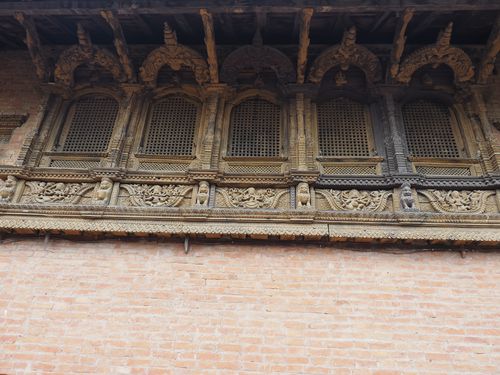
Bhaktapur • Palace of 55 Windows
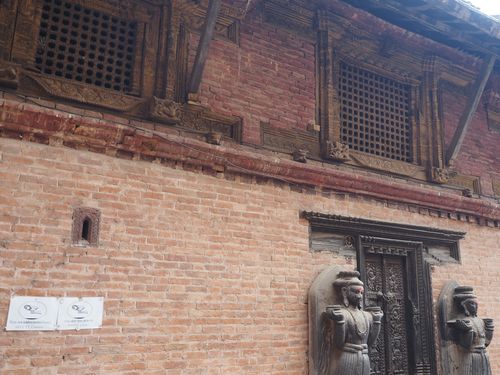
Bhaktapur • Palace of 55 Windows
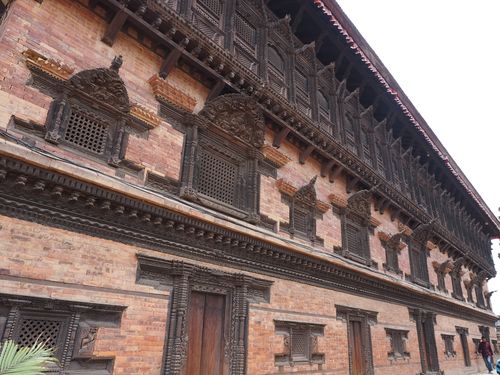
Bhaktapur • Palace of 55 Windows
Monument profile
Palace of 55 Windows
Monument category: Palace
Monument family: Palace and Annexes
Monument genre: Residential
Cultural heritage: Hindu
Geographic location: Bhaktapur • Nepal
Construction period: 18th century AD
This monument in Bhaktapur is inscribed on the UNESCO World Heritage List since 1979 and is part of the serial property "Kathmandu Valley".See the UNESCO monuments featured on this site
• Links to •
• Dynasties that contributed to the construction of the monument •

• List of videos about Bhaktapur on this site •
Bhaktapur • A Journey Through Nepal’s Historic Wonder
• Sources •
Sources
- UNESCO World Heritage Centre. "Kathmandu Valley." https://whc.unesco.org/en/list/121/
- Wikipedia. "Palace of 55 Windows, Bhaktapur." https://en.wikipedia.org/wiki/Bhaktapur_Durbar_Square
Books and Publications
- Slusser, Mary Shepherd. Nepal Mandala: A Cultural Study of the Kathmandu Valley. Princeton University Press, 1982.
- Vaidya, Tulasī Rāma. Bhaktapur Rajdarbar. Centre for Nepal and Asian Studies, Tribhuvan University, 2002.
The History of the Palace of 55 Windows in Bhaktapur: A Comprehensive Analysis
The Palace of 55 Windows, located in Bhaktapur Durbar Square, is one of the most remarkable monuments of Nepalese heritage. Built during the reign of King Bhupatindra Malla between 1697 and 1708, it stands as a testament to the artistic and architectural excellence of the Malla dynasty. Its intricate wooden carvings, unique design, and historical significance make it a key part of Nepal’s cultural identity. This article delves into the political and social context of its construction, the historical events that shaped its fate, and the transformations it has undergone over the centuries.
Political and Social Context of Construction
The Rivalry Among the Malla Kingdoms
During the late 17th and early 18th centuries, the Kathmandu Valley was divided into three competing city-states: Bhaktapur, Kathmandu, and Patan. Each was ruled by a king from the Malla dynasty, and their rivalry led to an architectural and cultural competition. Monumental constructions were commissioned to showcase the power, wealth, and artistic sophistication of each kingdom.
The Vision of King Bhupatindra Malla
King Bhupatindra Malla (r. 1696-1722) was a visionary monarch and a great patron of the arts. His decision to build the Palace of 55 Windows was driven by several objectives:
- To consolidate royal authority by establishing an imposing residence.
- To demonstrate the kingdom’s prosperity through an elaborate and aesthetically rich structure.
- To reinforce Bhaktapur’s status as a cultural and political hub.
- To surpass the architectural grandeur of rival palaces in Kathmandu and Patan.
Bhupatindra Malla actively participated in the design process, often depicted in inscriptions as a king who valued artistic refinement. His contributions also extended to temple construction and urban planning, making Bhaktapur a center of Malla-era grandeur.
Major Historical Events Affecting the Site
The Gorkha Invasion of 1769
A defining moment in the history of the Palace of 55 Windows was the conquest of Bhaktapur by King Prithvi Narayan Shah in 1769. This marked the end of the Malla rule and the beginning of Nepal’s unification under the Shah dynasty.
Following the invasion:
Bhaktapur lost its political prominence and ceased to be a royal capital.
The palace was no longer a primary residence for the ruling elite.
The administration shifted to Kathmandu, leading to reduced maintenance of the palace.
Despite these changes, the palace remained an important cultural landmark, preserving the artistic legacy of the Malla rulers.
Earthquakes and Their Impact
Nepal’s seismic activity has posed a persistent threat to historical monuments. The 1934 earthquake caused extensive damage to the palace, leading to the collapse of some structures. The 2015 earthquake inflicted further damage, necessitating urgent restoration efforts.
Global Context at the Time of Construction
The late 17th and early 18th centuries saw a rise in monumental architecture worldwide:
- In France, the completion of Versailles under Louis XIV symbolized absolute monarchy.
- In China, the Qing dynasty expanded the Forbidden City.
- In India, the Mughal empire was at its peak, constructing ornate palaces and tombs.
The construction of the Palace of 55 Windows reflects a global trend where architecture was used as an expression of political power and artistic excellence.
Transformations Over Time
Changes in Function and Decline
After the fall of the Malla dynasty, the palace’s function evolved:
It was no longer a royal residence but remained a symbol of Bhaktapur’s historical past.
Some sections were repurposed for administrative use.
Gradual neglect led to structural wear and loss of original details.
Restoration and Conservation Efforts
Restoration projects have played a crucial role in preserving the palace:
- 1934: Post-earthquake repairs attempted to stabilize the structure.
- 1970s: UNESCO-led conservation efforts restored key architectural elements.
- Post-2015: A renewed focus on reconstruction following earthquake damage.
Current Role and Cultural Significance
A National Symbol of Heritage
Today, the Palace of 55 Windows is one of Nepal’s most iconic historical landmarks. It is:
- A major tourist attraction, drawing visitors fascinated by its carvings and history.
- A site for cultural festivals, particularly during Bisket Jatra, an annual Newar celebration.
- A representation of Nepal’s architectural identity, celebrated in literature and media.
Impact on Bhaktapur’s Identity
The palace continues to serve as a reminder of Bhaktapur’s golden era, preserving the artistry and craftsmanship of the Malla period. It stands as a cultural link between past and present, influencing local traditions and tourism.
Conservation Challenges and Modern Threats
Environmental and Urbanization Pressures
The palace faces numerous challenges, including:
Seismic risks, requiring ongoing structural reinforcement.
Urban encroachment, which alters the historical landscape.
Tourism-related wear and tear, affecting wooden carvings and stone foundations.
Preservation Strategies
To safeguard the site, restoration efforts focus on:
Traditional craftsmanship to repair damaged wooden elements.
Earthquake-resistant techniques to reinforce weak structures.
Tourism regulation to prevent excessive foot traffic in vulnerable areas.
Conclusion
The Palace of 55 Windows stands as a masterpiece of Newar architecture, reflecting the artistic vision of Bhupatindra Malla and the cultural richness of the Malla dynasty. Despite centuries of political change, seismic destruction, and evolving urban landscapes, it remains a symbol of Nepal’s historical grandeur. As conservation efforts continue, this remarkable structure is preserved for future generations, ensuring its place as an architectural and historical treasure in the heart of Bhaktapur.
Architectural and Technological Innovations
Seismic Resilience and Structural Stability
Nepal, situated in a seismically active zone, has historically faced the challenge of building earthquake-resistant structures. The Palace of 55 Windows incorporates various techniques to withstand tremors:
- Flexible brick-and-wood construction: The combination of bricks and wooden elements absorbs seismic shocks, reducing structural damage.
- Wooden joinery without nails: The palace features interlocking wooden beams, which allow slight movements during earthquakes, preventing rigid failures.
- Thick load-bearing walls: The massive brick walls provide overall stability while distributing seismic forces evenly.
This design has ensured the palace’s survival despite multiple earthquakes, including the devastating ones in 1934 and 2015.
Ventilation and Climate Adaptation
The palace is designed to maximize airflow and regulate temperature, essential for comfort in Bhaktapur’s subtropical climate:
- Alignment of windows allows cross-ventilation, ensuring a natural cooling system.
- Courtyards and open spaces help in air circulation while maintaining a shaded, cool environment.
- Overhanging eaves and multi-tiered roofs provide protection against heavy monsoon rains while allowing proper drainage.
Materials and Construction Methods
Primary Materials Used
The palace is constructed using locally sourced materials, chosen for their durability and adaptability to the region’s climate:
- Handmade terracotta bricks: Provide insulation and structural strength while giving the palace its characteristic reddish hue.
- Sal wood (Shorea robusta): Used for carved windows, doors, and support beams due to its resistance to pests and humidity.
- Lime and mud mortar: Traditional binding material that allows flexibility, preventing cracking under seismic stress.
Construction Techniques
- Bricklaying with layered reinforcement: Enhances structural integrity while allowing walls to "breathe."
- Intricate wood carving techniques: Each window and balcony is meticulously sculpted, demonstrating unparalleled craftsmanship.
- Tiered roof structure: Inspired by pagoda-style temples, the palace's roof is designed to distribute weight effectively while maintaining aesthetic harmony.
Architectural and Artistic Influences
Traditional Newar Architecture
The Palace of 55 Windows epitomizes Newar architecture, characterized by:
- Ornate wooden windows and lattices, finely carved with depictions of deities, animals, and floral motifs.
- Symmetric spatial organization, reflecting balance and cosmic alignment.
- Multi-tiered roofing, inspired by Nepalese temples and designed to enhance aesthetic appeal.
Influences from Indian and Tibetan Styles
The palace also exhibits external influences:
- Mughal-inspired floral designs on window frames and stone reliefs.
- Tibetan motifs, such as the dragon carvings and Buddhist-inspired iconography on wooden panels.
- Indian Rajput-style embellishments, seen in the delicate friezes and courtyards, reflecting Bhaktapur’s historical trade connections.
This synthesis of artistic traditions makes the palace an architectural marvel, bridging cultural influences from South and Central Asia.
Spatial Organization and Notable Features
Overall Layout
The Palace of 55 Windows is a three-story structure, organized around courtyards and open spaces that create a hierarchical layout:
The grand facade with 55 latticed windows—its most striking feature.
The inner sanctum, likely used for administrative and royal functions.
An integrated temple complex, reflecting the Malla kings’ religious devotion.
Distinctive Architectural Elements
55 intricately carved windows, each unique in design, showcasing exceptional craftsmanship.
Monumental stone staircase, leading to the upper levels, symbolizing royal grandeur.
Bronze and wooden embellishments, reinforcing the regal nature of the structure.
Dimensions and Notable Facts
Estimated height: 15 meters, divided into three stories.
Number of windows: 55, each a testament to fine Newar woodcarving skills.
Construction duration: 11 years (1697-1708).
Mythological significance: Legends claim that each window represents a different year of prosperity under Bhupatindra Malla’s reign.
International Recognition and Conservation Challenges
UNESCO World Heritage Status
The Palace of 55 Windows is part of the Kathmandu Valley UNESCO World Heritage Site, designated in 1979.
It is recognized for its architectural and artistic importance as a Malla-era landmark.
Threats to Preservation
Despite its historical importance, the palace faces several conservation challenges:
Earthquake Damage: Repeated seismic events have caused structural weaknesses, necessitating restoration efforts.
Tourist Footfall: Continuous visitor influx accelerates wear on wooden carvings and staircases.
Urbanization Pressures: Encroaching modern infrastructure threatens the integrity of Bhaktapur Durbar Square.
Restoration and Conservation Strategies
Efforts to preserve the palace include:
- Structural reinforcements with traditional materials to maintain authenticity.
- Wood carving restoration projects, employing expert artisans.
- Seismic retrofitting, ensuring the palace’s resilience against future earthquakes.
- Tourism regulation policies, limiting overcrowding and physical damage.
Conclusion
The Palace of 55 Windows is an icon of Nepalese heritage, representing a blend of structural resilience, artistic mastery, and cultural synthesis. As a prime example of Newar architecture, it stands as a testament to the grandeur of the Malla dynasty. Though challenged by time, earthquakes, and modernization, the palace continues to captivate historians, architects, and visitors alike. With ongoing conservation efforts, this architectural marvel remains a living monument, preserving the artistic and engineering brilliance of Nepal’s past.