

 Français (France)
  Nederlands (nl-NL)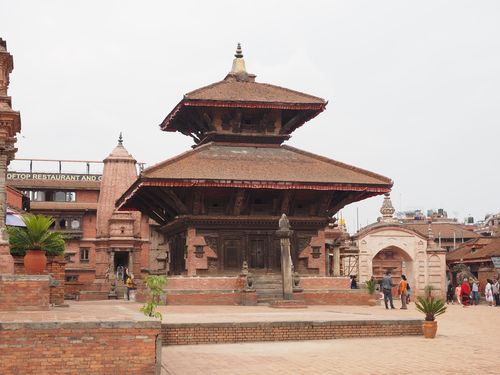
Monument profile
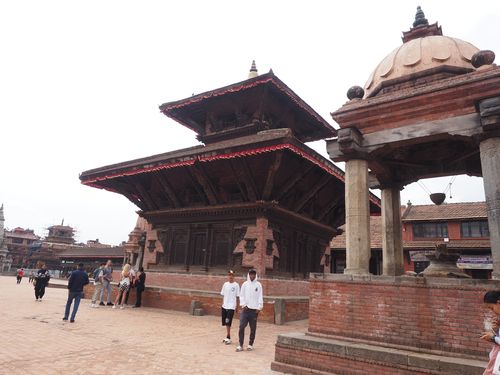
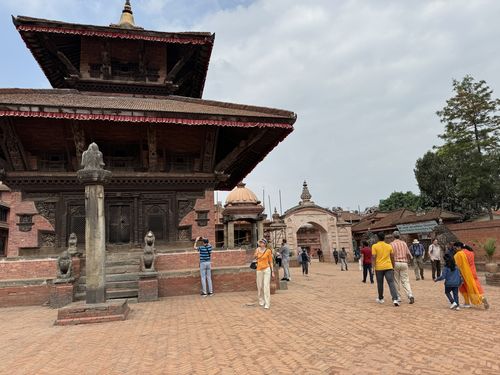
Jagannath temple
Monument category: Hindu Temple
Monument family: Temple
Monument genre: Religious
Cultural heritage: Hindu
Geographic location: Bhaktapur • Nepal
Construction period: 15th century AD
This monument in Bhaktapur is inscribed on the UNESCO World Heritage List since 1979 and is part of the serial property "Kathmandu Valley".See the UNESCO monuments featured on this site
• Links to •
• Dynasties that contributed to the construction of the monument •

• List of videos about Bhaktapur on this site •
Bhaktapur • A Journey Through Nepal’s Historic Wonder
History of Jagannath temple in Bhaktapur
Context of Construction
The Jagannath Temple in Bhaktapur, Nepal, was constructed during a period marked by significant political and cultural developments. In the 17th century, under the reign of King Jitamitra Malla (r. 1673–1696), Bhaktapur experienced a renaissance in art and architecture. King Jitamitra Malla was renowned for his patronage of religious and cultural projects, aiming to enhance the city's spiritual significance and demonstrate his devotion. The construction of the Jagannath Temple was part of this broader initiative to establish Bhaktapur as a prominent center of worship and culture.
The temple was built to enshrine the deities Jagannath, Balabhadra, and Subhadra, reflecting the influence of the Jagannath cult from Puri, India. This incorporation signifies the cultural exchanges between Nepal and India during that era. By introducing the worship of Jagannath, King Jitamitra Malla sought to align his kingdom with broader Hindu traditions, thereby reinforcing his political alliances and cultural ties with neighboring regions.
Historical Events
Throughout its history, the Jagannath Temple has witnessed several significant events that have shaped its current form. The devastating earthquake of 1934 caused extensive damage to many structures in Bhaktapur, including the Jagannath Temple. The original multi-tiered pagoda-style temple suffered severe destruction, leading to its reconstruction in a more modest form. The rebuilt temple featured a single-story structure with a simplified design, diverging from its initial grandeur.
In 2015, another major earthquake struck Nepal, once again impacting Bhaktapur's architectural heritage. The Jagannath Temple sustained damage, prompting restoration efforts to preserve its historical and cultural significance. These events underscore the temple's resilience and the community's commitment to maintaining their cultural landmarks despite natural adversities.
Global Context
The construction of the Jagannath Temple in the 17th century coincided with a global trend of monumental religious architecture. During this period, many regions were erecting grand structures to signify religious devotion and political power. For instance, the Taj Mahal in India, completed in 1653, exemplifies the era's architectural advancements and the emphasis on creating enduring religious monuments. Similarly, European countries were constructing elaborate cathedrals and churches, reflecting the widespread endeavor to manifest spiritual and temporal authority through architecture.
The Jagannath Temple's establishment aligns with this global movement, representing Bhaktapur's aspiration to showcase its religious significance and cultural sophistication. The temple not only served as a place of worship but also as a symbol of the kingdom's prosperity and the ruler's dedication to fostering cultural and religious growth.
Transformations Over Time
Over the centuries, the Jagannath Temple has undergone various transformations due to natural disasters and changing socio-political contexts. The earthquakes of 1934 and 2015 necessitated significant reconstructions, altering the temple's original architectural style. The initial multi-tiered pagoda design was replaced with a simpler structure, reflecting both the immediate need for restoration and the available resources during those periods.
Despite these changes, the temple has retained its religious function and continues to be a focal point for worship and cultural activities. The resilience of the temple mirrors the community's dedication to preserving their heritage and adapting to evolving circumstances while honoring their traditions.
Contemporary Role and Cultural Importance
In modern times, the Jagannath Temple remains integral to Bhaktapur's cultural and religious landscape. It serves as an active site for worship, particularly during festivals dedicated to Lord Jagannath. These celebrations attract devotees from various regions, reinforcing communal bonds and cultural identity. The temple also contributes to Bhaktapur's identity as a city rich in historical and spiritual heritage, drawing tourists and researchers interested in its storied past.
The temple's presence enhances the local community's sense of pride and continuity, linking present generations with their ancestral traditions. It stands as a testament to the enduring nature of cultural practices and the importance of preserving such sites for future generations.
Conservation Status and Challenges
Preserving the Jagannath Temple poses several challenges, primarily due to environmental factors and urban development pressures. The region's susceptibility to earthquakes necessitates ongoing structural assessments and restorations to ensure the temple's stability and safety. Additionally, urbanization and increasing tourism introduce concerns regarding the preservation of the temple's integrity and the surrounding area's cultural ambiance.
Efforts to conserve the temple involve collaboration between local authorities, cultural heritage organizations, and the community. These initiatives focus on employing traditional construction techniques and materials to maintain the temple's historical authenticity. Balancing the demands of modernization with the need to protect cultural heritage remains a critical aspect of the temple's conservation strategy.
In summary, the Jagannath Temple of Bhaktapur stands as a significant monument embodying the city's historical, cultural, and religious evolution. From its inception in the 17th century under King Jitamitra Malla to its present-day role, the temple reflects the community's resilience and dedication to preserving their heritage amidst changing times and challenges.
Architectural Analysis of the Jagannath Temple, Bhaktapur
The Jagannath Temple in Bhaktapur, Nepal, is a fine representation of Newar architecture, showcasing a synthesis of indigenous building techniques, artistic expressions, and religious symbolism. Constructed during the Malla period, this temple reflects the architectural advancements and aesthetic sensibilities of the time. This analysis examines its technological innovations, construction materials, artistic influences, spatial organization, and conservation challenges.
Technological and Architectural Innovations of the Era
The Malla dynasty oversaw a period of architectural refinement in the Kathmandu Valley, with the Jagannath Temple embodying several key advancements.
One of its most distinctive features was its original multi-tiered pagoda design, an architectural form widely adopted in Nepalese temple construction. This tiered structure not only provided a visually imposing profile but also distributed weight efficiently, reinforcing stability against earthquakes. The use of wooden struts (tundals) to support the overhanging roofs demonstrated an advanced understanding of structural engineering.
Another significant innovation was the integration of natural ventilation. The lattice windows (ankhijhyal) facilitated air circulation while protecting the inner sanctum from excessive sunlight and dust. This method also ensured a comfortable interior temperature, a crucial adaptation to the valley’s climatic conditions.
Materials and Construction Methods
The choice of materials was guided by both practical and symbolic considerations. The temple was built using:
- Brick: The walls consist of locally fired terracotta bricks, known for their durability and weather resistance. The fine masonry work showcases the craftsmanship of the Newar builders.
- Wood: Timber, primarily sal wood (Shorea robusta), was used for doorways, windows, and struts due to its strength and resistance to pests.
- Mud Mortar and Lime Plaster: These materials provided flexibility, helping the structure absorb seismic shocks—a feature particularly important in earthquake-prone Nepal.
The construction techniques reflected a deep understanding of earthquake mitigation, as seen in the interlocking brick system and wooden joints, which allowed movement during seismic activity.
Architectural and Artistic Influences
The Jagannath Temple integrates Newar craftsmanship with external influences, reflecting Nepal’s position as a cultural crossroads.
- The pagoda style is a hallmark of Newar architecture, but elements of Indian temple design, particularly from Odisha (home to the famous Jagannath Temple of Puri), influenced the shrine’s religious iconography.
- Carvings on the wooden struts depict Hindu deities, mythological animals, and tantric symbols, blending Hindu and Buddhist traditions.
- The roof’s diminishing tiers, supported by intricate brackets, mirror principles found in Chinese architecture, hinting at cultural exchanges along ancient trade routes.
Spatial Organization and Structural Features
The Jagannath Temple was originally a two-tiered structure, following the mandala layout typical of Newar religious buildings.
The main sanctum (garbhagriha) housed the idols of Jagannath, Balabhadra, and Subhadra, arranged in accordance with traditional Hindu iconography.
The outer courtyard functioned as a gathering place for devotees, reflecting the social role of temples in Newar culture.
The tiered pagoda roof, supported by elaborately carved struts, provided an aesthetic and functional element, ensuring rainwater runoff while enhancing the temple’s verticality.
Notable Dimensions and Historical Anecdotes
Originally, the Jagannath Temple was approximately three times its current size, with two stories and a grand tiered roof.
The 1934 earthquake caused severe structural damage, reducing the temple to a single-story shrine with a simpler roof design.
Unlike most Nepalese temples, which are made primarily of brick and wood, early descriptions suggest that the Jagannath Temple may have originally featured a shikhara-style spire, before adopting the pagoda format.
A rare feature inside the temple is the unique coloration of its idols: Jagannath (blue), Subhadra (red), and Balabhadra (white)—a departure from standard representations.
International Recognition and Conservation Challenges
Though overshadowed by Bhaktapur’s Nyatapola and Dattatreya temples, the Jagannath Temple remains an important part of the city’s UNESCO-listed heritage. However, conservation efforts face several obstacles:
- Seismic Activity: The temple is vulnerable to earthquakes, as demonstrated by its partial destruction in 1934 and 2015.
- Urbanization Pressures: The growing population and commercial expansion of Bhaktapur Durbar Square threaten the temple’s immediate surroundings.
- Material Degradation: The wooden carvings, exposed to humidity, pests, and pollution, require constant maintenance.
Preservation efforts focus on traditional reconstruction techniques, ensuring that restorations use authentic materials. However, securing funding for these projects remains a significant challenge.
Conclusion
The Jagannath Temple of Bhaktapur, though less grand than it once was, remains an architectural and cultural landmark. Its original tiered pagoda design, intricate carvings, and Newar craftsmanship embody the technical and artistic achievements of its time.
Despite earthquakes, urban encroachment, and material decay, the temple continues to serve as a place of worship and a cultural symbol, reminding visitors of Bhaktapur’s rich architectural heritage. Conservation efforts must balance historical preservation with modern urban realities, ensuring that the Jagannath Temple endures for future generations.