

 Français (France)
  Nederlands (nl-NL)
 The Golden Gate of the Royal Palace in Bhaktapur is an 18th-century monumental entrance leading to the former palace of the Malla kings. It is distinguished by its finely sculpted gilded metalwork, depicting Hindu religious and mythological motifs. Regarded as one of the most remarkable gates in the Kathmandu Valley, it showcases Newar craftsmanship and reflects Bhaktapur’s political and cultural significance at the time of its construction. This monument is a UNESCO World Heritage Site, ensuring its recognition and preservation as part of the region’s architectural heritage.
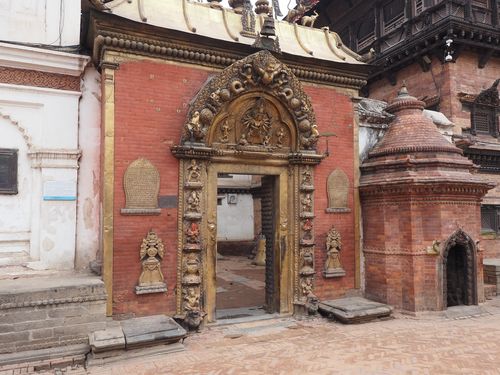
Bhaktapur • Golden Gate of royal palace
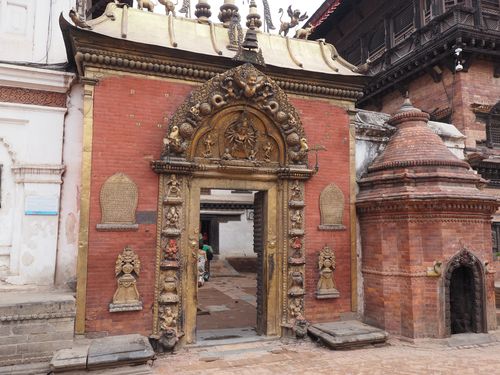
Bhaktapur • Golden Gate of royal palace
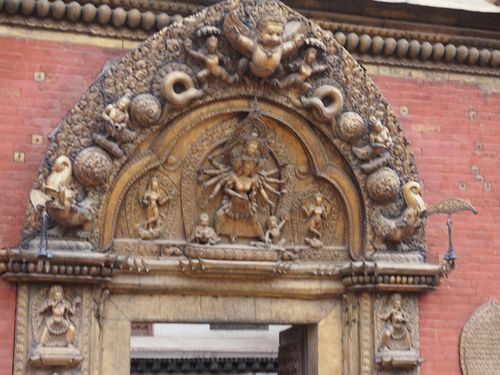
Bhaktapur • Golden Gate of royal palace
Monument profile
Golden Gate of royal palace
Monument category: Palace
Monument family: Palace and Annexes
Monument genre: Residential
Cultural heritage: Hindu
Geographic location: Bhaktapur • Nepal
Construction period: 18th century AD
This monument in Bhaktapur is inscribed on the UNESCO World Heritage List since 1979 and is part of the serial property "Kathmandu Valley".See the UNESCO monuments featured on this site
• Links to •
• Dynasties that contributed to the construction of the monument •

• List of videos about Bhaktapur on this site •
Bhaktapur • A Journey Through Nepal’s Historic Wonder
• Sources •
Sources
- Slusser, Mary Shepherd. Nepal Mandala: A Cultural Study of the Kathmandu Valley. Princeton University Press, 1982.
- Gutschow, Niels. Architecture of the Newars: A History of Building Typologies and Details in Nepal. Serindia Publications, 2011.
- UNESCO. "Kathmandu Valley World Heritage Site." whc.unesco.org
- Department of Archaeology, Nepal. "Preservation of Bhaktapur Monuments." doa.gov.np
The History of the Golden Gate of the Royal Palace in Bhaktapur
The Golden Gate of the Royal Palace in Bhaktapur, Nepal, is one of the most remarkable historical and architectural landmarks of the Kathmandu Valley. This intricately designed gateway, adorned with gilded copper and finely detailed sculptures, serves as the main entrance to the inner courtyards of the Royal Palace of Bhaktapur. Built during the 18th century, the Golden Gate represents the artistic and political ambitions of the Malla dynasty, which ruled over the valley for centuries. Today, it stands as a symbol of Nepal’s rich cultural heritage and is part of the UNESCO World Heritage Site of the Kathmandu Valley.
Political and Social Context of Its Construction
A Monument of Power and Devotion
The Golden Gate was commissioned by King Bhupatindra Malla, who ruled Bhaktapur from 1696 to 1722. The Malla kings were known for their patronage of the arts and architecture, and Bhupatindra Malla was particularly ambitious in enhancing the grandeur of Bhaktapur. His reign marked an era of prosperity and intense artistic expression, during which Bhaktapur sought to rival the other city-states of the Kathmandu Valley—Kathmandu and Patan.
The gate was constructed as a symbol of divine authority and royal power. In Nepalese culture, gateways to palaces and temples were often elaborately decorated to reflect their sacred significance. The Golden Gate, leading to the Taleju Temple complex within the palace, was intended to emphasize the divine legitimacy of the Malla rulers, who were seen as intermediaries between the gods and their subjects.
Rivalries and the Malla Kingdoms
At the time of its construction, the Kathmandu Valley was divided among three competing Malla kingdoms—Bhaktapur, Kathmandu, and Patan. Each ruler sought to outshine the others by commissioning grand architectural projects. Bhaktapur, known for its cultural and artistic excellence, used monuments like the Golden Gate to assert its dominance. The gate’s intricate design and expensive gilded embellishments reflected Bhaktapur’s wealth and artistic supremacy.
Major Historical Events Affecting the Site
The Fall of the Malla Dynasty
In 1769, Prithvi Narayan Shah, the king of the Gorkha kingdom, invaded the Kathmandu Valley and unified Nepal under a single rule. This conquest ended the era of the Malla kings and led to a shift in political power. Although the palace complex, including the Golden Gate, lost its function as a royal residence, it remained a revered site due to its religious significance.
Earthquakes and Restorations
The Kathmandu Valley is prone to earthquakes, and Bhaktapur has suffered damage from several significant seismic events. The 1934 earthquake caused major destruction to many historical structures, but the Golden Gate survived with relatively minimal damage. However, the 2015 earthquake, which devastated much of Nepal’s heritage, led to extensive restoration efforts around Bhaktapur Durbar Square, ensuring that the Golden Gate and other historical structures remained intact.
Modern Conservation Efforts
Recognizing its historical and cultural importance, the Nepalese government and international organizations, including UNESCO, have undertaken preservation projects to maintain the Golden Gate. Artisans trained in traditional Newar craftsmanship have played a crucial role in its conservation, ensuring that the original artistic elements are preserved.
The Global Context at the Time of Its Construction
The Golden Gate was built at a time when monumental architecture was flourishing across the world. Some notable contemporaneous constructions include:
- France: The Palace of Versailles (expanded in the late 17th and early 18th centuries), showcasing the power of Louis XIV.
- China: The Qing Dynasty’s Forbidden City continued to be an administrative and cultural center.
- India: The Mughal Empire was at its peak, with architectural marvels like the Red Fort in Delhi being expanded.
Bhaktapur’s Golden Gate, though part of a smaller kingdom, shares the same intent as these global monuments—to project power, culture, and devotion.
Transformations and Changes Over Time
Shifts in Function: Originally the main ceremonial entrance to the palace, the Golden Gate lost its political function after the fall of the Malla dynasty. However, it remained the entrance to the Taleju Temple, which is still an active religious site.
Restoration and Urban Changes: As Bhaktapur expanded, urban planning adjustments were made to accommodate tourism, but the Golden Gate retained its original position and prominence.
Touristic and Cultural Importance: Today, the gate serves as a major attraction, drawing visitors and scholars fascinated by its artistry and history.
The Role of the Monument Today
Cultural and Religious Importance
The Golden Gate remains a spiritually significant monument in Bhaktapur. Since it provides access to the Taleju Temple, it continues to play a role in religious festivals, particularly during events like Dashain, the most important Hindu festival in Nepal.
A Tourist and Heritage Site
As part of Bhaktapur Durbar Square, the Golden Gate attracts thousands of visitors every year. Its detailed sculptures, including celestial beings, mythical creatures, and deities, offer insight into the religious iconography of the Malla period.
Current State and Conservation Challenges
Threats to the Monument
Seismic Activity: Given Nepal’s susceptibility to earthquakes, the Golden Gate is at risk from future tremors.
Pollution and Environmental Damage: Air pollution and acid rain threaten the gilded copperwork, requiring regular maintenance.
Tourism Management: While tourism brings revenue for preservation, excessive foot traffic can lead to erosion and structural strain.
Preservation Efforts
UNESCO and Nepalese Government Initiatives: Programs are in place to stabilize and restore heritage structures within Bhaktapur.
Local Artisan Engagement: Traditional techniques are employed to ensure that any restoration work maintains authenticity.
Tourism Regulation: Entry fees for Bhaktapur Durbar Square help fund conservation efforts, ensuring the long-term preservation of the site.
Conclusion
The Golden Gate of the Royal Palace in Bhaktapur stands as an extraordinary example of Malla-era artistry, religious symbolism, and political ambition. Its history reflects the cultural and political dynamics of medieval Nepal, while its present role as a UNESCO-protected site underscores its importance in the global heritage landscape. Despite the challenges of environmental and seismic threats, dedicated conservation efforts continue to safeguard this treasure for future generations. As one of Nepal’s most iconic monuments, the Golden Gate remains a testament to the skill and vision of the Newar artisans who created it, ensuring its place in both history and the contemporary world.
The Architecture of the Golden Gate of the Royal Palace in Bhaktapur
The Golden Gate of the Royal Palace in Bhaktapur, Nepal, is one of the most remarkable examples of Newar craftsmanship and a significant architectural landmark of the Malla dynasty. Constructed in the 18th century under the rule of King Ranjit Malla, this ornate gate serves as the main entrance to the Bhaktapur Durbar Square and leads to the Royal Palace courtyard. Known for its intricate repoussé metalwork, it represents a fusion of Hindu and Buddhist iconography, showcasing the artistic mastery of the era. This article delves into its architectural innovations, materials, influences, and preservation challenges.
Technological and Architectural Innovations of the Time
During the Malla period, Bhaktapur was a center of architectural excellence. The construction of the Golden Gate reflects the advanced metalworking skills and urban planning strategies developed in the region.
Structural Stability and Seismic Considerations
Given Nepal’s seismic activity, traditional Newar architecture incorporated flexible materials and layered construction to absorb tremors. Though the Golden Gate is primarily a decorative feature rather than a structural element, its placement and integration within the palace complex followed earthquake-resistant principles:
- Timber Frames: The gate is embedded within a brick and timber structure, which helps absorb vibrations.
- Multi-Layered Construction: The palace walls surrounding the gate are built with brick and mortar, reducing structural strain during earthquakes.
- Metal Flexibility: The repoussé metalwork is slightly flexible, preventing cracks during minor seismic activity.
Ventilation and Climate Considerations
Unlike fully enclosed palace structures, the Golden Gate is an open architectural feature that allows for natural airflow between the palace and the courtyard. The courtyard configuration ensures that temperature regulation within the inner palace remains consistent, reducing heat retention during hot seasons.
Materials and Construction Techniques
The Golden Gate exemplifies the sophisticated use of metals, stone, and brick in Newar architecture.
Primary Materials Used
- Gilded Copper: The relief sculptures are crafted from copper sheets, covered in a layer of gold, giving the gate its distinctive luminous appearance.
- Brick and Mortar: The surrounding walls are composed of traditional Newar bricks, known for their deep red hue and durability.
- Timber Supports: Wooden lintels and door frames provide structural reinforcement, crucial in an earthquake-prone region.
Repoussé Metalworking
One of the defining features of the Golden Gate is the repoussé technique, in which thin copper sheets were hammered from the reverse side to create intricate three-dimensional reliefs. This technique, mastered by Newar artisans, allowed for:
- Highly detailed iconography, including depictions of Hindu deities such as Bhairava, Durga, and Garuda.
- Lightweight but durable design, making the gate resistant to environmental degradation.
- A sense of grandeur, as the gold overlay added a regal aesthetic.
Symbolic and Decorative Elements
The ornamental features of the Golden Gate serve both aesthetic and spiritual purposes:
- Mythological Guardians: Two large lions flank the entrance, symbolizing royal power and divine protection.
- Divine Imagery: The central panel features Taleju Bhawani, the patron goddess of the Malla kings, highlighting the spiritual authority of the monarchy.
- Floral and Geometric Patterns: The archway is adorned with intricate carvings, reflecting the synthesis of Hindu and Buddhist artistic traditions.
Architectural and Artistic Influences
The Golden Gate is a prime example of Newar craftsmanship, but it also incorporates artistic influences from neighboring cultures.
Newar Artistic Tradition
The Malla kings were patrons of the Newar artistic heritage, which was characterized by:
- Elaborate metalwork, particularly in temples and royal palaces.
- Fusion of Hindu and Buddhist iconography, reflecting Nepal’s religious syncretism.
- Detailed wood and stone carvings, often depicting deities, celestial beings, and protective motifs.
Influence of Indian and Tibetan Art
- Mughal Influence: The symmetry and floral motifs echo Mughal aesthetics, which were introduced to Nepal through trade and diplomatic exchanges.
- Tibetan Influence: The use of gilded copper repoussé is also seen in Tibetan monastery decorations, indicating cultural cross-pollination between Nepal and Tibet.
Spatial Organization and Structural Features
The Golden Gate functions as a threshold between the public and royal spheres within Bhaktapur Durbar Square.
Layout and Orientation
The gate serves as the main entrance to the inner palace courtyard.
It is aligned with key ceremonial spaces, ensuring ritual processions pass through it.
The height and width of the archway are designed to accommodate royal entourages.
Key Structural Elements
- Main Archway: The grand arch is the focal point, adorned with golden reliefs and mythical figures.
- Side Niches: Flanking the entrance are small alcoves, possibly used for ritual offerings or guardian statues.
- Stepped Entrance: Leading to the palace courtyard, the stairs are made of stone, ensuring durability.
Notable Dimensions and Anecdotes
Approximate Height: 4 meters (13 feet)
Width: 3 meters (10 feet)
Legends: It is said that King Ranjit Malla was so enamored with the beauty of the gate that he lamented its loss when he surrendered Bhaktapur to the Gorkha king Prithvi Narayan Shah in 1769.
Recognition and Conservation Challenges
UNESCO World Heritage Status
The Golden Gate, along with Bhaktapur Durbar Square, has been recognized as a UNESCO World Heritage Site since 1979.
Conservation Challenges
- Seismic Damage: The 2015 Nepal earthquake caused structural instability, requiring urgent restoration efforts.
- Pollution and Weathering: Airborne pollutants and acid rain have tarnished the gilded surfaces over time.
- Tourist Footfall: Increased tourism has led to wear on surrounding structures, necessitating restricted access during conservation work.
Preservation Efforts
Gold Leaf Restoration: Regular re-gilding ensures that the reliefs maintain their brilliance.
Earthquake Reinforcement: Strengthening the brick and timber framework to improve seismic resilience.
Tourism Management: Controlled access to prevent overexposure to human contact and environmental factors.
Conclusion
The Golden Gate of the Royal Palace in Bhaktapur is an architectural masterpiece, blending advanced metalworking, religious iconography, and strategic urban planning. It stands as a symbol of the Malla dynasty’s artistic patronage and a testament to Nepal’s rich cultural heritage. While restoration efforts continue, this monument remains one of the most exquisite examples of repoussé craftsmanship in South Asia and a jewel of Bhaktapur’s architectural legacy.