

 Français (France)
  Nederlands (nl-NL)
 The Vatsala Devi Temple is a religious monument located in Bhaktapur, Nepal. It is known for its stone structure and refined architecture, characteristic of the Newar style. Recognized as a significant landmark, it has been part of the UNESCO World Heritage Site since 1979 as part of the Kathmandu Valley. The temple is associated with Hindu worship and remains an important religious site. Its urban setting and integration within a historic ensemble make it a key element of Bhaktapur’s cultural landscape.
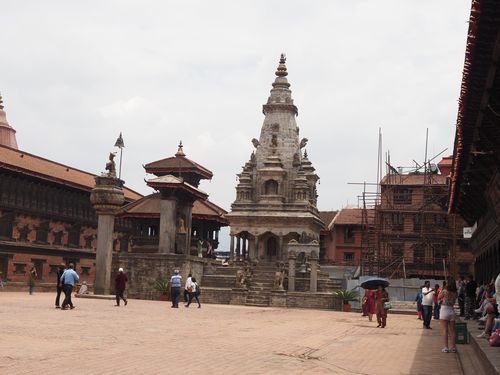
Bhaktapur • Vasala Devit temple

Bhaktapur • Vasala Devit temple

Bhaktapur • Vasala Devit temple
Monument profile
Vasala Devit temple
Monument category: Hindu Temple
Monument family: Temple
Monument genre: Religious
Cultural heritage: Hindu
Geographic location: Bhaktapur • Nepal
Construction period: 17th century AD
This monument in Bhaktapur is inscribed on the UNESCO World Heritage List since 1979 and is part of the serial property "Kathmandu Valley".See the UNESCO monuments featured on this site
• Links to •
• Dynasties that contributed to the construction of the monument •

• List of videos about Bhaktapur on this site •
Bhaktapur • A Journey Through Nepal’s Historic Wonder
The History of Vatsala Devi Temple in Bhaktapur
The Vatsala Devi Temple, located in Bhaktapur, Nepal, is one of the most significant Hindu monuments in the Kathmandu Valley. Constructed in the late 17th century, the temple is an exquisite representation of Newar architecture and reflects the religious devotion and artistic sophistication of the Malla dynasty. Dedicated to Vatsala Devi, a manifestation of the goddess Durga, the temple was a focal point for religious worship and civic life.
Throughout its history, the temple has withstood political rivalries, earthquakes, and urban transformations. However, it suffered severe destruction during the 2015 Nepal earthquake, leading to ongoing reconstruction efforts aimed at preserving its historical and cultural significance.
Political and Social Context of Its Construction
The Malla Dynasty and Rivalries in the Kathmandu Valley
The Malla dynasty (12th–18th century) ruled over the Kathmandu Valley, dividing it into three competing city-states: Kathmandu, Patan, and Bhaktapur. These cities engaged in cultural and architectural rivalries, each attempting to outshine the others by constructing grand palaces, temples, and public squares.
Bhaktapur, under King Jitamitra Malla (1673–1696), aimed to strengthen its religious identity and establish itself as the cultural and spiritual capital of the valley. The construction of the Vatsala Devi Temple in 1696 was part of this broader ambition.
Religious and Cultural Significance
The temple was dedicated to Vatsala Devi, an incarnation of Durga, the fierce warrior goddess who symbolizes protection and divine power. It was built to ensure divine blessings upon the kingdom and reinforce the king’s legitimacy through religious patronage.
The choice of a stone structure instead of the more common brick and wood reflects the desire for permanence and grandeur, distinguishing the temple from others in the region.
Major Historical Events Impacting the Site
The Role of Successive Kings
King Bhupatindra Malla (1696–1722) further enhanced the religious and architectural landscape of Bhaktapur, adding elements such as the Taleju Bell in 1737, placed near the temple.
The temple became an important site for Hindu rituals and royal ceremonies, reinforcing its status in the city.
Natural Disasters and Earthquake Damage
The 1934 Nepal Earthquake caused minor damage but left the temple largely intact.
However, the 2015 Nepal Earthquake completely destroyed the temple, reducing it to rubble.
The disaster led to massive restoration efforts, with the goal of rebuilding the temple using traditional materials and methods.
Reconstruction Efforts
The temple is currently being rebuilt according to historical documentation and local craftsmanship traditions.
The Kathmandu Valley Preservation Trust (KVPT) and UNESCO are involved in the restoration.
Global Context at the Time of Its Construction
Similar Architectural Movements Worldwide
During the late 17th century, various cultures worldwide were engaging in monumental architectural projects:
- In Europe, Baroque architecture flourished, with elaborate churches and palaces.
- In India, the Mughal Empire was constructing grand Islamic-inspired structures such as the Taj Mahal (completed in 1653).
- In China, the Qing dynasty was expanding imperial palaces.
The Vatsala Devi Temple reflects Bhaktapur’s engagement in this global movement of monumental architecture, showcasing local craftsmanship while integrating broader Hindu stylistic influences.
Architectural Changes and Transformations
Evolution Over the Centuries
Originally built in 1696, the temple remained largely unchanged until the 2015 earthquake.
Post-earthquake, a faithful reconstruction effort is underway.
Changes in Urban Surroundings
The temple was historically surrounded by other religious and civic structures in Durbar Square.
Modern urbanization has led to increased tourist foot traffic, changing its role from a solely religious structure to a cultural landmark.
Role and Cultural Importance Today
Religious and Social Significance
The temple remains a place of devotion, with Hindu worshippers visiting daily.
It is integrated into major festivals, such as Dashain and Tihar.
Tourism and Global Recognition
As part of Bhaktapur Durbar Square, the temple is a UNESCO World Heritage Site (since 1979).
Tourists visit it as a symbol of Nepal’s architectural and religious heritage.
Conservation Challenges and Modern Threats
Threats to Its Preservation
Seismic activity continues to be a major risk.
Pollution and urban encroachment threaten the preservation of stone carvings.
Reconstruction and Restoration Plans
Government and international heritage organizations are collaborating to ensure the authenticity of the restoration.
The use of traditional stonework methods is being prioritized to maintain the original aesthetic.
Conclusion
The Vatsala Devi Temple is a testament to Newar craftsmanship, Hindu devotion, and royal ambition in 17th-century Bhaktapur. Though destroyed by the 2015 earthquake, its ongoing reconstruction symbolizes Nepal’s commitment to heritage preservation. As a UNESCO World Heritage Site, it continues to inspire historians, architects, and visitors, reaffirming its importance in Nepal’s cultural landscape.
The History of Vatsala Devi Temple in Bhaktapur
The Vatsala Devi Temple, located in Bhaktapur, Nepal, is a significant example of the region's architectural heritage. Constructed in the late 17th century, this temple exemplifies the technological and artistic advancements of its time. Its design, materials, and stylistic influences offer insight into the cultural and historical context of the era.
Technological and Architectural Innovations
During the 17th century, Nepalese architecture saw a fusion of indigenous styles with external influences, leading to innovative construction techniques. The Vatsala Devi Temple is a testament to this blend, showcasing the shikhara architectural style, which is more commonly associated with North Indian temple design. This style is characterized by a towering, beehive-shaped spire, symbolizing Mount Meru, the mythical axis of the universe in Hindu cosmology.
The temple's construction utilized advanced masonry techniques. Craftsmen employed precise stone-cutting methods to fit sandstone blocks seamlessly without the use of mortar, ensuring both stability and aesthetic appeal. This dry-stone construction not only provided resilience against natural calamities but also demonstrated the artisans' mastery over material properties and structural engineering.
In terms of urban planning, the temple's placement within Bhaktapur Durbar Square reflects thoughtful integration into the city's spatial dynamics. Positioned on a three-tiered plinth, the elevated structure signifies its religious importance and offers a vantage point over the surrounding area. This strategic location facilitated natural ventilation, with the raised platform allowing air circulation beneath the structure, mitigating moisture accumulation and preserving the integrity of the stonework.
Materials and Construction Methods
The primary material used in the temple's construction is sandstone, a departure from the traditional brick and timber prevalent in Nepalese architecture. Sandstone was chosen for its durability and workability, allowing for intricate carvings that adorn the temple's façade. The stone's natural hues also contribute to the temple's aesthetic, harmonizing with the earthy tones of the surrounding structures.
Artisans employed chiseling and carving techniques to create detailed sculptures and reliefs depicting deities, floral motifs, and mythological scenes. These embellishments not only serve decorative purposes but also convey religious narratives and cultural values. The precision of the carvings indicates a high level of skill and an understanding of both artistic expression and structural integrity.
Architectural and Artistic Influences
The Vatsala Devi Temple embodies a confluence of regional and foreign architectural elements. While the shikhara style roots it in North Indian temple architecture, the temple also incorporates features distinctive to the Newar culture of the Kathmandu Valley. This synthesis is evident in the temple's ornate woodwork, lattice windows, and the inclusion of local deities alongside pan-Hindu iconography.
The temple's artistic motifs reflect both religious symbolism and local aesthetics. Floral patterns, geometric designs, and depictions of mythological figures are meticulously carved into the stone surfaces. These elements not only enhance the temple's visual appeal but also serve as didactic tools, conveying stories and moral lessons to the devotees.
Organization and Structure
Spatially, the temple is organized to facilitate religious rituals and accommodate congregations. The sanctum sanctorum, housing the deity Vatsala Devi, is centrally located, allowing devotees to circumambulate as part of their worship. The three-tiered plinth not only elevates the temple physically but also symbolically represents ascending levels of spiritual attainment.
Notable design elements include the presence of guardian sculptures, such as lions and elephants, flanking the temple's entrance. These figures serve both protective and symbolic functions, embodying strength and vigilance. Additionally, the temple is accompanied by the Taleju Bell, installed in 1737, which historically signaled prayer times and communal gatherings.
Dimensions and Notable Facts
While specific measurements of the Vatsala Devi Temple are not extensively documented, its prominence within Bhaktapur Durbar Square underscores its significance. The temple's towering shikhara spire distinguishes it from surrounding structures, making it a focal point of the square.
An intriguing aspect of the temple is the "barking bell" legend. It is believed that when the Taleju Bell is rung, dogs in the vicinity begin to bark, adding a layer of local folklore to the temple's history. This anecdote reflects the temple's integration into the social and cultural fabric of Bhaktapur.
Conservation and Global Recognition
The Vatsala Devi Temple has faced challenges in preservation, notably the devastation caused by the 2015 earthquake, which led to its complete destruction. Reconstruction efforts commenced in 2017, adhering to traditional building methods to maintain historical authenticity, and were completed in 2021. These efforts underscore the community's commitment to preserving its cultural heritage.
As part of the Bhaktapur Durbar Square, the temple is included in the UNESCO World Heritage Site designation for the Kathmandu Valley. This recognition highlights its architectural and cultural significance on a global scale, emphasizing the importance of its preservation for future generations.
In conclusion, the Vatsala Devi Temple stands as a testament to the architectural ingenuity and cultural synthesis of 17th-century Nepal. Its design, materials, and artistic elements reflect a harmonious blend of local traditions and external influences, contributing to its enduring legacy as a cultural and religious landmark.