

 Français (France)
  Nederlands (nl-NL)
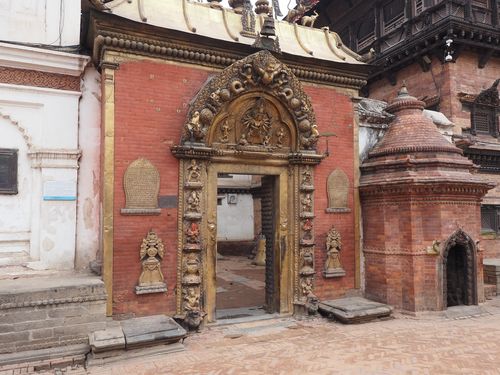
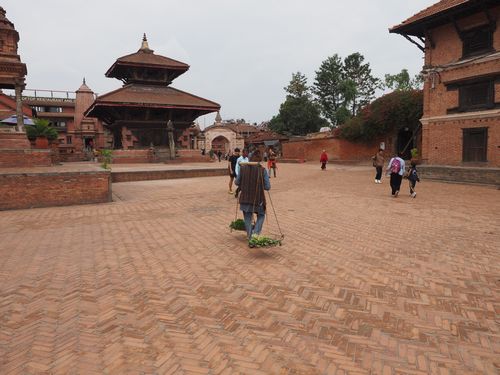
 The Bhairavnath Temple is a religious structure located in Bhaktapur, Nepal. Dedicated to Bhairava, a formidable form of Shiva associated with protection and power, it holds cultural and spiritual significance within the local traditions. Originally built during the reign of the Malla kings, it has undergone several restorations over time. The temple plays a key role in the city's annual rituals and festivals, reinforcing its importance in the spiritual and social life of the community. Its distinctive architecture and religious significance make it a prominent feature of Bhaktapur’s heritage.

Monument profile
Bhairavnath temple
Monument category: Hindu Temple
Monument family: Temple
Monument genre: Religious
Cultural heritage: Hindu
Geographic location: Bhaktapur • Nepal
Construction period: 18th century AD
• Links to •
• Dynasties that contributed to the construction of the monument •

• List of videos about Bhaktapur on this site •
Bhaktapur • A Journey Through Nepal’s Historic Wonder
The Historical Evolution of Bhairavnath Temple in Bhaktapur
The Bhairavnath Temple, located in Taumadhi Square, Bhaktapur, Nepal, is a significant religious and architectural landmark dedicated to Bhairava, a fierce manifestation of Shiva. This temple has undergone numerous transformations since its original construction in the 17th century, reflecting the political ambitions of the Malla kings, the religious significance of Bhairava in Nepalese culture, and the architectural advancements of the time. Over the centuries, it has withstood natural disasters, political upheavals, and urban changes, yet remains a central figure in Bhaktapur’s spiritual and cultural identity.
This article explores the historical context surrounding the temple’s construction, major events that have shaped its evolution, and its contemporary role in Nepalese society.
Context of Construction
The Political and Social Landscape
The Bhairavnath Temple was originally built in the early 17th century, during the reign of Jagat Jyoti Malla, ruler of Bhaktapur. At this time, the Kathmandu Valley was divided into three competing Malla kingdoms—Kathmandu, Patan, and Bhaktapur. These city-states vied for dominance through trade, military strength, and cultural achievements. The Malla kings were great patrons of art and religion, using monumental architecture to assert their power and devotion.
For Bhaktapur, the construction of the Bhairavnath Temple was a strategic act. Bhairava, known for his protective and fearsome nature, was revered as a guardian deity who could shield the city from external threats. Erecting a temple in his honor reinforced the king’s spiritual legitimacy while serving as a warning to rival states.
Religious Significance
Bhairava is one of the most powerful forms of Shiva, embodying destruction and time’s inexorable force. His worship was deeply tied to Tantric traditions, which were influential in Nepal at the time. The establishment of a temple dedicated to Bhairava also signified the growing importance of Shakta and Shaiva worship in the Kathmandu Valley.
Major Historical Events
Architectural Transformations
Originally built as a single-tiered pagoda, the temple was expanded into a three-tiered structure during the early 18th century under King Bhupatindra Malla. This expansion aligned with Bhaktapur’s ambition to outshine its rival cities, particularly Kathmandu, which had its own grand religious edifices.
Wars and Political Shifts
The Gurkha conquest of the Kathmandu Valley in 1769, led by Prithvi Narayan Shah, marked a turning point in Nepalese history. Bhaktapur lost its status as a major political center, leading to a decline in royal patronage for temples like Bhairavnath. While the temple remained a revered religious site, the change in ruling power led to a shift in resources and priorities.
Natural Disasters and Restorations
Bhaktapur, like much of Nepal, is prone to earthquakes, which have periodically damaged its historical structures:
- 1934 Earthquake: Caused significant destruction to many of Bhaktapur’s temples, including Bhairavnath, leading to major restoration efforts.
- 2015 Earthquake: One of the most devastating natural disasters in Nepal’s recent history, it severely impacted the temple, requiring another wave of reconstruction and conservation work.
Despite these challenges, the temple has been carefully restored multiple times, ensuring that it remains both structurally sound and aesthetically faithful to its original design.
Global Context at the Time of Construction
During the 17th and 18th centuries, monumental religious architecture was flourishing worldwide:
- India: The Taj Mahal (1632–1653) was being built under the Mughal emperor Shah Jahan, showcasing Islamic and Persian architectural brilliance.
- China: The expansion of Beijing’s Forbidden City reflected the Ming dynasty’s focus on grand imperial architecture.
- Europe: The Baroque period saw the rise of St. Peter’s Basilica in Vatican City and Versailles in France.
The construction of Bhairavnath Temple fits within this global trend where rulers used architecture as a demonstration of power, faith, and cultural identity.
Transformations Over the Centuries
Modifications and Structural Changes
The Bhairavnath Temple has evolved over time:
Expanded to three tiers under King Bhupatindra Malla, enhancing its grandeur.
Strengthened and restored multiple times due to earthquake damage.
Urban integration: The temple remains a focal point in Taumadhi Square, surrounded by other significant structures such as the Nyatapola Temple.
Functionality and Religious Role
While its primary function as a place of worship has remained unchanged, the temple has also played a crucial role in public celebrations, particularly the Bisket Jatra festival.
The Temple’s Role Today
Cultural and Religious Significance
The Bhairavnath Temple remains an active religious center, where devotees offer prayers to Bhairava. Rituals, processions, and Tantric practices associated with the deity continue to be performed, highlighting the temple’s enduring spiritual relevance.
Symbol of Bhaktapur’s Identity
The temple is not only a place of worship but also a symbol of Bhaktapur’s resilience. Despite political changes and natural disasters, the community has consistently restored and preserved this landmark, reflecting a strong sense of cultural heritage.
Tourism and Economic Impact
As part of Bhaktapur’s UNESCO World Heritage Site, the temple attracts thousands of visitors annually, contributing to the local economy. However, this tourist influx also presents challenges, such as increased wear and strain on the structure.
Conservation Status and Challenges
Structural Preservation
Efforts to preserve the Bhairavnath Temple have been ongoing, particularly in the wake of recent earthquakes. Conservation teams focus on:
- Using traditional materials (brick, wood, and stone) to maintain authenticity.
- Reinforcing the wooden framework to enhance earthquake resistance.
- Limiting modern alterations to protect historical integrity.
Threats to Preservation
The temple faces several challenges:
- Urbanization: The expansion of modern infrastructure around Bhaktapur affects the traditional skyline and risks encroaching on heritage sites.
- Environmental factors: Pollution and climate conditions contribute to the gradual erosion of stone carvings and wooden elements.
- Tourist impact: Increased foot traffic and exposure to foreign materials accelerate wear and tear.
Future Outlook
The Department of Archaeology Nepal and international heritage organizations continue to work on long-term strategies for preservation. Efforts include sustainable tourism policies, controlled restoration projects, and increased awareness programs for local communities and visitors.
Conclusion
The Bhairavnath Temple is more than just a historical monument; it is a living symbol of Bhaktapur’s religious, cultural, and architectural heritage. From its construction under the Malla kings to its role in modern Nepalese society, the temple has endured wars, dynastic changes, and natural disasters while remaining a central pillar of devotion and identity.
As conservation efforts continue, the temple’s historical significance and spiritual legacy remain intact, ensuring that future generations can witness and appreciate this remarkable architectural and religious marvel.
The Architecture of Bhairavnath Temple in Bhaktapur
The Bhairavnath Temple, situated in Taumadhi Square in Bhaktapur, Nepal, is one of the finest examples of Newar architecture, a style deeply rooted in the Kathmandu Valley’s artistic and cultural traditions. Dedicated to Bhairava, a fierce manifestation of Shiva, this temple stands as a testament to the architectural ingenuity of the Malla period. Over the centuries, the temple has undergone several transformations, with structural enhancements that reflect the evolution of Nepalese craftsmanship, technological advancements in construction, and the influence of neighboring cultures.
This article provides a detailed analysis of the temple’s architecture, examining its construction techniques, materials, influences, spatial organization, and conservation challenges.
Technological and Architectural Innovations of the Period
Construction Techniques and Engineering Mastery
The Bhairavnath Temple is an example of Nepalese pagoda architecture, characterized by its tiered roofs, intricately carved wooden supports, and earthquake-resistant construction methods. Built initially in the 17th century and expanded in the 18th century, the temple employs traditional load-bearing structures combined with flexible materials that allow it to withstand seismic activity.
One of the key architectural innovations is the post-and-lintel system, a method widely used in Newar temples. This system features:
- Massive wooden beams that distribute weight efficiently across the structure.
- Interlocking wooden joints that provide flexibility, enabling the structure to absorb shocks during earthquakes.
- A tiered pagoda-style roof, which gradually reduces in weight at higher levels, ensuring structural stability.
Additionally, the multi-tiered roofs act as a natural stabilizing mechanism, dispersing seismic energy rather than concentrating it at a single point. This innovation was particularly important in the seismically active Kathmandu Valley, where large-scale stone constructions were less viable.
Urban and Climatic Adaptation
The temple’s architectural layout is deeply integrated into Bhaktapur’s urban planning, standing at the heart of Taumadhi Square, surrounded by other major structures such as the Nyatapola Temple. The temple’s design is optimized for both functionality and climate adaptability:
- Elevated base: Protects the structure from seasonal flooding and soil erosion.
- Open spaces between roof tiers: Allow for natural ventilation, preventing excessive heat buildup in the inner sanctum.
- Deep eaves and sloped roofs: Efficiently channel rainwater away from the temple’s wooden components, preventing moisture damage.
These features showcase a holistic approach to construction, where architectural aesthetics merge with functional resilience and environmental sustainability.
Materials and Construction Methods
Choice of Materials and Their Properties
The construction of the Bhairavnath Temple involved a combination of locally available materials, each chosen for its durability, aesthetic quality, and structural advantages:
- Brick and mud mortar: The primary building material, providing a lightweight yet sturdy foundation.
- Sal wood (Shorea robusta): Used extensively in pillars, beams, doors, and struts, known for its resistance to decay and insect infestation.
- Clay tiles: Cover the roofing, ensuring effective waterproofing while maintaining an organic aesthetic.
- Gilded copper embellishments: Seen in doorways and decorative panels, these elements add a spiritual and artistic dimension while offering protection against weathering.
Innovative Construction Methods
The Newar craftsmen of the Malla period employed advanced woodworking techniques, including:
- Mortise and tenon joints, allowing for precise wood interlocking without the need for nails.
- Earthquake-resistant timber framing, designed to flex rather than break under seismic stress.
- Hand-carved struts, depicting mythological figures, which serve both structural and decorative purposes.
The meticulous craftsmanship in the wooden carvings and brickwork showcases the unparalleled skill of the Newar artisans, who blended aesthetic complexity with engineering sophistication.
Architectural and Artistic Influences
Regional and Foreign Influences
The Bhairavnath Temple stands as a fusion of local and external artistic traditions:
- Newar Pagoda Style: Originating in the Kathmandu Valley, this architectural style shares similarities with Chinese and Tibetan pagodas, particularly in its tiered roofing system.
- Indian Temple Iconography: The depiction of Bhairava and other Hindu deities on the temple’s carvings reflects Indian Shaivite influences, particularly from Bihar and Bengal.
- Tibetan Buddhist Aesthetics: Elements such as guardian figures and mandala motifs in the decorative patterns suggest an interplay between Hindu and Buddhist artistic traditions.
Ornamentation and Symbolism
The temple’s wood carvings, gilded details, and sculptural reliefs are not merely decorative; they carry deep symbolic meanings:
- Depictions of Bhairava in various forms emphasize his role as a protector of Bhaktapur.
- Carved struts and pillars illustrate scenes from Hindu mythology, reinforcing the temple’s religious significance.
- Floral and geometric motifs represent Tantric cosmology, illustrating the interplay of the material and spiritual worlds.
These intricate details reflect the spiritual and artistic sensibilities of the Malla period, making the Bhairavnath Temple a masterpiece of religious iconography and craftsmanship.
Structural Organization and Layout
Spatial Arrangement
The temple follows a tripartite hierarchical structure, with:
A raised brick platform, providing elevation and protection.
A square sanctum, where the principal idol of Bhairava is enshrined.
Three-tiered roofing, with each level progressively reducing in size to create a sense of vertical ascension.
Notable Architectural Features
Massive entrance doors, adorned with carved deities and protective motifs.
Multi-layered roof struts, each depicting figures from Hindu and Tantric traditions.
Central sanctum, reserved for priests and worshippers, emphasizing intimacy and spiritual focus.
Statistical Insights and Notable Anecdotes
Key Dimensions and Figures
Height: Approximately 25 meters, making it one of Bhaktapur’s tallest structures.
Number of Tiers: Three, in accordance with traditional Newar pagoda design.
Age: Over 400 years, with continuous renovations.
Legends and Stories
Local lore suggests that the idol of Bhairava within the temple emanates divine power, and failing to perform the correct rituals could lead to unforeseen calamities in Bhaktapur.
During Bisket Jatra, the temple is at the heart of processions and offerings, reinforcing its role in communal worship and protection rituals.
International Recognition and Conservation Challenges
Architectural Significance in a Global Context
The Bhairavnath Temple is part of the rich historical heritage of Bhaktapur and the Kathmandu Valley, which has been listed as a UNESCO World Heritage Site since 1979. However, the temple itself is not explicitly included in the list of inscribed monuments, which primarily covers Bhaktapur Durbar Square. Nevertheless, its preservation remains crucial for safeguarding Newar architecture and Nepal’s cultural identity.
Preservation Challenges
Seismic Vulnerability: Despite earthquake-resistant features, continuous reinforcement efforts are necessary.
Urban Encroachment: Increasing modernization threatens the temple’s visual and spatial integrity.
Tourist Footfall: The rising number of visitors contributes to wear and tear, necessitating stricter conservation policies.