

 Français (France)
  Nederlands (nl-NL)
 00:00 • intro | 00:35 • temples on every street corner | 02:33 • Intense commercial activity | 04:16 • Religious coexistence | 04:43 • traditional water management
Personal creation from visual material collected during my trip Nepal (2024)
Map of places or practices in Kathmandu on this site
• Use the markers to explore the content •
Kathmandu: Urban Life, Neighbourhood Temples and Everyday Spaces
A Capital Shaped by History and Daily Practice
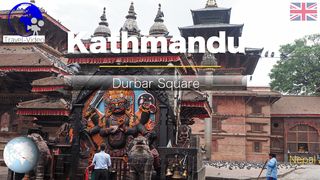
Kathmandu holds a distinctive place in the history of the Himalayas. Capital of Nepal and historic centre of the Kathmandu Valley, the city has long combined political authority, craft production, trade networks, and religious activity. Its urban fabric brings together crowded streets, traditional houses, local shrines, neighbourhood temples, courtyards, markets, and long-established water systems. This creates a city where heritage is not confined to famous monuments but continues through ordinary streets and daily routines.
The video highlights this essential dimension of Kathmandu. It presents a city where sacred symbols appear throughout the urban landscape, where commerce structures movement and public life, where several religious traditions coexist, and where historic water management remains visible. Rather than focusing only on grand ceremonial sites, it explores the living texture of the city.
Shrines at Street Corners, Markets and Water Basins
One of Kathmandu’s most striking features is the presence of small sacred structures throughout residential and commercial districts. These may take the form of Hindu shrines, modest stupas, protective images, lingas, or family-maintained altars. They do not always have the scale of major temples, yet they play an important role in neighbourhood life. Residents may stop briefly for offerings, gestures of respect, or a moment of reflection before beginning the day.
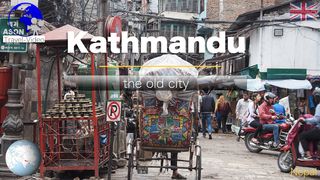
The city is equally marked by intense commercial activity. Street shops, workshops, market stalls, and family-run businesses form a dense economic landscape. Open-fronted stores, goods displayed close to the pavement, and a continuous flow of pedestrians reveal an urban culture based on proximity and constant exchange. Streets function not only as routes of circulation but as places of encounter, negotiation, and social presence.
Another key element is the network of urban basins, fountains, and historic water points. In a densely inhabited valley, access to water required careful planning over many centuries. Reservoirs, stone spouts, ponds, and courtyard water systems supported domestic life, ritual practice, and the growth of neighbourhood communities.
A City of Religious Coexistence
Kathmandu developed within a cultural environment where Hinduism and Buddhism have long interacted. This coexistence is visible not only through separate institutions but also through shared spaces, overlapping symbolism, and parallel devotional practices. Certain sites may be visited by followers of different traditions, while festivals and rituals often reflect centuries of exchange.
The valley was deeply shaped by Newar civilisation, whose merchants, rulers, craftsmen, and religious communities created one of South Asia’s richest urban cultures. Wood-carved temples, monastery courtyards, votive shrines, and decorated domestic architecture reflect this legacy. Even as the modern city expands, the older urban core preserves many of these forms.
Earthquakes, demographic growth, and changing economic patterns have altered parts of Kathmandu, yet continuity often survives through use. A shrine still visited each morning, a fountain still known to residents, or a family shop maintained across generations can preserve historical meaning more effectively than formal monuments alone.
Understanding Kathmandu’s Urban Structure
The video also helps explain how the city functions spatially. Kathmandu is not simply a collection of separate monuments. Housing, worship, commerce, and movement remain closely connected. Temples appear beside shops and homes. Public spaces may serve ritual, economic, and social purposes at the same time. Water structures are practical infrastructure but also historical markers.
This layered organisation explains the visual density many visitors notice. A single street can contain architecture, trade, symbolic imagery, neighbourhood interaction, and traces of earlier centuries. To understand Kathmandu, one must look beyond landmarks and pay attention to recurring details.
What the Videos on This Site Make Especially Clear
Videos created largely from carefully selected and animated photographs offer a particular advantage in a city as visually complex as Kathmandu. They allow the eye to slow down and observe details often missed during a rapid walk through busy streets. Carved wooden windows, shrine niches, market fronts, stone basins, narrow lanes, and spatial relationships become easier to read.
Progressive transitions help viewers understand how one element connects to another. A temple within a commercial street, a water point beside houses, or the coexistence of different religious symbols within the same district becomes clearer through paced visual sequencing.
Close framing can also reveal materials, textures, proportions, and practical uses of space. Rather than presenting only movement, this approach encourages careful observation and gradual comprehension of the city’s urban character.
A Capital Best Understood Through Its Details
Kathmandu is compelling not only because of its celebrated monuments, but because sacred practice, trade, and historic infrastructure remain embedded in everyday life. Its streets preserve a rare continuity between past and present. To continue exploring these themes, the detailed pages linked to neighbourhood temples, street shops, and urban basins offer a deeper understanding of the many layers of Nepal’s capital.
Links to related pages
• Main dynasties that ruled the region • •


Audio Commentary Transcript
In the old city of Kathmandu, temples are not set apart from everyday life.
They are part of it.
At every crossroads, in every narrow street, a shrine reminds us that the sacred accompanies ordinary gestures.
Here, praying, working, and moving through the city are not separate activities, but elements of a single urban rhythm, shaped by centuries of living traditions.
The old city of Kathmandu is not limited to its temples.
It is also defined by narrow streets, shops, workshops, and constant activity.
Businesses open directly onto the public space, with little separation from the street.
Commercial and craft activities shape the everyday life of the old city.
In Kathmandu’s old city, Hindu temples and Buddhist stupas have coexisted for centuries.
These small shrines, embedded in the urban fabric, reflect a shared religious practice in which traditions overlap without excluding one another.
In Kathmandu’s old city, water long shaped urban life.
Public basins, supplied by springs and traditional channels, met everyday needs as well as ritual uses.
Often associated with temples and inner courtyards, they reflect a collective system of water management that was essential to the city before the modern era.

Original music – personal creation
Disclaimer: Despite its appropriateness, copyright issues prevent the use of nepalese traditional music in "Kathmandu • Urban life, local temples and everyday spaces", hence the use of royalty-free music. Despite our careful selection, some might regret this decision, which is necessary to avoid potential lawsuits. Although difficult, this decision is the only viable solution.


