Français (France)
  Nederlands (nl-NL)
 Of Hindu tradition, the Licchavi (Nepal) dynasty ruled for approximately 350 years, ± between 400 and 750 over all or part of Nepal.
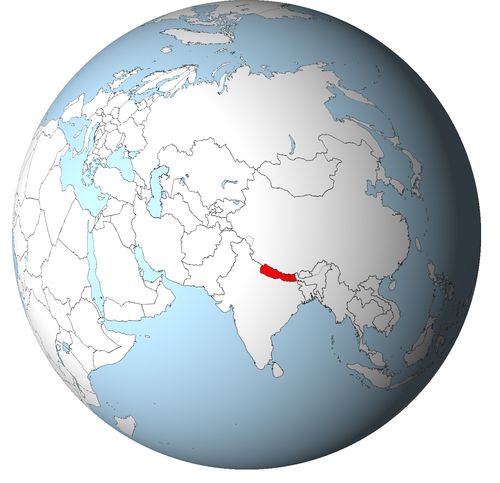
This map illustrates the maximum territory that the Licchavi (Nepal) Dynasty had reached at its height, covering the current regions of __ in Nepal. Its main purpose is to provide a visual aid to understand the geographical extent of this dynasty. However, it's important to note that the contemporary borders of these regions may not necessarily coincide with the historical territories.
The Licchavi Dynasty and Its Role in the Formation of Early Nepal
A foundational dynasty in the Kathmandu Valley
The Licchavi dynasty occupies a central place in the early history of Nepal. It ruled mainly in the Kathmandu Valley between approximately the fourth and ninth centuries, although the chronology of its earliest and latest phases remains partly uncertain. The Licchavi period is especially important because it represents one of the first eras of Nepalese history that can be studied through inscriptions, coins, sculptures, monuments and administrative records.
The dynasty established a durable political framework in the valley, an area that was already settled, fertile and connected to wider trade routes. The Licchavis did not rule a vast empire, but they transformed the Kathmandu Valley into a structured kingdom with royal authority, religious institutions, landholding elites and local communities. Their period helped define the political and cultural identity of early Nepal.
Royal authority and the growth of written administration
One of the major contributions of the Licchavi period was the development of inscriptional administration. Sanskrit inscriptions engraved on stone pillars, slabs and monuments record donations, royal orders, religious foundations, land grants and the names of rulers and officials. These inscriptions make the Licchavi period one of the earliest historically documented phases of Nepal.
The Licchavi kings generally used royal titles such as maharaja or great king, reflecting the influence of Sanskrit political culture from northern India. However, their kingdom was not simply an imitation of Indian models. Royal power was adapted to the geography and society of the Kathmandu Valley. The monarch ruled in cooperation with aristocratic families, local authorities, religious institutions and administrative officers.
The political structure was not always stable or fully centralised. At certain moments, powerful ministers such as Amshuvarman, Jishnugupta and Vishnugupta exercised real authority, sometimes overshadowing the Licchavi king. This shows that the dynasty’s political history was shaped not only by kingship, but also by court factions and elite families.
A strategic position between India and the Himalayas
The Kathmandu Valley gave the Licchavis a strategic position between the Gangetic plain to the south and the Himalayan world to the north. This location strongly influenced the development of the kingdom. From the south came Sanskrit culture, Brahmanical ritual forms, administrative models and religious ideas linked to Hinduism and Buddhism. From the north came contacts with Tibet and the trans-Himalayan routes.
This intermediary position made Nepal more than an isolated mountain kingdom. The Licchavi rulers were able to participate in wider networks of diplomacy, trade and culture. Relations with northern India remained important throughout the period, while contacts with Tibet and China became especially visible in the seventh century, notably under Narendradeva. The Licchavi kingdom thus acted as a bridge between South Asia and the Himalayan regions.
Religious pluralism as a feature of Nepalese culture
The Licchavi period was decisive in shaping the religious landscape of Nepal. Hinduism and Buddhism both flourished in the Kathmandu Valley, often side by side. Royal and aristocratic donations supported temples, monasteries, stupas, shrines and religious communities. This coexistence became a lasting feature of Nepalese civilisation.
Hindu traditions, especially those connected with Vishnu and Shiva, received significant patronage. The temple of Changu Narayan, associated with early Licchavi inscriptions, illustrates the importance of Vaishnavism in the valley. At the same time, Buddhism remained an important religious force, supported by monasteries, stupas and lay communities.
The interaction between Hindu and Buddhist traditions during the Licchavi period helped create the complex religious culture later associated with the Kathmandu Valley. Rather than developing as completely separate traditions, Hindu and Buddhist practices often shared artistic forms, sacred spaces and patronage networks.
Artistic and architectural achievements in the valley
The Licchavi dynasty played a major role in the development of Nepalese art and architecture. Although many wooden structures from the period have not survived, inscriptions, stone sculptures and temple sites show that the valley already possessed a refined artistic culture. Images of Vishnu, Shiva, Buddhist figures and local deities reveal both Indian influence and local adaptation.
Licchavi art helped prepare the later flowering of Newar artistic traditions. Sculptures from this period show careful workmanship, balanced forms and a strong religious purpose. Temples, shrines, water structures and religious foundations contributed to the organisation of sacred space in the valley.
The importance of the Licchavi period lies not only in individual monuments, but in the formation of a cultural landscape. The Kathmandu Valley became a network of sacred sites, settlements, inscriptions and ritual centres. This pattern remained influential in later Nepalese history.
Agriculture, land grants and commercial routes
The Licchavi economy was based primarily on the fertile lands of the Kathmandu Valley. Agriculture provided the foundation of royal power, local wealth and religious patronage. Inscriptions mention land grants, irrigation, taxes and donations, showing that land was central to both administration and social prestige.
Temples and monasteries were also economic institutions. They received land, managed resources and supported priests, monks, artisans and attendants. Religious patronage therefore contributed to the redistribution of wealth and to the organisation of local society.
Trade also played an important role. The valley’s position between India and Tibet allowed goods, people and ideas to move through Nepal. While the Licchavi economy was not based solely on trans-Himalayan trade, this function strengthened the kingdom’s prosperity and cultural openness.
A lasting framework for Nepalese history
The Licchavi dynasty was one of the formative powers in the history of Nepal. It gave the Kathmandu Valley a durable political structure, developed a written administrative culture, supported religious pluralism and encouraged artistic production. Its rulers and elites shaped a society connected to India, Tibet and the Himalayan world.
After the decline of Licchavi authority, many of the institutions and cultural patterns established during this period survived. Later dynasties inherited a valley already marked by temples, inscriptions, sacred sites, aristocratic networks and trade routes. For this reason, the Licchavi period remains a foundational chapter in the political, cultural and economic history of Nepal.
The Geographic Reach of the Licchavi Dynasty in the Kathmandu Valley and Early Nepal
A kingdom centred on the Kathmandu Valley
The Licchavi dynasty of Nepal exercised its authority mainly in the Kathmandu Valley between approximately the fourth and ninth centuries. Its territorial base was not a vast empire, but a compact and strategically important valley surrounded by hills and connected to both the Gangetic plain and the Himalayan world. This geography shaped the character of Licchavi rule. Their power was concentrated in a fertile, densely settled and religiously important region rather than spread across a large and uniform territorial state.
The Kathmandu Valley formed the core of the kingdom. It included the areas of present-day Kathmandu, Patan, Bhaktapur and several surrounding settlements and sacred sites. The valley offered fertile agricultural land, water resources, internal routes and a favourable location for trade. These conditions allowed the Licchavis to develop a stable political and economic base. Their authority was expressed through inscriptions, land grants, religious foundations and royal patronage across the valley.
Political control over urban and sacred centres
The Licchavi rulers controlled or influenced several important centres within the valley. Sites such as Changu Narayan, Deopatan, Hadigaon and settlements associated with present-day Kathmandu and Patan appear in the historical landscape of the period. These places were not merely administrative points. They were also religious, economic and symbolic centres that helped define royal authority.
The dynasty strengthened its presence through donations to temples, monasteries and religious communities. This created a territorial system in which sacred sites played a political role. A temple or monastery that received land, revenue or royal protection became part of the structure of power. As a result, Licchavi control was not only military or administrative. It was also ritual, economic and social.
The Kathmandu Valley became an organised cultural landscape under Licchavi rule. Inscriptions record grants, regulations and royal orders, showing that the dynasty sought to manage land, taxation and religious institutions. The valley’s territory was therefore integrated through a combination of kingship, aristocratic families, local communities and religious establishments.
Influence beyond the central valley
Although the valley was the heart of Licchavi power, the dynasty probably exercised influence over surrounding hill regions and routes leading outward from the basin. The passes around the valley were important for security, trade and communication. Control of these routes allowed the Licchavis to connect with the lower lands to the south and the Himalayan zones to the north.
The exact limits of Licchavi territory are difficult to define. Like many early South Asian kingdoms, its authority was strongest at the centre and more variable at the margins. Some peripheral areas may have recognised the prestige or overlordship of the Licchavi king without being directly administered in the same way as the valley. Others may have been linked through trade, religious patronage, marriage alliances or local chiefs.
This pattern means that Licchavi geography should be understood as a sphere of influence rather than a state with fixed modern borders. Their power radiated from the Kathmandu Valley along routes, river valleys and settlement networks.
Relations with northern India
The southern orientation of the Licchavi kingdom connected Nepal with northern India. The Gangetic plain was a major source of political models, religious ideas, Sanskrit learning and administrative vocabulary. Licchavi inscriptions were written in Sanskrit and royal titles such as maharaja reflected the influence of Indian political culture.
These southern connections influenced the dynasty’s relations with neighbouring and distant Indian powers. The Licchavis had to position themselves within a broader world shaped by the Gupta and post-Gupta kingdoms, regional rulers and Brahmanical intellectual networks. They were not simply dependent on India, but they drew heavily from Indian cultural forms while adapting them to the social and geographic conditions of Nepal.
The route between the Kathmandu Valley and the plains encouraged the movement of priests, scholars, merchants, artisans and religious specialists. This helped integrate Nepal into the cultural world of South Asia while preserving a distinct local identity.
Contacts with Tibet and the Himalayan world
To the north, Licchavi territory was connected with the Himalayan routes leading toward Tibet. These routes became increasingly important, especially from the seventh century onward. The valley’s position made it a natural intermediary between India and Tibet, giving the Licchavi kingdom a role that exceeded the size of its territory.
Relations with Tibet were political, commercial and cultural. Under rulers such as Narendradeva, Nepal became involved in wider Himalayan diplomacy. Contacts with Tibet and, indirectly, with China show that the Licchavi kingdom was not isolated. It formed part of a trans-Himalayan network through which goods, envoys, monks and ideas moved.
The northern routes increased the strategic value of the Kathmandu Valley. Whoever controlled the valley could influence movement between the Indian plains and the Tibetan plateau. This made the Licchavi kingdom important to neighbouring powers, even though its territorial base remained relatively small.
A limited territory with wide regional importance
The geographic extension of the Licchavi dynasty was therefore concentrated but influential. The dynasty controlled the Kathmandu Valley and probably influenced surrounding routes and hill zones. Its authority was not defined by large-scale conquest, but by the effective organisation of a strategic valley.
This geography shaped its relations with neighbouring dynasties and regions. To the south, the Licchavis absorbed and adapted elements of Indian political and religious culture. To the north, they participated in Himalayan exchanges with Tibet. Within the valley, they developed a system that linked monarchy, landholding, temples, monasteries and local elites.
The Licchavi kingdom was territorially modest compared with large Indian empires, but its position gave it exceptional importance. By controlling the Kathmandu Valley, the dynasty helped turn early Nepal into a political and cultural bridge between northern India and the Himalayan world.
The chronology of the Licchavis of Nepal remains approximate. This list follows the main historical period, c. 400-750, distinguishing attested or probable rulers, phases of shared power with powerful ministers and the late period before the transition to other lineages.
Formation of Licchavi power in the Kathmandu Valley
- Vrishadeva or Vishvadeva (c. 400) • A ruler placed at the beginning of the historical Licchavi phase, he is associated with the consolidation of power in the Kathmandu Valley.
- Shankaradeva I (c. 425) • An early king of the line, he belongs to the period before the first securely dated inscriptions.
- Dharmadeva (c. 450-464) • Father of Manadeva I, he preceded the first Licchavi ruler clearly attested by inscription.
Better-attested Licchavi kings of the fifth and sixth centuries
- Manadeva I (c. 464-505) • The first securely documented Licchavi king, he commissioned the Changu Narayan inscription and issued coins in his name.
- Mahideva (c. 505-506) • A very briefly mentioned ruler, his reign remains uncertain in Licchavi chronology.
- Vasantadeva (c. 506-532) • He maintained dynastic continuity after Manadeva I and belongs to the consolidation phase of the kingdom.
- Manudeva (first half of the 6th century) • A king known from a probable chronology, he remains less documented than rulers attested by inscriptions.
- Vamanadeva or Vardhamanadeva (c. 538) • A ruler in the Licchavi sequence, he belongs to a period of political transition.
- Ramadeva (c. 545) • A little-known king, he forms part of the continuity of sixth-century Licchavi monarchy.
- Amaradeva (mid-6th century) • A poorly dated ruler, his reign is preserved in dynastic lists without abundant documentation.
- Gunakamadeva (mid-6th century) • A king placed in the sixth-century chronology, he remains difficult to date precisely.
- Ganadeva (c. 560-565) • He ruled briefly during a period marked by the growing influence of aristocratic families.
- Gangadeva (c. 567-573) • A Licchavi ruler of the second half of the sixth century, he governed during a politically complex phase.
- Manadeva II (c. 575-576) • A briefly mentioned king, he is sometimes retained in the Licchavi succession despite limited evidence.
Royal authority and domination by powerful ministers
- Shivadeva I (c. 590-604) • An important king, he ruled when the minister Amshuvarman gained decisive political influence.
- Amshuvarman (c. 605-621, effective rule) • First a powerful minister, he later exercised royal authority and dominated the kingdom despite his non-Licchavi origin.
- Udayadeva (c. 621) • The legitimate Licchavi heir, he attempted to restore the line after Amshuvarman’s domination.
- Dhruvadeva (c. 624-625) • A Licchavi king with limited power, he ruled during a period of strong ministerial influence.
- Bhimarjunadeva (c. 631-641, nominal or shared rule) • A Licchavi ruler whose authority was challenged by Jishnugupta and later by Vishnugupta.
- Jishnugupta (c. 631-633, effective power) • A minister or de facto ruler, he exercised significant authority alongside or at the expense of the Licchavi king.
- Vishnugupta (c. 635-641, effective power) • A figure of the same phase of Gupta domination, he controlled power while Licchavi kingship formally survived.
Restoration and late phase of the Licchavi dynasty
- Narendradeva (c. 643-679) • A restoring Licchavi king, he re-established dynastic authority and developed relations with Tibet and China.
- Shivadeva II (c. 694-705) • A late Licchavi ruler, he governed during a period of political continuity after Narendradeva.
- Jayadeva II (c. 713-733) • An important king of the late phase, he is known from inscriptions and from the continued prestige of Licchavi rule.
- Shankaradeva II (c. 748-749) • A briefly attested ruler, he belongs to the period of gradual dynastic decline.
 Links to the main sections of the site