

 Français (France)
  Nederlands (nl-NL)
 The Golden Fountain in Bhaktapur is located in the courtyard of the royal palace at Durbar Square. This traditional water structure, dating back to the Malla period, is known for its finely crafted decorations and cultural significance. It features intricate gilded metalwork and symbolic motifs. Still in use today, it reflects the ingenuity of Newar artisans in water management and the creation of functional yet aesthetically refined public spaces.
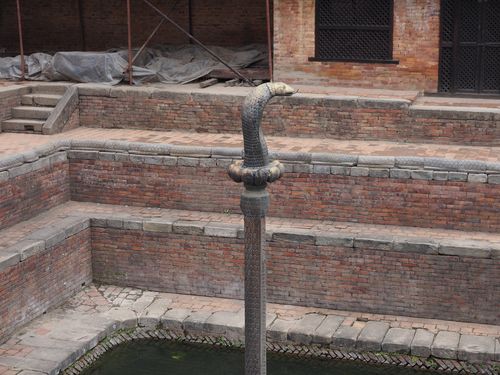
Bhaktapur • Golden Fontain

Bhaktapur • Golden Fontain

Bhaktapur • Golden Fontain
Monument profile
Golden Fontain
Monument category: Fontain
Monument family: Civil engineering structures (bridges, wells, etc.) and factories
Monument genre: Economic
Cultural heritage: Hindu
Geographic location: Bhaktapur • Nepal
Construction period: 17th century AD
This monument in Bhaktapur is inscribed on the UNESCO World Heritage List since 1979 and is part of the serial property "Kathmandu Valley".See the UNESCO monuments featured on this site
• Links to •
• Dynasties that contributed to the construction of the monument •

• List of videos about Bhaktapur on this site •
Bhaktapur • A Journey Through Nepal’s Historic Wonder
• Sources •
Sources
- UNESCO World Heritage Centre. "Kathmandu Valley." https://whc.unesco.org/en/list/121/
- Wikipedia. "Golden Fountain, Bhaktapur." https://en.wikipedia.org/wiki/Bhaktapur_Durbar_Square
Livres et publications
- Shrestha, Purushottam Lochan. Pachpanna Jhyale Darbarko Vishvarupa. Lalitkala Magazine, 2014.
- Vaidya, Tulasī Rāma. Bhaktapur Rajdarbar. Centre for Nepal and Asian Studies, Tribhuvan University, 2002.
The History of the Golden Fountain in Bhaktapur: A Comprehensive Analysis
The Golden Fountain, located in the courtyard of the royal palace at Durbar Square in Bhaktapur, is an extraordinary example of traditional Newar water architecture. Built during the Malla dynasty, it serves both a practical and ceremonial role, symbolizing the importance of water management in urban planning. More than just a functional structure, the fountain is an artistic masterpiece adorned with intricate metalwork and religious iconography. Over the centuries, it has witnessed the rise and fall of dynasties, natural disasters, and urban transformations while maintaining its cultural significance.
Political and Social Context of Construction
The Golden Fountain was built in the 15th century, a time when the Malla kings ruled over the Kathmandu Valley. This period was marked by intense rivalries among the three city-states of Kathmandu, Patan, and Bhaktapur, each striving to surpass the others in terms of architecture and urban development.
Why Was the Monument Built?
The fountain was constructed for several reasons:
- Water Supply and Ritual Purposes: Bhaktapur’s palace complex required a reliable water source for both daily use and religious ceremonies. The Malla kings integrated sophisticated water systems into their palaces, ensuring a steady water supply for the royal family and temple rituals.
- Symbol of Royal Power and Prestige: The elaborate decoration of the fountain, with gilded copper reliefs and mythical motifs, reflected the grandeur of the Malla monarchy.
- Urban Planning and Infrastructure: The construction of public water fountains, or hiti, was a common practice in Newar cities, demonstrating advanced urban engineering and communal water distribution systems.
Political Rivalries and Influences
During the 15th century, Bhaktapur, under the reign of Yaksha Malla (1428–1482), was at the height of its influence. The city had to compete with Kathmandu and Patan, both of which had their own elaborate palace complexes and water systems. To assert its dominance, Bhaktapur’s rulers invested heavily in monumental architecture, including the Golden Gate, the Palace of Fifty-Five Windows, and the Golden Fountain.
Major Historical Events Impacting the Site
The Gorkha Invasion of 1769
The most significant political shift in Bhaktapur’s history occurred in 1769, when Prithvi Narayan Shah, the king of Gorkha, invaded the city and incorporated it into the newly unified Kingdom of Nepal. After the conquest:
- Bhaktapur lost its status as an independent capital, leading to a decline in royal patronage.
- The Golden Fountain remained functional, but its significance diminished as power shifted to Kathmandu.
Earthquakes and Reconstruction
Being located in a seismically active region, Bhaktapur has faced multiple earthquakes, some of which significantly damaged its structures:
- The 1934 earthquake caused widespread destruction, leading to major restoration projects across the city.
- The 2015 earthquake inflicted severe damage on Durbar Square, prompting international efforts to restore the fountain and other monuments.
Continuous Use and Maintenance
Despite political changes and natural disasters, the Golden Fountain has remained operational for centuries. Unlike some abandoned historical sites, it has been continuously used for both ritual and practical purposes.
The Global Context at the Time of Construction
During the 15th century, many civilizations around the world were constructing monumental structures that reflected their technological advancements and socio-political structures:
- In Europe, elaborate fountains were built in cities such as Florence and Rome, emphasizing the importance of urban water management.
- In China, the Ming Dynasty was constructing complex irrigation systems and decorative palace gardens.
- In India, water reservoirs and stepwells (baolis) were being developed, similar in function to Newar water systems.
The Golden Fountain in Bhaktapur is part of this global trend of integrating water infrastructure with artistic expression, demonstrating the sophistication of Malla-era urban planning.
Transformations and Modifications Over Time
Architectural Changes
Although the overall structure of the fountain remains largely intact, minor modifications and repairs have been made over the centuries to maintain its functionality. These include:
- Reinforcement of the stone basin to prevent erosion.
- Re-gilding of the metalwork to restore its original brilliance.
- Adaptation of the water supply system to accommodate modern urban changes.
Changes in Usage
Initially reserved for royal use, the fountain gradually became accessible to the public after the fall of the Malla kingdom. Today, it serves as both a tourist attraction and a functional water source.
Urban Development and Its Impact
The growing urbanization of Bhaktapur has posed challenges to the preservation of historic sites. The increased demand for infrastructure has led to concerns about encroachment, pollution, and water contamination affecting the fountain.
The Role of the Monument Today and Its Cultural Importance
Modern Perception and Usage
Today, the Golden Fountain is considered:
- A key historical landmark within Bhaktapur Durbar Square.
- A religious site, where rituals and offerings are still performed.
- A symbol of Bhaktapur’s cultural identity, attracting both scholars and visitors.
Religious and Social Significance
The fountain remains an integral part of Newar religious traditions, particularly in relation to water deities. Devotees continue to use its water for ablutions and sacred rituals.
Current Conservation Challenges and Restoration Efforts
Threats to Preservation
- Environmental Factors: Pollution and changing weather patterns accelerate the deterioration of stone and metal components.
- Tourism Pressure: Increased foot traffic and visitor interaction contribute to physical wear.
- Urbanization: Construction projects in Bhaktapur risk disturbing historical water channels connected to the fountain.
Restoration Policies and UNESCO Protection
- UNESCO World Heritage Status: As part of the Kathmandu Valley UNESCO listing, the fountain benefits from international conservation funding.
- Government and Local Initiatives: Restoration projects focus on using traditional materials and techniques to maintain authenticity.
Tourism Management Strategies: Regulations have been introduced to control visitor access and prevent damage to historical features.
Conclusion
The Golden Fountain of Bhaktapur is more than just a historical artifact—it is a living piece of heritage, continuously used for both practical and spiritual purposes. Its architectural brilliance, historical significance, and cultural resilience make it an essential landmark in Nepal’s history. Despite facing challenges from earthquakes, urbanization, and environmental threats, restoration efforts ensure that this masterpiece remains a testament to Newar craftsmanship and the enduring legacy of the Malla dynasty.
The Architecture of the Golden Fountain in Bhaktapur: A Comprehensive Analysis
The Golden Fountain, located within the royal palace courtyard of Bhaktapur Durbar Square, is one of the finest examples of Newar hydraulic architecture. Constructed during the Malla period, it exemplifies the sophisticated engineering techniques, artistic mastery, and spiritual symbolism characteristic of medieval Nepalese architecture. More than just a functional water source, it is a monument of cultural significance, blending utility with aesthetic refinement. This article explores the technological innovations, materials, architectural influences, spatial organization, and modern conservation efforts related to this historic fountain.
Technological and Architectural Innovations of the Era
The Golden Fountain represents a high level of urban water management from the Malla period. The fountain was not merely a decorative feature but an essential component of royal infrastructure, supplying water to the palace for ceremonial and daily use.
Advanced Water Management Techniques
- Gravity-fed water system: The fountain operates on a hiti system, a traditional Newar water conduit that channels water from underground sources. This allowed for a steady flow of fresh water, independent of seasonal variations.
- Integration with underground aquifers: The fountain was constructed in direct connection with Bhaktapur’s network of stone spouts, ensuring continuous water supply.
- Efficient drainage and overflow mechanisms: The design prevents water stagnation, directing excess water toward nearby agricultural fields through a series of concealed drainage channels.
Structural Stability and Earthquake Resilience
Nepal is highly prone to earthquakes, and Bhaktapur has suffered multiple seismic events over the centuries. The Golden Fountain was designed to endure these conditions through:
- Interlocking stone masonry, which allows flexibility during tremors.
- Use of heavy stone basins, providing a strong foundation and resistance to shifting.
- Modular metal ornamentation, ensuring that decorative elements could be restored independently if damaged.
The durability of the Golden Fountain, despite multiple earthquakes, demonstrates the ingenuity of Newar engineering in seismic adaptation.
Materials and Construction Methods
The choice of materials and methods of construction played a critical role in ensuring both the longevity and aesthetic quality of the fountain.
Primary Materials Used
- Stone (sandstone and granite): Chosen for its durability and ease of carving, the stone was sourced from local quarries and meticulously shaped.
- Gilded Copper and Bronze: The decorative elements of the fountain are cast in copper alloy, with sections plated in gold to prevent corrosion and enhance visual impact.
- Handmade bricks: Surrounding structures utilize Newar-style baked bricks, providing an architectural harmony with the palace complex.
Innovative Construction Techniques
- Stone carving precision: Artisans used hand tools to carve intricate reliefs, creating lifelike depictions of mythical creatures.
- Metal casting and gilding: The golden components were produced using the lost-wax casting technique, a method that allowed for high levels of detail.
- Waterproofing techniques: A special lime mortar was used to protect the stonework from water erosion, demonstrating knowledge of hydraulic engineering.
The materials and construction techniques used in the Golden Fountain reflect both functional requirements and aesthetic ambitions, making it one of the most sophisticated hydraulic structures of its time.
Architectural and Artistic Influences
The Golden Fountain is an architectural hybrid, incorporating elements from local Newar traditions, Indian influences, and Tibetan Buddhist motifs.
Newar Architectural Features
- Ornate metalwork: The fountain's spouts feature elaborate carvings of serpentine Nagas and mythological beasts.
- Tiered layout: The multi-layered design, where water cascades from an upper level to the lower basin, follows the traditional hiti format found in Newar settlements.
- Religious symbolism: Carvings of Hindu deities, guardian figures, and tantric imagery suggest that the fountain was not just utilitarian but also a site of ritual purification.
Foreign Influences
- Indian Shikhara elements: Some ornamental details resemble North Indian temple architecture, reflecting cross-cultural exchanges.
- Tibetan iconography: The fountain’s dragon motifs mirror similar depictions in Tibetan Buddhist art, suggesting artistic interactions between Nepal and Tibet.
The fusion of styles in the Golden Fountain highlights Bhaktapur’s role as a cultural and artistic hub within the Himalayan region.
Spatial Organization and Structural Layout
The Golden Fountain is part of a larger architectural ensemble, positioned strategically within the royal palace complex.
Key Structural Elements
- Primary water spout: The main spout, shaped like a mythical creature (Makara), serves as the principal point of water discharge.
- Secondary decorative elements: Smaller, intricately designed copper reliefs frame the structure, enhancing its aesthetic appeal.
- Enclosed courtyard setting: The fountain is set within a protected palace courtyard, limiting environmental exposure while maintaining its ceremonial function.
Dimensions and Notable Features
Height: Approximately 2 meters, allowing a controlled water flow from elevated basins.
Width: Around 3 meters, ensuring sufficient capacity for multiple users during rituals.
Material weight: The gilded copper components weigh over 50 kg, making them among the heaviest ornamental metalworks in Bhaktapur.
This combination of precise engineering and artistic embellishment makes the Golden Fountain a rare example of functional yet monumental Newar craftsmanship.
Recognition and Conservation Challenges
The Golden Fountain holds a prominent place in Nepal’s cultural heritage, yet it faces significant challenges in preservation.
- International Recognition and UNESCO Protection
- Listed as part of the Kathmandu Valley UNESCO World Heritage Site since 1979.
Recognized for its unique combination of water management and artistic expression.
Current Conservation Issues
Environmental degradation: Air pollution and acid rain accelerate the corrosion of metal elements.
Seismic risks: Given its age, the structure remains vulnerable to future earthquakes.
Tourism impact: The increasing visitor traffic puts pressure on the surrounding architectural integrity.
Preservation Strategies
Periodic re-gilding of copper elements to prevent decay.
Traditional restoration techniques, maintaining Newar craftsmanship methods.
Controlled visitor access to reduce physical wear on the structure.
Efforts to preserve and maintain the Golden Fountain are essential to ensure its legacy for future generations.
Conclusion
The Golden Fountain of Bhaktapur is not merely an architectural relic—it is a living piece of Nepalese history. Its sophisticated hydraulic system, exquisite craftsmanship, and spiritual significance make it an outstanding example of medieval Newar engineering. Despite environmental threats and urbanization, ongoing conservation efforts continue to protect this masterpiece. The Golden Fountain stands as a testament to the ingenuity of the Malla dynasty, demonstrating the enduring legacy of Nepalese heritage.