

 Français (France)
  Nederlands (nl-NL)
 The Wakupaati Narayan Temple is a religious structure in Bhaktapur, Nepal. Dedicated to Vishnu, it reflects the significance of spiritual traditions in the region. The monument showcases local craftsmanship and cultural practices while remaining an active place of worship. Its location within a historically rich urban setting makes it a notable part of the city's heritage.
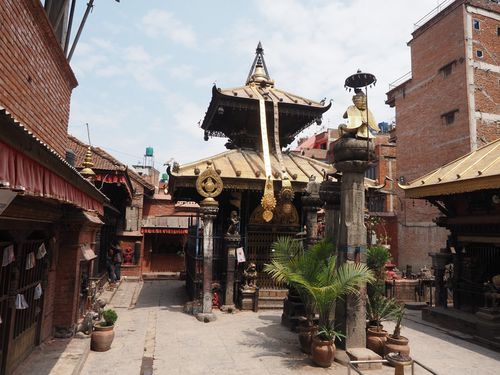
Bhaktapur • Wakupaati Narayan temple
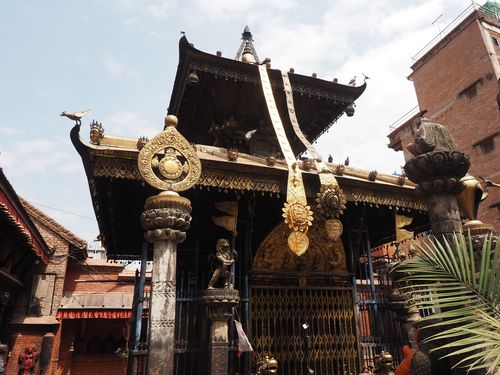
Bhaktapur • Wakupaati Narayan temple
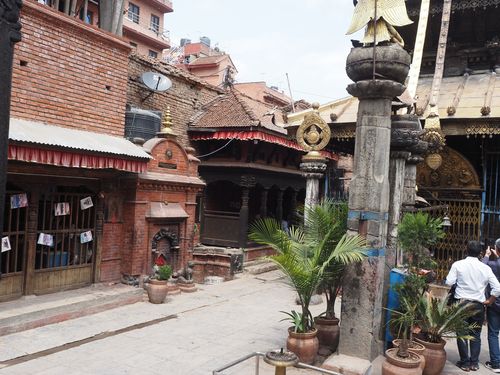
Bhaktapur • Wakupaati Narayan temple
Monument profile
Wakupaati Narayan temple
Monument category: Hindu Temple
Monument family: Temple
Monument genre: Religious
Cultural heritage: Hindu
Geographic location: Bhaktapur • Nepal
Construction period: 17th century AD
• Links to •
• Dynasties that contributed to the construction of the monument •

• List of videos about Bhaktapur on this site •
Bhaktapur • A Journey Through Nepal’s Historic Wonder
The History of Wakupaati Narayan Temple in Bhaktapur: A Legacy of Power and Devotion
The Wakupaati Narayan Temple, nestled in the heart of Bhaktapur, Nepal, is a significant religious and historical monument. It stands as a testament to the architectural brilliance and religious fervor of the Malla period while reflecting the broader socio-political landscape of medieval Nepal. Over centuries, this temple has witnessed dynastic struggles, urban transformations, and restoration efforts, making it an invaluable cultural asset. This article explores the temple’s historical significance by examining its construction context, major historical events, transformations, and its role in modern Nepalese society.
Political and Social Context of Its Construction
The Wakupaati Narayan Temple was constructed during the rule of the Malla dynasty, a period marked by intense temple-building activities in the Kathmandu Valley. The Mallas, who reigned from the 12th to the 18th centuries, were known for their patronage of arts, architecture, and Hinduism. The temple's construction can be understood within the framework of political rivalry, religious devotion, and urban development.
The Role of the Mallas in Temple Construction
The Mallas saw religious architecture as a means to legitimize their rule. Kings often commissioned temples to honor Hindu deities, reinforcing their divine right to govern. In Bhaktapur, the seat of one of the three main Malla kingdoms, temple construction was also a display of power and wealth, aimed at surpassing the architectural achievements of Kathmandu and Patan.
The Wakupaati Narayan Temple, dedicated to Vishnu-Narayan, likely served multiple purposes:
Religious Devotion: As a shrine to Vishnu, the temple was central to royal worship and religious festivals.
Political Symbolism: The construction demonstrated the prosperity and authority of Bhaktapur's rulers.
Urban Planning: The temple was integrated into Bhaktapur’s layout, reinforcing the sacred geometry of the city.
Rivalries and Alliances
Bhaktapur was one of the three rival Malla kingdoms, alongside Kathmandu and Patan. The construction of grand temples was part of a broader competitive spirit among these cities. Each kingdom sought to outshine the others by commissioning temples that were grander and more intricately designed. The construction of the Wakupaati Narayan Temple was likely influenced by this race for architectural and religious supremacy.
Moreover, external threats—such as the growing influence of the Gorkha Kingdom, which would later unify Nepal—meant that Bhaktapur needed to solidify its identity. The temple served not only as a spiritual center but also as a cultural stronghold.
Major Historical Events Affecting the Site
Wars, Sieges, and Destruction
Throughout its history, the Wakupaati Narayan Temple has faced various challenges, including political upheavals and natural disasters.
The Unification of Nepal (1768-1769)
In the late 18th century, the Gorkhali King Prithvi Narayan Shah launched a military campaign to unify Nepal. Bhaktapur, the last of the Malla strongholds, fell in 1769, leading to the decline of its royal patronage. While the temple itself was not deliberately destroyed, the shifting power dynamics meant that many structures in the city suffered neglect.
The Earthquake of 1934
Nepal’s 1934 earthquake was one of the most devastating disasters in the country’s history. Several temples in Bhaktapur suffered severe damage, and the Wakupaati Narayan Temple required restoration. Efforts were made to rebuild the temple using traditional methods, but some modifications were introduced.
The Earthquake of 2015
In April 2015, another major earthquake struck Nepal, causing extensive damage to Bhaktapur’s heritage sites. The Wakupaati Narayan Temple sustained structural damage, prompting renewed conservation efforts.
Restorations and Urban Transformations
Bhaktapur’s status as a UNESCO World Heritage Site has led to significant conservation initiatives. The temple has undergone multiple restorations, often employing traditional construction methods to maintain authenticity.
1970s: German-led restoration projects played a key role in preserving Bhaktapur’s historic core.
Post-2015: Local and international organizations contributed to earthquake recovery, emphasizing structural resilience.
The Global Context During Its Construction
The construction of the Wakupaati Narayan Temple occurred during a time when monumental architecture was flourishing worldwide. In the Indian subcontinent, Mughal architecture was reaching its zenith with structures like the Taj Mahal (completed in 1648), influencing artistic styles in Nepal. Meanwhile, in Europe, the Baroque era saw the rise of grand cathedrals and palaces.
Comparison with Indian and Himalayan Architecture
The shikhara-style elements of the temple draw parallels with Indian temples of the same period, such as those in Orissa and Rajasthan.
The Newar craftsmen of Bhaktapur were also sought after in Tibet, influencing Tibetan monastery architecture.
Bhaktapur’s temple construction was thus part of a broader regional tradition of religious and artistic expression.
Transformations Over the Centuries
Architectural Modifications
The temple has undergone several restorations, some of which altered its original structure:
Post-earthquake reconstructions led to minor adjustments in ornamentation.
Adaptation to urban development saw the temple become more integrated into modern Bhaktapur.
Changing Functions
While the temple remains a place of worship, its touristic significance has grown. Conservation efforts have transformed it into a heritage landmark, balancing religious and economic roles.
The Role of the Temple Today and Its Cultural Significance
Religious and Social Functions
Annual Vishnu festivals are held at the temple.
Pilgrims and devotees visit the temple regularly.
Local ceremonies and cultural events reinforce its importance in daily life.
National Identity and Tourism
The temple is a symbol of Nepalese heritage and an attraction for both scholars and tourists. Its recognition as a UNESCO site ensures continued global appreciation.
Conservation Challenges and Future Prospects
Threats to the Temple
Earthquakes: Seismic activity remains the greatest threat.
Urbanization: Expansion of modern infrastructure poses challenges.
Tourism: Balancing preservation with visitor management is crucial.
Preservation Efforts
Government and UNESCO-backed projects ensure regular maintenance.
Use of traditional materials in restoration helps maintain authenticity.
Community involvement is increasing, with local artisans playing a key role in conservation.
Conclusion
The Wakupaati Narayan Temple is not just an architectural marvel but a historical chronicle of Bhaktapur’s evolution. From its origins as a symbol of Malla power to its modern role as a cultural heritage site, the temple has witnessed Nepal’s political shifts, architectural transformations, and conservation challenges. Today, it remains a vital link between Nepal’s past and future, embodying the resilience of its people and the timeless beauty of its craftsmanship.
The Architecture of Wakupaati Narayan Temple in Bhaktapur: A Testament to Newar Ingenuity
The Wakupaati Narayan Temple, located in the ancient city of Bhaktapur, Nepal, is a remarkable example of Newar religious architecture. Built during the Malla period, this temple represents a unique confluence of structural ingenuity, artistic mastery, and religious devotion. As one of the most significant Vishnu shrines in Bhaktapur, the temple is not just an architectural wonder but also an important cultural and spiritual landmark. This article provides an in-depth exploration of the architectural elements of the temple, highlighting its technological innovations, materials, artistic influences, spatial organization, and conservation challenges.
Technological and Architectural Innovations
The Wakupaati Narayan Temple exemplifies several advanced construction techniques that were ahead of their time. The builders of this temple employed strategies that not only enhanced the temple’s aesthetic appeal but also improved its structural stability and climatic adaptability.
Structural Stability and Earthquake Resistance
The Kathmandu Valley, including Bhaktapur, is situated in a seismically active region. As such, earthquake-resistant construction techniques were a critical aspect of temple design. The Malla architects developed innovative methods to ensure longevity, which are evident in the temple’s structure:
Brick and timber integration: The temple is built with a combination of bricks and hardwood beams, which distribute seismic forces and prevent catastrophic collapse.
Flexible wooden joints: The wooden elements of the temple, particularly in its struts and doorways, allow for slight movement, helping absorb the shocks of earthquakes.
Tiered roofing system: The multiple layers of the temple’s shikhara (tower) help distribute weight evenly, ensuring greater stability.
Urban Planning and Climatic Adaptations
The temple was designed not just as an independent structure but as an integral part of Bhaktapur’s urban fabric. Features of its design that respond to climatic and urban constraints include:
Elevated foundation: This protects the temple from monsoon flooding.
Ventilation through open galleries and latticed windows: This ensures natural airflow, keeping the interior cool during the summer months.
Strategic orientation: The temple is aligned in accordance with cosmological principles, allowing natural light to highlight the deity at specific times of the day.
Materials and Construction Methods
The materials used in the construction of the Wakupaati Narayan Temple were carefully selected for their durability, aesthetic value, and symbolic significance.
Primary Construction Materials
Baked clay bricks: Used for the main walls and floors, these bricks were manufactured locally using traditional kiln-firing techniques.
Timber (Shorea robusta - Sal wood): This hardwood, sourced from the forests of Nepal, was used extensively for columns, struts, and decorative carvings.
Stone: Limited to the temple base and entrance, stone was employed for its durability and resistance to erosion.
Construction Techniques
Mortise-and-tenon joinery: This advanced woodworking technique, commonly found in Newar structures, ensured that wooden elements fit seamlessly without nails.
Lime mortar: Used as a binding agent, this mortar added to the structure's flexibility.
Hand-carved wooden struts: These provided both ornamental and structural support, depicting various deities, mythical creatures, and floral motifs.
Architectural and Artistic Influences
The Wakupaati Narayan Temple embodies a rich interplay of local and foreign artistic influences, making it a fusion of Himalayan, Indian, and even Tibetan aesthetics.
Influence of Indian Shikhara Architecture
Unlike the pagoda-style temples that dominate Nepal, this temple follows the shikhara style, which originated in North India.
The tower-like spire is reminiscent of Orissan and Rajasthani temple architecture, suggesting cultural exchanges between the Malla court and Indian artisans.
Newar Aesthetics and Craftsmanship
The temple incorporates elements distinct to Newar architecture, including:
Intricate wood carvings: The temple features highly detailed wooden toranas (doorways) with Hindu iconography, particularly scenes from the Ramayana and Mahabharata.
Brass and gilded embellishments: Used in the temple’s finials and doors, these add a regal touch.
Influence of Tibetan and Chinese Styles
Due to trade and religious connections with Tibet, some motifs—such as dragons and celestial beings—reflect a Tibetan influence.
Spatial Organization and Structural Design
Layout and Spatial Arrangement
Sanctum (Garbhagriha): The innermost chamber houses the sacred idol of Vishnu.
Mandapa (Pillared hall): This hall provides space for prayers and rituals.
Surrounding smaller shrines: Dedicated to other Hindu deities, these enhance the temple’s ritual significance.
Distinctive Architectural Features
Shikhara-style tower: The temple's multi-tiered spire is crowned with a golden kalasha (sacred finial).
Elaborate stone steps flanked by guardian figures, which serve both aesthetic and symbolic functions.
Perforated stone windows that allow filtered light into the sanctum.
Notable Statistics and Legends
Dimensions and Figures
Height of the temple: Approximately 25 meters.
Number of carved wooden struts: Over 200, each depicting unique mythological figures.
Estimated construction period: Spanning multiple decades, with subsequent renovations.
Legends and Anecdotes
It is believed that the temple was constructed under divine guidance, and miracles have been associated with its sanctum.
According to local folklore, the temple's foundation was laid on sacred ground, chosen through an ancient ritual involving astrology and divine omens.
International Recognition and Conservation Challenges
The Wakupaati Narayan Temple is recognized as an important heritage site within Bhaktapur’s UNESCO-listed historic area. However, its conservation faces significant challenges.
Threats to the Temple
Earthquake damage: Nepal’s 2015 earthquake significantly affected Bhaktapur’s temples, necessitating restoration.
Urbanization pressures: Modern infrastructure developments encroach upon historic sites.
Pollution and weathering: Rising pollution levels contribute to erosion of stone surfaces and decay of wooden elements.
Conservation Efforts
Government and UNESCO-supported restoration: Efforts focus on using traditional methods to retain authenticity.
Community-led initiatives: Local artisans continue to play a role in restoring wooden carvings and frescoes.
Sustainable tourism policies: Aiming to reduce visitor impact on fragile structures.
Conclusion
The Wakupaati Narayan Temple is not merely a religious site but a symbol of Nepalese architectural and artistic heritage. Its technological innovations, materials, artistic influences, and structural grandeur highlight the ingenuity of the Newar builders. Over centuries, it has survived earthquakes, political upheavals, and modernization, standing as a testament to Nepal's resilience. Today, ongoing conservation efforts aim to ensure that this architectural marvel continues to inspire future generations while maintaining its historical and spiritual significance.