

 Français (France)
  Nederlands (nl-NL)
 The Nyatapola Temple in Bhaktapur, Nepal, is one of the country's most remarkable religious structures. Defined by its multi-tiered design, it stands out for its height and traditional architecture. Dedicated to the goddess Siddhi Lakshmi, the temple is known for its structural strength and exceptional preservation. It remains a significant cultural landmark and an important site for visitors and worshippers.

Bhaktapur • Nyatapola temple
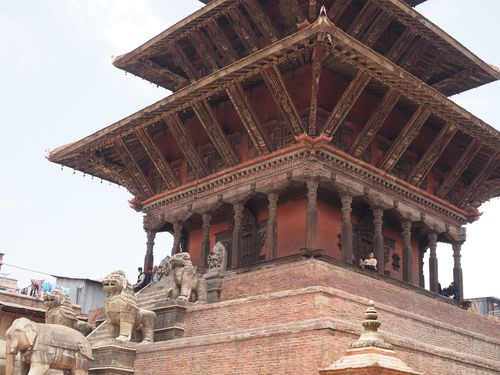
Bhaktapur • Nyatapola temple

Bhaktapur • Nyatapola temple
Monument profile
Nyatapola temple
Monument category: Hindu Temple
Monument family: Temple
Monument genre: Religious
Cultural heritage: Hindu
Geographic location: Bhaktapur • Nepal
Construction period: 18th century AD
• Links to •
• Dynasties that contributed to the construction of the monument •

• List of videos about Bhaktapur on this site •
Bhaktapur • A Journey Through Nepal’s Historic Wonder
The History of the Nyatapola Temple in Bhaktapur, Nepal: A Monument of Malla Era Majesty
The Nyatapola Temple, located in the ancient city of Bhaktapur, Nepal, stands as one of the most remarkable religious structures in the country. Completed in 1702 during the reign of King Bhupatindra Malla, the temple is dedicated to Siddhi Lakshmi, the Hindu goddess of fortune and power. Known for its five-tiered pagoda structure, it is the tallest of its kind in Nepal and exemplifies the architectural brilliance of the Newar community. The construction of the Nyatapola Temple was deeply intertwined with the political, social, and religious dynamics of the time. This article explores the historical significance of the temple, its political and social context, the major historical events that have shaped the site, and its continued importance in the modern era.
Political and Social Context of Construction
The Role of King Bhupatindra Malla
The early 17th century in the Kathmandu Valley was marked by a period of intense political rivalry among the three Malla kingdoms: Kathmandu (Kantipur), Patan (Lalitpur), and Bhaktapur. These city-states were in constant competition to assert their dominance through various means, most notably through monumental architecture. King Bhupatindra Malla of Bhaktapur was a key figure in this period. His reign, from 1696 to 1722, was characterized by his commitment to strengthening the cultural and spiritual legacy of Bhaktapur through grand construction projects.
The Nyatapola Temple, built in 1702, was one of the king's most significant architectural endeavors. The temple was designed to be a symbol of Bhaktapur's religious and political power, surpassing its rivals' monuments in both scale and grandeur. King Bhupatindra Malla used religious architecture not only to honor the goddess Siddhi Lakshmi, a deity associated with strength and prosperity but also to assert his authority over the valley and demonstrate his patronage of Hinduism. The temple's height and monumental form represented Bhaktapur’s ambition to dominate the spiritual and cultural landscape of the Kathmandu Valley.
Political Rivalries and Alliances
Bhaktapur’s rivalry with Kathmandu and Patan was not just based on military conflict but also on religious and architectural competition. The Malla kings often used the construction of temples to demonstrate their superiority. The Nyatapola Temple, with its towering five-story structure, was a direct response to the pagoda-style temples being built in the other kingdoms, most notably in Kathmandu. The temple was designed to not only be a spiritual center but also to act as a political statement, outshining the temples in the neighboring city-states. This rivalry also played a role in fostering alliances between the Malla rulers and external powers, such as the Mughal Empire, which had a profound influence on the architectural styles of the region during this period.
Major Historical Events Affecting the Site
Earthquakes and Restoration Efforts
Over the centuries, the Nyatapola Temple has faced significant challenges, primarily due to earthquakes. The Kathmandu Valley is located in a seismically active zone, and the Nyatapola Temple, like many other monuments in the area, has been impacted by several major earthquakes:
- The 1833 Earthquake: This earthquake caused extensive damage to many of Bhaktapur’s monuments, but the Nyatapola Temple remained relatively unscathed. This was a testament to the quality of its construction.
- The 1934 Earthquake: One of the most devastating earthquakes in Nepal’s history, it destroyed many temples and pagodas in the Kathmandu Valley. The Nyatapola Temple was damaged but underwent restoration efforts shortly after.
- The 2015 Earthquake: The most recent earthquake significantly affected the valley, but the Nyatapola Temple withstood the tremors with minimal damage. Restoration efforts have continued in the years following the quake.
These restoration efforts have been vital in maintaining the temple's structural integrity and ensuring its continued role as a key cultural and religious site in Bhaktapur.
Global Context During the Construction
The Nyatapola Temple was completed in 1702, a time when monumental architecture was flourishing around the world. In Europe, the Baroque period was in full swing, characterized by grandiose structures such as the Palace of Versailles in France and St. Peter’s Basilica in Rome. These buildings were often built to reflect the wealth and power of monarchs, a concept that can be seen in Bhupatindra Malla’s ambition with the Nyatapola Temple.
In India, the Mughal Empire was at its peak, under the reign of Aurangzeb, and the Mughal architectural style was influencing much of the subcontinent. The grand palaces and mosques built during this period, such as the Taj Mahal, had a significant impact on the architecture of Nepal, including the design of the Nyatapola Temple. Similarly, in China and Tibet, religious architecture, such as Buddhist monasteries and Taoist temples, was undergoing significant developments during the same period.
Transformations and Modifications Over Time
Changes in Architecture and Usage
Since its completion, the Nyatapola Temple has undergone several modifications and restorations, particularly after the major earthquakes. However, its essential architectural design has remained largely intact, and the temple continues to function as a place of worship, especially during the Dashain festival, which celebrates Siddhi Lakshmi.
Integration with Urban Development
Originally situated at the periphery of Bhaktapur, the temple is now surrounded by urban development. This growth has changed the way the temple interacts with its environment. While the temple remains a spiritual center, its surroundings have become more congested, creating new challenges for preservation and accessibility.
The Role of the Monument Today and Its Cultural Importance
A Place of Worship and Cultural Identity
Today, the Nyatapola Temple is an important religious site for the people of Bhaktapur and Nepal at large. It remains a place of active worship and plays a central role in the spiritual life of the city. The temple is particularly visited during Ekadashi and other religious ceremonies dedicated to Siddhi Lakshmi.
A Major Tourist Attraction
As part of Bhaktapur’s UNESCO World Heritage Site, the Nyatapola Temple attracts both religious pilgrims and international tourists. Its architectural beauty and historical significance make it one of the most visited sites in the Kathmandu Valley, contributing to the local economy through tourism.
Conservation and Modern Challenges
Environmental and Urban Pressures
The Nyatapola Temple faces several modern-day challenges, primarily stemming from urbanization and the pressure of increased tourism. The growing population of Bhaktapur, coupled with the influx of visitors, has raised concerns about the temple’s preservation. There is a need to balance the temple’s religious function with the demands of tourism.
Ongoing Restoration Efforts
In response to the challenges posed by earthquakes, environmental degradation, and urbanization, continuous efforts have been made to restore and preserve the temple. The use of traditional restoration methods, backed by the Nepalese government and international organizations, ensures that the Nyatapola Temple retains its original structure and significance for future generations.
Conclusion
The Nyatapola Temple stands as a remarkable testament to the architectural and cultural achievements of the Malla period in Nepal. Built with exceptional craftsmanship, it reflects the political ambitions, religious fervor, and architectural ingenuity of its time. Over the centuries, the temple has survived natural disasters and urban transformations, continuing to serve as a spiritual and cultural beacon for the people of Bhaktapur. Its preservation is a vital concern for both local and international conservation efforts, ensuring that this monumental structure remains a key part of Nepal’s heritage.
The Architecture of Nyatapola Temple in Bhaktapur, Nepal: A Masterpiece of Malla Era Design
The Nyatapola Temple, built in 1702 under the reign of King Bhupatindra Malla, is one of Nepal's most iconic and significant religious structures. Located in the ancient city of Bhaktapur, this five-tiered pagoda-style temple is dedicated to Siddhi Lakshmi, the goddess of strength and prosperity. It stands as an excellent example of Newar architecture and showcases numerous innovations in construction techniques that were advanced for its time. The temple reflects not only the technical and artistic achievements of the Malla period but also its role in reinforcing political and spiritual authority. This article examines the temple’s architectural features, innovations, materials, artistic influences, and the unique design elements that make it a monumental structure in the Kathmandu Valley.
Architectural Innovations and Construction Techniques
Technological and Structural Innovations
The Nyatapola Temple is renowned for its five-tiered pagoda design, a common feature in Nepalese temples but taken to a monumental scale in this case. The structure is an impressive example of vertical construction, with each level slightly smaller than the one beneath it. This step-like design allows for not only aesthetic appeal but also structural stability. The pagoda design was particularly advantageous in a region like the Kathmandu Valley, which is prone to earthquakes.
One of the most notable innovations in the temple’s construction is the combination of brick and wood. While the outer walls are made of brick, the upper levels incorporate wooden beams and pillars. This combination of materials provided both the necessary strength and flexibility to withstand seismic activity. The temple’s wooden struts and pillars, intricately carved with Hindu religious symbols, help distribute the weight of the upper floors evenly and absorb seismic shocks. The inclusion of wooden elements also offered some flexibility, which prevented cracks and damage during tremors.
The roofing system is another key feature of the temple’s design. The tiered roofs are covered in traditional tiles that not only contribute to the aesthetic beauty of the temple but also help distribute the weight of the upper floors more evenly. The multi-layered roofing also serves a functional purpose by helping to redirect rainwater and minimize wear on the underlying structure.
Stability, Ventilation, and Urban Planning
In terms of stability, the Nyatapola Temple is designed to endure the challenges posed by seismic forces. The thick brick walls are reinforced with wooden beams, while the tiered roof helps reduce the overall weight of the structure. Additionally, the temple’s open galleries and strategically placed windows ensure proper ventilation, which helps control the temperature inside and prevent dampness, a key factor in the preservation of wooden elements.
The urban layout of Bhaktapur, where the Nyatapola Temple is located, follows a mandala pattern, with sacred structures arranged in a symbolic configuration. The temple’s placement in Taha-linga Square was not only strategic for its religious significance but also considered its role in the city’s broader urban design. The temple stands as a focal point within the square, contributing to the overall flow and structure of the city.
Materials and Construction Methods
Materials Used and Their Significance
The materials used in the Nyatapola Temple’s construction were chosen for both their aesthetic qualities and their practical durability. The most prominent materials are brick, wood, and stone.
Brick: The bricks used for the walls are sturdy and resilient, providing a strong foundation and ensuring the long-lasting nature of the structure. The red clay bricks were molded locally and fired in traditional kilns, ensuring their quality.
Wood: Wooden beams and pillars are used extensively in the upper levels of the temple. The choice of sal wood (Shorea robusta), known for its resistance to rot and insects, makes it ideal for use in the humid environment of the Kathmandu Valley. The wooden carvings that adorn the temple are a testament to the intricate craftsmanship of the Newar artisans of the time.
Stone: Stone was used for the statues and pillars, particularly at the base of the temple. The statues of Garuda, the mythological bird and mount of Vishnu, are made of stone and placed at the temple’s entrance to guard the temple.
Construction Techniques
The construction of Nyatapola Temple utilized techniques such as mortise-and-tenon joinery, a method that joins wooden elements without nails. This technique allows the temple to flex slightly during earthquakes, preventing damage. The layered construction system, where each floor is slightly smaller than the one below it, helped distribute the weight evenly and reduce the structural stress.
Architectural and Artistic Influences
Synthesis of Regional and Foreign Traditions
Nyatapola Temple represents a fusion of regional and foreign architectural influences. The pagoda style, which originated in China and spread across East Asia, was adapted by Newar artisans and incorporated into the religious architecture of Nepal. This influence is evident in the temple’s tiered roof and overall design.
At the same time, the temple’s ornamentation reflects the influence of Indian and Mughal art, particularly in the intricate carvings of Hindu deities such as Vishnu, Garuda, and Ganesha. The use of symmetrical designs and decorative elements in the temple’s façade is a direct homage to the stylistic trends prevalent in the Indian subcontinent.
Local Newar Artistry
The temple is also an example of the rich Newar architectural tradition. The wooden carvings in the Nyatapola Temple, including depictions of divine beings and mythical creatures, showcase the exceptional skill of Newar craftsmen. The temple’s wooden struts are not only structural but also serve as elaborate decorative features, contributing to the temple’s overall beauty and religious significance.
Layout and Design Features
The Nyatapola Temple is arranged in a multi-tiered structure. Each tier is slightly smaller than the one beneath it, giving the temple a pyramid-like appearance. The temple’s layout follows the traditional pagoda format, which is square in shape, with a central worship hall at the base. The temple’s entrance is guarded by two stone statues of elephants, which lead to two pillars with stone statues of Garuda, marking the transition from the outer world to the sacred space inside.
Notable Design Elements
Five-Tiered Roof: The temple’s most striking feature is its five-tiered roof, which rises to a height of approximately 30 meters. This design is not only visually impressive but also plays a functional role in distributing weight and ensuring the temple’s structural stability.
Statues and Carvings: The intricate carvings on the wooden beams and stone statues depict various deities and mythical figures, reflecting the religious and artistic traditions of the time.
Stone Pillars and Statues: At the base of the temple are stone pillars adorned with figures of Garuda, Ganesha, and other deities. These serve as both spiritual symbols and structural supports for the temple.
Notable Statistics and Legends
The Nyatapola Temple stands at approximately 30 meters tall and consists of five stories, each with a smaller floor plan than the one beneath it. The temple is known for its fine wooden carvings and stone sculptures, which are integral to its religious and artistic significance.
A popular legend associated with the temple is that it was built by King Bhupatindra Malla in celebration of a divine victory, marking the triumph of good over evil. This legend further solidifies the temple’s symbolic role in affirming the king’s power and devotion.
Global Recognition and Conservation Challenges
World Heritage Status and Conservation Efforts
As part of Bhaktapur’s UNESCO World Heritage Site, the Nyatapola Temple is globally recognized for its cultural and architectural significance. Despite its structural resilience, the temple faces challenges from urbanization and the increasing number of tourists. These pressures pose threats to the preservation of the temple, necessitating ongoing conservation efforts to protect it from environmental degradation and wear and tear.
Preservation and Restoration
The Nepalese government and international organizations have undertaken several restoration projects to ensure that the Nyatapola Temple remains a symbol of Nepal’s rich heritage. Traditional restoration methods have been employed to preserve the temple’s original structure and artistic integrity.
Conclusion
The Nyatapola Temple in Bhaktapur is a masterpiece of Newar architecture, blending traditional design with innovative construction techniques to create an enduring symbol of religious devotion and political power. Through its architectural elegance, the temple continues to inspire admiration, while its preservation remains crucial for future generations. The temple not only serves as a place of worship but also stands as a testament to the historical and cultural significance of Nepal’s Malla era.