

 Français (France)
  Nederlands (nl-NL)
 The Dattatraya Temple in Bhaktapur is a significant example of Newar architecture, built in the 15th century during the reign of King Yaksha Malla. Dedicated to Dattatraya, an incarnation of the Hindu trinity, it is renowned for its wooden structure, which tradition claims was carved from a single tree trunk. Located in Dattatraya Square, the temple has been a focal point of religious and social life in Bhaktapur for centuries. Having withstood multiple earthquakes, it has undergone several restorations to maintain its rich artistic heritage.
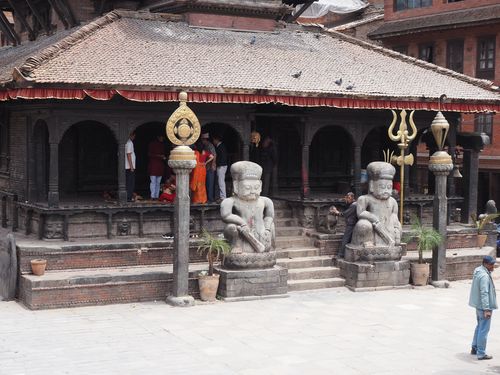
Bhaktapur • Dattatraya Temple
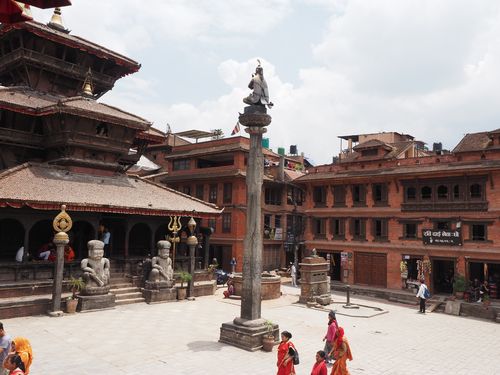
Bhaktapur • Dattatraya Temple
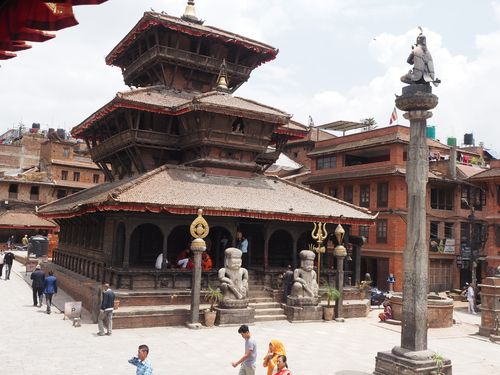
Bhaktapur • Dattatraya Temple
Monument profile
Dattatraya Temple
Monument category: Hindu Temple
Monument family: Temple
Monument genre: Religious
Cultural heritage: Hindu
Geographic location: Bhaktapur • Nepal
Construction period: 15th century AD
• Links to •
• Dynasties that contributed to the construction of the monument •

• List of videos about Bhaktapur on this site •
Bhaktapur • A Journey Through Nepal’s Historic Wonder
The History of Dattatraya Temple in Bhaktapur, Nepal
Dattatraya Temple, located in Bhaktapur, Nepal, is one of the most significant Hindu temples in the Kathmandu Valley. Built in the 15th century during the reign of King Yaksha Malla, the temple is dedicated to Dattatraya, a composite deity representing the Hindu trinity of Brahma, Vishnu, and Shiva. This temple, a masterpiece of Newar architecture, has played a crucial role in the cultural and religious life of Bhaktapur for centuries.
Political and Social Context of Construction
The Malla Dynasty and the Rise of Bhaktapur
In the 15th century, Bhaktapur was one of the three main city-states in the Kathmandu Valley, alongside Kathmandu and Patan. These kingdoms were ruled by different branches of the Malla dynasty, which had established their power in the region since the 12th century. The Mallas were great patrons of the arts, architecture, and religion, leading to an era of intense urban development and temple construction.
The construction of Dattatraya Temple was part of King Yaksha Malla’s broader vision to transform Bhaktapur into a religious and cultural center that could rival Kathmandu and Patan. His rule was marked by architectural projects aimed at showcasing the city's prosperity and devotion. The temple was built not only as a place of worship but also as a political statement, symbolizing Bhaktapur’s wealth and spiritual dedication.
Religious and Cultural Significance
Dattatraya, the temple’s main deity, embodies the essence of the Hindu trinity, merging the creative, preservative, and destructive aspects of the cosmos. The temple was intended to be a major pilgrimage site, attracting devotees from across the region. It was also constructed near Dattatraya Square, which became a hub for religious ceremonies, festivals, and traditional markets.
Major Historical Events Affecting the Temple
Wars, Invasions, and Dynastic Changes
The most significant political event that affected the temple was the Gorkha conquest of the Kathmandu Valley in 1769. King Prithvi Narayan Shah, the ruler of the Gorkha Kingdom, launched a military campaign that led to the fall of the Malla rulers and the unification of Nepal. Although Bhaktapur suffered damage during the invasion, Dattatraya Temple remained relatively unscathed, continuing to function as an important religious center.
Over the centuries, the temple has witnessed the decline of the Malla dynasty, the consolidation of Nepal under the Shah rulers, and the political transformations of the modern era. Despite changes in governance, it has retained its religious significance, continuing to serve as a sacred space for Hindu devotees.
Earthquakes and Natural Disasters
The Kathmandu Valley is prone to earthquakes, and Bhaktapur has suffered significant damage from seismic events. The earthquake of 1934 caused structural damage to several historic buildings, including parts of Dattatraya Temple. More recently, the 2015 earthquake severely impacted the region, necessitating urgent restoration efforts.
Global Context at the Time of Construction
During the 15th century, architectural developments were taking place across the world. In Europe, the Renaissance was beginning to take shape, leading to innovations in art and construction. In China, the Ming Dynasty was investing in large-scale infrastructure, including the Forbidden City. Meanwhile, the Mughal Empire in India was developing grand structures that combined Persian, Islamic, and Indian architectural influences.
Against this global backdrop, the construction of Dattatraya Temple was part of a broader movement in the Kathmandu Valley, where rulers sought to create religious and architectural marvels that reflected their power and devotion.
Transformations and Changes Over the Centuries
Modifications and Restorations
Over the centuries, Dattatraya Temple has undergone multiple restorations. The wooden structures and intricately carved facades required continuous maintenance to preserve their original beauty.
- 19th and 20th centuries: Several renovations were carried out by local artisans, using traditional Newar craftsmanship.
- Post-2015 earthquake: Major restoration projects were initiated to stabilize the structure and repair damaged elements.
Despite these efforts, the temple’s historical authenticity has been largely maintained, with restorations adhering to traditional techniques.
Changes in Use and Urban Evolution
Originally surrounded by an open landscape, the temple is now part of a densely populated urban area. The growth of Bhaktapur and increasing tourism have transformed the temple's surroundings, integrating it into a more commercial and social setting.
The Temple’s Role Today and Its Cultural Importance
A Center of Worship and Tradition
Dattatraya Temple remains an active place of worship. Hindu devotees regularly visit the site to offer prayers, particularly during festivals such as Dashain and Tihar. The temple also plays a crucial role in the local cultural identity, being a focal point for traditional ceremonies.
Tourism and Economic Impact
As one of Bhaktapur’s key attractions, the temple draws thousands of visitors annually. The influx of tourists has contributed to the local economy, supporting artisans, guides, and cultural preservation initiatives. However, managing tourism while ensuring the site’s conservation remains a challenge.
Current State of Conservation and Modern Preservation Challenges
Environmental and Human Threats
The preservation of Dattatraya Temple faces several challenges:
- Seismic activity: The risk of future earthquakes requires continuous structural assessments and reinforcement.
- Urbanization: The expanding city and increased vehicular traffic pose risks to the integrity of the temple and its surroundings.
- Tourist impact: High foot traffic can accelerate wear on the wooden carvings and foundational structures.
Conservation Policies and Restoration Efforts
Efforts to preserve the temple are led by local authorities, heritage organizations, and international bodies. Although the temple itself is not directly listed as a UNESCO World Heritage Site, it benefits from heritage conservation projects aimed at protecting Bhaktapur’s cultural landscape.
Recent restoration efforts include:
- Use of traditional materials: To maintain architectural authenticity, restorers use original wood and brick techniques.
- Structural reinforcement: Engineers have reinforced the foundations and roofing to improve earthquake resistance.
- Tourism regulations: Measures have been introduced to control visitor numbers and limit potential damage.
Conclusion
Dattatraya Temple in Bhaktapur stands as a remarkable example of Newar architecture and religious devotion. Its construction during the Malla period reflected both political ambition and spiritual dedication, embedding it deeply within Bhaktapur’s cultural identity. Despite the passage of time, natural disasters, and socio-political changes, the temple continues to be a vital part of the city’s religious and artistic heritage.
As conservation efforts persist, the temple remains a symbol of Nepal’s rich architectural legacy, attracting historians, pilgrims, and tourists alike. It embodies the enduring strength of Newar craftsmanship and serves as a testament to the cultural vibrancy of Bhaktapur, ensuring that its legacy will be preserved for future generations.
Architectural Analysis of Dattatraya Temple in Bhaktapur, Nepal
Dattatraya Temple, one of Bhaktapur’s most significant architectural and religious landmarks, is a masterpiece of Newar craftsmanship. Built during the Malla period, this temple showcases the finest elements of traditional Nepalese temple architecture. Unlike many temples constructed with stone, it is uniquely known for being made from the wood of a single tree, demonstrating the exceptional craftsmanship and architectural ingenuity of the time. This analysis explores the technological advancements, materials, artistic influences, structural organization, and conservation efforts related to the temple’s architecture.
Technological and Architectural Innovations of the Era
Structural Engineering and Stability
During the Malla period (12th–18th centuries), Newar architects developed sophisticated construction techniques that combined aesthetics with functionality. The Dattatraya Temple was designed to withstand the region's seismic activity while preserving its artistic integrity.
- Flexible Wood-Based Structure: The temple’s primary construction material, wood, was chosen for its flexibility and ability to absorb seismic shocks. The intricate joinery techniques used to assemble the structure allow it to move slightly during earthquakes, reducing the likelihood of collapse.
- Multi-Tiered Pagoda Design: The temple follows the traditional multi-tiered pagoda style, which distributes weight efficiently and enhances stability. The structure is supported by elaborately carved wooden struts that help balance the upper levels.
- Overhanging Eaves and Ventilation: The extended eaves provide shade and protect the wooden structure from excessive rainfall, while the open design allows air circulation, reducing humidity buildup that could lead to decay.
Urban Planning and Spatial Integration
Dattatraya Temple is strategically positioned in Dattatraya Square, an area that historically functioned as a commercial, religious, and social hub. The temple's orientation follows traditional Hindu spatial planning, aligning with religious and astrological principles.
- Temple and Square Integration: The temple serves as both a religious space and a central landmark of the square, fostering cultural and social gatherings.
- Processional and Pilgrimage Routes: Its placement allows for ritual processions and easy access for worshippers, reflecting the Newar tradition of integrating religious structures within the urban fabric.
Materials and Construction Methods
Choice of Materials
The temple's construction relies on locally available, high-quality materials that contribute to both its resilience and aesthetic appeal.
- Wood (Sal Tree - Shorea robusta): The temple is primarily built from the wood of a single sal tree, a durable and termite-resistant hardwood that has historically been favored for sacred architecture in Nepal.
- Brick and Mortar Foundation: The base is constructed from baked bricks and a traditional mortar mixture of mud and lime, which provides structural support and prevents water damage.
- Gilded Copper Roof Finials: The roof is adorned with gilded copper elements that reflect Nepalese metalworking excellence and add to the temple’s visual grandeur.
Construction Techniques
Newar artisans employed intricate woodworking techniques, demonstrating their expertise in carpentry, sculpture, and temple design.
- Interlocking Joinery: Instead of nails, wooden elements were joined using advanced interlocking techniques, ensuring long-term stability.
- Intricate Carvings: The temple’s pillars, windows, and struts are adorned with highly detailed carvings of deities, mythical creatures, and floral motifs.
- Lacquer and Protective Coatings: Wooden surfaces were treated with natural lacquers to enhance durability and protect against insects and weathering.
Architectural and Artistic Influences
Newar Architectural Identity
Dattatraya Temple is a quintessential example of Newar architecture, blending indigenous construction techniques with stylistic influences from surrounding cultures.
- Multi-Tiered Pagoda Style: This tiered structure follows the Newar temple-building tradition, characterized by tiered roofs, upward-curving eaves, and rich wooden ornamentation.
- Symbolic Ornamentation: Carvings of gods, celestial beings, and guardian figures reflect the Hindu and Buddhist cosmology of the Kathmandu Valley.
- Torana and Lintel Designs: The intricately carved torana (decorative arch above the main entrance) is a hallmark of Newar temple architecture.
External Influences
Despite being a distinct product of Newar craftsmanship, the temple also exhibits stylistic elements influenced by Indian, Tibetan, and Southeast Asian traditions.
- Indian Influence: The temple’s sculptural motifs and religious iconography share similarities with medieval Indian temple art, particularly in depictions of Vishnu and Shiva.
- Tibetan Influence: Some of the decorative elements and roof designs resemble features seen in Tibetan Buddhist monasteries, reflecting cultural exchanges between Nepal and Tibet.
- Southeast Asian Parallels: The pagoda-style structure is reminiscent of traditional temples found in Myanmar, Thailand, and China, which share Nepal’s tiered-roof architectural lineage.
Spatial Organization and Notable Design Elements
General Layout
Dattatraya Temple follows a symmetrical layout typical of Nepalese pagoda temples.
- Main Sanctum (Garbhagriha): The innermost chamber houses the idol of Dattatraya, the temple’s presiding deity.
- Open Pavilion: Unlike enclosed sanctuaries, this temple incorporates an open pavilion area for community gatherings and prayers.
- Wooden Struts: Supporting the tiered roofs, the temple’s elaborately carved struts depict divine beings and mythological creatures.
Key Design Features
- Roof Design: The multi-tiered structure is crowned with gilded metal embellishments and ornamental finials.
- Pillars and Windows: Wooden latticework and ornately carved columns contribute to the temple’s visual complexity.
- Iconography: The temple façade and struts display Hindu deities such as Vishnu, Shiva, and Lakshmi, reflecting the temple’s religious significance.
Dimensions and Notable Facts
Height: Approximately 20 meters.
Material Weight: An estimated several tons of carved wood contribute to the temple’s grandeur.
Construction Time: The temple was completed during the 15th century, though it has undergone restorations over the centuries.
International Recognition and Conservation Challenges
Cultural and Heritage Importance
Dattatraya Temple, while not individually listed as a UNESCO World Heritage Site, contributes to the cultural landscape of Bhaktapur and the Kathmandu Valley’s heritage. It is a focal point for local festivals and religious celebrations, making it an invaluable part of Nepal’s living history.
Preservation Challenges
- Seismic Vulnerability: Nepal’s seismic activity poses an ongoing threat to the temple’s structural integrity.
- Tourist Impact: Increased foot traffic has led to wear and tear on wooden surfaces and carvings.
- Environmental Damage: Exposure to moisture, pollution, and climate change accelerates wood deterioration.
Conservation Efforts
Efforts to maintain the temple involve traditional restoration methods to ensure authenticity.
- Use of Traditional Materials: Restoration projects prioritize local timber and historical construction techniques.
- Structural Reinforcement: Engineers have introduced seismic-resistant measures while preserving the temple’s original design.
- Tourism Regulation: Controlled access helps minimize damage from excessive foot traffic.
Conclusion
Dattatraya Temple is an architectural and cultural treasure that encapsulates the artistic brilliance of the Malla period. Its unique wooden construction, intricate carvings, and historical significance make it a vital part of Nepalese heritage. Despite environmental and human-made challenges, conservation efforts continue to preserve its authenticity for future generations. The temple remains a living monument, reflecting the architectural ingenuity and spiritual depth of Bhaktapur’s historical landscape.