Français (France)
  Nederlands (nl-NL)
 00:00 • intro | 00:35 • Parsurameswara temple | 05:40 • Mukteshwara temple | 09:33 • Siddheswara temple | 10:30 • Swarnajaleswara-temple | 11:48 • Kotiteertheswara temple | 13:05 • Heilige Bindusagar reservoir | 15:25 • to the Lingaraj temple | 17:53 • Lingaraj temple | 21:35 • Ananda Besudeva temple | 25:55 • Rajarani temple
Personal creation from visual material collected during my trip India • Amazing East India: Assam, Odisha, West Bengal (2023)
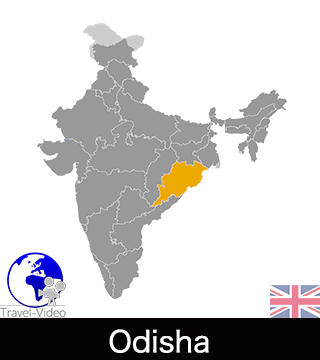
Map of places or practices in Bhubaneswar on this site
• Use the markers to explore the content •
Bhubaneswar, the Temple City of Odisha
A historic city shaped by sacred architecture
Bhubaneswar holds a unique place in India’s cultural landscape. Today the capital of Odisha, it is above all renowned for the remarkable concentration of Hindu temples that earned it the title of “Temple City.” Its historic core preserves the legacy of many centuries of religious construction, where shrines, sacred tanks, ceremonial routes and urban neighborhoods form a coherent and living heritage.
This video offers a journey through that monumental landscape, presenting temples from early periods to the great medieval sanctuaries that define the city’s identity. It also reveals how architecture and daily life remain closely connected in Bhubaneswar, where many sacred spaces continue to function as active places of worship.
Major monuments and spaces featured in the video
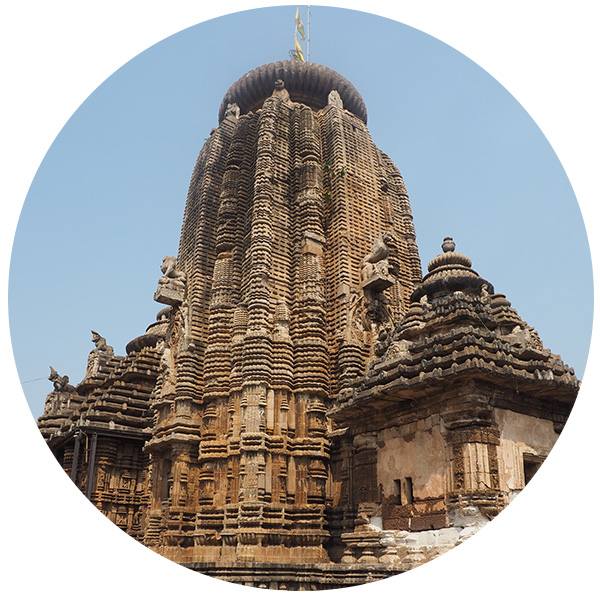
The Parsurameswara Temple is among the oldest surviving temples in Bhubaneswar. It illustrates an early phase of regional temple design, with its curving tower, carved exterior walls and relatively compact proportions. The Mukteshwara Temple, often regarded as a masterpiece, is especially famous for the elegance of its sculptural ornament and its celebrated arched gateway, one of the most distinctive features in Indian temple architecture.
The Siddheswara Temple and Swarnajaleswara Temple show that Bhubaneswar’s importance does not rest on a few famous monuments alone. Numerous smaller shrines enrich the historic landscape and testify to sustained religious patronage over centuries. The Kotiteertheswara Temple belongs to this wider network of sacred sites.
The sacred reservoir of Bindusagar is one of the symbolic centers of the old city. This large ritual water tank has long played a major role in ceremonies, festivals and the spatial organization of nearby temples. The approach toward Lingaraj Temple, visible in the video, helps explain the ceremonial relationship between sacred water, processional routes and the principal shrine.
Lingaraj Temple dominates the city’s sacred skyline through both scale and prestige. It represents the mature expression of Odisha’s classical temple style, with its soaring sanctum tower and carefully ordered subsidiary halls. The Ananda Basudeva Temple, dedicated to Vishnu, reflects the coexistence of different Hindu traditions within the city. Rajarani Temple is admired for the refinement of its sculpture and the harmony of its proportions.
Historical, architectural and cultural context
Bhubaneswar’s great period of temple construction extended mainly between the 7th and 13th centuries under regional dynasties such as the Shailodbhavas, Somavamsis and Eastern Gangas. Royal patronage of temples helped express political legitimacy, religious devotion and cultural prestige.
The city is one of the principal centers of the Kalinga style, the regional temple architecture of Odisha. This tradition is characterized by the curvilinear tower above the sanctum, assembly halls with pyramidal roofs, richly sculpted walls and a strong sense of balanced massing. Decorative programs include deities, mythical scenes, celestial figures, floral patterns and geometric motifs.
Water also plays a central role in Bhubaneswar’s sacred geography. Tanks, reservoirs and ritual ponds were essential for purification rites, festival processions and traditional urban life. In Bhubaneswar, temple architecture and hydraulic planning remain closely linked.
Unlike some archaeological sites preserved mainly as monuments of the past, Bhubaneswar continues to function as a living city. Worship, markets, neighborhood life and seasonal celebrations still animate many of the spaces shown in the video.
What the videos on this site make especially clear
Videos built from carefully selected and animated photographs are particularly effective for a city as visually dense as Bhubaneswar. They allow viewers to study sculptural details that may be difficult to notice during a brief visit, compare temple towers, and understand the differences between monuments that belong to the same architectural tradition.
Smooth transitions between images also clarify the urban structure: the sequence of temples, the presence of sacred water bodies, the movement from modern streets into the old sacred quarter, and the relationship between major shrines and smaller sanctuaries. Bhubaneswar appears not as a collection of isolated buildings, but as a continuous sacred landscape.
This format is equally valuable for reading architectural volume. Towers, shadow patterns on stone, layered carvings and overall proportions become easier to appreciate through progressive visual presentation.
One of India’s great sacred cities
Bhubaneswar brings together history, devotion and architecture in an exceptional urban ensemble. Its temples reflect centuries of artistic and religious development, while its tanks and streets still preserve living traditions. This video offers a clear and accessible introduction to the city, while the related detailed pages invite deeper exploration of each monument and its wider historical context.
Music:
- - YouTube video library - Aalaap in Raag Jhinjhoti - Sandeep Das, Adhiraj Chaudhuri
- - YouTube video library - Adana - Teental - Aditya Verma, Subir Dev
- - YouTube video library - Dhaka - Kevin MacLeod, (© Dhaka by Kevin MacLeod is licensed under a Creative Commons Attribution 4.0 license. https://creativecommons.org/licenses/by/4.0/
- Source: http://incompetech.com/music/royalty-free/index.html?isrc=USUAN1400003
- Artist: http://incompetech.com/
- )
- - YouTube video library - Manj Khammaj - Aditya Verma
- - YouTube video library - Manj Khammaj - Teental - Aditya Verma, Subir Dev
- - YouTube video library - Raag Bageshree - Sandeep Das, Adhiraj Chaudhuri, Bivakar Chaudhuri
- - YouTube video library - Raag Pahadi - Sandeep Das, Mayank Raina, Bivakar Chaudhuri
- - YouTube video library - Raag Pilu - Sandeep Das, Adhiraj Chaudhuri, Bivakar Chaudhuri
Disclaimer: Despite its appropriateness, copyright issues prevent the use of indian traditional music in "Bhubaneswar • the city of the temples • Odisha", hence the use of royalty-free music. Despite our careful selection, some might regret this decision, which is necessary to avoid potential lawsuits. Although difficult, this decision is the only viable solution.








Audio Commentary Transcript
Parsurameswara temple
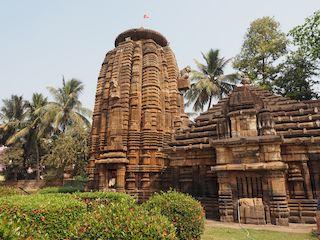
Located in the ancient city of Bhubaneswar, in the state of Odisha, India, the Parsurameswara Temple stands as a remarkable monument of Hindu architecture dedicated to Lord Shiva. Built around the 7th century, it is one of the oldest surviving temples in the region and marks the beginning of the prolific temple construction era in Bhubaneswar, often referred to as the "City of Temples."
The Parsurameswara Temple is renowned for its intricately carved sculptures and sophisticated architecture. It is built in the Kalinga architectural style, characterized by a vimana, a vertical structure built as a tower, which is considered the temple's main sanctuary. The vimana is topped with an amalaka, a stone carved to resemble an amla or Indian gooseberry, further crowned by a kalasa, or finely decorated stone pot.
The bas-reliefs on the Parsurameswara Temple depict scenes from Hindu mythology, including stories of Lord Shiva, as well as various floral and geometric motifs. These sculptures are not just decorative elements but serve as visual storytelling that guides devotees and visitors through the teachings and legends of Hinduism.
As a prototype for future temples in the region, the Parsurameswara Temple played a crucial role in the evolution of Odisha's temple design and remains a site of great archaeological and spiritual significance. Its legacy continues to inspire and attract scholars, historians, and pilgrims from around the world.
Mukteshwara temple
Located in Bhubaneswar, close to the 7th-century Parsurameswara Temple, the Mukteshwara Temple stands out as a masterpiece of Kalinga architecture from the 10th century. Famous for its ornately carved gateway, known as torana, this temple marks a stylistic transition point between the early and later phases of temple architecture in the region. Dedicated to Shiva, worshipped here as Mukteshvara, the Lord of Liberation, the temple is renowned for its intricate sculptures. The sacred well, Marichi Kund, is situated near the main entrance, accessible for rituals and known for its healing properties. This well is a central element of the complex, adding a spiritual and therapeutic dimension to the architectural ensemble. Mukteshwara is often cited by historians for its pivotal role in the evolution of Odia architectural style, showcasing innovation and adaptation through the centuries.
Siddheswara temple
Built in the mid-15th century, Siddheswara Temple in Bhubaneswar stands out for its relatively recent architecture compared to other medieval temples in the area. Dedicated to Lord Shiva, the temple reflects a transitional period in Odisha's art and architecture, blending traditional motifs with stylistic innovations of the time.
Swarnajaleswara Temple
The Swarnajaleswara Temple is one of the oldest temples in Odisha, dating from the 7th century according to the sign at the entrance. Dedicated to the god Shiva, it offers valuable insight into the early architecture of the Kalinga style in the region.
This temple illustrates the initial phases of the development of stone temples, featuring a modest vimana (sanctuary tower) adorned with detailed carvings. The walls display floral and geometric motifs, as well as representations of deities, reflecting the art and spirituality of the time. The name "Swarnajaleswara" combines "Swarna" meaning gold, "Jala" meaning water, and "Ishwara" meaning lord, symbolizing the spiritual wealth and purity associated with Shiva.
Although less known than other monuments in Bhubaneswar, the Swarnajaleswara Temple testifies to the religious devotion and architectural heritage of the 7th century, offering a window into the cultural history of the region.
Kotiteertheswara temple
The Kotitirtheswara Temple is a remarkable example of 15th-century Kalinga architecture. Dedicated to Lord Shiva, it houses a Shiva Lingam that attracts numerous devotees. The name "Kotitirtheswara" means "Lord of ten million pilgrimage places," reflecting its immense spiritual significance. Near the sacred Bindusagar reservoir, the temple is the site of many rituals and festivals dedicated to Shiva, testifying to Odisha's rich religious and cultural tradition.
Bindusagar tank
At the heart of Bhubaneswar, the Bindusagar Tank is a center of spirituality and daily life. Established in the 7th century by the Ganga dynasty, this reservoir not only provides water to the surrounding temples but also serves as a community gathering spot. Here, the shores of Bindusagar echo with the prayers of pilgrims and the splashing of water as women wash their clothes, continuing traditions that strengthen bonds across generations.
to the Lingaraj temple
From the Bindusagar Tank, the journey continues towards the Lingaraj Temple, passing by the Davi Padahara Pond and near the Gopaltirtha Math, Chitrakarini, and other historic temples. These intermediate sites enrich the route with their history and architecture before reaching the Lingaraj Temple, a major center of worship and medieval architecture in Bhubaneswar.
Lingaraj temple
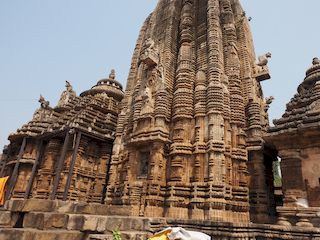
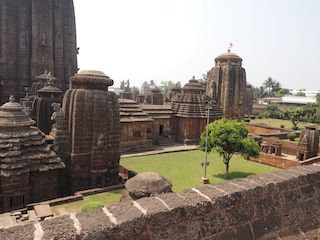
In the heart of Bhubaneswar, the Lingaraj Temple stands as a beacon of architectural brilliance, being the largest temple in the city dedicated to the god Shiva. Constructed in the 11th century by the Ganga dynasty, this structure is a prime example of Kalinga-style architecture that defines the region. With its intricate carvings and imposing tower, Lingaraj Temple is not only an artistic achievement but also a crucial center of spirituality for Hindus. Access to the temple is limited to adherents of the Hindu faith, lending an air of mystery and exclusivity. The temple precinct houses over 50 smaller shrines, underscoring its role as a pivotal site for devotion and religious rituals in Bhubaneswar.
Ananda Vasudeva temple
The Ananta Vasudeva Temple is a Hindu edifice dedicated to Lord Vishnu in his form as Ananta Vasudeva, meaning "eternal Vasudeva" or "infinite Vishnu." The name derives from "Ananta," meaning "infinite" or "eternal" in Sanskrit, and "Vasudeva," another name for Krishna, one of Vishnu's incarnations. Built in the 13th century by the Eastern Ganga dynasty, it represents a notable example of Kalinga architecture. This temple is unique in the region as the main Vaishnavite sanctuary among a multitude of Shaivite temples. The structures and sculptures depict scenes from Hindu epics such as the Mahabharata and the Ramayana, reflecting the artistic skill and cultural richness of the medieval period. Its historical and cultural significance testifies to the religious diversity and architectural heritage of the area.
At the Ananta Vasudeva Temple, food occupies a central place in religious and cultural practices. Dishes such as rice, lentils, vegetables, and local desserts are prepared according to traditional rituals. Cooking is done in earthen pots, stacked on top of each other and placed over wood fires, thus respecting ancestral methods.
The cooks and carriers, called Suara or Mahasuara, transport the food on their heads. This practice allows for the efficient movement of large quantities of food throughout the temple while maintaining the purity and sacred nature of the offerings. Carrying the baskets in this manner is also a sign of respect towards the blessed food and the deities.
This sacred food, called Mahaprasad, is first offered to the temple deities before being distributed to the faithful. The stalls located around the central courtyard play an essential role in this distribution. The Mahaprasad is sold at affordable prices, allowing devotees to consume it. This practice strengthens community ties and allows the faithful to fully participate in the temple's rites. It also contributes to the local economy by supporting the families involved in the preparation and sale of this sacred offering.
Rajarani temple
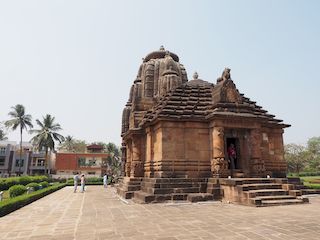
The Rajarani Temple, built in the 11th century under the Somavamsi dynasty, is a remarkable example of Kalinga architecture in Bhubaneswar. Its name comes from the red and golden sandstone used in its construction, called "Rajarani." Unlike most temples in the region, it contains no primary deity in its inner sanctum, although it is often associated with Shiva.
The temple stands out for its tall Shikhara and its refined sculptures depicting celestial figures, everyday scenes, and mythological motifs. It symbolizes the transition towards a more elaborate architectural style, characteristic of later periods. Today, although no longer an active place of worship, the Rajarani Temple remains a valuable testament to Bhubaneswar's cultural and artistic heritage.