

 Français (France)
  Nederlands (nl-NL)
 The Davi Padahara Pond, located in Bhubaneswar, Odisha, India, is a historical reservoir built in the 11th century. It serves both religious purposes and local water needs. The pond, closely tied to the Lingaraj Temple's rituals, features symbolic carvings dedicated to the worship of Shiva. Over the centuries, restoration efforts have been made to maintain its cultural and spiritual significance in the region.
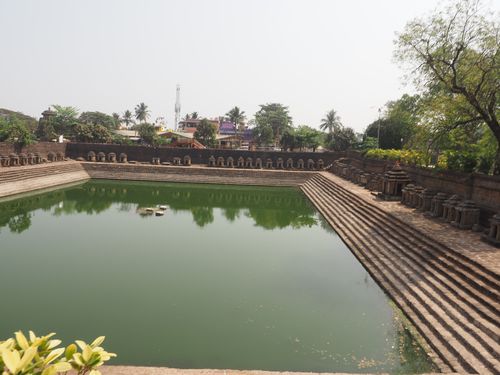
Bhubaneswar • Davi Padahara Pond

Bhubaneswar • Davi Padahara Pond

Bhubaneswar • Davi Padahara Pond
Monument profile
Davi Padahara Pond
Monument category: Cistern
Monument family: Civil engineering structures (bridges, wells, etc.) and factories
Monument genre: Economic
Cultural heritage: Hindu
Geographic location: Bhubaneswar • Odisha •
Construction period: 11th century AD
• Links to •
• Dynasties that contributed to the construction of the monument •


• List of videos about Bhubaneswar on this site •
Bhubaneswar • the city of the temples • Odisha
Bhubaneswar • Udayagiri and Khandagiri Jain caves
• Sources •
Digitale bronnen
- OrissaPOST: Devi Padahara – Pulchritude Lost in History
- Odishabytes: Lingaraj Temple Reflection on Devi Padahara Pond
Boeken en publicaties
- Majumdar, R. C. *Ancient India*. Motilal Banarsidass, 2003.
- Sahu, N. K. *History of Orissa*. Nalanda, 1997.
Political and Social Motivations Behind the Construction of Davi Padahara Pond in Bhubaneswar
The Davi Padahara Pond, located in Bhubaneswar, Odisha, was constructed in the 11th century during the reign of King Jajati Keshari, a ruler of the Somavamsi dynasty. Its construction was not only a technical and hydraulic feat but also reflected deep-rooted political and social motives designed to strengthen the region’s stability and religious significance.
Political and Social Motivations
The primary political motivation behind the construction of Davi Padahara Pond was to legitimize the ruler's authority and ensure the well-being of the community. By providing a reliable source of water in a climate marked by seasonal variations, the pond played a critical role in supporting agriculture, which was the backbone of the local economy. In medieval India, rulers often sought to establish their legitimacy by commissioning public works, especially those that were of immediate benefit to the populace. Water reservoirs, temples, and wells became symbols of a king’s benevolence and capability to ensure prosperity.
Socially, the pond had a profound religious significance as it was closely linked to the nearby Lingaraj Temple, one of the holiest sites in Odisha. The reservoir supported the temple's water needs for ritualistic purposes, reinforcing the connection between political authority and religious institutions. The 108 Lingas surrounding the pond further underscored its religious importance, integrating spiritual and practical uses
Historical Events and Regional Impact
Over time, the Davi Padahara Pond witnessed several historical shifts. During the medieval period, the region experienced political transitions as various dynasties, including the Ganga and Marathas, left their mark on Odisha. Despite changes in governance, the pond retained its relevance as an essential religious and social hub. The close association with Lingaraj Temple, where rituals such as the immersion of deities during festivals occurred, helped preserve its importance across centuries.
Globally, the 11th century was a time of intense infrastructural developments, especially in regions with advanced knowledge of engineering and agriculture. In Europe, similar hydraulic projects were underway, such as the construction of aqueducts and canals to support urban centers. The Chinese Song Dynasty was also implementing extensive water management projects to boost agricultural productivity. In comparison, the construction of Davi Padahara Pond illustrates how India, too, was pioneering in hydraulic innovations designed to support both the economy and religious practices.
Transformations and Cultural Influence
Throughout its long history, the Davi Padahara Pond has undergone significant changes. The expansion of Bhubaneswar in the 20th century led to urban encroachment, which diminished its visibility and interrupted its historical function as a reflective pool for the Lingaraj Temple. Modern buildings obstructed the sightlines and disrupted the pond’s aesthetic connection to the temple. However, recent efforts under the Ekamra Kshetra Project have focused on restoring the pond’s historical significance by removing the encroachments, aiming to rejuvenate its cultural role.
Culturally, Davi Padahara reflects a blend of indigenous traditions and external influences. While the primary architectural style is deeply rooted in the Kalinga architecture of Odisha, the motifs and water management techniques may have absorbed influences from Southeast Asia, particularly through trade routes that connected India to kingdoms in present-day Thailand and Cambodia. This cross-pollination of ideas is evident in the integration of artistic and engineering elements that resonate with both local and foreign traditions.
Conservation and Preservation Challenges
The current state of conservation for Davi Padahara Pond is closely linked to the broader urban development of Bhubaneswar. The Ekamra Kshetra Project, initiated by the government, has played a vital role in restoring the site’s historical integrity. However, challenges remain, particularly in combating water pollution, urban encroachment, and the effects of climate change, which threaten the long-term sustainability of the pond.
The restoration efforts have focused on enhancing the visibility of the pond and reconnecting it to the Lingaraj Temple, both physically and symbolically. Nonetheless, ongoing vigilance is required to ensure that modern developments do not overshadow the historical importance of this ancient reservoir.
Conclusion
The Davi Padahara Pond is a remarkable example of how political power, religious significance, and engineering excellence were intertwined in medieval India. Its construction not only addressed immediate practical needs but also symbolized the ruler's responsibility towards their people and their connection to the divine. Despite the challenges of modern urbanization, the pond continues to be a focal point of cultural heritage, with ongoing restoration efforts aiming to preserve its significance for future generations. Its enduring legacy as a functional and spiritual site is a testament to the ingenuity and foresight of its creators.
Technological Innovation and Artistic Fusion in the Architecture of Davi Padahara Pond, Bhubaneswar
The Davi Padahara Pond in Bhubaneswar, Odisha, is an architectural marvel that exemplifies the technological and cultural advancements of 11th-century India. Constructed during the reign of the Somavamsi dynasty, the pond reflects the era’s sophisticated approach to hydraulic engineering and artistic design, while also serving as a symbol of the spiritual and social ethos of the time.
Technological and Construction Innovations
The construction of Davi Padahara Pond illustrates the advanced knowledge of water management and architecture that existed in medieval India. Built as a reservoir for both practical and religious purposes, the pond was essential for irrigation, daily use, and religious ceremonies linked to the nearby Lingaraj Temple. The stone masonry used to construct the pond walls is a testament to the engineering precision of the time, with large blocks of locally sourced stone meticulously fitted to ensure durability and water retention.
Hydraulic engineering played a crucial role in the design of the pond, particularly in managing the seasonal variations in water supply. The pond was designed to capture rainwater efficiently, helping to sustain the region during dry seasons. This level of technological innovation highlights the integration of sustainability and resource management in early Indian architecture.
Materials and Techniques Reflecting Grandeur
The primary material used in the construction of the pond was locally quarried stone, shaped to form robust, water-tight structures. The precision of the stonework ensured the pond’s longevity, withstanding centuries of use and environmental changes. Additionally, the use of lime mortar helped to reinforce the pond’s walls and protect them from erosion, showcasing the builders’ understanding of material science.
One notable feature of the pond is its inclusion of 108 Lingas—small shrines to Lord Shiva—around its perimeter. These sacred structures were integrated into the pond’s design, blending functionality with religious symbolism. The Lingas represent not only a religious connection but also a reflection of the ritualistic importance of the water, used in various temple ceremonies.
A Unique Fusion of Regional and Foreign Influences
While the Davi Padahara Pond is deeply rooted in the Kalinga architectural style, it also incorporates influences from neighboring regions, particularly through the interactions between India and Southeast Asia. The motifs and decorative patterns carved into the stonework reflect a blend of local traditions and external influences that came through trade and cultural exchanges.
For example, the design of the stone carvings around the pond shows similarities to patterns found in Khmer architecture in Cambodia, suggesting a cross-pollination of artistic ideas. This fusion of styles demonstrates the openness of the Kalinga region to external influences, while still preserving its distinct architectural identity.
Structural Layout and Notable Features
The layout of the Davi Padahara Pond is functional and symbolic. It follows a rectangular or square plan, which is typical of ancient Indian water reservoirs, designed for both practical water management and aesthetic beauty. The pond is surrounded by steps, known as ghats, allowing for easy access to the water for ritual purification or daily use.
A key feature of the pond is its proximity to the Lingaraj Temple, enhancing its religious significance. The reflection of the illuminated Lingaraj Temple in the pond during festivals adds to the spiritual ambiance, making the pond a site of visual and religious importance.
Anecdotes and Historical Significance
According to local lore, the pond was built after Goddess Parvati, thirsty after an encounter with demons, asked Lord Shiva for water. In response, Shiva created the Davi Padahara Pond. This legend ties the pond not only to the local mythology but also to the religious practices that have been central to the temple’s rituals for centuries.
In terms of historical significance, the Davi Padahara Pond was central to the rituals of the Lingaraj Temple, with water from the pond being used for purification rites and other religious ceremonies. The pond's integration into the temple’s rituals highlights the interplay between water management and spiritual practice, a common theme in medieval Indian architecture.
International Recognition and Conservation
Although the Davi Padahara Pond is not yet listed as a UNESCO World Heritage Site, it plays a crucial role in Bhubaneswar’s cultural landscape. Recent conservation efforts under the Ekamra Kshetra project have focused on restoring the pond’s original beauty and function by clearing modern encroachments and addressing issues of pollution. These efforts have revitalized the pond, allowing it to regain its importance in both religious and social contexts.
Challenges in Preservation
The preservation of the Davi Padahara Pond faces modern challenges, including urbanization, pollution, and climate change. The rapid expansion of Bhubaneswar has threatened the historical site with encroachments and changes in the city’s infrastructure, which could compromise the pond’s integrity. Water contamination from modern pollutants also poses a risk to the pond’s functionality and its role in temple rituals.
However, ongoing efforts by the local government and conservation groups aim to protect the pond from further degradation, ensuring that this important piece of India’s hydraulic and religious history remains preserved for future generations.
Conclusion
The Davi Padahara Pond stands as a testament to the technological prowess, artistic ingenuity, and religious devotion of 11th-century India. Its construction showcases a blend of advanced hydraulic engineering and aesthetic elegance, while its integration with the Lingaraj Temple underscores its spiritual significance. Through ongoing conservation efforts, the pond continues to play a pivotal role in the cultural heritage of Bhubaneswar, offering insights into the innovations of the past and the importance of preserving such treasures in the face of modern challenges.