

 Français (France)
  Nederlands (nl-NL)
 Of Hindu tradition, (with additional Buddhist and Jain influence), the Somavamsi dynasty ruled for approximately 300 years, ± between 850 and 1150 over all or part of East India, during the Medieval Period.
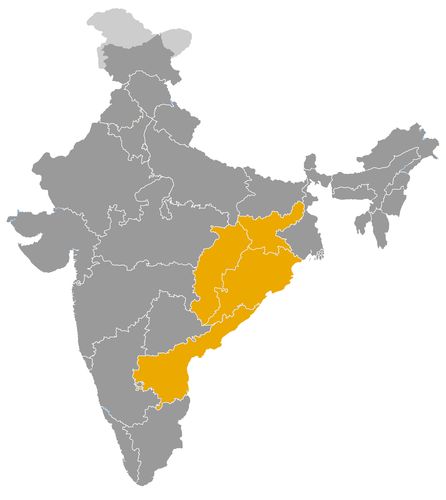
This map illustrates the maximum territory that the Somavamsi Dynasty had reached at its height, covering the current regions of Jharkand and Odisha in India. Its main purpose is to provide a visual aid to understand the geographical extent of this dynasty. However, it's important to note that the contemporary borders of these regions may not necessarily coincide with the historical territories.
The Place and Role of the Somavamsi Dynasty in Indian History
A Regional Dynasty between Kosala and Odisha
The Somavamsi dynasty, also known as the Somavamshi or sometimes associated with the Keshari tradition, played an important role in the medieval history of eastern India. Its rule extended mainly over Dakshina Kosala, Utkala and large parts of present-day Odisha between the ninth and twelfth centuries. The broad chronological range around 850 to 1150 is useful for describing the dynasty’s emergence, height and gradual decline, while the best-attested rulers belong chiefly to the period from the late ninth century to the early twelfth century.
The Somavamsis were not a pan-Indian imperial power. Their significance lies instead in their regional role. They connected the inland zones of central-eastern India with the coastal plains of Odisha and helped create a more coherent political and cultural space. Their rule prepared the ground for the later rise of the Eastern Gangas, who inherited and expanded several aspects of Somavamsi political and architectural development.
Political Consolidation in Dakshina Kosala
The early Somavamsi power base was Dakshina Kosala, a region corresponding broadly to western Odisha and adjoining parts of Chhattisgarh. This inland territory offered agricultural resources, forest products, military manpower and access to routes linking the Deccan, central India and the eastern coast. From this base, rulers such as Mahashivagupta I Janamejaya consolidated dynastic authority and established the foundations of later expansion.
The Somavamsis rose in a political environment marked by competition among several regional dynasties. The Bhauma-Karas still held influence in Utkala, while powers such as the Kalachuris, the Chalukyas and the Eastern Gangas affected the margins of the Somavamsi realm. The dynasty therefore had to combine military expansion, local administration, alliance-building and religious legitimation.
Their political achievement was the gradual integration of inland Kosala with the coastal and temple-rich regions of Odisha. This process gave the dynasty a broader territorial identity and helped shape the medieval political geography of eastern India.
Integration of Utkala and the Growth of Bhubaneswar
One of the most important developments under the Somavamsis was their expansion toward Utkala, the coastal region of present-day Odisha. The weakening of the Bhauma-Kara dynasty created an opportunity for Somavamsi rulers to extend their control eastward. This expansion gave them access to fertile plains, religious centres, trade routes and urban settlements closer to the Bay of Bengal.
Bhubaneswar became one of the most significant centres associated with the Somavamsi period. Under their rule or influence, the city developed as a major sacred and architectural landscape. It was especially connected with Shaivism, and the growth of temple building there became one of the most enduring cultural achievements of the dynasty.
The Somavamsi integration of Utkala was not merely territorial. It also transformed the dynasty’s political identity. A ruling house that had emerged from the interior became the patron of one of the most important sacred urban landscapes of eastern India.
Religious Patronage and the Formation of an Odishan Temple Tradition
The cultural impact of the Somavamsis is most clearly visible in their religious patronage. Their royal names, including forms such as Mahashivagupta, reflect a strong association with Shiva. The dynasty supported Shaiva institutions, temple construction, land grants and the incorporation of Brahmanical religious authority into the political order.
This Shaiva emphasis did not eliminate religious diversity. Medieval Odisha remained a plural region where Buddhism, Jainism, local cults and different forms of Hindu worship coexisted. However, under the Somavamsis, Shaivism became especially prominent in royal ideology and monumental expression.
Their importance in architectural history is considerable. The Somavamsi period contributed to the development of the distinctive temple architecture of Odisha, with stone temples, sculptural decoration, sacred precincts and ritual landscapes. Later monuments under the Eastern Gangas would reach even greater scale, but many foundations of the regional style were laid or strengthened during the Somavamsi age.
Economic Foundations of Inland and Coastal Power
The Somavamsi economy rested on the combination of inland and coastal resources. Dakshina Kosala provided forests, agricultural land, mineral resources and access to interior routes. Utkala offered fertile plains, temple-centred settlements, craft activity and connections toward the Bay of Bengal. The union of these regions increased the dynasty’s ability to collect revenue and support its religious and political institutions.
Temples played an important economic role. Land grants to temples and Brahmins transferred villages, revenues and rights into religious institutions, which then became centres of local administration, ritual activity, craft employment and redistribution. The growth of temple networks therefore strengthened both religious authority and economic organization.
Routes between the interior and the coast encouraged the movement of agricultural goods, forest products, artisans, pilgrims and officials. The Somavamsis helped create a more integrated regional economy in which royal power, temple patronage and local production were closely linked.
Relations with Neighbouring Dynasties
The Somavamsis occupied a strategic position between several political worlds. Their expansion into Utkala brought them into succession and rivalry with the Bhauma-Karas. Their western and northern frontiers exposed them to competition with the Kalachuris and other central Indian powers. Their southern and eastern margins eventually brought them into contact and conflict with the Eastern Gangas.
The Eastern Gangas became the decisive force in the final phase of Somavamsi history. As they expanded in Odisha, they absorbed Somavamsi territories and inherited much of the regional framework that the Somavamsis had helped create. This transfer of power did not erase the Somavamsi legacy; it incorporated it into the next major phase of Odishan history.
A Foundational Dynasty for Medieval Odisha
The Somavamsis were a regional dynasty, but their role was foundational. Politically, they connected Dakshina Kosala and Utkala. Culturally, they strengthened Shaiva temple patronage and contributed to the formation of the Odishan architectural tradition. Economically, they integrated inland resources with coastal plains and temple-based networks.
Their importance in Indian history lies in this regional transformation. They did not rule the whole subcontinent, but they helped define the historical identity of medieval Odisha. Their legacy continued through the Eastern Gangas and through the sacred and architectural landscape that remains one of the most distinctive cultural markers of eastern India.
The Geographical Expansion of the Somavamsi Dynasty in India
A Regional Power between Inland Kosala and Coastal Odisha
The geographical expansion of the Somavamsi dynasty must be understood as a regional process that linked inland eastern India with the coastal plains of Odisha. The dynasty, also known as the Somavamshi and sometimes connected with the Keshari tradition, ruled mainly between the ninth and twelfth centuries. A broad range from around 850 to 1150 is useful for describing its emergence, height and gradual decline, while the best-attested rulers belong chiefly to the period from the late ninth century to the early twelfth century.
The Somavamsis first developed their authority in Dakshina Kosala, an inland region corresponding broadly to western Odisha and adjoining parts of present-day Chhattisgarh. From this base, they expanded eastward into Utkala, the coastal region of Odisha. This movement from the interior to the coast was the defining feature of their territorial history. It allowed them to control agricultural lands, forests, religious centres, trade routes and eventually some of the most important sacred landscapes of medieval eastern India.
Dakshina Kosala as the First Territorial Base
Dakshina Kosala formed the early heartland of Somavamsi power. This inland region had important natural and strategic advantages. It contained cultivable land, forests, mineral resources and routes connecting central India, the Deccan and the eastern coast. These resources provided the dynasty with a strong military and economic foundation.
The first well-attested Somavamsi rulers, such as Mahashivagupta I Janamejaya, consolidated their authority in this region before their successors turned more actively toward the east. Control of Dakshina Kosala gave the dynasty access to manpower, land revenue and forest products. It also placed the Somavamsis at the crossroads of several political zones.
This position was both advantageous and vulnerable. To the west and north-west, they had to deal with powers such as the Kalachuris and other central Indian dynasties. To the south and south-west, the political currents of the Deccan could affect their frontier. To the east lay Utkala, whose coastal wealth and religious prestige made it a natural objective for expansion.
Expansion toward Utkala and the Coastal Plains
The movement into Utkala was the most important stage in Somavamsi geographical expansion. Utkala, corresponding to much of coastal Odisha, had previously been influenced or ruled by the Bhauma-Kara dynasty. As Bhauma-Kara power declined, the Somavamsis gained the opportunity to extend their authority toward the eastern plains.
This expansion transformed the character of the kingdom. The Somavamsis were no longer only inland rulers of Kosala; they became rulers of a wider territory that connected the interior with the coast. Utkala offered fertile agricultural plains, urban settlements, temple centres and access to routes leading toward the Bay of Bengal.
The incorporation of the Bhubaneswar region was especially important. Bhubaneswar became one of the major religious and architectural centres of medieval Odisha. By controlling this area, the Somavamsis gained not only territory but also cultural prestige. Their rule became associated with the growth of Shaiva temple culture and with the development of a distinctive regional architectural tradition.
Relations with the Bhauma-Karas of Odisha
The Somavamsi advance into Utkala directly affected their relations with the Bhauma-Karas. The Bhauma-Karas had earlier played a major role in Odisha, and their decline created space for Somavamsi expansion. The transition was probably not a single conquest, but a gradual process involving military pressure, dynastic succession, local alliances and the absorption of existing administrative structures.
By taking over former Bhauma-Kara zones, the Somavamsis inherited a region with established religious, political and economic institutions. They redirected this inheritance toward their own dynastic identity, especially through Shaiva royal ideology and temple patronage. The expansion into Utkala therefore represented both territorial replacement and cultural transformation.
Frontier Relations with Central Indian and Deccan Powers
The western and north-western frontiers of the Somavamsi kingdom brought it into contact with the Kalachuris and other central Indian powers. These relations were shaped by competition for Kosala, control of routes and influence over frontier regions. The Somavamsis could not ignore these neighbours, because their original inland base lay close to zones of political rivalry.
Further south, the dynasty was affected by broader Deccan politics, including the influence of powers such as the Chalukyas. Even when direct conflict was limited, the Somavamsi position between the Deccan, central India and the eastern coast placed the kingdom within a wider network of strategic pressures.
The dynasty’s geography therefore required constant balancing. It had to defend its inland heartland, integrate the coastal plains and manage relations with neighbouring powers that sought access to the same routes and resources.
The Eastern Gangas and the End of Somavamsi Autonomy
The decisive challenge came from the Eastern Gangas. As Ganga power expanded in Odisha, Somavamsi authority gradually weakened. By the twelfth century, the Eastern Gangas absorbed much of the territory previously ruled by the Somavamsis. This process marked the end of effective Somavamsi autonomy, although local or titular survivals may explain broader chronological limits extending toward the mid-twelfth century.
The Eastern Gangas inherited a region already partly unified by the Somavamsis. They benefited from the territorial integration of Kosala and Utkala, the growth of Bhubaneswar and the temple-based political culture that had developed under Somavamsi rule.
A Territorial Legacy That Shaped Medieval Odisha
The geographical expansion of the Somavamsis was regional, but historically significant. By linking Dakshina Kosala with Utkala, they helped shape the territorial foundations of medieval Odisha. Their rule connected inland resources with coastal plains, political authority with sacred geography, and royal expansion with temple patronage.
Their relations with the Bhauma-Karas, Kalachuris, Chalukyas and Eastern Gangas were all shaped by this geography. The Somavamsis did not build a pan-Indian empire, but they created a coherent regional power whose legacy endured through later Odishan history. Their expansion prepared the ground for the Eastern Gangas and contributed decisively to the political and cultural formation of eastern India.
The Somavamsis, or Somavamshis, ruled mainly over Dakshina Kosala, Utkala and part of present-day Odisha between the 9th and 12th centuries. The broad range c. 850–1150 is suitable for the dynasty’s emergence, height and gradual decline, while the best-attested rulers belong mainly to the period from the late 9th century to the early 12th century. The dates below are indicative and based chiefly on inscriptions.
- Mahashivagupta I Janamejaya (c. 882–922) • The first well-attested Somavamsi ruler, he consolidated the dynasty’s power in Dakshina Kosala.
- Mahabhavagupta I Yayati (c. 922–955) • He strengthened Somavamsi authority and contributed to the kingdom’s expansion toward Utkala.
- Mahashivagupta II Bhimaratha (c. 955–980) • He ruled during a phase of expansion and assertion in western and central present-day Odisha.
- Mahabhavagupta II Dharmaratha (c. 980–1005) • His reign is associated with the Somavamsi advance toward the coastal regions and the weakening of the Bhauma-Karas.
- Nahusha (c. 1005–1021) • A poorly documented ruler, he reigned during a period of transition and dynastic tension.
- Indraratha (c. 1021–1025) • He appears to have held brief and contested authority before the rise of Yayati II.
- Mahashivagupta III Yayati II (c. 1025–1040) • He is often regarded as the ruler who united Kosala and Utkala under broader Somavamsi authority.
- Uddyotakesari (c. 1040–1065) • He maintained Somavamsi power and is associated with religious and monumental development in the Bhubaneswar region.
- Janamejaya II (c. 1065–1080) • His reign belongs to a phase of stabilization after the territorial expansion of his predecessors.
- Puranjaya (c. 1080–1090) • A later ruler, he governed while pressure from neighbouring powers increased.
- Karnadeva (c. 1090–1110) • The last important ruler of the dynasty, he faced the rise of the Eastern Gangas, who eventually absorbed the Somavamsi territories.
- Somavamsi decline phase (c. 1110–1150, possible local survivals) • After Karnadeva, Somavamsi political autonomy gradually disappeared in favour of the Eastern Gangas, although local or titular survivals may explain a broad mid-12th-century endpoint.