

 Français (France)
  Nederlands (nl-NL)
 The Lingaraj Temple is one of the most significant religious monuments in the city of Bhubaneswar, in the Indian state of Odisha. Dedicated to the god Shiva in the form of Lingaraj, it stands as a major center of Shaivite worship in eastern India. The temple forms part of a broader sacred landscape that includes numerous shrines and pilgrimage sites that have shaped the religious identity of the city over many centuries. The complex continues to function as an active place of worship and attracts large numbers of devotees during major religious festivals. Because of its spiritual role and historical importance, the Lingaraj Temple remains a key landmark of Odisha’s cultural heritage.
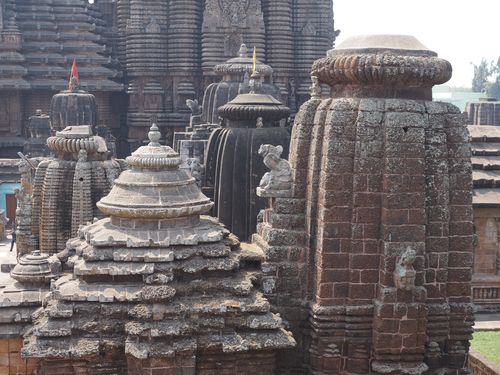
Bhubaneswar • Lingaraj Temple
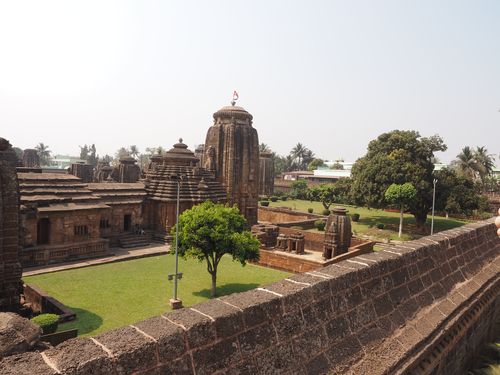
Bhubaneswar • Lingaraj Temple
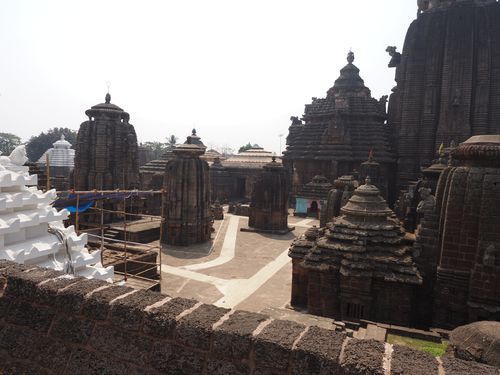
Bhubaneswar • Lingaraj Temple
Monument profile
Lingaraj Temple
Monument category: Hindu Temple
Monument family: Temple
Monument genre: Religious
Cultural heritage: Hindu
Geographic location: Bhubaneswar • Odisha • India
Construction period: 11th century AD
• Links to •
• Dynasties that contributed to the construction of the monument •


• List of videos about Bhubaneswar on this site •
Bhubaneswar • the city of the temples • Odisha
Bhubaneswar • Udayagiri and Khandagiri Jain caves
History of the Lingaraj Temple in Bhubaneswar
Political and Religious Context of the Construction
The Lingaraj Temple in Bhubaneswar, located in the present-day Indian state of Odisha, represents one of the most significant religious monuments of eastern India. Its origins are closely connected to the political and religious developments that shaped the region between the 9th and 11th centuries, a period marked by the consolidation of regional dynasties and the strengthening of temple-based religious institutions.
Before the construction of the current temple, the area known as Ekamra Kshetra had already been recognized as an important center of Shaivism. Numerous early shrines dedicated to Shiva were established in the region, creating a sacred landscape that attracted pilgrims and religious communities. The decision to construct a monumental temple dedicated to Lingaraj, a form of Shiva worshipped through the lingam, reflected both spiritual devotion and political ambition.
The main phase of construction is generally associated with the Somavamsi dynasty, which ruled large parts of Odisha during the early medieval period. These rulers sought to legitimize their authority through religious patronage, a common strategy among Indian monarchs of the time. By sponsoring the construction of a major temple dedicated to Shiva, the Somavamsi kings reinforced their political power while associating themselves with divine protection and cosmic order.
Temples during this period functioned not only as places of worship but also as centers of economic and social organization. Land grants, donations, and ritual obligations linked the temple to agricultural communities, priestly institutions, and local elites. The Lingaraj Temple therefore played a central role in integrating religious authority with royal governance.
Dynastic Changes and Regional Power Struggles
The history of the Lingaraj Temple cannot be separated from the broader political transformations that affected eastern India during the medieval period. While the Somavamsi rulers initiated the major phase of construction, the temple continued to receive patronage under subsequent dynasties.
By the 11th century, the Eastern Ganga dynasty gradually replaced the Somavamsis as the dominant power in Odisha. Rather than abandoning the religious institutions established by their predecessors, the new rulers reinforced them. The Lingaraj Temple remained an important religious center and continued to receive support through royal donations and ritual patronage.
These dynastic transitions demonstrate how temples functioned as enduring institutions that transcended individual rulers. Control over major religious sites allowed successive dynasties to anchor their authority within established sacred traditions.
Throughout the medieval period, Odisha remained relatively insulated from the large-scale temple destructions that affected certain regions of northern India during periods of military conflict. The geographical position of the region and the strength of local political structures contributed to the preservation of the temple and its religious activities.
Historical Events and Evolution of the Site
Over the centuries, the Lingaraj Temple evolved into a vast religious complex. Numerous smaller shrines were constructed within the temple enclosure, creating a dense architectural landscape that reflected the growing importance of Bhubaneswar as a sacred city.
The expansion of the temple complex corresponded to the increasing popularity of Shaivite worship in the region. Pilgrimage networks developed, linking Bhubaneswar with other important religious centers in eastern India. Festivals and ritual gatherings attracted large numbers of devotees and reinforced the temple’s role as a focal point of religious life.
Although the temple was not subjected to major destruction during periods of political instability, the administration and management of the complex changed over time. Different dynasties and local authorities influenced the organization of rituals, the management of temple lands, and the distribution of religious privileges.
During the early modern period, the temple continued to function as a major religious institution despite broader political changes across the Indian subcontinent. The persistence of ritual traditions ensured continuity even as regional power structures evolved.
Global Context of Monumental Construction
The construction and expansion of the Lingaraj Temple occurred during a period when monumental religious architecture was flourishing in many parts of the world. Between the 9th and 11th centuries, societies across Eurasia were investing considerable resources in the construction of religious structures that expressed both spiritual devotion and political authority.
In Europe, this period corresponded to the rise of Romanesque architecture and the construction of large monastic churches and cathedrals. In the Islamic world, dynasties such as the Abbasids and regional powers sponsored monumental mosques and urban religious institutions. In Southeast Asia, the Khmer Empire began constructing large temple complexes that would eventually culminate in the monumental architecture of Angkor.
The Lingaraj Temple fits within this broader global pattern of religious monumentalization. Although the architectural forms and religious traditions differed greatly, these projects shared a common purpose: to anchor political authority within sacred landscapes and to reinforce social cohesion through monumental religious institutions.
Transformations and Urban Development
As Bhubaneswar developed over the centuries, the Lingaraj Temple played a decisive role in shaping the city’s urban identity. The temple became the focal point of a broader sacred geography composed of numerous shrines, ritual tanks, and pilgrimage routes.
The temple enclosure gradually expanded as additional shrines were constructed to accommodate different forms of worship and devotional practices. The presence of these structures created a complex ritual environment in which pilgrims could visit multiple sacred sites within a single pilgrimage circuit.
Markets, residential quarters for priests, and facilities for pilgrims developed around the temple complex. This integration of religious and urban space illustrates the role temples played as catalysts for economic and social activity in medieval Indian cities.
Cultural and Religious Role in the Present Day
Today, the Lingaraj Temple remains one of the most important active temples in the state of Odisha. It continues to function as a center of Shaivite worship and attracts thousands of pilgrims each year. Religious rituals are performed daily according to long-established traditions maintained by hereditary priestly communities.
One of the most significant events associated with the temple is the annual festival of Shivaratri, during which large numbers of devotees gather to participate in ceremonies dedicated to Shiva. The temple also plays an important role in regional festivals that reinforce cultural identity and religious continuity.
Beyond its religious functions, the temple has become a symbol of Bhubaneswar’s historical identity. The city is widely known as the “City of Temples,” and the Lingaraj Temple stands as one of its most recognizable monuments. Its presence reinforces the city’s status as an important cultural and spiritual center in eastern India.
Conservation and Contemporary Challenges
Like many historic monuments in rapidly growing urban environments, the Lingaraj Temple faces several challenges related to conservation and heritage management. The expansion of Bhubaneswar as a modern administrative capital has increased pressures on the historic urban landscape surrounding the temple.
Air pollution, traffic, and the growing number of visitors have raised concerns about the long-term preservation of the monument’s stone surfaces and sculptural details. Environmental factors such as humidity and biological growth also contribute to the gradual deterioration of stone structures.
Government agencies responsible for cultural heritage have implemented conservation programs aimed at protecting the temple complex. These efforts include structural monitoring, restoration of damaged sculptures, and regulations controlling development near the historic site.
Although the temple is not currently listed as a UNESCO World Heritage Site, it is recognized as a monument of national importance and receives protection under India’s archaeological and cultural preservation laws.
Conclusion
The history of the Lingaraj Temple reflects the complex interaction between religion, politics, and urban development in medieval India. Built during a period of dynastic consolidation and religious expansion, the temple became a central institution that linked royal authority with spiritual devotion.
Over the centuries, the monument has remained an enduring symbol of Shaivite tradition and regional identity. Its continued use as a place of worship demonstrates the remarkable continuity of religious practices in the Indian subcontinent.
Today, the Lingaraj Temple stands not only as an architectural landmark but also as a living religious institution whose historical significance continues to shape the cultural landscape of Bhubaneswar and the wider region of Odisha.
Architecture of the Lingaraj Temple in Bhubaneswar
A Major Monument of the Kalinga Architectural Tradition
The Lingaraj Temple in Bhubaneswar represents one of the most accomplished examples of the architectural tradition known as Kalinga architecture, which developed in the region corresponding to present-day Odisha between the 7th and 12th centuries. As the largest and most imposing temple in the historic sacred landscape of Bhubaneswar, the monument marks a mature stage in the evolution of temple design in eastern India.
The architectural composition of the temple illustrates the fully developed form of the regional temple typology. Rather than consisting of a single shrine, the complex is organized as a sequence of ritual structures aligned along an east–west axis. The principal components include the sanctum tower (vimana or deul), the assembly hall (jagamohana), the festival or dance hall (nata mandir), and the hall of offerings (bhoga mandapa). This arrangement reflects a progressive architectural expansion that accompanied the increasing ceremonial complexity of medieval Hindu temple worship.
The scale, structural refinement, and sculptural richness of the Lingaraj Temple demonstrate the high level of architectural maturity reached by temple builders in Odisha during the late early-medieval period.
Technological Innovations and Construction Expertise
The construction of the Lingaraj Temple reveals sophisticated knowledge of stone engineering and structural balance. The temple’s principal tower rises to approximately fifty-five meters, making it one of the tallest temple structures in the region. Its characteristic curvilinear profile represents the rekha deul type, a vertical form composed of gradually converging surfaces that emphasize upward movement.
This curving tower structure was not merely aesthetic. The design allowed the distribution of structural loads downward through successive stone courses, ensuring stability despite the considerable height of the building. The geometry of the tower channels weight toward the base platform, creating a stable architectural mass capable of enduring centuries of environmental stress.
Builders achieved this stability through the precise placement of large stone blocks. The construction system relies primarily on gravity and careful stone interlocking rather than visible mortar. Individual stones were shaped to fit closely together, creating a compact structural system resistant to shifting or displacement.
Architectural elements also contributed to environmental adaptation. Openings, recessed surfaces, and internal volumes promote natural ventilation and moderate the interior temperature. In the humid climate of coastal Odisha, such passive architectural solutions were essential to maintaining the structural integrity of the temple and the comfort of ritual participants.
The placement of the temple within a walled enclosure also reflects an advanced understanding of sacred spatial planning. The temple complex is not isolated but integrated into a broader urban religious landscape composed of shrines, ritual tanks, and pilgrimage routes.
Materials and Stone Construction Techniques
The primary material used in the construction of the Lingaraj Temple is local sandstone. This stone was widely used in the temples of Odisha because of its favorable working properties. When freshly quarried, the stone is relatively soft and can be carved with precision, but it hardens when exposed to air, increasing its durability over time.
Stone blocks were carefully quarried, transported, and shaped using metal tools. Artisans refined surfaces through polishing techniques that enhanced both the durability and visual clarity of sculptural details. The precision of stone cutting is evident in the extremely narrow joints between blocks, which demonstrate the technical skill of the craftsmen involved in the construction.
The temple structure relies on layered stone courses arranged with remarkable accuracy. Each course supports the weight of the layers above it, creating a stable and coherent architectural mass. This construction method enabled builders to achieve significant vertical height without compromising structural stability.
The durability of the temple across centuries is largely attributable to the effectiveness of these construction techniques. The carefully balanced stone structure has allowed the monument to withstand climatic variations, seismic activity, and the gradual wear associated with long-term use.
Artistic Influences and Decorative Program
The exterior surfaces of the Lingaraj Temple are covered with an exceptionally rich sculptural program that forms an integral part of the architecture. Rather than being applied decoration, these sculptures are integrated into the structural rhythm of the building.
The decorative scheme includes representations of Hindu deities, celestial figures, dancers, musicians, guardians, and mythological scenes. These sculptures convey religious symbolism and illustrate elements of Hindu cosmology associated with the worship of Shiva. Many figures appear within niches and vertical projections that emphasize the upward movement of the tower.
Floral motifs, geometric patterns, and ornamental friezes further enrich the temple façade. These decorative elements create a dense visual texture that enhances the monument’s monumental presence. The sculptural style reflects the artistic traditions of Odisha, characterized by fluid lines, rhythmic compositions, and highly detailed relief work.
While the temple remains firmly rooted in regional architectural traditions, certain stylistic influences from other parts of the Indian subcontinent can be detected in the iconography and compositional arrangements of the sculptural panels. These influences illustrate the cultural exchanges that shaped medieval artistic production across different regions of India.
Spatial Organization and Architectural Layout
The spatial layout of the Lingaraj Temple complex reflects the ritual requirements of Shaivite worship as it developed during the medieval period. Each architectural component corresponds to a specific function within the religious ceremonies performed at the temple.
The sanctum, or garbhagriha, houses the sacred lingam representing Shiva. This inner chamber is relatively small and intentionally dim, reinforcing the symbolic idea of divine presence concealed within the architectural core. Access to this space is restricted to priests who perform daily rituals.
In front of the sanctum lies the jagamohana, a large assembly hall where devotees gather during worship. This structure is wider and more open than the sanctum, allowing a larger number of participants to observe rituals.
Further east stands the nata mandir, a hall historically associated with ritual dance and ceremonial performances. These performances formed part of temple worship traditions in Odisha, reflecting the close relationship between architecture, ritual, and performing arts.
The bhoga mandapa, the final structure in the axial sequence, served as the hall where food offerings to the deity were prepared and presented. The addition of this structure illustrates the expansion of temple rituals and the increasing scale of ceremonial activity.
Beyond these main buildings, the temple enclosure contains numerous subsidiary shrines dedicated to different deities. These smaller structures form a complex sacred environment that allows pilgrims to engage with multiple aspects of Hindu worship within a single temple precinct.
Dimensions and Notable Architectural Features
The principal tower of the Lingaraj Temple reaches a height of roughly fifty-five meters, dominating the skyline of the historic city. Its vertical profile is articulated through a series of projecting ribs that emphasize the upward movement of the structure.
The temple complex contains more than one hundred subsidiary shrines distributed throughout the enclosure. This concentration of temples has contributed to Bhubaneswar’s reputation as one of the most important historic temple cities in India.
The entire complex is surrounded by a high boundary wall that defines the sacred precinct and separates it from the surrounding urban environment. Entrance gateways provide controlled access to the inner courtyard, reinforcing the symbolic transition from the secular world to the sacred domain.
Among the architectural features frequently noted by historians are the elaborate sculptural panels, the highly developed tower form, and the balanced proportions between the different structural components of the temple.
Local traditions sometimes attribute the temple’s construction to master artisans whose skills were considered extraordinary. Although these accounts belong more to regional folklore than documented history, they illustrate the cultural prestige associated with the monument.
Architectural Significance and Conservation Challenges
The Lingaraj Temple occupies a central position in the study of temple architecture in eastern India. It represents the culmination of several centuries of architectural experimentation that gradually refined the structural and decorative vocabulary of Kalinga temples.
Its architectural significance extends beyond regional history. The temple provides valuable insight into the relationship between religious practice, artistic expression, and political patronage in medieval India. Scholars often regard the monument as one of the most complete examples of the fully developed Kalinga temple type.
Despite its remarkable preservation, the temple faces contemporary conservation challenges. Urban growth in Bhubaneswar has increased environmental pressures on the monument. Air pollution, visitor traffic, and climatic conditions contribute to the gradual erosion of sculptural surfaces.
Conservation authorities have implemented monitoring and restoration programs aimed at protecting the structure and its decorative elements. These efforts focus on maintaining structural stability, managing visitor impact, and preventing damage caused by environmental factors.
Although the temple is not currently included on the UNESCO World Heritage List, it is recognized as a monument of national importance and remains under official protection as part of India’s cultural heritage.
Conclusion
The architecture of the Lingaraj Temple represents a sophisticated synthesis of engineering skill, artistic expression, and religious symbolism. Through its monumental tower, complex spatial organization, and extensive sculptural decoration, the temple illustrates the highest achievements of medieval temple construction in Odisha.
Beyond its architectural importance, the monument reflects the broader cultural and religious dynamics that shaped the sacred landscape of Bhubaneswar. The Lingaraj Temple continues to stand as a major example of India’s architectural heritage and remains a living center of religious activity more than a millennium after its construction.