

 Français (France)
  Nederlands (nl-NL)
 The Mukteshwara Temple, located in Bhubaneswar, Odisha, India, stands as a prominent example of 10th-century architecture. Dedicated to Shiva, the temple is noted for its ornately carved gateway, which is often regarded as one of the most sophisticated works of religious architecture from this era. The temple complex presents a striking sight with its detailed sculptures and stone structure that reflect the craftsmanship of the time. It serves not only as a place of worship but also as a symbol of the area's artistic and spiritual traditions.

Bhubaneswar • Mukteshwara temple

Bhubaneswar • Mukteshwara temple
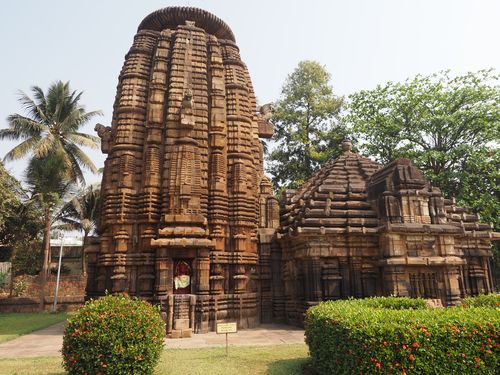
Bhubaneswar • Mukteshwara temple
Monument profile
Mukteshwara temple
Monument category: Hindu Temple
Monument family: Temple
Monument genre: Religious
Cultural heritage: Hindu
Geographic location: Bhubaneswar • Odisha • India
Construction period: 10th century AD
• Links to •
• Dynasties that contributed to the construction of the monument •

• List of videos about Bhubaneswar on this site •
Bhubaneswar • the city of the temples • Odisha
Bhubaneswar • Udayagiri and Khandagiri Jain caves
The Mukteshwara Temple in Bhubaneswar: Political and Social Motivations Behind Its Construction and Global Context
The Mukteshwara Temple, located in Bhubaneswar, Odisha, is an architectural gem of the Somavamsi dynasty, dating back to the 10th century. Dedicated to Lord Shiva, this temple is not only a religious site but also a political and cultural symbol of its era. The temple's construction reflects the ambitions of regional rulers, societal transformations, and broader interactions with external artistic and cultural influences. This article explores the political and social motivations behind the temple's construction, its historical significance, and the major transformations it has undergone over the centuries.
Political and Social Motivations for Construction
The Mukteshwara Temple was constructed during the reign of the Somavamsi dynasty, which ruled over the region of Kalinga (modern-day Odisha). At the time, the construction of grand temples served a dual purpose. Politically, it was a way for rulers to assert their authority and divine right to rule. By commissioning religious monuments dedicated to prominent deities like Shiva, the kings aligned themselves with divine power, solidifying their legitimacy among their subjects.
Socially, the temple symbolized a unifying force for the region's diverse communities. Bhubaneswar was a melting pot of Hindu, Buddhist, and Tantric traditions, and the Mukteshwara Temple stands as a fusion of these religious practices. Its construction during a period of shifting religious ideologies reflects the region's syncretism, with the temple serving as a focal point for cultural and spiritual unity.
Historical Events and Their Impact on the Region
Several key historical events shaped the development of Bhubaneswar as a cultural and political center. The rise of the Somavamsi dynasty in the 10th century marked a period of consolidation of power, during which rulers like Yayati I sought to expand their influence across eastern India. Temples such as Mukteshwara were not only religious centers but also hubs for cultural exchange and intellectual thought.
The strategic location of Bhubaneswar, near important trade routes, allowed the region to benefit from commercial exchanges with other parts of India and Southeast Asia. These interactions brought foreign influences that shaped the temple's art and architecture, blending local styles with external motifs. Over time, the temple became a key site for religious pilgrimages, contributing to its regional importance.
Global Context and Comparison
The construction of the Mukteshwara Temple occurred during a period of global transformations. In Europe, the 10th century saw the consolidation of the Holy Roman Empire and the growth of Christian monasticism, which also led to the construction of grand cathedrals. In China, the Song dynasty was emerging, fostering a golden age of cultural, technological, and artistic innovation. Similarly, in the Islamic world, the Abbasid Caliphate was reaching its peak, with cities like Baghdad becoming centers of intellectual and architectural prowess.
Like other regions during this period, Odisha was undergoing a period of cultural renaissance. Temples served as both religious and political symbols, akin to how cathedrals in Europe and mosques in the Islamic world functioned. The Mukteshwara Temple reflects this global trend of monumental architecture symbolizing both divine and political authority.
Major Transformations of the Mukteshwara Temple
Over the centuries, the Mukteshwara Temple has undergone several transformations, reflecting shifts in power and cultural influence. The decline of the Somavamsi dynasty and the rise of the Ganga dynasty brought new artistic elements to the region, including intricate carvings and sculptures that were later added to the temple complex.
During the colonial period, British interest in India’s architectural heritage led to increased documentation of the temple. Although Mukteshwara escaped significant damage during this time, the growing urbanization of Bhubaneswar in the 20th century began to threaten its surroundings.
The fusion of architectural styles at Mukteshwara—such as the torana (arched gateway) borrowed from Buddhist stupas—demonstrates the temple’s openness to external influences. This blending of styles not only enhanced its aesthetic appeal but also contributed to its growing reputation as a significant architectural site.
Cultural Importance and Current State of Conservation
Mukteshwara Temple holds immense cultural importance as one of the finest examples of Kalinga architecture. Its intricate carvings, unique arched entrance, and blend of religious symbolism have made it a key destination for scholars, historians, and tourists alike. Despite not being listed as a UNESCO World Heritage Site, the temple enjoys recognition for its artistic significance, contributing to global interest in Odisha’s architectural heritage.
The Archaeological Survey of India (ASI) has been instrumental in the temple’s conservation efforts. While its main structure remains well-preserved, the surrounding environment faces threats from increasing urbanization and pollution.
Preservation Challenges in the Modern Era
The Mukteshwara Temple faces several challenges in maintaining its historical integrity. Bhubaneswar's rapid urban expansion places pressure on the temple site, with new buildings encroaching on the area. Environmental degradation, particularly due to air pollution, has also accelerated the erosion of the temple's intricate sculptures.
In addition, the rise in tourism presents both opportunities and challenges. While increased visibility brings attention to the need for conservation, the influx of visitors can strain the site, especially if proper preservation measures are not in place. Managing these competing interests will be crucial in ensuring the temple's long-term survival.
Conclusion
The Mukteshwara Temple in Bhubaneswar stands as a testament to the architectural and cultural advancements of the Somavamsi dynasty. Constructed with political and social motivations in mind, the temple served as both a religious sanctuary and a symbol of regional authority. Its architectural innovations and blending of cultural influences illustrate the dynamic interactions between local traditions and external forces during this period. Although the temple has weathered centuries of change, its preservation in the face of modern threats remains a critical concern. Efforts to maintain this cultural treasure will ensure that its significance endures for generations to come, linking the past to the present.
The Mukteshwara Temple in Bhubaneswar: A Technological and Artistic Marvel of the Somavamsi Era
The Mukteshwara Temple in Bhubaneswar, built around the 10th century, stands as a masterpiece of Indian architecture and a reflection of the technological and artistic advancements achieved during the reign of the Somavamsi dynasty. This temple, dedicated to Lord Shiva, showcases a blend of local traditions and external influences, making it an important symbol of cultural and religious significance in Odisha. Its unique architectural features and innovative construction techniques demonstrate the technological sophistication of the time, while the temple's plan and design continue to captivate scholars and visitors alike.
Technological Advancements and Construction Techniques
The Mukteshwara Temple exemplifies the technological innovations of the Somavamsi period, particularly in the precision of its construction and the intricacy of its carvings. The temple was constructed primarily using locally sourced sandstone, a durable and workable material ideal for detailed carvings. The craftsmanship of the era is evident in the precision of the temple's relief sculptures, which depict mythological narratives, floral motifs, and intricate geometrical patterns.
The construction techniques used in Mukteshwara were highly advanced for their time. The temple was built using the "dry masonry" technique, where stones are carefully placed and interlocked without the use of mortar, ensuring durability and stability. The Somavamsi architects also employed a sophisticated understanding of load distribution, allowing the temple's main spire, or shikhara, to rise gracefully while maintaining structural integrity.
One of the most notable innovations of the Mukteshwara Temple is its torana, or ornamental gateway. This arched structure, intricately carved with depictions of scrollwork, lotus flowers, and mythical creatures, is an architectural feature not commonly seen in other temples of the period. It highlights the ingenuity of the builders in incorporating elements of Buddhist architecture, showing a fusion of religious and artistic traditions.
Unique Architectural Features and Decorative Elements
The Mukteshwara Temple is a harmonious blend of traditional Kalinga architecture with external artistic influences. The temple's structure follows the classic layout of a Hindu temple, consisting of three key elements: the deul (sanctum), the jagamohana (assembly hall), and the torana (ornamental arch). The deul is crowned by a shikhara, a tall spire that represents Mount Kailash, the mythical abode of Lord Shiva.
The jagamohana, with its pyramidal roof, is an innovation in temple architecture, providing both functional and aesthetic benefits. It allows natural light to illuminate the interior while maintaining a cool environment, suitable for religious activities. The temple is renowned for its elaborate carvings, including scenes of dancers, musicians, and mythical beings, which reflect both local traditions and influences from neighboring regions, including the Buddhist art of Nalanda and Bengal.
The decorative motifs in the Mukteshwara Temple are a testament to the artistic skills of the Somavamsi artisans. The temple is adorned with reliefs of celestial beings, scrolls, and intricate lotus flowers, all carved with exquisite detail. These carvings not only serve an aesthetic purpose but also convey religious and philosophical meanings, showcasing the fusion of spirituality and art.
Layout and Notable Structural Design
The layout of the Mukteshwara Temple is compact yet grand in its proportions, symbolizing the ideal cosmic order in Hinduism. The temple follows the traditional Kalinga temple plan, with a square sanctum, a rectangular assembly hall, and an axial alignment leading to the torana. The entire complex is enclosed by a low boundary wall, giving it a sense of sanctity and seclusion.
The torana, with its graceful arch and sculpted motifs, is one of the most iconic features of the Mukteshwara Temple. This gateway is often cited as an architectural marvel of its time, representing the artistic synthesis between Hindu and Buddhist traditions. Its presence not only enhances the visual appeal of the temple but also marks a ritualistic entry point for devotees, symbolizing the transition from the material to the spiritual realm.
An interesting anecdote about the temple is that it was historically referred to as "the jewel of Odisha architecture" due to its intricate design and compact, elegant proportions. This temple is considered a precursor to the grander temples of Odisha, such as the Lingaraja and the Sun Temple of Konark, which were built later in the same region.
Contribution to International Recognition
The architectural and artistic innovations of the Mukteshwara Temple have contributed to its recognition on the global stage. While it is not yet a UNESCO World Heritage Site, it attracts scholars, art historians, and tourists from around the world, drawn to its unique blend of artistic styles and its importance in the evolution of temple architecture in India.
The temple has become a point of reference in the study of Hindu temple architecture, particularly for its innovative use of the torana and its fusion of different artistic traditions. Its inclusion in various international exhibitions and academic studies has brought it further into the spotlight as a monument of global importance.
Current State of Conservation
The Mukteshwara Temple is well-preserved, thanks to the efforts of the Archaeological Survey of India (ASI) and the Odisha government. Despite centuries of exposure to the elements, the temple's carvings remain remarkably intact, showcasing the durability of the sandstone used in its construction. However, the temple faces modern challenges, including environmental degradation due to air pollution and the pressures of urbanization in Bhubaneswar.
Tourism also poses a threat to the temple's preservation. As more visitors flock to the site, the risk of wear and tear on the temple's delicate carvings increases. Conservation efforts are ongoing, with particular attention given to restoring damaged sculptures and maintaining the structural integrity of the temple.
Preservation Challenges in the Modern Era
The Mukteshwara Temple faces several challenges in preserving its historical and architectural integrity. The temple is vulnerable to air pollution, which accelerates the erosion of its sandstone surface. In addition, the growing urbanization of Bhubaneswar has led to increased foot traffic, further threatening the delicate carvings that adorn the temple's walls.
Conservationists are also concerned about the impact of climate change, particularly the increasing frequency of cyclones and heavy rains, which could damage the temple's structure. Ongoing efforts by the ASI aim to mitigate these threats by implementing modern preservation techniques, while respecting the traditional methods used during the temple’s original construction.
Conclusion
The Mukteshwara Temple stands as a symbol of technological and artistic innovation during the Somavamsi era. Its construction techniques, use of local materials, and intricate decorative motifs showcase the ingenuity of its builders. The fusion of regional and foreign influences in the temple's architecture reflects the cultural exchanges that occurred in Odisha during this period, making it a significant monument in the history of Indian architecture.
Although the temple has faced challenges over the centuries, its importance as a cultural and religious landmark remains undiminished. Conservation efforts continue to preserve this architectural gem, ensuring that it remains a testament to the technological and artistic advancements of the Somavamsi dynasty for future generations to appreciate.