

 Français (France)
  Nederlands (nl-NL)
 The Parsurameswara Temple, located in Bhubaneswar, Odisha, India, is a notable example of ancient religious architecture. Dedicated to Lord Shiva, this 7th-century temple is one of the oldest in the city, known for its many shrines. Its finely carved stone structure showcases the craftsmanship of the time, with intricate decorative motifs and divine figures adorning its walls. Though relatively modest in size compared to other temples, Parsurameswara holds a significant place in Bhubaneswar's cultural heritage, drawing visitors for its beauty and peaceful ambiance.

Bhubaneswar • Parsurameswara temple
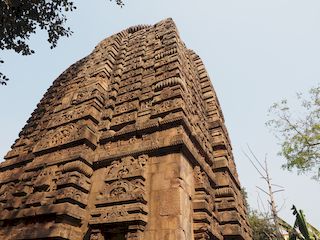
Bhubaneswar • Parsurameswara temple

Bhubaneswar • Parsurameswara temple
Monument profile
Parsurameswara temple
Monument category: Hindu Temple
Monument family: Temple
Monument genre: Religious
Cultural heritage: Hindu
Geographic location: Bhubaneswar • Odisha • India
Construction period: 7th century AD
• Links to •
• Dynasties that contributed to the construction of the monument •

• List of videos about Bhubaneswar on this site •
Bhubaneswar • the city of the temples • Odisha
Bhubaneswar • Udayagiri and Khandagiri Jain caves
The Political and Social Motivations Behind the Construction of the Parsurameswara Temple and its Historical Legacy
Construction and Political Motivations
The Parsurameswara Temple, located in Bhubaneswar, Odisha, India, was built in the 7th century during the reign of the Somavamsi dynasty. This period was marked by significant political and social changes in eastern India, as rulers sought to consolidate their power and influence. The construction of temples was often a political tool used by monarchs to legitimize their rule and demonstrate their allegiance to religious traditions, in this case, Shaivism, the worship of the god Shiva.
Politically, the Somavamsi kings built temples to assert their dominance over the region and to unify their territories under a common faith. Socially, these temples served as communal centers where religious activities reinforced social hierarchies, with the king positioned as the patron of religion and culture. Temples like Parsurameswara were not only places of worship but also symbols of the king’s wealth and power.
Historical Events and Regional Development
Several significant historical events marked the era of Parsurameswara's construction. Bhubaneswar, known as the "City of Temples," became a key religious center in eastern India, largely due to the rise of Shaivism and the building of such grand monuments. The construction of the temple came at a time when the region was experiencing a religious transition, with Buddhism and Jainism still prevalent but beginning to decline as Hinduism, particularly Shaivism, gained prominence.
This shift in religious practice influenced the social structure, as rulers who aligned themselves with Shaivism gained the support of the Brahminical class and strengthened their political standing. Temples like Parsurameswara thus played a dual role in promoting religious devotion and reinforcing political legitimacy.
Global Context and Comparisons
The 7th century was a time of transformation in many parts of the world. In Europe, the early medieval period saw the spread of Christianity following the decline of the Roman Empire, with churches becoming centers of social and political life. Similarly, in China, the Tang dynasty was flourishing, promoting Buddhism as a state religion and using monumental architecture, like the construction of Buddhist pagodas, to strengthen the state's influence. The Islamic world was rapidly expanding, with the Umayyad Caliphate promoting Islamic culture and architecture in the Middle East and North Africa.
In comparison, the construction of the Parsurameswara Temple reflected a global pattern of rulers using religious architecture as a means to establish authority, inspire devotion, and unify diverse populations. However, while in other parts of the world, the spread of monotheistic religions was prominent, eastern India under the Somavamsis was focused on maintaining and promoting the Hindu tradition through Shaivism.
Architectural Transformations and External Influences
Over the centuries, the Parsurameswara Temple has undergone several transformations, though it has largely retained its original form. The structure is a fine example of Nagara-style architecture, with intricate carvings and a towering vimana (temple tower) over the sanctum. However, later additions and restorations have reflected the influence of different dynasties and cultural trends, as successive rulers sought to leave their mark on the temple.
The motifs and decorative elements of the temple showcase a blend of regional artistic traditions, such as the fine stonework of Odisha, and external influences, particularly from northern and southern India. These include detailed sculptures of gods, animals, and floral patterns, which reflect a synthesis of local craftsmanship and broader Indian art forms.
Cultural Importance and Current Conservation Status
Today, the Parsurameswara Temple holds a significant place in Odisha’s cultural heritage. While not a UNESCO World Heritage Site, it is recognized as one of Bhubaneswar’s most important historical structures and is part of the city’s rich temple legacy. The temple remains an active site of worship, which has helped preserve its cultural relevance in the modern era.
The conservation status of the temple is relatively stable, although efforts are ongoing to protect its intricate carvings from weathering and environmental damage. The temple's inclusion in national heritage conservation programs has ensured that it receives attention from archaeologists and conservationists.
Modern Preservation Challenges
Despite its well-preserved state, the Parsurameswara Temple faces several modern challenges. The primary threat comes from urbanization in Bhubaneswar, where rapid development can lead to pollution, increased foot traffic, and vibrations from nearby construction that may destabilize the structure. The temple's soft stone carvings are also vulnerable to weathering due to climate change, with more intense monsoon seasons causing erosion.
Another challenge is the management of tourism. While the temple is a key cultural attraction, too many visitors can accelerate wear and tear on the structure. Balancing public access with preservation is a continuing concern for local authorities.
Conclusion
The Parsurameswara Temple is more than just a historical monument; it is a testament to the political and social ambitions of the Somavamsi rulers and a symbol of religious and cultural continuity in eastern India. Its architecture and historical significance continue to attract scholars and visitors alike. The challenges of preservation are considerable, but with sustained efforts, this iconic structure can endure as a monument to India’s rich temple-building tradition.
Technological and Architectural Innovation in the Parsurameswara Temple, Bhubaneswar
Architectural Significance and Technological Advancements
The Parsurameswara Temple, constructed in the 7th century in Bhubaneswar, Odisha, is a striking example of early medieval Indian temple architecture that reflects the technological prowess and artistic innovation of its time. Dedicated to the Hindu god Shiva, the temple stands as one of the oldest surviving structures in the region and showcases a refined blend of engineering, artistic craftsmanship, and religious expression.
The temple's Nagara-style architecture, characterized by a curvilinear tower (vimana) above the sanctum, demonstrates the advanced understanding of structural design and balance by the builders of the period. The construction of such a stable and enduring stone structure, without the use of mortar, reflects an impressive mastery of stone masonry. The use of interlocking stone blocks, precisely cut and placed, was crucial in ensuring the longevity of the temple, especially in a region prone to heavy monsoons.
Materials and Construction Techniques
The primary material used for the construction of the Parsurameswara Temple is local sandstone, a type of sedimentary rock that was abundant in the region. Sandstone was chosen not only for its durability but also for its workability, which allowed artisans to carve intricate designs and reliefs. The stonework of the temple includes bas-relief sculptures of deities, mythical creatures, and floral motifs, which were painstakingly detailed using basic tools but highly skilled craftsmanship.
One of the innovative techniques used in the construction of the temple is the dry-stone method, where stones are fitted together without mortar. This required precise cutting of stone blocks to ensure they fit together perfectly, creating a structure that could withstand both natural elements and the test of time. The corbelled roofing technique was another hallmark of the architectural innovation of the era, where overlapping stones formed stable roof structures without requiring wooden supports.
Unique Blend of Regional and Foreign Artistic Influences
The Parsurameswara Temple exhibits a unique fusion of regional traditions from Odisha and external artistic influences from northern and southern India. The Nagara-style architecture, common in northern India, blends seamlessly with the regional Kalinga architectural style, known for its ornate carvings and sculptural elements. The temple’s design emphasizes verticality, with the vimana rising gracefully above the sanctum, while the outer walls are covered in detailed carvings that illustrate both local mythology and broader pan-Indian themes.
The motifs found on the temple walls, such as the representations of Shiva, Parvati, and other deities, reflect a strong Shaivite influence, which was dominant in the region at the time. However, the intricate floral and geometric patterns show connections with southern Indian Dravidian styles and possibly influences from Gupta art, which was prevalent in northern India.
The detailed stone carvings also include representations of lions and elephants, symbolizing power and protection, as well as intricate depictions of apsaras (celestial maidens) and dancers, which add a dynamic aesthetic element to the static stone structure. These decorations not only illustrate religious devotion but also highlight the cultural exchanges that shaped the artistic output of the region during the 7th century.
Notable Structure and Layout
The Parsurameswara Temple follows a traditional Nagara-style layout, with a garbhagriha (sanctum sanctorum) at the center, a small mandapa (porch), and a towering vimana. Despite its relatively modest size compared to later temples, it stands out for its proportional elegance and the intricate detailing on its surfaces.
The temple’s vimana is about 10.8 meters high, making it a notable structure for its time. The vimana's curvilinear shape and its ornamented surfaces illustrate both religious symbolism and technical precision, as the weight distribution of the structure had to be carefully managed to avoid collapse.
Anecdotes and Historical Context
According to local lore, the Parsurameswara Temple was among the first temples constructed in Bhubaneswar, making it a forerunner to the city's famous Lingaraja Temple. An interesting anecdote about its construction relates to the small Nandi (bull) shrine at the temple, which is rare for Shiva temples of this period. Nandi is typically placed in larger, more prominent shrines in front of Shiva temples, but the smaller size here reflects the early phase of Shaivite temple architecture, which would later evolve into more elaborate complexes.
International Recognition and UNESCO Status
While the Parsurameswara Temple is not yet part of the UNESCO World Heritage Site list, it forms an integral part of Bhubaneswar’s temple landscape, which has drawn international recognition for its architectural and cultural significance. The temple contributes to the collective heritage of Bhubaneswar, often referred to as the “City of Temples,” and attracts scholars and tourists alike due to its historical importance.
Its potential inclusion on the UNESCO list would likely enhance its conservation efforts and global visibility, helping to secure funding and expertise necessary to preserve its intricate carvings and structural integrity. Moreover, such recognition could elevate the temple’s status as a key example of early Hindu temple architecture and as a testament to the technological and artistic achievements of the 7th century.
Preservation Challenges
The primary threats to the Parsurameswara Temple's preservation stem from environmental factors, including the erosion of its sandstone due to heavy rainfall and humidity in the region. Urbanization in Bhubaneswar poses another challenge, as increased pollution and construction activities nearby could lead to vibrations and structural stress on the temple.
Efforts to preserve the temple focus on restoring its carvings and preventing further damage from natural and human-induced factors. Conservationists are also working to manage the flow of tourists, ensuring that the temple's delicate structure is not overwhelmed by foot traffic.
Conclusion
The Parsurameswara Temple stands as a monument to the technological ingenuity and artistic creativity of 7th-century India. Its blend of regional and external influences, coupled with its innovative construction techniques, highlights the temple’s importance not only as a religious site but also as a cultural symbol of the era. As efforts continue to preserve its legacy, the temple remains a testament to the advanced architectural knowledge and cultural synthesis that shaped early medieval India.