

 Français (France)
  Nederlands (nl-NL)
 The Swarnajaleswara Temple is a significant monument located in Bhubaneswar, Odisha, India. This temple is a notable example of the region’s architecture and reflects the rich cultural and religious heritage of ancient India. It is part of a collection of temples that draw both devotees and visitors interested in exploring Bhubaneswar’s spiritual and historical legacy. The site remains a place of worship and a symbol of Odisha's religious heritage.
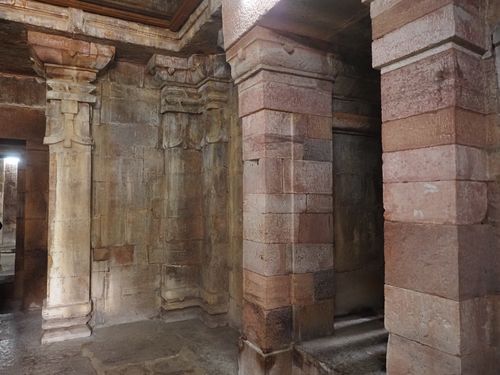
Bhubaneswar • Swarnajaleswara temple

Bhubaneswar • Swarnajaleswara temple

Bhubaneswar • Swarnajaleswara temple
Monument profile
Swarnajaleswara temple
Monument category: Hindu Temple
Monument family: Temple
Monument genre: Religious
Cultural heritage: Hindu
Geographic location: Bhubaneswar • Odisha • India
Construction period: 11th century AD
• Links to •
• Dynasties that contributed to the construction of the monument •


• List of videos about Bhubaneswar on this site •
Bhubaneswar • the city of the temples • Odisha
Bhubaneswar • Udayagiri and Khandagiri Jain caves
The Political and Social Motivations Behind the Construction of the Swarnajaleswara Temple: Historical Context and Preservation Challenges
Origins and Political Motivations
The Swarnajaleswara Temple, located in Bhubaneswar, Odisha, is a significant example of Kalinga architecture, dating back to the medieval period, likely between the 11th and 12th centuries. The construction of the temple reflects the political and social aspirations of the ruling dynasties, primarily the Somavanshi and Eastern Ganga rulers. During this era, temple building was a strategic tool employed by monarchs to solidify their political legitimacy and assert their religious authority. Temples like Swarnajaleswara symbolized the king’s divine connection and their role as protectors of Hinduism, a crucial aspect of asserting control over their territories.
Socially, temples served as community hubs, not only as places of worship but also as centers for education, culture, and economic activity. The construction of grand temples demonstrated the rulers' wealth and cultural patronage, helping to unify and strengthen the local population under a shared religious and political framework.
Historical Events and Regional Development
The period during which the Swarnajaleswara Temple was built saw significant shifts in power within the Indian subcontinent. The Somavanshi dynasty, which likely initiated the construction of the temple, was engaged in consolidating its power in eastern India. They competed with other regional dynasties, such as the Cholas to the south and the Pala Empire to the east. The construction of temples played a vital role in establishing religious dominance and securing loyalty from local populations, as well as presenting a challenge to rival dynasties.
Globally, the 11th century was a period of architectural and cultural flourishing. In Europe, the Romanesque style was emerging, characterized by large cathedrals and monasteries. Meanwhile, the Islamic world, under the Abbasid Caliphate, was witnessing a golden age of cultural and scientific advancements, with monumental mosques and palaces being constructed across the Middle East. Similarly, in East Asia, the Song Dynasty was making strides in technological innovation and urban development, while Mesoamerican civilizations such as the Maya were continuing to build grand temples and cities.
The construction of the Swarnajaleswara Temple reflects India’s own parallel development, where monumental religious architecture was used to express political and spiritual power.
Major Transformations and External Influences Over the Centuries
Over the centuries, the Swarnajaleswara Temple has undergone several transformations, reflecting shifts in political power and external cultural influences. After the decline of the Somavanshi dynasty, the Eastern Ganga dynasty continued the tradition of temple-building in the region. However, the rise of Muslim sultanates in northern India in the 13th century led to a decline in temple construction across much of the country. Despite this, temples in Odisha, including Swarnajaleswara, remained relatively intact due to the region’s geographical isolation and distance from the major centers of conflict.
Architecturally, the temple blends local Kalinga traditions with influences from southern India, particularly the Dravidian style. The intricate carvings of deities, floral motifs, and mythological figures seen on the temple’s exterior reflect both the artistic creativity of the time and the cross-regional exchange of ideas that occurred through trade and pilgrimage routes.
Cultural Significance and Current State of Conservation
Today, the Swarnajaleswara Temple holds significant cultural importance as a symbol of Odisha’s rich religious and architectural heritage. It continues to be a site of worship, attracting devotees and tourists alike. However, despite its ongoing cultural relevance, the temple is not currently listed as a UNESCO World Heritage site, though its inclusion would bring much-needed international attention to its preservation.
The state of the temple’s conservation is relatively stable, but like many ancient monuments, it faces several challenges due to environmental and human factors. The Archaeological Survey of India (ASI) is responsible for its upkeep, but the temple’s sandstone surfaces are gradually being eroded by pollution and natural weathering.
Challenges in Preserving the Temple’s Integrity
The Swarnajaleswara Temple faces numerous challenges in preserving its historical integrity. The rapid urbanization of Bhubaneswar has led to increased pollution, which accelerates the erosion of the temple’s intricate stone carvings. In addition, fluctuations in temperature and humidity, coupled with monsoonal rains, continue to weaken the structure.
Another significant challenge comes from tourism. As Bhubaneswar grows in prominence as a spiritual and cultural destination, the influx of visitors puts added strain on the temple’s delicate features. Managing tourist foot traffic while ensuring the preservation of the site is a difficult balance for conservation authorities.
Efforts to mitigate these issues include ongoing restoration projects led by the ASI, focusing on stabilizing the structure and protecting the intricate carvings from further degradation. However, more comprehensive measures, potentially supported by international heritage organizations, are needed to ensure the temple's long-term preservation.
Conclusion: A Lasting Symbol of Political and Cultural Legacy
The Swarnajaleswara Temple stands as a testament to the political ambitions and religious devotion of the rulers who commissioned it. Its construction reflects the intricate relationship between political power, religious expression, and social cohesion in medieval India. Over the centuries, it has weathered shifts in power, cultural influences, and environmental challenges, retaining its status as an important cultural landmark in Odisha.
While the temple continues to play a vital role in the region’s cultural landscape, modern conservation efforts must be strengthened to ensure that this architectural gem can withstand the pressures of urbanization and environmental change, preserving it for future generations.
Architectural Innovations and Technological Advancements of the Swarnajaleswara Temple in Bhubaneswar
Introduction: Architectural Significance of the Swarnajaleswara Temple
The Swarnajaleswara Temple, located in Bhubaneswar, Odisha, India, stands as an enduring testament to the technological and architectural innovations of its time. Constructed during the medieval period, between the 11th and 12th centuries, the temple exemplifies the mastery of Kalinga architecture, a style characterized by its precision in stone carving, imposing structures, and harmonious design. The temple's design reflects the cultural and religious aspirations of the period, merging local craftsmanship with external artistic influences.
Materials and Construction Techniques
The Swarnajaleswara Temple was primarily constructed using locally sourced sandstone, a material highly favored in the region due to its durability and ability to be intricately carved. This sandstone, often reddish-golden in color, allowed artisans to create elaborate designs that have survived for centuries. The temple’s stone blocks were assembled without the use of mortar, utilizing a precise technique of interlocking stones, which added to the structural integrity of the monument. This method, often referred to as drystone construction, not only highlights the technical expertise of the builders but also showcases an advanced understanding of geometry and engineering principles.
The intricate carvings that adorn the temple were made using fine chiseling tools, requiring an exceptional level of skill from the artisans. Each detail, from the delicate floral patterns to the lifelike figures of deities, was carved with precision, reflecting both artistic brilliance and technological innovation.
Architectural Features and the Fusion of Artistic Traditions
One of the most striking features of the Swarnajaleswara Temple is its vimana, the towering spire that rises above the sanctum. This element is a hallmark of Kalinga architecture, where the height of the tower is symbolic of spiritual ascent. The pyramid-like structure of the vimana is crowned with an amalaka (stone disc) and a kalasha (ritual pot), both of which are symbols of divine power and abundance in Hindu iconography.
The temple’s external walls are richly adorned with carvings depicting various aspects of Hindu mythology, including deities, celestial beings, and mythical creatures. These motifs are characteristic of the Kalinga style but also incorporate influences from the Dravidian architectural traditions of southern India, particularly in the stylization of the figures and ornamental details. This blend of regional and foreign styles illustrates the cultural exchange that was prevalent during this period, as Odisha’s rulers maintained contact with neighboring dynasties through trade, pilgrimage, and political alliances.
Notable Structural Layout and Plan
The Swarnajaleswara Temple follows a classic temple plan typical of Kalinga architecture. The vimana houses the central sanctum where the deity would be enshrined, and in front of it is the jagamohana, or assembly hall, where devotees gather for worship. This linear arrangement, guiding worshippers from the outer space of the jagamohana to the inner sanctum, mirrors the spiritual journey from the earthly realm to the divine.
What sets this temple apart is its proportionate symmetry, with each section of the temple intricately connected to create a cohesive and balanced structure. The height of the vimana, in relation to the size of the base and the surrounding structures, gives the temple an imposing yet graceful presence, making it a visually striking monument.
Noteworthy Facts and Anecdotes About the Temple’s Construction
Although detailed records of the construction process of the Swarnajaleswara Temple are scarce, it is believed that the artisans employed for its creation were among the finest of their time. One legend associated with the temple is that its construction was guided by divine inspiration, allowing it to be completed in an unusually short period. Such stories, though unverified, add to the temple’s mystique and spiritual significance.
The precision in the stonework, the complexity of the carvings, and the temple’s structural resilience have been the subject of admiration from historians and architects alike. While the Swarnajaleswara Temple may not be as large as some of its counterparts, it is renowned for its artistic detail and architectural sophistication.
International Recognition and UNESCO World Heritage Status
Though the Swarnajaleswara Temple has not yet been designated as a UNESCO World Heritage site, it is recognized for its cultural and architectural significance within India and beyond. Its inclusion on the UNESCO list would not only elevate its status globally but would also bring additional resources for its conservation. This recognition would further highlight the importance of Kalinga architecture in the global context of religious and historical monuments.
Conservation Status and Modern Preservation Challenges
The temple, like many ancient monuments, faces several modern challenges in terms of preservation. The increasing urbanization of Bhubaneswar, coupled with environmental factors such as air pollution and weathering, has led to the gradual erosion of the temple’s sandstone surfaces. The fine carvings, once sharp and detailed, are slowly being worn down, which poses a significant threat to the integrity of the monument.