

 Français (France)
  Nederlands (nl-NL)
 Bindusagar Reservoir is a large sacred water tank located in the city of Bhubaneswar in the Indian state of Odisha. It forms an important element of the city’s religious and urban landscape, which is widely known for its remarkable concentration of Hindu temples. The reservoir plays a central role in local religious practices and in several ceremonies associated with nearby shrines. Pilgrims and devotees gather at the site during important festivals and ritual events throughout the year. Because of its spiritual significance and cultural role, Bindusagar Reservoir remains an important landmark within the sacred heritage of Bhubaneswar.
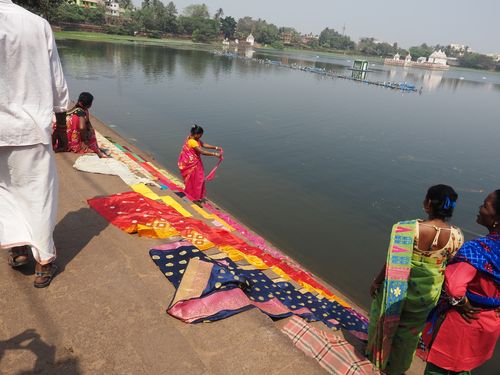
Bhubaneswar • Bindusagar Tank
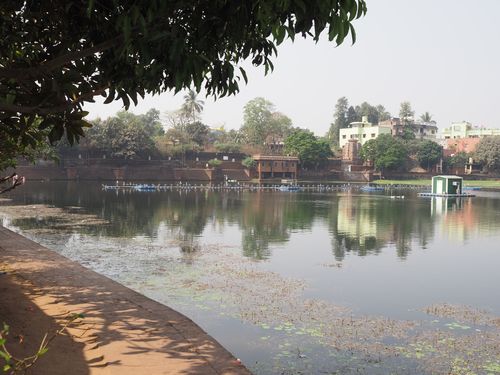
Bhubaneswar • Bindusagar Tank
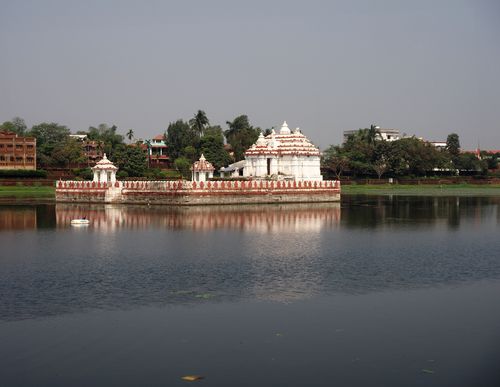
Bhubaneswar • Bindusagar Tank
Monument profile
Bindusagar Tank
Monument category: Cistern
Monument family: Civil engineering structures (bridges, wells, etc.) and factories
Monument genre: Economic
Cultural heritage: Hindu
Geographic location: Bhubaneswar • Odisha • India
Construction period: 7th century AD
• Links to •
• Dynasties that contributed to the construction of the monument •


• List of videos about Bhubaneswar on this site •
Bhubaneswar • the city of the temples • Odisha
Bhubaneswar • Udayagiri and Khandagiri Jain caves
History of the Bindusagar Reservoir in Bhubaneswar
Political and Religious Context of Its Creation
The Bindusagar Reservoir is one of the most historically significant sacred water bodies in the city of Bhubaneswar, in the Indian state of Odisha. Located north of the Lingaraj Temple, the reservoir forms an essential element of the sacred landscape traditionally known as Ekamra Kshetra. This area developed over many centuries as a major center of Shaivite worship, and the reservoir played an important role in the religious and urban organization of the city.
The creation of Bindusagar must be understood within the broader political and social framework of early medieval Odisha. Between the 7th and 11th centuries, regional dynasties such as the Shailodbhava and later the Somavamsi rulers consolidated their authority in the region. These rulers supported the construction of temples and sacred infrastructure in order to strengthen both religious institutions and royal legitimacy.
In this context, large ritual reservoirs were an important component of temple complexes. They served practical purposes by providing water for ritual purification, but they also carried symbolic meanings connected with Hindu cosmology. Water bodies associated with temples were often seen as representations of the cosmic oceans described in religious texts. By sponsoring the construction or enlargement of such reservoirs, rulers demonstrated their role as patrons of religion and guardians of sacred geography.
The establishment of Bindusagar also contributed to the formation of Bhubaneswar as a pilgrimage center. The reservoir created a focal point around which temples, shrines, and ritual routes could be organized. This integration of religious architecture and hydraulic infrastructure reinforced the political prestige of the ruling dynasties.
Dynastic Changes and Historical Development
Over the centuries, the Bindusagar Reservoir remained closely connected to the political history of the region. Although its earliest phases may date to earlier religious settlements in Ekamra Kshetra, the reservoir gained greater importance during the Somavamsi period, when Bhubaneswar experienced significant religious and architectural development.
The Somavamsi rulers promoted Shaivite worship and sponsored major temple construction projects. Their patronage contributed to the rise of the Lingaraj Temple, which eventually became the principal sanctuary of the region. Bindusagar functioned as a ritual water source associated with this temple and the many shrines surrounding it.
In the 11th century, political power in Odisha shifted to the Eastern Ganga dynasty. Rather than abandoning the existing religious centers, the new rulers continued to support them. The continuity of patronage ensured that Bindusagar remained an important part of the sacred infrastructure of Bhubaneswar.
Unlike certain temple complexes in northern India that experienced large-scale destruction during military campaigns, Bhubaneswar’s sacred landscape was largely preserved. The region’s geographical position and political stability during certain periods helped protect the reservoir and the surrounding temples from extensive damage.
Throughout the medieval and early modern periods, Bindusagar continued to serve as a central element of ritual life in the city. Its association with major temples ensured that it remained a vital location for pilgrims and religious ceremonies.
Major Historical Events and Ritual Use
The Bindusagar Reservoir has long been integrated into the ritual practices associated with the Lingaraj Temple and other nearby sanctuaries. Pilgrims traditionally perform ritual bathing or purification near the reservoir before entering the temples of the sacred precinct.
Over time, the reservoir also became the setting for major religious festivals and processions. One of the most important ceremonies linked to the site occurs during the festival of Ashokashtami. During this celebration, deities from the Lingaraj Temple are carried in procession, and ceremonial events are conducted near the reservoir.
Although the reservoir itself was not a battlefield or fortress, broader historical events in the region influenced its management and maintenance. Changes in dynastic authority affected temple administration, land endowments, and the organization of religious festivals.
The reservoir’s long history therefore reflects not only the religious traditions of Bhubaneswar but also the evolving political structures that governed the region.
Global Context of Monumental Construction
The development of Bindusagar took place during a period when many civilizations invested in monumental religious architecture. Between the 8th and 12th centuries, societies across Eurasia were constructing large sacred complexes that combined religious symbolism with political authority.
In Europe, the Romanesque architectural tradition produced monumental churches and monasteries that became centers of religious and social life. In the Islamic world, powerful dynasties built mosques and urban religious complexes that shaped the layout of cities. In Southeast Asia, the Khmer Empire developed temple complexes that culminated in the monumental architecture of Angkor.
In India, temple cities often incorporated water reservoirs as essential components of sacred urban planning. These reservoirs were not only practical hydraulic structures but also symbolic elements representing purification and cosmological order.
Bindusagar therefore belongs to a broader historical pattern in which religious centers integrated architecture, water management, and ritual practice into a unified landscape.
Transformations and Urban Evolution
Over many centuries, the Bindusagar Reservoir underwent various modifications that reflected changes in urban organization and religious practice. The edges of the basin were gradually reinforced with stone steps and platforms to allow easier access for pilgrims.
As Bhubaneswar expanded as a temple city, additional shrines and ritual structures appeared around the reservoir. This growth transformed the surrounding area into a complex sacred environment where water, temples, and ceremonial routes formed an interconnected system.
At certain moments in history, the reservoir required restoration or maintenance due to sediment accumulation, fluctuations in water supply, or environmental conditions. Local authorities and temple institutions periodically undertook repairs to ensure that the basin remained usable for ritual purposes.
The reservoir thus evolved alongside the city itself, reflecting the continuous interaction between religious practices and urban development.
Cultural Role in Contemporary Bhubaneswar
Today, the Bindusagar Reservoir remains an active and visible part of the religious life of Bhubaneswar. Pilgrims visiting the Lingaraj Temple often approach the reservoir as part of their devotional journey. Ritual activities and gatherings continue to occur around the basin, particularly during major religious festivals.
The reservoir has also become an important symbol of the historical identity of the city. Bhubaneswar is frequently described as a “city of temples,” and Bindusagar forms one of the most recognizable features of this sacred landscape.
In addition to its religious significance, the site attracts scholars, historians, and visitors interested in the historical development of temple cities in India. The reservoir provides insight into the relationship between sacred water bodies and religious architecture in the region.
Preservation and Modern Challenges
Despite its long history and cultural importance, the Bindusagar Reservoir faces several contemporary challenges related to conservation and urban growth. Rapid expansion of Bhubaneswar has increased pressure on the historic environment surrounding the basin.
Environmental concerns such as water pollution, sedimentation, and waste accumulation threaten the ecological balance of the reservoir. Increased tourism and large crowds during religious festivals also place additional strain on the infrastructure of the site.
In response to these challenges, local authorities and heritage organizations have implemented conservation initiatives aimed at improving water quality and preserving the historical structures around the reservoir. These efforts include cleaning programs, monitoring environmental conditions, and regulating certain activities near the basin.
Although Bindusagar itself is not individually listed as a UNESCO World Heritage Site, it forms part of the broader historical and religious landscape of Bhubaneswar, which is widely recognized for its architectural and cultural significance.
Conclusion
The history of the Bindusagar Reservoir illustrates the close relationship between religion, urban planning, and hydraulic engineering in the development of temple cities in India. Established within the sacred landscape of Ekamra Kshetra, the reservoir played a crucial role in shaping the ritual and spatial organization of Bhubaneswar.
Across many centuries, Bindusagar remained closely linked to the political history of the region, the evolution of temple institutions, and the daily practices of pilgrims and devotees. Its continued use as a ritual water body demonstrates the remarkable continuity of religious traditions in the city.
Today, the reservoir stands not only as a functional element of religious life but also as a historical landmark that reflects the enduring interaction between water, architecture, and spirituality in the cultural heritage of Odisha.
Architecture of the Bindusagar Reservoir in Bhubaneswar
A Central Hydraulic Structure within the Sacred Landscape of Ekamra Kshetra
The Bindusagar Reservoir is one of the most significant architectural elements within the historic sacred landscape of Bhubaneswar in the Indian state of Odisha. Located immediately north of the Lingaraj Temple, the reservoir forms a large ritual water basin integrated into a complex urban and religious environment that developed over many centuries. While temples dominate the monumental architecture of Bhubaneswar, water reservoirs such as Bindusagar represent an equally important component of the sacred urban design characteristic of medieval temple cities in eastern India.
In the traditional planning of Hindu religious centers, water tanks were not simply utilitarian hydraulic installations. They formed an essential architectural component of ritual landscapes, linking purification practices, cosmological symbolism, and urban organization. Bindusagar illustrates this integrated conception of sacred architecture, where water management, religious activity, and spatial planning converge in a coherent monumental ensemble.
The reservoir functions as a structuring element of the sacred geography of Bhubaneswar, around which temples, shrines, and ceremonial routes were historically organized.
Technological Innovations and Hydraulic Engineering
The construction of a reservoir of Bindusagar’s scale required advanced knowledge of hydraulic engineering and landscape architecture. Medieval builders had to excavate a substantial basin while ensuring the long-term structural stability of its embankments. This involved careful planning of slopes, retaining walls, and stepped access points.
One of the principal architectural solutions was the use of terraced stone steps descending toward the water. These steps provided gradual access to the reservoir while simultaneously reinforcing the edges of the basin. By distributing pressure along multiple levels, the stepped configuration reduced the risk of collapse or erosion along the banks.
The reservoir’s design also responded to the climatic conditions of eastern India. Seasonal monsoon rains required a structure capable of accommodating fluctuations in water levels. The stepped embankments allowed the basin to remain functional regardless of variations in water height.
In addition to these structural features, the reservoir was integrated into a broader water management system. Channels and natural drainage patterns likely contributed to the replenishment of the basin, ensuring a relatively stable supply of water throughout the year. The ability to maintain a large water body in a dense religious center demonstrates the technical expertise of the engineers and craftsmen responsible for its construction.
The architectural concept therefore combined practical hydraulic solutions with ritual requirements, creating a multifunctional structure capable of serving both religious and urban needs.
Materials and Construction Methods
The architectural framework of the Bindusagar Reservoir relies primarily on the use of locally available stone, particularly sandstone, which was widely employed in the construction of temples and hydraulic structures throughout Odisha. This material offered a balance between durability and workability, making it suitable for shaping into large structural blocks and detailed architectural elements.
The retaining walls and steps surrounding the basin were built from carefully cut stone blocks arranged in horizontal courses. The precision with which these stones were shaped and positioned ensured a stable structure capable of withstanding both hydrostatic pressure and heavy pedestrian use.
The stone steps were designed to extend along the entire perimeter of the reservoir, creating a continuous architectural interface between land and water. This configuration allowed large numbers of pilgrims to approach the basin simultaneously during religious festivals and ritual bathing ceremonies.
The masonry techniques used in the construction relied primarily on gravity and precise stone fitting rather than extensive mortar. The tight joints between blocks reveal the skill of the craftsmen who assembled the structure. Such techniques were common in medieval Indian architecture and contributed to the long-term durability of monumental stone constructions.
The use of stone terraces also minimized erosion caused by water movement and human activity. By stabilizing the embankments, the architectural design ensured that the reservoir could function as a permanent component of the city’s sacred infrastructure.
Architectural Influences and Symbolic Design
Although Bindusagar is fundamentally a hydraulic structure, its architectural form reflects broader religious and symbolic traditions within Hindu sacred architecture. Water reservoirs associated with temples were often conceived as representations of cosmic oceans surrounding the mythical Mount Meru, the symbolic center of the universe in Hindu cosmology.
The integration of the reservoir within the temple landscape reinforces this cosmological symbolism. Numerous temples and shrines surround the basin, creating a spatial dialogue between water and architecture. The presence of ritual platforms, small shrines, and ceremonial structures around the edges of the reservoir enhances its role as a sacred space rather than merely a water source.
The architectural environment surrounding Bindusagar also reflects the regional Kalinga style that characterizes the temples of Odisha. Many of the small shrines located near the reservoir display the typical curvilinear towers and sculptural ornamentation associated with this architectural tradition.
While the reservoir itself does not feature elaborate sculptural decoration comparable to temple façades, its design remains closely integrated with the surrounding architectural language. The alignment of steps, platforms, and ritual structures demonstrates careful planning intended to harmonize the hydraulic installation with the sacred urban landscape.
Spatial Organization and Structural Layout
Bindusagar is organized as a large rectangular basin enclosed by stone embankments on all sides. The edges of the reservoir are lined with stepped ghats, which provide access points for ritual bathing and other ceremonial activities. These ghats form one of the most visually striking architectural features of the reservoir.
At the center of the basin lies a small artificial island that contains a shrine associated with the Lingaraj Temple. This island acts as a focal point within the water body, reinforcing the sacred character of the reservoir. The presence of a shrine within the basin emphasizes the symbolic relationship between water purification and divine presence.
The spatial layout of the reservoir also facilitates religious processions and ceremonial gatherings. The wide stone steps create terraces where devotees can assemble during festivals or ritual events. The surrounding temples further structure the movement of pilgrims within the sacred precinct.
The architectural composition of the reservoir thus integrates multiple functions: access to water, ritual activity, and spatial organization of religious ceremonies.
Dimensions and Notable Architectural Features
Bindusagar is one of the largest ritual water tanks in Bhubaneswar. Its considerable surface area allows it to serve as a major ceremonial space connected with the Lingaraj Temple complex and the surrounding shrines.
The stepped embankments extend continuously along the perimeter of the reservoir, forming a monumental architectural frame around the water body. These steps create a rhythmic visual pattern while also serving practical purposes related to access and structural reinforcement.
The central island shrine constitutes one of the most distinctive architectural elements of the reservoir. During certain religious festivals, ceremonial processions involve rituals associated with this island, highlighting its symbolic importance within the sacred landscape.
Local traditions attribute special spiritual significance to the water of Bindusagar. According to religious belief, the reservoir symbolically contains drops of water from many sacred rivers of India. This association reinforces the perception of the basin as a place of ritual purification and spiritual merit.
Architectural Significance and Conservation Challenges
The Bindusagar Reservoir represents an important example of the integration of hydraulic engineering and sacred architecture in medieval Indian urban design. Unlike monumental temples that emphasize vertical elevation and sculptural ornamentation, the reservoir demonstrates how water infrastructure could also be designed as a monumental and symbolically charged architectural space.
Today, the reservoir remains an essential part of the historical and religious environment of Bhubaneswar. However, modern urban expansion has created new challenges for its preservation. Increased population density, environmental pollution, and the pressures of tourism have affected both the water quality and the surrounding architectural structures.
Conservation initiatives aim to maintain the structural stability of the embankments, improve water management systems, and protect the surrounding temples and ritual platforms. Environmental monitoring and restoration programs are periodically undertaken to preserve the integrity of the site.
Although the reservoir itself is not individually listed as a UNESCO World Heritage monument, it forms an integral part of Bhubaneswar’s historic temple landscape, which is widely recognized as one of the most significant ensembles of religious architecture in India.
Conclusion
The architecture of the Bindusagar Reservoir illustrates the sophisticated relationship between water management, religious symbolism, and urban planning in the temple cities of medieval India. Through its stepped embankments, stone masonry, and integration within a network of temples, the reservoir exemplifies the architectural principles that shaped the sacred geography of Bhubaneswar.
More than a hydraulic installation, Bindusagar functions as a monumental spatial element that organizes ritual activity and connects the surrounding temples within a unified sacred landscape. Its enduring presence within the city demonstrates the long-lasting importance of water architecture in the religious and cultural traditions of Odisha.