

 Français (France)
  Nederlands (nl-NL)
 Rajarani Temple, located in Bhubaneswar, Odisha, India, is a significant example of Kalinga-style architecture from the 11th century. Built of sandstone, the temple is renowned for its intricate carvings and unique decorative motifs that draw the attention of visitors. Unlike other temples in the region, it does not appear to be dedicated to any specific deity, which has intrigued historians. Though modest in size compared to other monuments in Bhubaneswar, Rajarani Temple remains a valuable testament to the art and culture of its era, attracting both scholars and curious tourists.
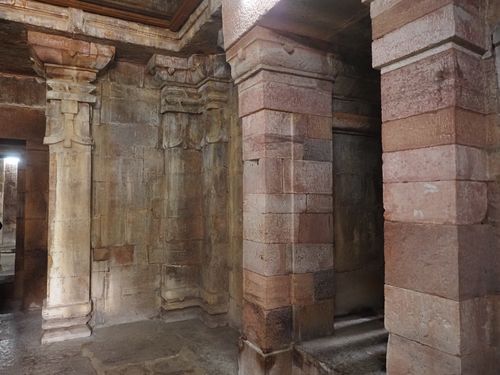
Bhubaneswar • Rajarani temple
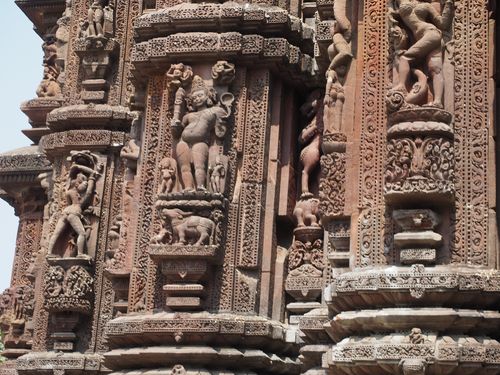
Bhubaneswar • Rajarani temple

Bhubaneswar • Rajarani temple
Monument profile
Rajarani temple
Monument category: Hindu Temple
Monument family: Temple
Monument genre: Religious
Cultural heritage: Hindu
Geographic location: Bhubaneswar • Odisha • India
Construction period: 11th century AD
• Links to •
• Dynasties that contributed to the construction of the monument •

• List of videos about Bhubaneswar on this site •
Bhubaneswar • the city of the temples • Odisha
Bhubaneswar • Udayagiri and Khandagiri Jain caves
The Rajarani Temple of Bhubaneswar: Political Motives, Historical Events, and Global Context
Historical Background and Construction Date
The Rajarani Temple, located in Bhubaneswar, Odisha, is one of the finest examples of Kalinga architecture, constructed around the 11th century during the reign of the Somavanshi dynasty. Although its exact date remains debated, scholars generally place its construction between 1050 and 1150 CE. This period marked a significant political and social transformation in eastern India, where the Somavanshi rulers sought to establish their power through religious patronage and monumental architecture.
Political and Social Motivations Behind the Construction
The construction of the Rajarani Temple was driven by both political and social motivations. Politically, the Somavanshi rulers used temple construction as a means to assert their legitimacy and authority. By erecting grand temples, they reinforced their role as protectors of Hinduism, particularly at a time when Buddhism was in decline, and Shaivism and Vaishnavism were gaining prominence. The Rajarani Temple, though not dedicated to a specific deity, likely served as a symbol of royal power and religious devotion, showcasing the dynasty's wealth and influence.
Socially, the temple played a key role as a cultural and religious center. Temples during this period were not only places of worship but also hubs for social gatherings, economic transactions, and artistic expression. The Rajarani Temple's ornate carvings and sculptures reflect the aesthetic tastes of the time, providing a space for both spiritual and social activities that unified the local community.
Major Historical Events and Their Impact
The Rajarani Temple’s construction took place during a time of significant political change in India. The fall of the Pala Empire in eastern India allowed local dynasties like the Somavanshis to rise in power. Regionally, this era was marked by increased interaction between different dynasties, fostering a blend of cultural and architectural influences.
Globally, the 11th century was a period of architectural flourishing in other parts of the world. In Europe, Romanesque architecture was gaining prominence with the construction of monumental cathedrals. The Islamic world was also experiencing a golden age, with the expansion of mosques and madrasas. In East Asia, the Song Dynasty in China was renowned for its advancements in science, technology, and urban planning. The Rajarani Temple, though part of a localized Indian context, reflects the global trend of monumental architecture serving as a tool for political and religious expression.
Transformations and Cultural Influences Over the Centuries
Over the centuries, the Rajarani Temple underwent several transformations, both in its religious significance and its physical state. Originally conceived as a Shaivite temple, it later took on associations with other Hindu deities, reflecting the evolving religious landscape of the region. The absence of a central deity in its main sanctum has led scholars to speculate that it may have served multiple religious purposes, or possibly tantric rituals.
The architectural style of the temple also reflects a synthesis of local and foreign influences. The use of the distinctive "Rajarani sandstone" and the intricate carvings of celestial nymphs (Apsaras) highlight the unique regional craftsmanship. At the same time, elements such as the vimana (tower) and the jagamohana (assembly hall) exhibit influences from southern Indian Dravidian architecture, showcasing a cross-regional exchange of ideas.
Global Context and Comparison
In a global context, the Rajarani Temple stands alongside other monumental constructions of the 11th century, such as the Notre Dame Cathedral in France and the Great Mosque of Córdoba in Spain. While these structures were built for different religions and political contexts, they all symbolize the importance of architecture in expressing divine power and royal authority.
Cultural Significance and Current Conservation Status
Today, the Rajarani Temple is recognized as a cultural icon in Odisha and an architectural gem in India. Its status as a protected monument under the Archaeological Survey of India (ASI) has ensured its preservation, though it has not yet been included on UNESCO’s World Heritage list. Its unique design, combined with the absence of a central deity, continues to attract scholars and tourists, contributing to its international recognition.
Challenges in Preservation and Modern Threats
Despite its relatively well-preserved state, the Rajarani Temple faces several modern threats. Urbanization in Bhubaneswar has increased environmental pressures, including air pollution and humidity, which accelerate the degradation of its sandstone carvings. The growing influx of tourists poses additional risks to its structural integrity, necessitating careful management and conservation strategies by the ASI. The ongoing challenge is to balance public access with the need for preservation, ensuring that the temple’s historical value is not compromised.
Conclusion: A Timeless Monument of Power and Artistry
The Rajarani Temple remains a testament to the political ambitions and religious fervor of the Somavanshi rulers. Its advanced construction techniques, innovative design, and intricate decorations reflect the technological and cultural achievements of the 11th century in eastern India. As it continues to stand tall in the modern era, the temple not only serves as a reminder of India’s rich architectural heritage but also highlights the ongoing need for preservation in the face of contemporary challenges.
The Architectural Brilliance of Rajarani Temple: Technological Innovations and Artistic Fusion in Eastern Ganga Period
Technological Innovation of the Eastern Ganga Era
The Rajarani Temple in Bhubaneswar, Odisha, is a masterwork of Kalinga architecture, constructed around the 11th century during the Eastern Ganga dynasty. This era was known for its remarkable advances in temple architecture, particularly the use of sophisticated construction techniques and innovative design elements. The Rajarani Temple stands as a testament to the technological prowess and artistic creativity of this period, offering insight into the materials and techniques that made it a monumental achievement.
Materials and Construction Techniques: The Use of Rajarani Sandstone
The most distinctive feature of the Rajarani Temple is the sandstone from which it is built, known locally as “Rajarani” sandstone. This material, characterized by its warm reddish-gold hue, was chosen for its durability and ability to hold intricate carvings. The choice of Rajarani sandstone was not only practical but also symbolic, reflecting the wealth and artistic ambition of the period.
In terms of construction, the temple showcases the advanced stone-carving techniques of the time. Blocks of stone were expertly cut and fitted without the use of mortar, a method that required precision and skill. The artisans of the Eastern Ganga dynasty employed fine chiseling to create detailed sculptures and motifs, all while ensuring structural stability. This method allowed the temple’s exterior to be adorned with intricate carvings of celestial nymphs (apsaras) and mythical creatures, demonstrating both artistic sophistication and architectural innovation.
Architectural Features and Artistic Fusion: A Blend of Regional and Foreign Traditions
The Rajarani Temple exemplifies a unique blend of regional artistic traditions and external influences. Its towering structure, with a vimana (central tower) rising to approximately 18 meters, follows the classical Kalinga architectural style, which emphasizes verticality and grandeur. The jagamohana (prayer hall) complements this, showcasing a rectangular structure that leads devotees toward the sanctum, creating a spiritual journey through the temple.
One of the key features that set Rajarani Temple apart is its decorative richness. The temple walls are covered with exquisite carvings of musicians, dancers, and deities in sensuous postures, portraying a celebration of life and spirituality. These carvings exhibit a clear influence from Dravidian temple architecture, particularly in the stylized depictions of figures and ornamentation. At the same time, the temple incorporates elements unique to the Kalinga style, such as the delicate portrayal of female figures and nature motifs, highlighting the regional craftsmanship.
Moreover, the absence of a deity in the central sanctum has led to speculation about the temple's original purpose, with some historians suggesting that it may have been a tantric shrine or a royal temple not dedicated to any specific god. This architectural and religious ambiguity adds to the temple’s unique character.
Notable Structure and Plan: Symmetry and Sacred Space
The layout of the Rajarani Temple follows a well-organized plan, typical of Kalinga temples, but with a striking focus on symmetry. The temple is oriented along an east-west axis, allowing the first rays of the morning sun to illuminate the entrance. This alignment has both spiritual and architectural significance, as it creates a natural spotlight on the temple’s finely carved entrance.
The vimana itself is a pyramid-like structure with layers of decreasing size as it ascends, crowned with a kalasha (sacred vessel) symbolizing fertility and abundance. The temple’s plan facilitates an intimate spiritual experience, where the hall (jagamohana) serves as a communal space leading toward the divine sanctum, emphasizing the connection between the earthly and the divine.
Statistics and Anecdotes: A Testament to Artisan Skill
While no exact records of the temple’s construction survive, anecdotal evidence suggests that the artisans employed in its construction were among the finest of their time. The temple’s intricate carvings have often been compared to those of the more famous Sun Temple at Konark, although the Rajarani Temple is smaller in scale. Its craftsmanship remains a point of admiration, particularly the detailed depictions of female dancers and celestial figures, which were considered revolutionary for their time.
A unique feature of the Rajarani Temple is the lack of religious iconography directly linking it to any single Hindu deity, making it stand apart from other contemporary temples. This has led to theories that the temple may have served a more esoteric or royal function.
Global Recognition and UNESCO World Heritage Consideration
Although the Rajarani Temple is not currently inscribed as a UNESCO World Heritage site, its architectural significance and unique design have garnered international attention. Scholars and tourists alike marvel at its artistic detail and structural harmony, contributing to its growing recognition as a key monument in the history of Indian temple architecture.
The protection of the temple under the Archaeological Survey of India (ASI) has helped preserve its intricate carvings and overall structure, though it remains susceptible to environmental damage. Given its growing fame, inclusion on UNESCO’s World Heritage list would likely provide additional resources and attention to ensure its long-term conservation.
Current Conservation Status and Preservation Challenges
Despite its relatively good condition, the Rajarani Temple faces several challenges that threaten its preservation. Bhubaneswar’s rapid urbanization has introduced pollutants that cause slow erosion of the sandstone. Additionally, the increasing number of visitors to the temple poses risks to its physical structure, necessitating stricter conservation efforts and tourist management.
The temple’s future preservation will depend on continued efforts from both national and international bodies. The ASI has undertaken several restoration projects, but long-term sustainability will require modern conservation techniques that respect the temple’s historical integrity while addressing contemporary threats.
Conclusion: A Monument of Innovation and Cultural Fusion
The Rajarani Temple is a remarkable example of the technological advancements and artistic innovation of the Eastern Ganga period. Its unique blend of regional Kalinga traditions with external Dravidian influences makes it a stand-out example of cultural fusion in medieval Indian architecture. While challenges to its preservation persist, the temple’s beauty and historical importance continue to attract global recognition. The Rajarani Temple stands as a lasting symbol of the architectural ingenuity and spiritual richness of its time, deserving its place as one of India’s most cherished monuments.