

 Français (France)
  Nederlands (nl-NL)
 Map of places or practices featured in a video published on this site
• Use the markers to explore the content •
The Historical Evolution of Turkey from Anatolian Civilizations to the Modern Republic
Early Human Settlement and Prehistoric Anatolia
The territory of modern Turkey possesses one of the longest and richest continuous histories in the world. Situated at the intersection of Europe, Asia and the Middle East, Anatolia has for millennia served as a bridge between continents, civilizations and trade routes. This strategic position transformed the region into a centre of migration, cultural exchange and imperial competition.
Human presence in Anatolia dates back hundreds of thousands of years. Paleolithic tools discovered in various regions indicate the existence of hunter-gatherer communities long before the development of agriculture.
One of the most important archaeological discoveries in world history lies in southeastern Anatolia at Göbekli Tepe. Dating to around 9600 BCE, the monumental stone structures found there are among the oldest known religious complexes ever constructed by humans. Their existence challenged long-standing theories about the relationship between agriculture, religion and social organization.
Several millennia later, the settlement of Çatalhöyük emerged in central Anatolia as one of the world's largest Neolithic communities. Its densely packed houses, wall paintings and ritual practices illustrate the development of complex agricultural societies during the transition from nomadic life to permanent settlement.
These early civilizations established Anatolia as one of the principal centres of the Neolithic revolution, from which agricultural practices spread toward Europe and neighbouring regions.
The Bronze Age and the Rise of Anatolian Kingdoms
During the Bronze Age, Anatolia became integrated into extensive trade networks linking Mesopotamia, the Levant and the Aegean world.
Among the earliest known inhabitants were the Hattians, whose culture dominated central Anatolia before the arrival of Indo-European peoples. Their traditions would influence later civilizations throughout the region.
The Hittite Empire
By the seventeenth century BCE, the Hittites had established one of the great powers of the ancient Near East.
From their capital at Hattusa, located near present-day Boğazkale, the Hittites controlled much of Anatolia and extended their influence into northern Syria and Mesopotamia. Their political and military strength placed them among the principal rivals of New Kingdom Egypt.
The Battle of Kadesh, fought against Pharaoh Ramesses II during the thirteenth century BCE, became one of the most famous military confrontations of the ancient world and led to one of the earliest known international peace treaties.
The Hittites developed advanced legal systems, diplomatic practices and administrative institutions that influenced later states throughout the region.
Like many Bronze Age civilizations, the Hittite Empire collapsed during the widespread political and economic disruptions that affected the eastern Mediterranean around the twelfth century BCE.
Post-Hittite States and Greek Colonization
Following the collapse of the Hittite Empire, Anatolia fragmented into numerous regional kingdoms and principalities.
The Phrygians established themselves in central Anatolia and became associated with the legendary King Midas. In eastern Anatolia, the Kingdom of Urartu emerged around Lake Van and developed sophisticated irrigation systems and fortified cities.
The Lydians dominated western Anatolia and are particularly remembered for introducing some of the earliest standardized metal coinage during the seventh century BCE. Their capital, Sardis, became an important commercial centre.
Meanwhile, Greek settlers established numerous city-states along the Aegean coast. Cities such as Miletus, Ephesus and Smyrna became major centres of philosophy, science, literature and commerce.
The Ionian cities played a crucial role in the intellectual development of the Greek world. Philosophers such as Thales and Anaximander emerged from these Anatolian communities, contributing significantly to the origins of Western scientific thought.
Persian Rule and the Hellenistic World
During the sixth century BCE, the Achaemenid Persian Empire incorporated Anatolia into its vast imperial system.
Persian administration divided the region into satrapies governed by provincial officials while allowing considerable local autonomy. Royal roads crossing Anatolia facilitated communication and trade between the eastern Mediterranean and the Iranian plateau.
Persian rule lasted until the campaigns of Alexander the Great in the fourth century BCE.
Following Alexander's victories over the Persians, Anatolia became part of the Macedonian Empire. After Alexander's death in 323 BCE, his empire fragmented among his generals, and Anatolia was divided between several Hellenistic kingdoms, most notably the Seleucid Empire and the Kingdom of Pergamon.
Greek language and culture spread widely throughout urban centres during this period. Hellenistic influence transformed architecture, education and political institutions while interacting with older Anatolian traditions.
Roman Anatolia and the Rise of Christianity
From the second century BCE onward, Rome gradually extended its influence over Anatolia through alliances, annexations and military campaigns.
Under Roman rule, Anatolia became one of the wealthiest and most urbanized regions of the empire. Prosperous cities such as Ephesus, Pergamon, Antioch and Nicaea flourished through trade and imperial investment in roads, aqueducts and public buildings.
Anatolia also became one of the earliest centres of Christianity.
The Apostle Paul undertook several missionary journeys through the region, establishing Christian communities in cities across Asia Minor. Many of the churches mentioned in the Book of Revelation were located in western Anatolia.
Several important theological debates that shaped Christian doctrine occurred in Anatolia. The Council of Nicaea in 325 CE, convened by Emperor Constantine, established principles that remain central to Christian theology.
The Byzantine Empire and Christian Anatolia
In 330 CE, Emperor Constantine founded Constantinople on the site of Byzantium at the entrance to the Bosporus. The city became the capital of the Eastern Roman Empire, later known as the Byzantine Empire.
For more than a thousand years, Byzantine rule shaped the political, religious and cultural development of Anatolia.
Christianity became deeply embedded in social and political life, and Constantinople evolved into one of the largest and most influential cities in the medieval world. The city served as a centre of Orthodox Christianity, imperial administration and international commerce.
Anatolia itself functioned as the demographic and economic heartland of the empire, providing agricultural production, tax revenues and military manpower.
Beginning in the seventh century, however, Arab conquests transformed the geopolitical environment of the region. Anatolia became a frontier zone between the Christian Byzantine world and the expanding Islamic caliphates.
The Arrival of the Turks and the Transformation of Anatolia
Turkic peoples originating from Central Asia began entering the Middle East during the eleventh century.
The decisive turning point came with the Battle of Manzikert in 1071, when the Seljuk Turks defeated the Byzantine army. This victory opened Anatolia to increasing Turkish migration and settlement.
The Seljuk Sultanate of Rum
The Seljuks established the Sultanate of Rum, which controlled much of central Anatolia for nearly two centuries.
This period witnessed the gradual spread of Turkish language and Islamic culture across regions that had previously been predominantly Greek-speaking and Christian.
Cities such as Konya emerged as important political and cultural centres. Konya became particularly associated with Jalal al-Din Rumi, whose mystical teachings contributed to the development of Sufism and the Mevlevi order of whirling dervishes.
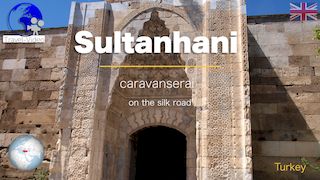
The Seljuk period also saw the construction of caravanserais, mosques and educational institutions that facilitated trade and cultural exchange along routes connecting Asia and the Mediterranean.
Mongol Invasions and the Rise of Turkish Principalities
The Mongol invasions of the thirteenth century weakened Seljuk authority throughout Anatolia.
As central control declined, the region fragmented into numerous small Turkish principalities known as beyliks.
Among these states was the principality founded by Osman I in northwestern Anatolia near the Byzantine frontier. Initially one among many competing powers, this small polity would eventually create one of history's largest empires.
The Ottoman Empire and Imperial Expansion
Founded at the end of the thirteenth century, the Ottoman state expanded steadily at the expense of both neighbouring Turkish principalities and the Byzantine Empire.
The conquest of Constantinople by Mehmed II in 1453 marked one of the defining moments in world history. Constantinople, renamed Istanbul, became the new imperial capital.
The Golden Age of the Ottoman Empire
During the sixteenth century, particularly under Sultan Suleiman the Magnificent, the Ottoman Empire reached the height of its political and territorial power.
The empire stretched across southeastern Europe, the Middle East and North Africa. Ottoman fleets dominated much of the eastern Mediterranean, while Istanbul developed into one of the world's largest cities and commercial centres.
The empire governed an extraordinarily diverse population composed of numerous ethnic, linguistic and religious communities. Through the millet system, many religious groups retained significant autonomy in managing their internal affairs.
Islam became the dominant religion of Anatolia during this period, although Christian and Jewish communities continued to exist throughout the empire.
Ottoman architecture, literature, law and administration left a profound and lasting legacy across three continents.
Decline, Reform and Modernization
Beginning in the eighteenth century, the Ottoman Empire experienced a gradual relative decline compared with the rapidly industrializing powers of Europe.
Military defeats, territorial losses and nationalist movements weakened imperial authority. In response, Ottoman leaders launched the Tanzimat reforms during the nineteenth century.
These reforms sought to modernize the military, bureaucracy, legal system and educational institutions according to European models.
Railways, telegraph lines and modern schools transformed parts of the empire, while intellectual movements promoted constitutional government and political reform.
Despite these efforts, the empire continued to lose territory and was increasingly described as the "sick man of Europe."
The First World War and the Collapse of Empire
The Ottoman Empire entered the First World War on the side of the Central Powers.
The conflict resulted in military defeat, occupation and the disintegration of imperial institutions. The war also witnessed the mass deportations and killings of Armenians, one of the most tragic and controversial episodes in the history of the region.
Following the war, Allied powers planned the partition of Anatolia through the Treaty of Sèvres.
The Turkish War of Independence
Resistance to partition emerged under the leadership of Mustafa Kemal, later known as Atatürk.
Between 1919 and 1922, Turkish nationalist forces fought against occupying armies and Ottoman authorities willing to accept Allied conditions.
The success of the nationalist movement resulted in the Treaty of Lausanne in 1923, which established the international borders of modern Turkey.
On 29 October 1923, the Republic of Turkey was officially proclaimed with Ankara as its capital.
Atatürk's Reforms and the Creation of Modern Turkey
Mustafa Kemal Atatürk initiated a far-reaching programme of political, social and cultural reform.
The caliphate was abolished, religious institutions were separated from the state and secular legal codes replaced Islamic courts. The Arabic script was replaced with a modified Latin alphabet, while educational reforms sought to modernize society and increase literacy.
Women gained political rights earlier than in many European countries, and efforts were made to promote a unified national identity centred on Turkish language and citizenship.
These reforms transformed Turkey into a secular and centralized nation-state distinct from its Ottoman predecessor.
Contemporary Turkey and Historical Continuities
Following the Second World War, Turkey gradually adopted a multiparty political system and aligned itself with Western institutions during the Cold War.
The country joined NATO in 1952 and became a strategically important ally because of its location between Europe, the Soviet Union and the Middle East.
During the late twentieth and early twenty-first centuries, Turkey developed into a major regional power with influence extending across the Balkans, the Caucasus, Central Asia and the Middle East.
Debates concerning secularism, religion, national identity, democratic institutions and the Kurdish question continue to shape political life.
The Historical Legacy of Anatolia
The history of Turkey reflects the succession and interaction of some of the world's most influential civilizations.
From the monumental sanctuaries of Göbekli Tepe to the imperial mosques of Istanbul, from Hittite kings to Ottoman sultans and the reforms of Atatürk, Anatolia has continuously served as a meeting place between continents, religions and cultures.
Modern Turkey therefore represents not merely the successor of the Ottoman Empire but the heir to thousands of years of human settlement, cultural exchange and political transformation at one of the world's great crossroads.



Contemporary Turkey Between Europe, Asia and the Middle East
A Country Connecting Continents
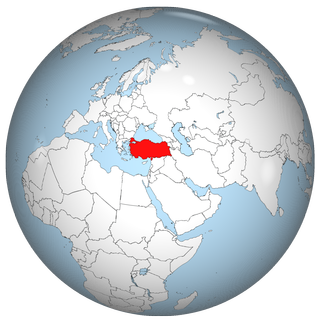
Turkey occupies a unique geographical position at the crossroads of Europe and Asia. Most of its territory lies in Anatolia, also known as Asia Minor, while a smaller section known as Eastern Thrace extends into southeastern Europe. This dual continental identity has shaped Turkey's historical development and continues to influence its political, economic and cultural orientation.
The country shares land borders with Greece and Bulgaria in the west, Georgia, Armenia, Azerbaijan and Iran in the east, and Iraq and Syria in the south. It is bordered by the Black Sea to the north, the Aegean Sea to the west and the Mediterranean Sea to the south. The Bosporus and Dardanelles straits, linked by the Sea of Marmara, connect the Black Sea with the Mediterranean and represent one of the world's most strategically important maritime corridors.
Turkey's position between Europe, the Caucasus, Central Asia and the Middle East gives it considerable geopolitical importance and makes it a major hub for trade, transportation and energy transit.
Landscapes, Mountains and River Systems
Turkey's terrain is dominated by the Anatolian Plateau, which occupies much of the country's interior and is surrounded by mountain ranges.
The Pontic Mountains stretch along the Black Sea coast, while the Taurus Mountains form a barrier between central Anatolia and the Mediterranean coast. Eastern Turkey is characterized by rugged highlands and volcanic mountains, including Mount Ararat, which rises to more than 5,100 metres and represents the country's highest peak.
Several major rivers originate within Turkey. The Kızılırmak is the longest river entirely within Turkish territory, while the Euphrates and the Tigris begin in eastern Anatolia before flowing toward Syria and Iraq. These rivers have made Turkey a crucial player in regional water management and hydroelectric development.
The country also contains numerous lakes, including Lake Van in eastern Anatolia and Lake Tuz in central Turkey, one of the largest salt lakes in the region.
Climate and Environmental Diversity
Turkey's large size and varied topography create significant climatic diversity.
The Mediterranean and Aegean coasts experience hot, dry summers and mild, rainy winters typical of Mediterranean climates. The Black Sea coast receives abundant rainfall throughout the year and supports extensive forests and agriculture.
Central Anatolia has a continental climate characterized by hot summers and cold winters, while eastern Turkey experiences harsher winters with heavy snowfall in mountainous areas.
This climatic diversity contributes to a remarkable variety of ecosystems, ranging from Mediterranean coastlines and fertile agricultural plains to alpine landscapes and semi-arid steppes.
Environmental challenges include water management, urban expansion, air pollution and vulnerability to earthquakes due to Turkey's location along major tectonic fault lines.
Population and Demographic Characteristics
Turkey's population exceeds eighty-five million inhabitants, making it one of the most populous countries in Europe and the Middle East.
The majority of citizens identify as ethnic Turks, but the country is also home to substantial Kurdish communities, particularly in southeastern Anatolia. Other groups include Arabs, Circassians, Laz, Bosniaks, Georgians, Armenians and various Balkan communities whose ancestors migrated to Anatolia during the Ottoman period.
Turkey has also become home to millions of refugees and migrants, especially from neighbouring Syria, significantly influencing demographic patterns and public policy.
Urbanization has transformed Turkish society during the last century. A large majority of the population now lives in urban areas, and several metropolitan regions have grown into major economic and cultural centres.
Languages and Cultural Identity
Turkish is the official language and serves as one of the principal elements of modern national identity. The language underwent significant reforms during the early years of the republic, when the Arabic script was replaced by a modified Latin alphabet.
Alongside Turkish, several minority languages continue to be spoken, including Kurdish, Arabic, Zaza, Laz and Armenian. Kurdish is the most widely spoken minority language and remains an important element of cultural identity in southeastern regions.
The coexistence of national identity and regional traditions contributes to the complexity and richness of Turkish society.
Religion and Secular Institutions
Islam is the religion of the vast majority of the population, with Sunni Islam representing the largest branch. A significant Alevi community constitutes another important component of Turkey's religious landscape.
At the same time, the Republic of Turkey was founded as a secular state under the reforms of Mustafa Kemal Atatürk. Secularism remains one of the constitutional principles of the republic, although debates concerning the relationship between religion and public life continue to play a major role in politics and society.
Small Christian and Jewish communities continue to exist, particularly in Istanbul and a few historic urban centres.
Religious holidays such as Eid al-Fitr and Eid al-Adha remain central moments in social and family life throughout the country.
Major Cities and Urban Centres
Ankara, the capital since 1923, serves as Turkey's political and administrative centre. It houses government institutions, ministries and diplomatic missions.
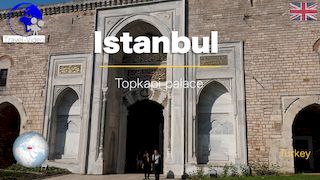
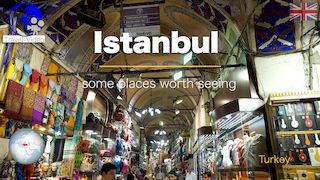
Istanbul is by far the country's largest city and its principal economic, financial and cultural centre. Located on both sides of the Bosporus, it is one of the world's major metropolitan areas and an important hub for international trade, tourism and transportation.
Izmir, situated on the Aegean coast, functions as one of Turkey's principal ports and commercial centres. Bursa remains a major industrial city and an important centre of automobile manufacturing and textiles.
Antalya has become one of the leading tourism destinations in the Mediterranean, while cities such as Adana, Gaziantep and Konya play major economic and cultural roles within their respective regions.
Administrative Organization and Political System
Turkey is a presidential republic divided into eighty-one provinces administered by governors appointed by the central government.
Constitutional reforms introduced in 2017 strengthened the presidential system by concentrating executive powers in the office of the president. The political system combines a strong central administration with elected municipal governments responsible for local services and urban management.
Political debates frequently focus on constitutional issues, democratic institutions, local governance and the balance between central authority and regional interests.
Transportation and Infrastructure
Turkey possesses one of the most developed transportation networks in its region.
An extensive motorway system connects major cities and facilitates trade between Europe and Asia. Major infrastructure projects have included bridges, tunnels and highways crossing the Bosporus and linking different parts of the country.
The railway network has undergone significant modernization, particularly through the development of high-speed rail services connecting Ankara with Istanbul, Konya and other large cities.
Turkey also operates numerous international airports, with Istanbul Airport ranking among the largest aviation hubs in the world.
Major seaports on the Mediterranean, Aegean and Black Sea coasts support Turkey's role in international trade and logistics.
A Diversified and Industrial Economy
Turkey possesses one of the largest economies in the wider Mediterranean and Middle Eastern region.
Industry represents a major component of economic activity, particularly in sectors such as automotive manufacturing, textiles, electronics, steel production, household appliances and defence industries.
Agriculture remains important despite rapid urbanization. Turkey is a major producer of wheat, cotton, olives, tea, citrus fruits, grapes and vegetables. It is also among the world's leading producers of hazelnuts and apricots.
The service sector dominates the economy, including banking, telecommunications, transportation and retail trade.
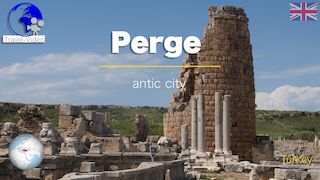
Tourism plays a particularly significant role. Millions of visitors are attracted annually by Turkey's historical monuments, archaeological sites and coastal resorts.
Culture, Heritage and Contemporary Society
Modern Turkish culture reflects influences from Anatolian civilizations, the Ottoman heritage and contemporary global trends.
Turkish cuisine is internationally renowned and varies considerably from one region to another. Traditional dishes, pastries and regional specialities remain central elements of social life.
Music, cinema, literature and television production have become important cultural industries with growing international influence. Turkish television series in particular have achieved considerable popularity across Europe, the Middle East and Latin America.
Traditional crafts such as carpet weaving, ceramics, metalwork and calligraphy continue to survive alongside modern artistic movements.
Festivals, local traditions and regional customs remain important expressions of cultural identity throughout the country.
International Relations and Contemporary Challenges
Turkey occupies a central position in regional and international politics due to its geographical location and economic importance.
As a member of NATO and a long-standing partner of the European Union, Turkey maintains strong ties with Western institutions while simultaneously pursuing an active foreign policy in the Middle East, the Caucasus, Central Asia and the eastern Mediterranean.
The country faces several important challenges, including inflation, economic fluctuations, urban growth, migration management and environmental pressures. Earthquake preparedness has become an increasingly important priority following several devastating seismic events in recent decades.
Turkey's role as an energy corridor linking producers in the Caspian region and the Middle East with European markets further increases its strategic significance.
A Regional Power Shaped by Multiple Identities
Contemporary Turkey combines the legacies of Anatolian civilizations, the Ottoman Empire and the secular republic established in the twentieth century.
Its position between continents, its dynamic economy and its cultural diversity have made it one of the most influential countries in its wider region. Balancing tradition and modernization, secular institutions and religious identities, and European and Asian dimensions continues to define the evolution of Turkish society in the twenty-first century.