

 Français (France)
  Nederlands (nl-NL)
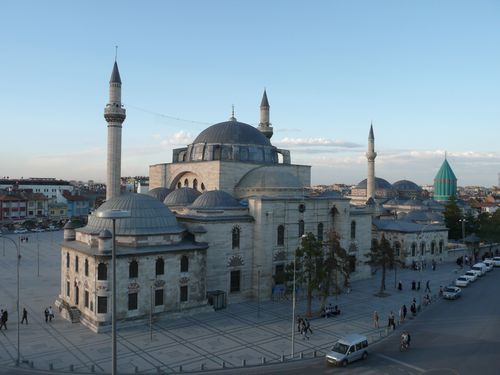
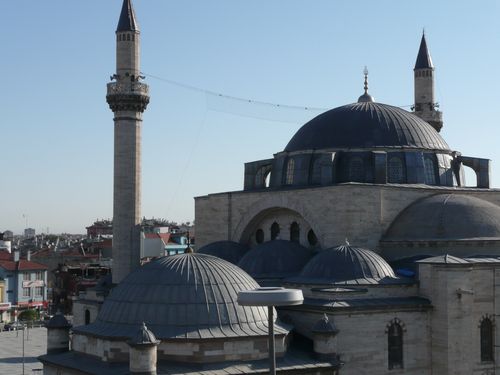
 The Selimiye Mosque is a religious building located in the city of Konya, Turkey, close to major sites within the urban center. It forms part of the visible religious landscape and contributes to the organization of local worship practices. Regularly used for prayers and gatherings, it maintains an active role within the city’s religious life. Its location in a well-frequented area also makes it an important point for visitors, reinforcing its presence within the cultural and spiritual perception of Konya.

Monument profile
Selimiye Mosque
Monument category: Mosque
Monument family: Mosque, Minaret or Madrasa
Monument genre: Religious
Cultural heritage: Islamic
Geographic location: Konya • Turkey
Construction period: 16th century AD
• Links to •
• List of videos about Konya on this site •
Konya, the city of whirling dervishes • Turkey
Selimiye Mosque in Konya: imperial foundation and continuity of function
Foundation under Selim II and urban positioning
The Selimiye Mosque was constructed in the sixteenth century in Konya during the reign of Sultan Selim II. Its establishment corresponds to a phase of direct imperial patronage, with the project initiated under central Ottoman authority. The mosque was deliberately positioned adjacent to the Mevlana complex, a location already characterized by intense religious activity and sustained flows of visitors. This placement reflects a strategic decision to integrate the new building into an existing focal point of religious life, reinforcing the visibility of imperial presence within a site of established spiritual significance.
Intended function and integration into local practices
From its completion, the Selimiye Mosque was designed to accommodate daily prayers and periodic congregational gatherings. Its role was not secondary or symbolic but fully operational within the urban religious framework. The building functioned in coordination with surrounding religious institutions, contributing to the organization of worship practices in this specific sector of the city. Its proximity to an established pilgrimage destination ensured continuous attendance, linking the mosque’s use to patterns of movement already structured by nearby sacred spaces. The mosque’s function remained strictly religious, with no documented evidence of alternative uses.
Stability, maintenance and absence of major disruption
Unlike other monuments affected by destructive events, the Selimiye Mosque does not appear to have undergone major structural damage requiring complete reconstruction. Historical records indicate continuity in its physical presence since the sixteenth century. Interventions have been limited to maintenance and restoration activities aimed at preserving the building’s structural condition and decorative features. These works have ensured the preservation of the original configuration without introducing significant alterations. The absence of documented functional changes further confirms the stability of the mosque’s role across successive periods.
Current use and institutional management
The mosque continues to operate as an active place of worship, serving the local population of Konya. Its use remains consistent with its initial purpose, accommodating regular prayer cycles and religious gatherings. Its location near prominent religious landmarks contributes to sustained visitor presence, integrating the building into contemporary movement patterns within the city. The management of the mosque falls under local religious authorities, responsible for maintenance, operational continuity and preservation of the structure. These administrative frameworks ensure that the building remains functional while retaining its historical identity.
Chronological context in a global framework
The construction of the Selimiye Mosque in the sixteenth century coincides with the expansion of the Ottoman Empire across the eastern Mediterranean. In Europe, this period corresponds to the Reformation and the consolidation of centralized monarchies. In South Asia, the Mughal Empire was developing under Akbar. In East Asia, the Ming dynasty maintained its administrative and economic structures.
Architectural Features of the Selimiye Mosque in Konya
The Selimiye Mosque in Konya is a masterpiece of Islamic architecture that reflects the region's rich cultural and religious heritage. While not as globally recognized as its namesake in Edirne, this Konya mosque has distinctive features worth exploring.
Exterior Design
The exterior design of the mosque is a harmonious combination of traditional elements of mosque architecture with Anatolian touches. The soaring minarets reaching skyward are a testament to spiritual aspiration, while the large central dome symbolizes the cosmos and the night sky.
Interior and Decoration
Inside, the mosque reveals ornate splendor. The walls are decorated with Iznik tiles, famous for their floral and geometric patterns in shades of blue, green and red. These tiles are a striking example of Ottoman ceramic art at its peak. Floral patterns, combined with calligraphic inscriptions, add a spiritual dimension to the space.
Acoustic
One of the impressive aspects of the mosque's interior is its excellent acoustics. The architects of the time deliberately designed the space so that even a whisper at one end of the mosque could be clearly heard at the other end. This highlights the importance of communication and connection in places of worship.
Structural Features
The mosque was designed to withstand the vagaries of time. Its solid foundations, combined with the use of quality materials, ensure its durability. Additionally, structural elements, such as arches and pillars, are not only functional, but are also integrated into the overall design, adding to the aesthetics of the monument.
Conclusion
Konya Selimiye Mosque is an architectural treasure that embodies the fusion of tradition and innovation. Every detail, from the Iznik tiles to the majestic minarets, tells a story of the dedication, faith and artistry that shaped this Anatolian marvel.