

 Français (France)
  Nederlands (nl-NL)
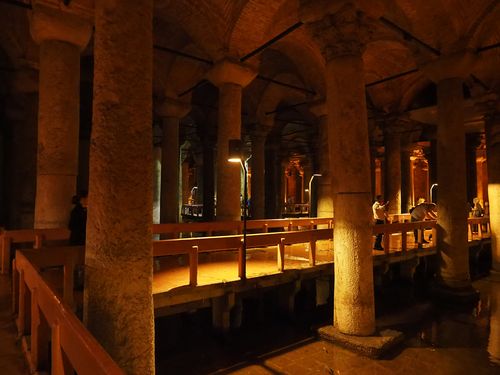
 The Basilica Cistern, located in Istanbul, Turkey, is an impressive underground structure from the Byzantine era. Built in the 6th century during the reign of Emperor Justinian I, it was designed to store water for the city and the Great Palace of Constantinople. With its 336 massive columns and ingenious architecture, the cistern is now a major attraction. It stands as a testament to the technological advancements of its time and remains a remarkable example of hydraulic engineering.
Monument profile
Basilica Cistern
Monument category: Cistern
Monument family: Civil engineering structures (bridges, wells, etc.) and factories
Monument genre: Economic
Cultural heritage: Byzantine
Geographic location: Istanbul • Turkey
Construction period: 6th century AD
This monument in Istanbul is inscribed on the UNESCO World Heritage List since 1985 and is part of the serial property "Historic Areas of Istanbul".See the UNESCO monuments featured on this site
• Links to •
• List of videos about Istanbul on this site •
Istanbul • Sultanahmet, the blue mosque, Turkey
Istanbul • Hagia Sofia, Turkey
Istanbul • Hagia Irene, Turkey
Istanbul • Cistern Basilica, Turkey
Istanbul • Topkapi palace, Turkey
Istanbul • Grand Bazaar, Galata Bridge, Bosphorus Treasures
• References •
UNESCO: Historic Areas of Istanbul
The Basilica Cistern: A Symbol of Byzantine Engineering and Historical Transformation
The Basilica Cistern, located in Istanbul, Turkey, is a marvel of Byzantine engineering and one of the largest surviving underground water reservoirs from the ancient world. Constructed in the 6th century during the reign of Emperor Justinian I, its purpose was to ensure a stable water supply for Constantinople, particularly the Great Palace. Over the centuries, the cistern has witnessed significant historical events, reflecting the political, social, and cultural shifts in the region.
Political and Social Motivations Behind Its Construction
The construction of the Basilica Cistern was driven by Constantinople’s strategic and political importance as the capital of the Byzantine Empire. The city’s growing population and frequent sieges necessitated an advanced water storage system to ensure a continuous supply.
Politically, the cistern demonstrated the administrative and engineering prowess of Justinian’s regime, reinforcing his legacy as a ruler who restored and modernized the empire’s infrastructure. Socially, it provided security for the urban population, emphasizing the role of public works in maintaining social stability and cohesion.
Historical Events and Regional Impact
The Basilica Cistern played a crucial role in supplying water to Constantinople’s Great Palace and surrounding areas through a network of aqueducts, including the Aqueduct of Valens. This system supported the city during sieges and periods of drought, highlighting its strategic significance.
Following the Ottoman conquest of Constantinople in 1453, the cistern was largely forgotten as the Ottomans developed alternative water systems. However, it continued to serve secondary purposes, such as supplying water to nearby buildings, until it was rediscovered in the 16th century by a Western explorer who observed locals drawing water and fishing through holes in the ground.
Global Context and Comparisons
The 6th century was a period of infrastructural advancements across the world. While the Byzantine Empire built the Basilica Cistern to address urban water needs, similar engineering feats were taking place globally. In India, the Gupta Empire was constructing stepwells and reservoirs, while the Mayan civilization in Mesoamerica developed advanced systems for collecting and storing rainwater.
The Basilica Cistern stands out for its scale and sophistication, demonstrating the Byzantine Empire’s capacity to adapt Roman engineering traditions to the needs of a dynamic and densely populated urban center.
Transformations Over the Centuries
The Basilica Cistern underwent several transformations that reflect the changing priorities and influences of successive empires. Built using repurposed columns from earlier Roman and Greek structures, its 336 columns display a mix of Corinthian, Ionic, and Doric styles, showcasing a blend of cultural traditions.
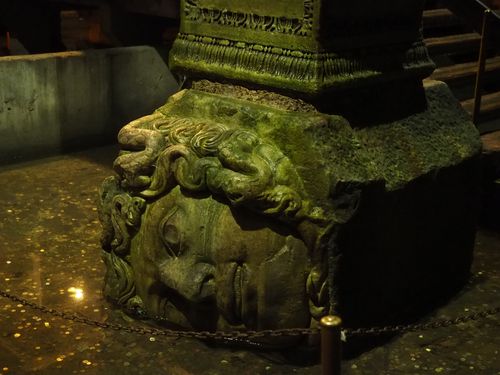
Notable features, such as the two Medusa head column bases, add an element of mystery. Their origin and purpose remain unclear, but they reflect the integration of pagan motifs into a Christian architectural context, illustrating the cultural transitions of the time.
Current State of Conservation and Challenges
Today, the Basilica Cistern is a major tourist attraction and an enduring symbol of Byzantine ingenuity. It is part of Istanbul’s Historic Areas, designated as a UNESCO World Heritage Site in 1985. Conservation efforts have stabilized its structure, repaired damaged columns, and enhanced its accessibility for visitors.
However, modern challenges include managing humidity, controlling the impacts of mass tourism, and protecting the structure from seismic risks. Efforts to address these issues focus on preserving the integrity of the site while maintaining its function as a cultural landmark.
A Testament to Byzantine Legacy
The Basilica Cistern is more than a feat of engineering; it is a reflection of the political ambition, social priorities, and cultural evolution of Constantinople. Its enduring presence underscores the ingenuity of its creators and its historical significance as a reservoir of innovation and resilience. Through ongoing preservation, it continues to inspire awe and serves as a bridge between the ancient and modern worlds.
The Basilica Cistern: A Testament to Byzantine Engineering and Artistic Fusion
The Basilica Cistern, located in Istanbul, Turkey, is an extraordinary example of Byzantine innovation and technological advancement. Constructed in the 6th century during the reign of Emperor Justinian I, this underground water reservoir was designed to supply water to the Great Palace and surrounding areas. Its architecture and construction methods reflect the grandeur of the Byzantine Empire and a unique blending of artistic traditions, making it one of the most remarkable structures of its kind.
Technological Advancements and Materials Used
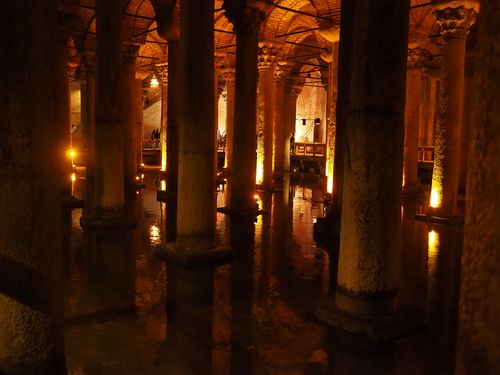
The Basilica Cistern showcases the advanced engineering capabilities of the Byzantine period. Measuring approximately 140 meters in length and 70 meters in width, it could hold up to 80,000 cubic meters of water. The structure is supported by 336 marble columns arranged in 12 rows of 28, each standing 9 meters tall.
To construct the cistern, engineers used a combination of brick and waterproof mortar, ensuring durability and resistance to constant humidity. The use of hollow bricks for the domes and vaulted ceilings helped reduce weight, an innovative technique that contributed to the stability of the subterranean structure.
Architectural Design and Decorative Features
The Basilica Cistern features a rectangular plan with symmetrical arrangements that optimize both functionality and aesthetic appeal. The ceiling is supported by arches resting on the columns, distributing weight efficiently and creating a harmonious visual rhythm.
One of the most intriguing aspects of the cistern is its use of repurposed materials, including columns and bases from earlier Roman and Greek structures. This practice not only reflects practical resourcefulness but also imbues the cistern with diverse artistic influences. The famous Medusa head column bases, positioned sideways and upside down, remain a focal point of fascination. Their origin and purpose are shrouded in mystery, but they highlight the interplay between pagan art and Christian infrastructure.
A Blend of Regional Traditions and Foreign Influences
The architecture of the Basilica Cistern blends local Byzantine craftsmanship with influences from Greco-Roman traditions. The varying styles of column capitals—Corinthian, Ionic, and Doric—demonstrate this eclecticism. The repurposing of ancient materials also underscores the Byzantine Empire’s ability to integrate and reinterpret diverse artistic legacies.
The design’s emphasis on symmetry, light diffusion, and spatial organization reflects the broader Byzantine aesthetic, which prioritized both functionality and spiritual resonance.
Notable Statistics and Anecdotes
Scale and Capacity: The cistern spans an area of approximately 9,800 square meters, making it one of the largest ancient reservoirs in the world.
Medusa Heads: The Medusa heads at the base of two columns are among its most famous features. Positioned in unconventional orientations, they have sparked numerous theories, from practical reuse to symbolic references.
Rediscovery: The cistern was largely forgotten after the Ottoman conquest of Constantinople but was rediscovered in the 16th century when locals were found drawing water and catching fish through holes in the ground.
International Recognition and UNESCO World Heritage Status
The Basilica Cistern is part of Istanbul’s Historic Areas, designated as a UNESCO World Heritage Site in 1985. This recognition highlights its significance as a masterpiece of Byzantine engineering and a cultural treasure.
As a major tourist attraction, the cistern has undergone extensive restoration to preserve its structural integrity. Challenges include managing the effects of constant humidity, seismic activity, and the wear and tear caused by millions of visitors annually. Modern interventions, such as enhanced lighting and walkways, have improved accessibility while preserving its historical authenticity.
A Global Icon of Byzantine Ingenuity
The Basilica Cistern stands as a testament to the technological and artistic achievements of the Byzantine Empire. Its innovative design, practical functionality, and eclectic artistic elements make it a landmark of historical and cultural significance. Through ongoing preservation efforts and its recognition as a UNESCO World Heritage Site, the cistern continues to captivate and educate visitors, bridging the ancient and modern worlds.