

 Français (France)
  Nederlands (nl-NL)
 The Galata Bridge in Istanbul, Turkey, connects the districts of Karaköy and Eminönü across the Golden Horn. This iconic bridge, serving both vehicles and pedestrians, is a vital part of the city's urban transport and a popular spot for fishing and commerce. With a history of multiple reconstructions, it remains a vibrant symbol of Istanbul's dynamic character.
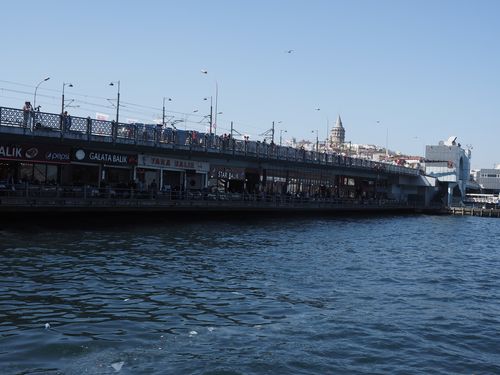
Istanbul • Galata Bridge: galata bridge seen from the bosphorus
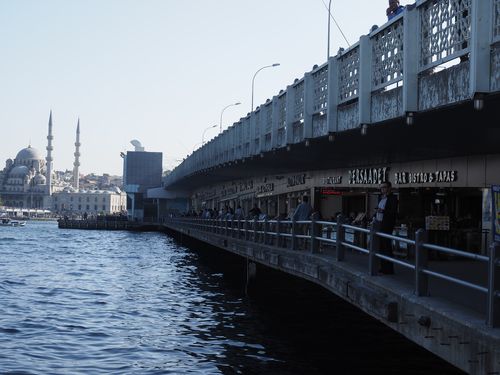
Istanbul • Galata Bridge: the lower level of the bridge
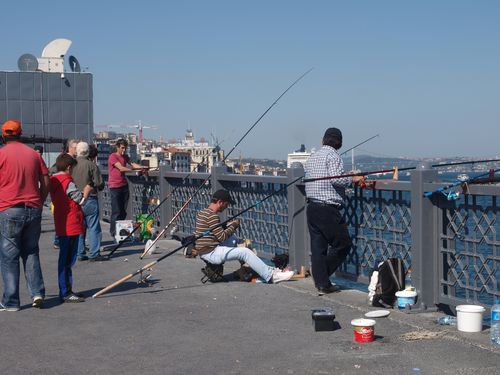
Istanbul • Galata Bridge: anglers
Monument profile
Galata Bridge
Monument category: Bridge
Monument family: Civil engineering structures (bridges, wells, etc.) and factories
Monument genre: Economic
Geographic location: Istanbul • Turkey
Construction period: 19th century AD
• Links to •
• List of videos about Istanbul on this site •
Istanbul • Sultanahmet, the blue mosque, Turkey
Istanbul • Hagia Sofia, Turkey
Istanbul • Hagia Irene, Turkey
Istanbul • Cistern Basilica, Turkey
Istanbul • Topkapi palace, Turkey
Istanbul • Grand Bazaar, Galata Bridge, Bosphorus Treasures
The Galata Bridge: Historical Significance and Transformations
The Galata Bridge, spanning the Golden Horn in Istanbul, Turkey, is a landmark of immense historical, social, and political importance. Since its initial construction in the mid-19th century, the bridge has symbolized Istanbul’s evolution as a cultural and economic hub. Through its various reconstructions and adaptations, the Galata Bridge has remained central to the city’s identity and connectivity.
Political and Social Motivations for Its Construction
The first Galata Bridge, built in 1845 during the reign of Sultan Abdülmecid, was part of the Ottoman Empire’s broader efforts to modernize its infrastructure. At a time when Istanbul was reasserting itself as a global trading center, the bridge was designed to facilitate trade, improve transportation, and unify the city across the Golden Horn. By connecting Eminönü and Karaköy, it enabled easier movement between the historic peninsula and the newer European-style neighborhoods.
Socially, the bridge fostered interaction between Istanbul’s diverse communities, including Muslims, Christians, and Jews. It symbolized the city’s role as a bridge—both physical and metaphorical—between East and West, and between tradition and modernity.
Historical Events and Their Impact
The Galata Bridge has been rebuilt multiple times, with each iteration reflecting the technological and political circumstances of its era:
- 1845: The first wooden bridge, constructed as a temporary structure, marked the beginning of organized connectivity across the Golden Horn.
- 1863: Sultan Abdülaziz commissioned a new bridge to accommodate increased urban and commercial activity during the construction of infrastructure for a visit by Napoleon III.
- 1912: A steel bridge, designed by a German company, replaced the earlier wooden structures, symbolizing the industrialization of the late Ottoman period.
- 1994: The current iteration of the bridge combines modern materials like steel and concrete, catering to the needs of contemporary Istanbul while retaining its cultural significance.
Each reconstruction has been shaped by Istanbul’s evolving role as a political, cultural, and economic hub. The bridge has witnessed key moments in history, from the fall of the Ottoman Empire to the rise of the Turkish Republic.
Global Context and Comparisons
When the first Galata Bridge was constructed in 1845, cities worldwide were undergoing transformations driven by industrialization. In London, bridges like the Tower Bridge and London Bridge played similar roles in connecting urban centers and facilitating trade. Similarly, Paris invested heavily in infrastructure along the Seine, integrating modern engineering into urban planning.
The Galata Bridge, while modest compared to some European counterparts, held unique significance as a link between continents and cultures. Its position in Istanbul, a city straddling Europe and Asia, gave it a symbolic role that transcended its practical purpose.
Transformations and Cultural Influences
The Galata Bridge is more than an infrastructure project—it is a living part of Istanbul’s cultural fabric. Over time, it has adapted to changing needs while retaining its role as a space for commerce and social interaction. Fishermen line its edges, capturing its enduring significance in daily life, while shops and restaurants beneath the bridge make it a hub of economic and cultural activity.
Architecturally, the bridge reflects influences from both Ottoman and European design, incorporating functional simplicity with aesthetic touches that highlight its role as a centerpiece of the city.
Current State of Conservation and Challenges
The current Galata Bridge, completed in 1994, is a modern structure designed to handle the demands of heavy traffic and large numbers of pedestrians. However, it faces several challenges:
- Structural Wear and Tear: Constant exposure to saltwater and weathering poses risks to the bridge’s materials, requiring regular maintenance.
- Seismic Risks: Istanbul’s location in an earthquake-prone region necessitates ongoing evaluation and reinforcement of the bridge’s structural integrity.
- Tourism Impact: As a major tourist attraction, the bridge experiences high foot traffic, which increases wear and tear on its infrastructure.
Efforts to preserve the bridge focus on balancing its functional role with its historical and cultural significance.
A Symbol of Connection and Resilience
The Galata Bridge embodies Istanbul’s rich history and its role as a meeting point of cultures and continents. Its successive transformations reflect the city’s resilience and adaptability through changing political regimes and technological advancements. Today, it remains a vibrant symbol of Istanbul’s enduring spirit, bridging the past and present while continuing to connect the lives of millions. Through careful preservation, the Galata Bridge stands as a testament to the dynamic evolution of one of the world’s most storied cities.
The Galata Bridge: Architectural Innovation and Cultural Synthesis
The Galata Bridge in Istanbul, Turkey, is a symbol of the city’s engineering prowess and cultural integration. Spanning the Golden Horn, it connects two vital districts, Eminönü and Karaköy, and has been rebuilt multiple times since its initial construction in the mid-19th century. Each version reflects the technological and aesthetic advancements of its era, blending local traditions with international influences.
Technological Innovations and Construction Materials
The various iterations of the Galata Bridge showcase advancements in engineering and construction techniques:
- 1845 Wooden Bridge: The first version, constructed under Sultan Abdülmecid, was made of wood and served as a practical but temporary solution. While functional, it lacked the durability to withstand the increasing demands of urban traffic and environmental challenges.
- 1912 Steel Bridge: The German-designed bridge introduced steel as a primary material, symbolizing the industrial era's technological progress. Its robust design addressed the durability issues of previous wooden structures while accommodating heavier traffic.
- 1994 Modern Bridge: The current bridge combines steel and concrete, reflecting advancements in materials science and construction methods. It incorporates movable sections to allow maritime traffic through the Golden Horn, showcasing an innovative approach to integrating urban and nautical functionality.
These materials and techniques highlight the evolution of construction practices, moving from basic solutions to complex, multi-functional designs.
Architectural Features and Decorative Elements
The Galata Bridge is not only a functional structure but also a space that embodies aesthetic and cultural significance:
- Functional Design: The bridge’s layout is practical, accommodating pedestrians, vehicles, and tram lines. Beneath the deck, a vibrant array of restaurants and shops creates a dynamic space that enhances its role as a social hub.
- Cultural Fusion: Earlier designs featured decorative motifs inspired by Ottoman architecture, with arches and embellishments reflecting regional artistry. Modern iterations are more streamlined but retain a connection to the city’s aesthetic identity through understated elegance and practical design.
- Integration with Urban Fabric: The bridge connects historical sites, including the Galata Tower and the historic peninsula, integrating the city’s past and present into its functionality and visual appeal.
Structure and Notable Design Features
The Galata Bridge’s design is notable for its adaptability and functionality:
- Length and Capacity: Spanning 490 meters with a width of 42 meters, the bridge accommodates both heavy vehicular traffic and pedestrian flow, underscoring its importance in Istanbul’s urban layout.
- Movable Sections: The inclusion of drawbridge mechanisms allows large vessels to pass through, reflecting a harmonious balance between urban and maritime needs.
Statistics and Anecdotes
- Daily Use: The bridge sees tens of thousands of vehicles and pedestrians daily, making it one of the busiest thoroughfares in Istanbul.
- Cultural Landmark: The bridge is a favored spot for locals and tourists alike, especially for fishing along its railings or dining at the eateries below.
Inspiration in Art: The Galata Bridge has been featured in numerous works of literature, art, and film, symbolizing Istanbul’s vibrant life and its role as a meeting point of continents.
International Recognition and UNESCO Status
While the Galata Bridge itself is not individually listed as a UNESCO World Heritage Site, it forms part of Istanbul’s Historic Areas, recognized by UNESCO in 1985. Its inclusion in this designation underscores its significance as a cultural and functional element of the city’s identity.
The bridge’s modern design and continued maintenance ensure its ongoing utility while preserving its cultural resonance. The combination of tradition and innovation makes it a globally recognized symbol of Istanbul.
Challenges and Preservation
Preserving the Galata Bridge involves addressing several challenges:
- Structural Maintenance: The bridge requires regular upkeep to manage the effects of heavy traffic and environmental factors, including saltwater corrosion.
- Seismic Risks: Istanbul’s location in an earthquake-prone region necessitates constant evaluation and reinforcement to ensure structural integrity.
- Tourism Pressure: As a popular attraction, the bridge must balance its role as a tourist destination with its functional purpose.
Efforts to maintain and enhance the bridge focus on protecting its structural and cultural significance while meeting the demands of a modern metropolis.
A Timeless Connector of Cultures
The Galata Bridge stands as a testament to Istanbul’s dynamic evolution, embodying technological progress, cultural fusion, and urban resilience. Its successive iterations reflect the city’s ability to adapt and innovate while preserving its rich heritage. Today, the Galata Bridge is more than an infrastructural marvel; it is a symbol of connection, uniting the diverse histories and communities that make Istanbul a truly unique global city.