Français (France)
  Nederlands (nl-NL)
 The Whirling Dervishes tradition in Konya, Turkey, is a spiritual practice deeply rooted in Sufi culture. It is associated with the Mevlevi Order, established in the 13th century by the followers of Mevlana Jalaluddin Rumi. This tradition centers around the ritual ceremony known as "Sema," where dervishes perform a meditative spinning dance, symbolizing a spiritual journey and union with the divine. The practice has been passed down through generations and continues to be observed during cultural and religious events in Konya, drawing visitors interested in Turkey's intangible heritage.
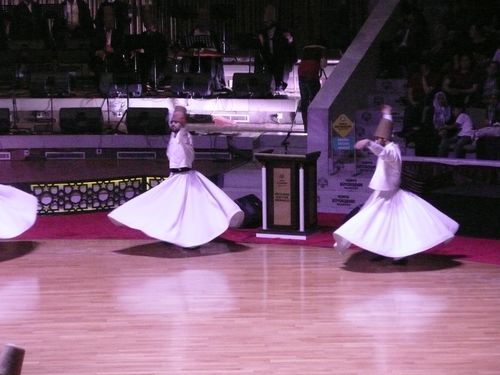
Konya • Whirling Dervishes
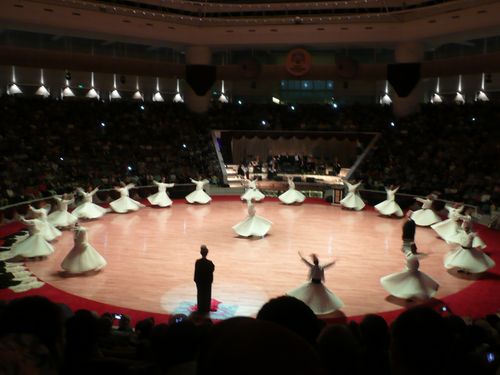
Konya • Whirling Dervishes
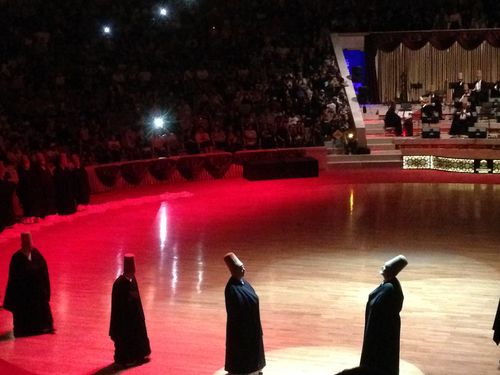
Konya • Whirling Dervishes
Tradition profile
Whirling Dervishes
Tradition category: Sufi celebrations
Tradition family: Religious traditions
Tradition genre: Religious Festivals and Celebrations
Cultural heritage: Islamic
This tradition in Konya is inscribed on UNESCO’s Representative List of the Intangible Cultural Heritage of Humanity under the name Mevlevi Sema Ceremony since 2008.
Geographic location: Konya • Turkey
• Links to •
• List of videos about Konya on this site •
Konya, the city of whirling dervishes • Turkey
• References •
UNESCO: Mevlevi Sema ceremony
• Sources •
The Whirling Dervishes of Konya: Political and Social Motivations, Evolution, and Contemporary Challenges
The Whirling Dervishes, an iconic spiritual practice associated with the Mevlevi Order in Konya, Turkey, emerged in the 13th century during a period of profound political and social transformation. Rooted in the teachings of the Persian poet and mystic Mevlana Jalaluddin Rumi, this tradition has transcended its origins to become a symbol of spiritual unity and cultural heritage. The practice, known as the Sema, reflects a blend of religious devotion, social cohesion, and artistic expression. Over the centuries, it has undergone significant transformations, shaped by political changes, cultural influences, and evolving social dynamics.
Political and Social Motivations Behind the Emergence
The emergence of the Whirling Dervishes was closely linked to the socio-political context of the Seljuk Empire, which ruled Anatolia in the 13th century. At the time, the region was experiencing turmoil due to the Mongol invasions, political fragmentation, and economic instability. The establishment of the Mevlevi Order provided a spiritual refuge and a sense of continuity amidst these challenges.
- Political Motivations: The Seljuk rulers, seeking to consolidate their power and promote unity within their diverse empire, supported the Mevlevi Order as a means to legitimize their rule through association with a respected spiritual movement. The Order’s teachings of love, tolerance, and unity resonated with a population experiencing uncertainty and displacement.
- Social Motivations: The Mevlevi Order provided a structured community where individuals from various social backgrounds could find solace and purpose. The Sema ritual, emphasizing inner peace and universal love, offered a way to transcend social divisions and foster a sense of collective identity.
Konya, as the capital of the Seljuk Empire, became a hub for Sufi learning and artistic expression, attracting scholars, poets, and musicians. This environment contributed to the development and institutionalization of the Whirling Dervishes as both a spiritual practice and a cultural phenomenon.
Historical Events and Their Impact on the Tradition
The evolution of the Whirling Dervishes was shaped by several key historical events:
- The Mongol Invasions (13th century): The destruction caused by the Mongols led many to seek spiritual guidance and stability, leading to the growth of the Mevlevi Order as a beacon of hope and resilience.
- Ottoman Patronage (15th–19th century): Under Ottoman rule, the Mevlevi Order flourished, with Mevlevi lodges (tekke) established across the empire, from Istanbul to Damascus and Cairo. The Ottomans recognized the Order's role in promoting moral values and social cohesion and often involved them in official ceremonies and diplomatic efforts.
- Secular Reforms of the Republic (20th century): The dissolution of the Ottoman Empire and the rise of the secular Turkish Republic under Mustafa Kemal Atatürk in 1923 led to the closure of Sufi lodges and the banning of religious orders, including the Mevlevi Order. This forced the practice underground, though it was later revived as a cultural tradition rather than a purely religious one.
- UNESCO Recognition (21st century): In 2008, the Whirling Dervishes were inscribed on UNESCO's list of Intangible Cultural Heritage of Humanity, marking a turning point in efforts to preserve and promote the tradition globally.
Cultural, Social, and Economic Influence in the Region
The tradition of the Whirling Dervishes has played a significant role in shaping the cultural identity of Konya and the broader Turkish landscape.
- Cultural Impact: The Sema ritual has influenced Turkish music, poetry, and visual arts, with Mevlana’s poetry remaining a source of inspiration across generations. The annual Mevlana Festival, held in Konya, attracts thousands of visitors, fostering a deep cultural appreciation and cross-cultural dialogue.
- Social Influence: The values of unity and love promoted by the Mevlevi Order have helped bridge divides within Turkish society, providing a framework for coexistence and mutual respect.
- Economic Contributions: Tourism centered around the Whirling Dervishes contributes significantly to the local economy of Konya, with visitors from around the world drawn to the mysticism and beauty of the ceremony.
Global Context and Similar Traditions
At the time of the emergence of the Whirling Dervishes, other spiritual and meditative traditions were developing across the world, offering similar pathways to enlightenment and unity:
- Sufi Practices in Persia and Central Asia: Other Sufi orders, such as the Naqshbandi and Qadiri, practiced dhikr (remembrance of God) through chants and rhythmic movements, emphasizing spiritual transformation.
- Buddhist Meditation Practices: In East Asia, Zen Buddhism developed techniques involving meditation and controlled breathing to achieve inner peace, paralleling the goals of the Sema ritual.
- Christian Monastic Chants: In Europe, Gregorian chants and monastic rituals aimed at achieving spiritual harmony through repetitive and contemplative practices, echoing the whirling movement of the dervishes.
Despite their geographical and cultural differences, these traditions share a common pursuit of spiritual transcendence through discipline, repetition, and devotion.
Major Transformations Over the Centuries
The Whirling Dervishes tradition has undergone several transformations that reflect shifts in political power, cultural exchange, and social change.
- From a religious order to a cultural heritage, transitioning from a deeply spiritual practice to a more public and accessible performance.
- Adaptation to modern performance spaces and tourism demands, leading to the staging of the ritual in theaters and festivals rather than solely in Mevlevi lodges.
- The development of educational programs to teach younger generations about the philosophical underpinnings of the tradition beyond its performative aspects.
Challenges to Preservation and Modern Threats
Despite its enduring appeal, the Whirling Dervishes tradition faces several challenges in the modern era:
- Commercialization: The growing popularity of the Sema ceremony as a tourist attraction risks reducing its spiritual depth to mere spectacle.
- Loss of Authenticity: The increasing demand for performances has led to a dilution of the ritual's original intent, with shortened versions and modifications for entertainment purposes.
- Transmission to Future Generations: Ensuring that younger generations understand the philosophical foundations of the Mevlevi tradition beyond the physical aspects of the dance is a pressing challenge.
Efforts by cultural organizations and academic institutions are crucial in addressing these challenges, ensuring that the tradition remains a living heritage rather than a relic of the past.
Conclusion
The Whirling Dervishes of Konya represent a unique intersection of spirituality, art, and social cohesion. Their evolution over centuries showcases their adaptability and resilience in the face of changing political landscapes and cultural influences. Today, thanks to international recognition and local preservation efforts, the tradition continues to inspire and educate, carrying forward the timeless message of unity and divine love espoused by Mevlana Rumi.
The Whirling Dervishes of Konya: A Social and Cultural Innovation of Their Time
The Whirling Dervishes of Konya, associated with the Mevlevi Order founded in the 13th century, represent a unique blend of spirituality, culture, and artistic expression. Emerging during the Seljuk period, this tradition reflects the social and cultural innovations of its time, embodying values of unity, spiritual enlightenment, and artistic refinement. The Sema ceremony, the central ritual of the Whirling Dervishes, serves as a profound expression of divine love and the pursuit of spiritual perfection, offering valuable insights into the societal values and influences that shaped its development.
Social and Cultural Innovation at the Time of Emergence
The Whirling Dervishes' tradition emerged in the 13th century, a time of significant political, social, and cultural shifts in Anatolia. The Seljuk Empire, under which Konya flourished as a major cultural and spiritual center, provided fertile ground for the development of Sufism and the spread of the Mevlevi Order. The tradition introduced several key social and cultural innovations:
- Inclusivity and Social Cohesion: The Mevlevi Order provided a structured yet inclusive spiritual framework where individuals from different backgrounds could engage in a shared pursuit of divine truth. This practice fostered a sense of belonging and unity across social classes.
- Integration of Arts and Spirituality: Unlike many other religious practices of the time, the Whirling Dervishes embraced music, poetry, and movement as integral parts of their worship, thereby contributing to a more holistic and experiential form of spirituality.
- Philosophical Depth and Universal Values: The teachings of Mevlana Jalaluddin Rumi emphasized universal love, tolerance, and the unity of humanity, making the practice relevant beyond the cultural and religious boundaries of the Seljuk Empire.
Rituals, Symbols, and Objects Reflecting Societal Grandeur
The elements of the Sema ceremony encapsulate the grandeur of the society in which it emerged, reflecting values such as humility, devotion, and harmony with the cosmos.
- The Whirling Movement: The counterclockwise spinning of the dervishes symbolizes the journey of the soul toward enlightenment.
The open right hand facing upwards represents receiving divine blessings, while the left hand facing downwards signifies distributing those blessings to the world. - Attire and Its Symbolism: The sikke (felt hat) symbolizes the tombstone of the ego, representing the dervish’s spiritual transformation.
The tennure (white robe) represents the burial shroud, signifying the dervish’s detachment from the material world.
The black cloak, which is removed at the beginning of the ceremony, symbolizes the abandonment of earthly attachments. - Music and Instruments: The ney (reed flute) represents the human soul’s longing for unity with the divine.
Percussion instruments such as the kudüm drums provide rhythmic structure, symbolizing the heartbeat of the universe. - The musical compositions often draw upon classical Persian and Turkish styles, reflecting the cultural synthesis within the Mevlevi tradition.
A Unique Blend of Regional Customs and External Influences
The tradition of the Whirling Dervishes is a reflection of Konya’s position as a crossroads of civilizations, blending various cultural and artistic elements:
- Regional Influences: Rooted in Anatolian Sufi traditions, the Mevlevi practice incorporated elements of local folklore, Turkish musical styles, and architectural motifs unique to the region.
- Persian Influence: Persian literature, particularly the poetry of Rumi, played a pivotal role in shaping the spiritual and artistic aspects of the tradition.
- Byzantine and Greek Influences: Architectural elements seen in Mevlevi lodges, along with musical influences from the Byzantine Empire, contributed to the richness of the Sema ceremony.
These influences underscore the Mevlevi Order's ability to adapt and incorporate different cultural elements, making it a dynamic tradition that resonated across diverse communities.
Notable Practices and Anecdotes
One of the most notable aspects of the Whirling Dervishes is the structured sequence of the Sema ceremony, which consists of several stages, each carrying deep symbolic meaning:
- Naat-i Sharif (Praise of the Prophet): The ceremony begins with a recitation of praise to the Prophet Muhammad, emphasizing the spiritual connection to Islam.
- Taksim (Improvisation): The ney performs an improvisational melody, symbolizing the separation of the soul from its origin.
- Whirling in Four Salams: The dervishes whirl in four stages, representing the progression from self-awareness to unity with the divine.
An interesting anecdote related to the Whirling Dervishes involves Rumi himself, who is said to have entered a state of ecstasy and spontaneous whirling upon hearing the rhythmic hammering of a goldsmith in Konya. This moment is often cited as the origin of the Sema practice.
International Recognition and UNESCO Designation
The Whirling Dervishes of Konya have gained worldwide recognition as a unique expression of spiritual heritage. The inclusion of the Mevlevi Sema ceremony on UNESCO’s Intangible Cultural Heritage of Humanity list in 2008 has had significant impacts on its preservation and promotion:
- Preservation Efforts: UNESCO recognition has facilitated funding for the restoration of Mevlevi lodges, documentation of the tradition, and transmission of knowledge to younger generations.
- Cultural Diplomacy: The Sema ceremony is now performed at international cultural events, enhancing Turkey’s cultural soft power and fostering greater cross-cultural understanding.
- Touristic Appeal: Konya has become a major destination for cultural tourism, particularly during the annual Mevlana Festival, which attracts thousands of visitors from around the world.
Challenges in Preserving the Tradition
Despite its global recognition and appeal, the Whirling Dervishes tradition faces several contemporary challenges:
- Commercialization Risks: The increased demand for performances outside their spiritual context raises concerns about the dilution of the tradition’s deeper meanings.
- Transmission of Authenticity: Maintaining the spiritual depth and integrity of the practice while adapting to modern times is a delicate balance that requires careful oversight.
- Modernization and Secularization: As Turkey continues to modernize, the role of religious traditions in public life is evolving, posing questions about the future role of the Mevlevi Order.
Efforts are being made by cultural institutions, government agencies, and the Mevlevi community itself to ensure that the tradition remains a vibrant and authentic expression of its original values.
Conclusion
The Whirling Dervishes of Konya stand as a testament to the enduring power of spiritual and cultural innovation. Their practice reflects the grandeur of the society that nurtured it, embodying values of unity, devotion, and artistic excellence. Through centuries of transformation, the tradition has not only survived but thrived, adapting to changing times while maintaining its core essence. Today, thanks to international recognition and dedicated preservation efforts, the Whirling Dervishes continue to inspire and captivate audiences worldwide, serving as a bridge between past and present, tradition and modernity.
 Links to the main sections of the site