Français (France)
  Nederlands (nl-NL)
 The cult of the Sacred Manikhot Tree is a contemporary religious tradition rooted in the Mekong region near Muang Champassak. It reflects a syncretic practice combining Theravāda Buddhism and local animist beliefs. Each year, residents place offerings, sacred fabrics, and votive objects around the preserved tree trunk. The ritual expresses hopes for protection, fertility, and spiritual continuity. This practice remains active in southern Laos and illustrates communal attachment to a sacred vegetal symbol.
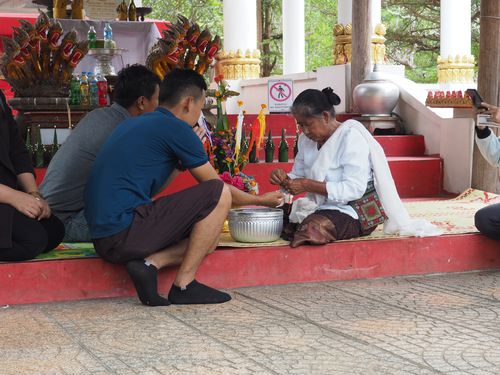
Laos • Cult of the Sacred Manikhot Tree - Living Spiritual Heritage
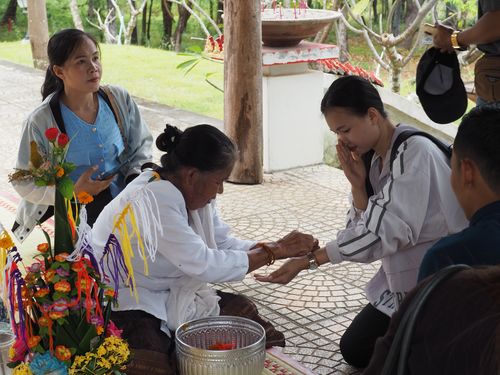
Laos • Cult of the Sacred Manikhot Tree - Living Spiritual Heritage
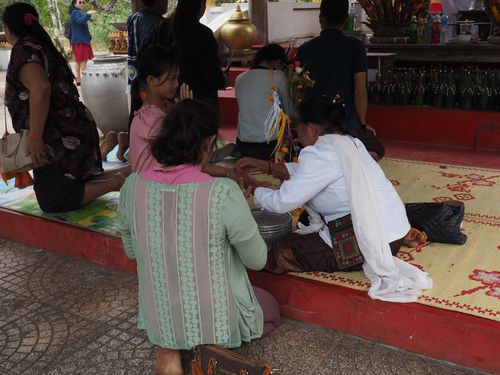
Laos • Cult of the Sacred Manikhot Tree - Living Spiritual Heritage
Tradition profile
Cult of the Sacred Manikhot Tree -Living Spiritual Heritage
Tradition category: Syncretic Celebrations
Tradition family: Religious traditions
Tradition genre: Religious Festivals and Celebrations
Cultural heritages: Buddhist, Animist
Geographic location: Laos • Laos
• Links to •
• List of videos about Mekong near Muang Champassak, Mekong near Luang Prabang, Mekong from Nakasong to Li Phi Somphamit on this site •
The Mekong: A Serene River? • Laos
Historical Development of the Sacred Manikhot Tree Cult
Mythological Foundations and Terminological Origins
The cult of the Sacred Manikhot Tree is rooted in a hybrid spiritual tradition that blends elements of Theravāda Buddhism and ancestral animist beliefs specific to southern Laos. The name “Manikhot” appears in several Lao mythological narratives as a symbol of cosmic wisdom and benevolent protection. It does not refer to a specific botanical species, but rather to an archetypal tree linked to prosperity and fertility.
In the oral traditions preserved in the Champassak region, Manikhot was believed to house a phi, or tutelary spirit of the waters. These beliefs predate formalized Buddhist doctrine and may trace back to the pre-Angkorian period between the 8th and 10th centuries.
Early Settlement and Pre-Colonial Practices
The location near the present-day site of Muang Champassak, on the banks of the Mekong, hosted agricultural and fishing communities for centuries. Archaeological surveys and local oral histories indicate the presence of tree-related worship prior to the rise of the Lan Xang Kingdom in the 14th century. Rituals were originally conducted in open-air settings, centered around a living tree considered spiritually potent due to its proximity to water and topographical prominence.
With the consolidation of Lan Xang influence, these ancestral rites were gradually integrated into popular Buddhism. The tree came to be respected not only as a spiritual entity but also as a silent witness to the evolving religious landscape of the region.
Collapse of the Tree and Founding of the Sanctuary
Photographs taken during the French colonial period in the 1930s depict the tree in its natural setting, without any built structure. The sacred tree collapsed in 2012 during a period of seasonal storms, an event perceived locally as spiritually significant. In response, the local community and resident monks constructed a new sanctuary to preserve the spiritual continuity of the site.
The shrine incorporates a segment of the original trunk, placed under a modest wooden pavilion. Though the structure dates from 2013, it is considered the legitimate successor of a much older intangible heritage.
Institutional Recognition and Cultural Documentation
In 2016, the Lao Ministry of Culture launched a regional documentation campaign for intangible heritage, including the Manikhot cult. Since 2020, the site has appeared in the provincial inventory of spiritual memory sites but lacks formal national protection.
The shrine now forms part of a symbolic axis along the Mekong, connecting Champassak to Li Phi and Khone Phapheng. This network of riverine sanctuaries underlines the significance of water, trees, and ritual as interrelated pillars of Lao cultural memory.
Sociological Functions of the Sacred Manikhot Tree Tradition
Community Practices and Intergenerational Transmission
The sanctuary of the Sacred Manikhot Tree functions as a core spiritual and social institution within the riverine communities near Muang Champassak. Annual offerings and ceremonies coincide with agricultural cycles, particularly during the lunar months of May and November. A 2017 field study conducted by the National University of Laos reported that 85% of residents from three nearby villages participated in at least one annual ritual.
Transmission of the cult occurs orally and through apprenticeship within nearby monasteries. Ritual language retains archaic Lao vocabulary, which preserves a connection with ancestral cosmologies and reinforces a sense of continuity.
Ritual Typologies and Environmental Integration
The most prominent ritual, phithi phavat, involves offerings of rice, flowers, and saffron cloth placed at the preserved tree trunk. During certain ceremonies, white threads are tied between the shrine and nearby trees, symbolizing spiritual connectivity across generations.
The Mekong itself serves as a ritual extension of the shrine. River water is used for purification rites, and seasonal flooding is interpreted as a sign of divine agency. Floating offerings are released during peak flood season, reinforcing the link between human intention and environmental rhythms.
Gender Roles and Community Structure
Elder women play a pivotal role in organizing ceremonies, safeguarding ritual objects, and instructing younger participants in proper practices. Monks officiate during formal observances, but the lay community governs day-to-day functions of the site.
Despite the out-migration of younger generations to urban centers, seasonal returns for ceremonies remain frequent. These returns function as both acts of filial piety and reaffirmations of cultural identity.
Tourism, Adaptation, and Continuity
Tourist attention has grown since 2015, leading to the addition of a bilingual information panel and modest infrastructure improvements. However, the shrine remains under local custodianship, and interactions with visitors are framed by respect for the sanctity of the site.
Offerings adapted for visitors are available, including symbolic incense and flower bundles, allowing respectful participation without disrupting local practice. The site exemplifies a successful balance between heritage preservation, spiritual continuity, and responsible tourism.
The Sacred Manikhot Tree cult remains a living tradition, responsive to sociocultural change yet firmly anchored in the spiritual ecology of the Mekong. It reflects the enduring relevance of river-centered worldviews in contemporary Southeast Asia.
 Links to the main sections of the site