

 Français (France)
  Nederlands (nl-NL)
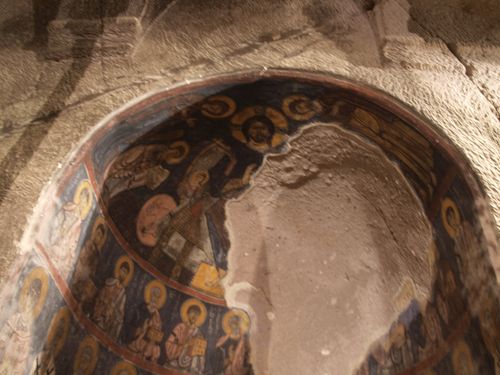
 The Gumusler Monastery, located near the city of Nigde in Turkey, is a significant Byzantine religious site. This rock-cut monastic complex features well-preserved frescoes from the 11th century. The monastery is notable for its main church and monastic cells, providing valuable insight into Byzantine monastic architecture and life in the Cappadocia region.
Gumusler (Nigde) • Gumusler monastery

Gumusler (Nigde) • Gumusler monastery

Gumusler (Nigde) • Gumusler monastery
Monument profile
Gumusler monastery
Monument categories: Monastery, Rock Sanctuary
Monument families: Monastery • Rock Sanctuary and Monumental Bas-reliefs
Monument genres: Religious
Cultural heritages: Byzantine, Christian
Geographic location: Nigde • Turkey
Construction period: 7th century AD
• Links to •
• List of videos about Gumusler (Nigde) on this site •
Gümüsler monastery • Nigde, Turkey
• References •
Wikipedia EN: Gümüşler Monastery
The Gumusler Monastery: Political, Social Motivations and Historical Impact
Political and Social Motivations Behind the Construction
The Gumusler Monastery, located near Nigde, Turkey, is a significant Byzantine monastic site dating back to the 10th or 11th century. The construction of this rock-cut monastery was likely motivated by a combination of political, social, and religious factors. During this period, the Byzantine Empire faced numerous external threats, particularly from the advancing Seljuk Turks. The creation of monastic complexes like Gumusler served both as spiritual refuges and as fortified sanctuaries for monks and local populations during times of insecurity. The monastery was a place for religious devotion, but it also symbolized the resilience of Byzantine Christian culture in the face of mounting pressure from surrounding Islamic powers.
Historical Events and Regional Impact
The Gumusler Monastery witnessed several critical historical events that shaped its role in the region. The Seljuk invasion in the 11th century marked a significant turning point, as the Byzantine Empire began to lose control over large parts of Anatolia. This shift in power dynamics likely influenced the function and status of the monastery. Under Seljuk and later Ottoman rule, many Byzantine religious sites were repurposed, abandoned, or adapted to fit the new sociopolitical realities.
The monastery’s survival through these turbulent periods is a testament to its importance as a center of Byzantine culture and faith. It continued to serve as a religious hub for local Christians, even as the surrounding region underwent significant demographic and cultural transformations.
Global Context and Comparisons
The 10th and 11th centuries were a time of significant change not only in the Byzantine Empire but also across the world. In Western Europe, this period saw the rise of the monastic reform movement, leading to the establishment of influential Benedictine monasteries. Similarly, in the Islamic world, cultural and scientific advancements were flourishing under the Abbasid Caliphate.
The Gumusler Monastery, like other Byzantine monastic sites, reflects a distinctly Eastern Christian tradition that emphasized isolation and contemplation. Unlike the large, open monastic complexes of Western Europe, Gumusler’s rock-cut architecture provided a more secluded and defensible environment, suited to the needs of a region often on the front lines of conflict.
Transformations and Cultural Influences
Over the centuries, the Gumusler Monastery underwent various transformations reflecting the shifts in power and cultural influences in the region. As the Byzantine presence in Anatolia waned, the monastery may have experienced periods of neglect or adaptation to serve new purposes under Seljuk or Ottoman rule. The introduction of Islamic art and architecture in the surrounding regions could have influenced the monastery's function and significance, although its core Christian identity remained.
The monastery's frescoes, which have survived remarkably well, illustrate a blend of regional artistic traditions and Byzantine iconography. These artworks provide valuable insights into the religious and cultural life of the period and highlight the monastery’s role as a repository of Byzantine Christian heritage in a predominantly Islamic context.
Current State of Conservation and Challenges
Today, the Gumusler Monastery is recognized as an important cultural and historical site. Its state of conservation is relatively good, especially considering its age and the challenges posed by its rock-cut structure. However, the site faces several preservation challenges, including natural erosion, the impact of tourism, and environmental threats such as earthquakes.
Efforts to preserve the monastery focus on stabilizing the rock formations, protecting the frescoes from further degradation, and managing visitor access to minimize damage. The growing recognition of the monastery’s historical value has led to increased attention from both Turkish authorities and international conservation organizations, which are working together to ensure its protection for future generations.
Conclusion
The Gumusler Monastery stands as a monument to the religious and cultural history of the Byzantine Empire in Anatolia. Its construction was driven by the need for spiritual refuge and cultural preservation during a time of significant political and social upheaval. Over the centuries, the monastery has weathered the storms of history, reflecting the changes in power and culture that have swept through the region. Today, it remains a vital link to the past, offering insights into the resilience and adaptability of Byzantine monasticism in a changing world. The ongoing efforts to preserve this unique site are crucial to maintaining its historical and cultural significance.
Architectural Innovation and Cultural Synthesis in the Gumusler Monastery
Technological Advances and Construction Techniques
The Gumusler Monastery, located near Nigde, Turkey, is a remarkable example of Byzantine monastic architecture that reflects the technological advances and innovative construction techniques of its time. Built in the 10th or 11th century, this monastery is carved directly into the soft volcanic tuff of the Cappadocia region. The use of this material was both practical and innovative: the tuff is relatively easy to carve, allowing for the creation of complex and extensive subterranean spaces, yet it hardens when exposed to air, providing durable structures that have lasted for centuries.
The construction process involved meticulously hollowing out large volumes of rock to create interconnected chambers, including a main church, cells for monks, storage rooms, and a central courtyard. The rock-cut nature of the monastery not only offered protection from the elements and invaders but also reflected the monastic ideals of isolation and asceticism, crucial aspects of Byzantine monastic life.
Architectural Features and Artistic Influences
The architecture of the Gumusler Monastery embodies a unique blend of regional artistic traditions and foreign influences, illustrating the cultural exchanges that occurred in the Byzantine Empire. The interior of the main church is adorned with frescoes that, despite their simple execution, are of significant artistic and historical value. These frescoes depict biblical scenes and religious figures in a style that combines Byzantine iconography with local Cappadocian elements, as well as influences from neighboring regions like Armenia and Georgia.
One of the most notable architectural features of the monastery is its cruciform layout, a common design in Byzantine church architecture, where the floor plan resembles a cross. This design not only holds religious significance but also optimizes the use of space within the rock-cut environment. The central dome, though modest in scale compared to other Byzantine churches, effectively creates a sense of verticality and grandeur within the subterranean context.
Structural Layout and Unique Design
The Gumusler Monastery is distinguished by its well-preserved layout, which includes a large central courtyard that serves as the heart of the complex. The courtyard allows natural light to penetrate the otherwise dark interiors, a thoughtful design choice that enhances the livability of the monastic spaces. Surrounding the courtyard are various chambers, including the refectory, storerooms, and the monks' cells, all of which are carved into the rock with precision and skill.
The church, which is the focal point of the monastery, features a central nave flanked by side aisles, a design that facilitates the communal aspects of worship while maintaining the secluded atmosphere typical of monastic life. The frescoes within the church are among the best-preserved in Cappadocia, offering a rare glimpse into the religious art and iconography of the Byzantine period in this region.
Historical Significance and Anecdotes
The Gumusler Monastery is one of the largest and most well-preserved rock-cut monasteries in Cappadocia, and it holds a significant place in the history of Byzantine monasticism. Anecdotal evidence suggests that the monastery could accommodate a considerable number of monks, reflecting its importance as a religious and communal hub during its peak.
One interesting anecdote about the monastery concerns the frescoes, which include a rare depiction of the "Deesis" (Christ flanked by the Virgin Mary and John the Baptist) in the main apse. This iconographic scene, while common in other parts of the Byzantine world, is relatively rare in Cappadocia, indicating the influence of wider Byzantine artistic trends.
Recognition and Conservation Efforts
Although the Gumusler Monastery is not yet listed as a UNESCO World Heritage site, its recognition has been growing in both academic and cultural tourism circles. The preservation of the monastery is of utmost importance, given its historical and architectural significance. The challenges faced in conserving the site include protecting the delicate frescoes from natural decay and mitigating the impact of tourism, which, while beneficial for awareness, poses risks to the structural integrity of the site.
Efforts to preserve the monastery have included stabilizing the rock surfaces, conserving the frescoes, and controlling access to sensitive areas to prevent damage. These measures are essential to ensuring that the Gumusler Monastery remains a testament to the architectural ingenuity and cultural richness of the Byzantine period in Anatolia.
Conclusion
The Gumusler Monastery is a striking example of Byzantine monastic architecture, demonstrating advanced construction techniques and a synthesis of artistic influences. Its well-preserved structure and frescoes provide valuable insights into the religious and cultural history of the region. As conservation efforts continue, the monastery's importance as a cultural and historical landmark is likely to grow, further cementing its place in the broader narrative of Byzantine and Anatolian heritage.