

 Français (France)
  Nederlands (nl-NL)
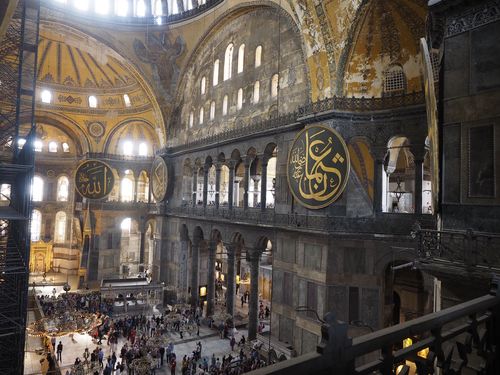
 Hagia Sophia, located in Istanbul, Turkey, is an iconic monument reflecting centuries of religious, cultural, and architectural evolution. Built in the 6th century under Byzantine Emperor Justinian, it has served as a Christian basilica, a mosque, and today functions as both a museum and an active mosque. Its grand dome and unique blend of Byzantine and Ottoman styles make it a symbol of world history, attracting millions of visitors annually.

Istanbul • Hagia Sophia
Istanbul • Hagia Sophia

Istanbul • Hagia Sophia
Monument profile
Hagia Sophia
Monument categories: Mosque, Basilica
Monument families: Mosque, Minaret or Madrasa • Church, cathedral, basilica, chapel
Monument genres: Religious
Cultural heritages: Byzantine, Islamic, Christian
Geographic location: Istanbul • Turkey
Construction period: 6th century AD
This monument in Istanbul is inscribed on the UNESCO World Heritage List since 1985 and is part of the serial property "Historic Areas of Istanbul".See the UNESCO monuments featured on this site
• Links to •
• List of videos about Istanbul on this site •
Istanbul • Sultanahmet, the blue mosque, Turkey
Istanbul • Hagia Sofia, Turkey
Istanbul • Hagia Irene, Turkey
Istanbul • Cistern Basilica, Turkey
Istanbul • Topkapi palace, Turkey
Istanbul • Grand Bazaar, Galata Bridge, Bosphorus Treasures
• References •
UNESCO: Historic Areas of Istanbul
Hagia Sophia: Political Motivations, Historical Transformations, and Cultural Significance
Hagia Sophia, located in Istanbul, Turkey, is one of the most renowned monuments in global history. Constructed in 537 CE during the reign of Emperor Justinian I, it served as a grand basilica for the Byzantine Empire, a mosque under the Ottoman Empire, and later as a museum before reverting to a mosque in 2020. Its architectural brilliance and historical journey embody centuries of political and social evolution, reflecting the shifting dynamics of power and cultural exchange.
Political and Social Motivations Behind Its Construction
The construction of Hagia Sophia was driven by Justinian’s ambition to consolidate his authority and project the might of the Byzantine Empire. It symbolized the fusion of religion, politics, and cultural influence.
- Religious Unity: As a center of Orthodox Christianity, Hagia Sophia was meant to reaffirm the supremacy of Christianity within the empire.
- Imperial Prestige: Justinian aimed to surpass the grandeur of all previous religious structures, particularly the Temple of Solomon, establishing Constantinople as the preeminent spiritual and political capital.
- Post-Crisis Reconciliation: Following the Nika Riots of 532, which devastated large parts of the city, including the original church on the site, the construction of Hagia Sophia sought to restore civic pride and stabilize the empire.
Key Historical Events and Their Impact
Hagia Sophia has been a focal point of major historical shifts, each leaving a profound impact on its identity and role:
Byzantine Era (537–1453):
Built as a Christian basilica, it served as the central place of worship and a symbol of Byzantine ecclesiastical power.
Its design and mosaics set new architectural and artistic benchmarks for centuries.
Fall of Constantinople (1453):
Sultan Mehmed II converted Hagia Sophia into a mosque, adding Islamic elements such as minarets, mihrabs, and calligraphic decorations, marking the city's transformation into the heart of the Ottoman Empire.
Modernization Period (1935):
Under Mustafa Kemal Atatürk, Hagia Sophia became a museum, symbolizing Turkey’s secularist vision and opening it to international recognition as a cultural treasure.
Return to Mosque (2020):
The reconversion of Hagia Sophia into a mosque reignited debates about its identity, highlighting its complex legacy as a shared global heritage.
Global Context and Comparisons
At the time of its construction, Hagia Sophia represented a pinnacle of technological and artistic achievement, comparable to monumental religious structures in other parts of the world:
Europe: Centuries before the Gothic cathedrals of Notre-Dame or Chartres were built, Hagia Sophia’s vast dome and intricate mosaics set an unparalleled standard.
Asia: Temples like Borobudur in Indonesia, with their rich symbolic carvings, paralleled Hagia Sophia in serving as spiritual and cultural centers.
Middle East: The Dome of the Rock in Jerusalem, built later in the 7th century, drew inspiration from Hagia Sophia’s innovative dome design.
These parallels underscore Hagia Sophia’s position as a prototype for subsequent architectural achievements.
Transformations and Cultural Significance
Hagia Sophia has undergone significant transformations that mirror the political and cultural transitions of its host city:
Architectural Evolution:
The original wooden structure, rebuilt in stone by Justinian, introduced pioneering techniques such as pendentives to support its massive dome.
Ottoman modifications, including the addition of minarets, integrated Islamic architectural elements, creating a visual blend of two major faith traditions.
Artistic Heritage:
Byzantine mosaics depicting Christian figures were initially covered during the Ottoman period but later restored during its time as a museum.
Islamic calligraphy and designs coexist with Christian imagery, making Hagia Sophia a symbol of cultural coexistence.
Global Symbolism:
Recognized as a UNESCO World Heritage Site in 1985, Hagia Sophia embodies the shared human heritage of diverse civilizations.
Current State of Conservation
Hagia Sophia is well-preserved but faces ongoing challenges related to its age, usage, and environmental factors:
Structural Integrity:
Its massive dome and ancient foundations are vulnerable to seismic activity in this earthquake-prone region.
Tourism and Usage:
As a functioning mosque and tourist attraction, balancing access with preservation is critical.
Environmental Factors:
Pollution and climate change accelerate the degradation of its materials, requiring regular maintenance and advanced restoration techniques.
Modern Challenges and Preservation Efforts
Despite its robust structure, Hagia Sophia’s preservation requires addressing several modern challenges:
- Cultural Sensitivity: Its dual religious and cultural identity necessitates careful management to respect its multifaceted significance.
- Funding and Expertise: Continued international collaboration is needed to fund restoration and leverage advanced conservation methods.
- Tourist Management: High visitor numbers increase wear on the building, making sustainable tourism strategies essential.
Conclusion
Hagia Sophia stands as a testament to human ingenuity and resilience, bridging civilizations and faiths. Its architectural and historical legacy reflects the profound cultural and political transformations that have shaped Istanbul and the broader world. As it continues to inspire and captivate millions, the careful preservation of this iconic monument is vital to ensure its enduring role as a symbol of shared global heritage.
Hagia Sophia: Architectural Innovation and Global Recognition
Hagia Sophia, located in Istanbul, Turkey, is an architectural masterpiece built in 537 CE during the Byzantine Empire under Emperor Justinian I. Renowned for its revolutionary design, advanced construction techniques, and blend of artistic traditions, the monument stands as a testament to human ingenuity and cultural exchange. Its rich history and global significance make it one of the most celebrated structures in the world.
Technological Innovation and Materials Used
The construction of Hagia Sophia set new standards in engineering and design, showcasing advancements far ahead of its time.
Materials:
- Lightweight Bricks: The dome and upper structures were built with specially crafted bricks, imported from the Aegean islands, to reduce weight and stress on the foundations.
- Exquisite Marbles: Marble sourced from across the Byzantine Empire, including Egypt, Thessaly, and the Bosporus region, was used for columns, walls, and floors, symbolizing imperial power and unity.
- Porphyry and Green Stone: Rare and luxurious stones, such as porphyry from Egypt and green stone from Thessaly, were employed in the decorative elements to emphasize opulence.
Construction Techniques:
- Pendentives: The dome’s revolutionary use of pendentives allowed it to rest on a square base, seamlessly transferring the weight to the four massive piers below.
- Double-Shell Dome: The central dome, with a height of 55.6 meters and a diameter of 31 meters, utilized a double-shell construction technique to enhance stability and reduce collapse risk.
- Integrated Buttresses: Later additions by the Ottomans, such as external buttresses, ensured the building’s resilience to seismic activity.
These materials and techniques combined to create a structure that not only exemplified the technological prowess of the Byzantine Empire but also inspired countless architectural works in subsequent centuries.
Architectural Features and Cultural Fusion
Hagia Sophia’s design and decoration reflect a harmonious blend of Byzantine, Roman, and later Ottoman influences, creating a unique synthesis of artistic traditions.
Architectural Design:
- The layout combines a traditional basilica plan with a central dome, creating a spacious, illuminated interior that evokes a sense of divinity.
- The semi-domes and aisles extend the space, giving the structure its characteristic grandeur and open ambiance.
Decorative Elements:
- Byzantine Mosaics: Intricate mosaics depicting Christ, the Virgin Mary, and other Christian figures adorned the interiors, emphasizing its role as a spiritual center.
- Islamic Calligraphy: After 1453, large medallions bearing the names of Allah, the Prophet Muhammad, and other Islamic figures were added, illustrating the transition to a mosque.
- Marble Inlays: The walls and floors feature elaborate geometric and floral patterns, showcasing a fusion of Byzantine and Eastern artistic motifs.
This blend of styles and elements highlights Hagia Sophia’s role as a cultural crossroads, bridging Eastern and Western traditions.
Structural Plan and Notable Features
Hagia Sophia’s plan and structural innovations have earned it a place among the greatest architectural achievements of all time.
Central Dome:
The main dome appears to float due to a series of 40 windows at its base, allowing natural light to flood the interior and create a mystical atmosphere.
Columns and Arches:
The interior features 107 columns, many repurposed from ancient temples, symbolizing the reuse of classical elements in a new context.
Dimensions:
The monument spans 82 meters in length, 73 meters in width, and reaches a height of 55.6 meters at its dome, making it the largest enclosed space of its time.
Noteworthy Statistics and Anecdotes
- Construction Time: The original structure was completed in just five years, an extraordinary feat considering its size and complexity.
- Architects: Anthemius of Tralles and Isidore of Miletus, renowned engineers and mathematicians, spearheaded the design, incorporating advanced scientific knowledge.
- Post-Earthquake Repairs: The dome partially collapsed in 558 CE due to an earthquake but was quickly rebuilt with an improved design.
Global Recognition and UNESCO Status
Hagia Sophia’s cultural and historical importance has earned it recognition as a UNESCO World Heritage Site since 1985, as part of Istanbul’s historic areas.
Conservation Efforts:
International collaborations have restored mosaics, stabilized the dome, and reinforced the structure to ensure its longevity.
UNESCO has emphasized the importance of balancing its dual heritage as both a Christian and Islamic site.
Tourism and Global Impact:
Hagia Sophia attracts millions of visitors annually, serving as a symbol of Istanbul’s rich cultural history and a meeting point of civilizations.
Challenges and Preservation
Despite its grandeur, Hagia Sophia faces several challenges related to its preservation:
Seismic Vulnerability:
Istanbul’s location in a seismically active region poses ongoing risks to the structure.
Wear from Tourism:
Heavy foot traffic and environmental exposure contribute to gradual deterioration, requiring constant maintenance.
Cultural Sensitivities:
The transition from museum to mosque in 2020 has sparked debates over the balance between preservation and functional use.
Conclusion
Hagia Sophia remains a masterpiece of architectural innovation and a symbol of cultural and religious convergence. Its advanced engineering, artistic grandeur, and historical significance have cemented its place as one of the world’s most iconic monuments. Preserving this unparalleled legacy requires continued collaboration and respect for its multifaceted identity, ensuring it continues to inspire and educate future generations.