

 Français (France)
  Nederlands (nl-NL)
 Hagia Irene, located in Istanbul, Turkey, is an ancient Orthodox church built during the Byzantine Empire. It is one of the earliest Christian churches in the city, predating the renowned Hagia Sophia. Repurposed as an arsenal and military depot under the Ottoman Empire, it now serves as a museum and venue for cultural events. Its architecture reflects the development of Byzantine styles and its historical significance within the city.
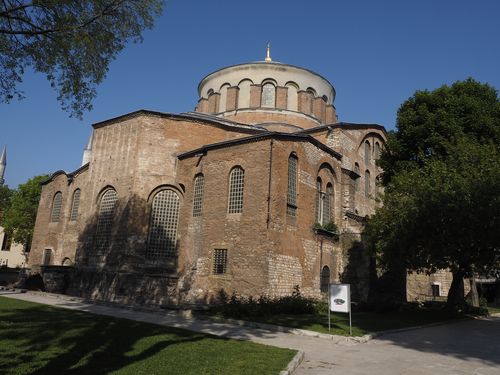
Istanbul • Hagia Irene
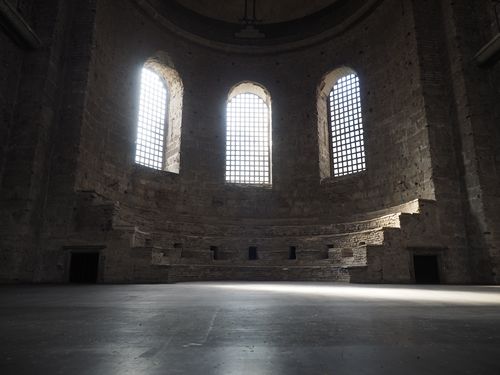
Istanbul • Hagia Irene
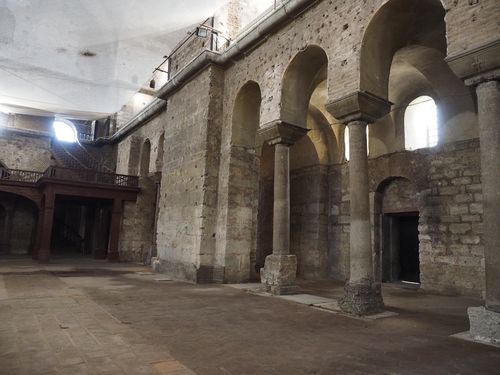
Istanbul • Hagia Irene
Profil du monument
Hagia Irene
Catégorie de monuments: Basilique
Famille de monuments: Eglise, cathédrale, basilique, chapelle
Genre de monuments: Religieux
Héritages culturels: Byzantin, Chrétien
Situation géographique: Istanbul • Turquie
Période de construction: 4ème siècle
Ce monument à Istanbul est inscrit sur la Liste du Patrimoine mondial de l'UNESCO depuis 1985 et fait partie du site en série "Historic Areas of Istanbul".Voir les monuments UNESCO présentés sur le site
• Liens vers •
• Liste des films sur Istanbul sur ce site •
Istanbul • Sultanahmet, la mosquée bleue, Turquie
Istanbul • Sainte-Sophie (Hagia Sophia), Turquie
Istanbul • Sainte Irène (Hagia Irene), Turquie
Istanbul • Citerne Basilique, Turquie
Istanbul • le palais de Topkapi, Turquie
Istanbul • Trésors du Grand Bazar, Pont de Galata, Bosphore
• Références •
UNESCO: Historic Areas of Istanbul
Hagia Irene: A Monument of Early Byzantine Ambitions and Transformations
Hagia Irene, located in Istanbul, Turkey, is one of the oldest Christian churches in the city, dating back to the 4th century. Built under the reign of Emperor Constantine I, it played a crucial role in establishing the prominence of Christianity within the Roman Empire’s new capital, Constantinople. Over the centuries, Hagia Irene has been shaped by significant historical events, reflecting the shifting powers and cultural influences that have marked the region.
Political and Social Motivations Behind Its Construction
The construction of Hagia Irene was part of Constantine I’s broader strategy to solidify Christianity as the dominant religion of the Roman Empire. It was built as the first imperial church of Constantinople, emphasizing the city’s status as the new political and religious center of the empire. Its name, meaning "Holy Peace," symbolized the establishment of harmony through the Christian faith.
Socially, Hagia Irene served as a unifying space for the growing Christian community in the city. It also demonstrated the Roman Empire's commitment to integrating faith into governance, reinforcing the idea that religious and political authority were intertwined.
Major Historical Events and Their Impact
Hagia Irene has witnessed several transformative events throughout its history. It was damaged during the Nika Riots of 532, a major civil uprising during Emperor Justinian’s reign, and later rebuilt to showcase the empire’s resilience and architectural prowess.
During the 8th and 9th centuries, the church played a significant role in the Iconoclast Controversy, a period of intense theological and political conflict over the use of religious images. Its lack of figurative mosaics, even after the controversy ended, reflects the lingering impact of this ideological divide.
Unlike many other churches in Constantinople, Hagia Irene was not converted into a mosque after the Ottoman conquest in 1453. Instead, it was repurposed as an arsenal, demonstrating its continued strategic importance under Ottoman rule.
Global Context and Comparisons
The construction of Hagia Irene coincided with major global transitions. In the 4th century, the Roman Empire was redefining itself, moving its power base eastward while embracing Christianity. At the same time, other regions were undergoing significant cultural shifts. For instance, India’s Gupta Empire was fostering advancements in science and art, and Mesoamerican civilizations were developing complex urban centers.
Hagia Irene reflects a global trend of monumental architecture being used to assert power, foster unity, and project cultural and religious identity.
Transformations Over the Centuries
Hagia Irene has undergone several reconstructions and adaptations. The most significant rebuild occurred under Justinian I in the 6th century after the Nika Riots, incorporating a domed basilica structure that became a hallmark of Byzantine architecture.
During the Ottoman era, its transformation into an arsenal involved modifications to its interior, though its overall structure remained intact. This preserved much of its Byzantine character, making it a rare example of an early Christian church in Istanbul that escaped religious conversion.
Current State of Conservation and Challenges
Today, Hagia Irene serves as a museum and cultural venue, hosting concerts and exhibitions. Its inclusion in the "Historic Areas of Istanbul," a UNESCO World Heritage Site since 1985, underscores its cultural and architectural significance.
However, the building faces modern preservation challenges. Istanbul’s seismic activity poses a constant threat to its structural integrity. Additionally, environmental factors such as pollution and the impact of tourism contribute to wear and tear. Conservation efforts focus on stabilizing the structure, protecting its brickwork and domes, and maintaining its unique acoustic properties.
A Symbol of Resilience and Cultural Legacy
Hagia Irene stands as a testament to the religious, political, and cultural transformations of Constantinople and later Istanbul. Its architecture and history reflect the city’s role as a crossroads of civilizations. As a rare survivor of early Byzantine architecture, it continues to inspire and educate, offering a tangible connection to a pivotal era in world history. With ongoing preservation efforts, Hagia Irene remains a beacon of cultural heritage and historical significance.
Hagia Irene: Architectural Innovation and Byzantine Heritage
Hagia Irene, located in Istanbul, Turkey, is a prime example of early Byzantine architecture, reflecting the technological advancements and artistic achievements of its era. Constructed in the 4th century during the reign of Emperor Constantine I, it remains one of the oldest surviving Christian churches in the city. Over time, its unique architectural elements and historical significance have contributed to its recognition as a symbol of cultural and religious heritage.
Technological Advancements and Construction Materials
Hagia Irene’s construction demonstrates the engineering ingenuity of the Byzantine Empire. Built primarily from bricks and mortar, the structure showcases advanced techniques in dome construction and spatial planning. The use of lightweight materials like hollow bricks for the dome helped reduce its overall weight, ensuring stability.
The basilica’s walls, reinforced with sturdy arches, and the incorporation of large windows allowed for ample light to penetrate the interior, creating an ethereal ambiance. This innovative use of light not only enhanced the spiritual atmosphere but also set a precedent for later Byzantine architectural masterpieces.
Architectural Design and Decorative Features
Hagia Irene follows a basilica plan with a central nave, side aisles, and a large dome supported by pendentives. This structural element was a groundbreaking innovation, distributing the weight of the dome onto the supporting pillars and walls. The dome’s elevated position and harmonious proportions became a hallmark of Byzantine architecture, influencing later buildings like Hagia Sophia.
One of Hagia Irene’s distinguishing features is its absence of figurative mosaics, likely due to the Iconoclast Controversy of the 8th and 9th centuries. Instead, geometric patterns and symbolic Christian motifs, such as crosses, dominate the interior decoration. These elements emphasize the spiritual focus of the space without reliance on visual representation.
Cultural Fusion in Design
Hagia Irene’s architectural elements reflect a blend of regional traditions and external influences. While its structural techniques were rooted in Roman engineering, its decorative simplicity aligns with early Christian aesthetics. This fusion highlights the transitional nature of the Byzantine Empire, bridging Roman classical heritage with emerging Christian ideals.
The adaptation of earlier Roman basilica layouts to suit Christian liturgical needs demonstrates the empire’s ability to innovate while preserving its cultural roots.
Notable Statistics and Anecdotes
Hagia Irene holds a unique place in Istanbul’s architectural history as one of the few Byzantine churches that was not converted into a mosque after the Ottoman conquest. Instead, it served as an arsenal, preserving its structure and Byzantine character.
A fascinating anecdote involves the church’s role in the Iconoclast Controversy. Its austere interior, devoid of figurative art, may have been influenced by these theological debates, making it a rare example of an Iconoclast-era building that survives today.
International Recognition and Conservation Efforts
As part of Istanbul’s Historic Areas, Hagia Irene has been a UNESCO World Heritage Site since 1985. This designation underscores its significance as a cultural and architectural treasure, ensuring that it remains a focus of preservation efforts.
Conservation challenges include seismic risks due to Istanbul’s location in an earthquake-prone region, as well as environmental wear and tear. Preservation projects aim to stabilize its structure, protect its unique brickwork, and enhance its accessibility for visitors.
A Global Icon of Byzantine Innovation
Hagia Irene exemplifies the technological and artistic achievements of the Byzantine Empire, offering insights into the early Christian architectural tradition. Its enduring presence amidst the historical transformations of Istanbul reflects its resilience and importance as a cultural landmark. Through continued preservation, it remains a testament to the ingenuity and spiritual aspirations of its creators, inspiring admiration from visitors worldwide.