

 Français (France)
  Nederlands (nl-NL)
 Map of places or practices featured in a video published on this site
• Use the markers to explore the content •
The Historical Formation of Indonesia: From Prehistoric Archipelagos to a Modern Maritime Nation
Early Human Presence in the Indonesian Archipelago
The history of Indonesia stretches back hundreds of thousands of years and is deeply intertwined with the geographical characteristics of one of the world's largest archipelagos. Situated between the Asian mainland and Australia and positioned along major maritime trade routes, the islands that today form Indonesia became an important crossroads for migrations, cultural exchanges and commercial networks long before the emergence of the modern state.
Some of the earliest evidence of human occupation in Southeast Asia has been discovered in Indonesia. On the island of Java, fossils of *Homo erectus*, commonly known as "Java Man", were discovered in the late nineteenth century near Trinil in East Java. These remains, dating from approximately 1.5 million to 700,000 years ago, demonstrated that early human ancestors inhabited the region far earlier than had previously been assumed.
Later discoveries at Sangiran and other archaeological sites confirmed that Java was one of the most important centres of early human evolution outside Africa. More recent findings on the island of Flores revealed the existence of *Homo floresiensis*, often referred to as the "Hobbit", a small-bodied human species that survived until around 50,000 years ago.
Modern humans, *Homo sapiens*, arrived in the archipelago approximately 50,000 years ago, probably through migration routes originating in mainland Asia. During periods of lower sea levels in the Ice Age, many western Indonesian islands formed part of the Asian continental shelf known as Sundaland, facilitating human migration and settlement.
The Austronesian Expansion and the Birth of Maritime Societies
Between approximately 3000 and 1500 BCE, Austronesian-speaking peoples migrated southward from Taiwan through the Philippines and into the Indonesian archipelago. These migrants introduced advanced seafaring technologies, agriculture, pottery production and new social structures.
The Austronesian expansion fundamentally shaped the linguistic and cultural identity of Indonesia. Today, most Indonesian languages belong to the Austronesian language family, although Papuan languages remain dominant in parts of eastern Indonesia, particularly in New Guinea.
The arrival of Austronesian populations encouraged the development of settled agricultural communities, especially in fertile volcanic regions such as Java and Bali. Rice cultivation gradually became a central feature of social and economic life in many areas, contributing to population growth and the emergence of increasingly complex political structures.
Maritime skills became equally important. Indonesian sailors developed sophisticated navigation techniques that enabled long-distance trade and migration throughout Southeast Asia and across the Indian Ocean. Some Indonesian communities participated in trading networks extending as far as Madagascar, whose population and language still reveal strong Austronesian influences originating from the Indonesian region.
The Emergence of Early Kingdoms and Indian Influence
From the first centuries of the Common Era, the Indonesian archipelago became integrated into extensive commercial networks linking India, China and the Middle East. Merchants transported spices, aromatic woods, gold, tin and forest products in exchange for textiles, ceramics and luxury goods.
These commercial interactions facilitated the spread of Indian cultural, political and religious influences. Local rulers adopted elements of Indian political theory, Sanskrit language, writing systems and religious traditions without losing their indigenous cultural identities.
Among the earliest known kingdoms was Kutai in eastern Borneo, which flourished during the fourth century CE and left inscriptions written in Sanskrit using Indian scripts. Around the same period, the kingdom of Tarumanagara emerged in western Java.
Indian religions spread gradually throughout the archipelago. Hinduism and Buddhism were often adopted by royal courts and urban elites, while local populations frequently integrated these new beliefs with older animist traditions and ancestor worship.
Srivijaya and the Rise of Maritime Power
By the seventh century, the kingdom of Srivijaya, centred in Palembang on Sumatra, emerged as one of Southeast Asia's most powerful maritime empires.
Srivijaya controlled strategic maritime passages, particularly the Strait of Malacca, through which much of the trade between India and China passed. Rather than relying on territorial conquest alone, its power depended largely on controlling ports, sea routes and commercial taxation.
The empire became an important centre of Mahayana Buddhism and attracted scholars and pilgrims from across Asia. Chinese records describe Srivijaya as a major intellectual and religious centre where Buddhist monks prepared for studies in India.
At its height between the seventh and thirteenth centuries, Srivijaya exercised influence over large portions of Sumatra, the Malay Peninsula, western Java and parts of Borneo.
Its decline resulted from shifting trade patterns, competition from regional rivals and military expeditions launched by the South Indian Chola Empire during the eleventh century.
The Classical Age of Java
As Srivijaya's influence weakened, political power increasingly shifted toward Java, whose fertile volcanic soils supported large populations and strong agricultural economies.
During the eighth and ninth centuries, central Java witnessed the rise of the Sailendra and Mataram dynasties. These kingdoms oversaw remarkable artistic and architectural achievements that remain among Indonesia's greatest cultural monuments.
Borobudur and Prambanan
The Buddhist Sailendra dynasty constructed Borobudur, one of the world's largest Buddhist monuments, during the ninth century. Built as a monumental mandala and pilgrimage site, it reflects the high level of artistic and engineering expertise achieved in Java.
Nearby, the Hindu kingdom of Mataram built the temple complex of Prambanan, dedicated primarily to Shiva. The coexistence of these two monumental complexes illustrates the close interaction between Hindu and Buddhist traditions in early Indonesian society.
Political centres later shifted from central to eastern Java, possibly due to volcanic activity, changing trade routes or internal conflicts.
The Majapahit Empire
The most influential pre-Islamic Indonesian state emerged in the late thirteenth century with the foundation of the Majapahit Empire in eastern Java.
Founded in 1293 following the defeat of Mongol forces sent by the Yuan dynasty of China, Majapahit gradually expanded under rulers such as Hayam Wuruk and the celebrated prime minister Gajah Mada.
During the fourteenth century, Majapahit exercised varying degrees of influence over much of present-day Indonesia as well as parts of Malaysia, Singapore, Brunei and the southern Philippines. Although its authority often depended on tributary relationships rather than direct administration, Majapahit represented the closest historical precedent to a unified Indonesian political sphere.
Majapahit culture produced important literary works in Old Javanese and contributed enduring concepts of kingship, administration and statecraft that would later influence Indonesian nationalism.
The national motto of modern Indonesia, *Bhinneka Tunggal Ika* ("Unity in Diversity"), originates from a Majapahit-era poem advocating religious tolerance between Hinduism and Buddhism.
The Arrival and Expansion of Islam
Islam reached Indonesia gradually through trade rather than conquest. Muslim merchants from Arabia, Persia, Gujarat and other parts of the Indian Ocean world established commercial communities in Indonesian ports beginning around the thirteenth century.
The first Islamic states emerged in northern Sumatra, particularly the Sultanate of Samudera Pasai. Islam spread primarily through trade networks, intermarriage, religious scholarship and the patronage of local rulers.
Unlike in some regions, conversion in Indonesia generally occurred gradually and peacefully. Islamic beliefs often merged with existing cultural traditions and local customs, creating distinctive forms of Indonesian Islam.
Islamic Sultanates and Regional Powers
By the fifteenth and sixteenth centuries, Islamic sultanates dominated many parts of the archipelago.
The Sultanate of Malacca became an important commercial and religious centre until its conquest by Portugal in 1511. Following its fall, Muslim commercial influence expanded through ports such as Aceh, Banten, Demak, Makassar and Ternate.
The spice-producing islands of Maluku gained particular importance because they were among the world's only sources of cloves and nutmeg, commodities of enormous value in global markets.
Islam became the dominant religion in Java during this period, although Bali retained its Hindu traditions and several eastern regions remained predominantly animist or Christian.
European Expansion and Colonial Rule
European interest in Indonesia was driven primarily by the lucrative spice trade.
The Portuguese were the first Europeans to establish a permanent presence in the archipelago after capturing Malacca in 1511. They built forts and trading posts in parts of eastern Indonesia but never succeeded in controlling the entire region.
The Dutch East India Company
Dutch merchants arrived in the late sixteenth century and established the Dutch East India Company, known as the VOC, in 1602.
The VOC developed into one of the world's first multinational corporations and gradually displaced Portuguese influence. In 1619, the Dutch established Batavia, present-day Jakarta, as their administrative centre.
Through military campaigns, alliances and monopolistic trade practices, the VOC secured control over valuable spice-producing regions. Local populations frequently resisted these policies, leading to numerous uprisings and conflicts.
Despite its influence, Dutch control remained uneven for centuries. Many Indonesian rulers retained considerable autonomy until the nineteenth century.
The Netherlands East Indies
After the VOC collapsed in 1799, its possessions were transferred to the Dutch state, leading to the creation of the Netherlands East Indies.
The nineteenth century saw the expansion of direct colonial administration throughout much of the archipelago. Dutch military campaigns subdued previously independent regions including Java, Bali, Aceh and parts of Borneo and Sulawesi.
One of the most significant colonial policies was the Cultivation System introduced in the 1830s. Indonesian farmers were compelled to devote part of their land and labour to export crops such as sugar, coffee and indigo.
Although the system generated enormous profits for the Netherlands, it contributed to poverty and hardship in many rural communities.
During the late nineteenth and early twentieth centuries, criticism of colonial exploitation encouraged reforms known as the Ethical Policy, which expanded education and administrative opportunities for Indonesians.
Ironically, these reforms helped create an educated indigenous elite that would later lead the nationalist movement.
Nationalism and the Road to Independence
Indonesian nationalism emerged during the early twentieth century among students, intellectuals and political activists.
Organizations such as Budi Utomo, Sarekat Islam and the Indonesian National Party promoted political awareness and national identity across ethnic and regional boundaries.
The concept of "Indonesia" itself gained increasing acceptance as a unifying national identity encompassing hundreds of ethnic groups and languages.
One of the most important milestones occurred in 1928 with the Youth Pledge, in which nationalist leaders declared one motherland, one nation and one language: Indonesia and the Indonesian language.
The choice of Bahasa Indonesia, derived largely from Malay, played a crucial role in building national unity.
Japanese Occupation and Independence
The Second World War transformed Indonesian history.
Japan occupied the Dutch East Indies between 1942 and 1945, ending centuries of Dutch colonial rule. Although Japanese occupation involved severe hardship, forced labour and repression, it also weakened European authority and allowed Indonesian leaders greater political visibility.
Nationalist figures such as Sukarno and Mohammad Hatta cooperated with Japanese authorities while preparing for eventual independence.
Following Japan's surrender in August 1945, Sukarno and Hatta proclaimed Indonesian independence on 17 August 1945.
The Netherlands attempted to restore colonial control, leading to a four-year struggle involving military conflict and diplomatic negotiations.
International pressure eventually forced Dutch recognition of Indonesian sovereignty in December 1949.
Nation Building and Political Transformation
The newly independent republic faced enormous challenges, including economic weakness, regional rebellions and ideological divisions.
President Sukarno promoted the state philosophy of Pancasila, emphasizing belief in God, humanitarianism, national unity, democracy and social justice.
Political instability increased during the 1950s and early 1960s as Sukarno moved toward a system of "Guided Democracy" that concentrated power in the presidency.
The Rise of Suharto and the New Order
A failed coup attempt in 1965 triggered one of the most traumatic episodes in Indonesian history. The subsequent anti-communist purges resulted in the deaths of hundreds of thousands of people and fundamentally transformed the country's political landscape.
General Suharto gradually assumed power and formally became president in 1967.
His New Order regime emphasized political stability, economic development and centralized government. Indonesia experienced rapid industrial growth and improvements in infrastructure and education, but political opposition was tightly controlled and corruption became widespread.
During this period Indonesia incorporated West Papua and invaded East Timor in 1975, leading to prolonged conflicts and international criticism.
Democratic Reform and Contemporary Indonesia
The Asian financial crisis of 1997 severely damaged Indonesia's economy and undermined support for Suharto's government.
Mass protests and political unrest forced Suharto's resignation in 1998, initiating a period known as Reformasi.
Subsequent governments introduced democratic reforms, decentralized political authority and strengthened civil liberties. Direct presidential elections were introduced, and Indonesia developed one of Southeast Asia's largest democratic systems.
East Timor voted for independence in 1999 and formally became an independent state in 2002, marking an important territorial change in the post-colonial era.
Indonesia has also faced major challenges including separatist movements, natural disasters, religious tensions and environmental pressures.
Historical Legacies in Modern Indonesia
Modern Indonesia is the product of multiple historical layers that have accumulated over millennia. Indigenous traditions, Indian civilization, Islamic scholarship, Chinese commerce, European colonialism and global political movements all contributed to the formation of the contemporary state.
The country's remarkable cultural diversity reflects centuries of migration and exchange across maritime Asia. More than 17,000 islands, hundreds of ethnic groups and numerous local languages coexist within a national framework built around shared institutions and the Indonesian language.
The principles of religious coexistence, maritime connectivity and cultural adaptation that shaped earlier Indonesian civilizations continue to influence the country's political and social life in the twenty-first century.
Indonesia's history is therefore not simply the story of a nation-state, but of a vast maritime world whose peoples and cultures have long connected Asia, the Indian Ocean and the Pacific.





Indonesia as a Maritime Power and Cultural Mosaic in the Twenty-First Century
A Vast Archipelago Between Two Oceans
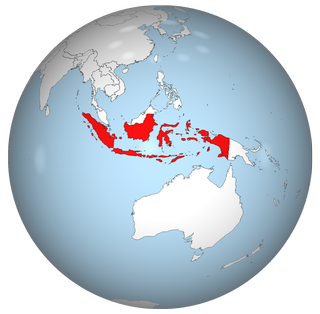
Indonesia is the world's largest archipelagic state and one of the most geographically diverse countries on Earth. Stretching across more than 5,000 kilometres from west to east, it lies between the Indian and Pacific Oceans and connects mainland Asia with Australia. The country occupies a strategic position along some of the world's busiest maritime routes, including the Strait of Malacca, the Sunda Strait and the Lombok Strait.
The Indonesian archipelago consists of more than 17,000 islands, of which approximately 6,000 are inhabited. The largest islands include Sumatra, Java, Kalimantan, Sulawesi and New Guinea, the latter being shared with Papua New Guinea. Indonesia also includes thousands of smaller islands, among them Bali, Lombok, Flores, Timor and the islands of the Maluku archipelago.
Indonesia shares land borders with Malaysia on Borneo, with Papua New Guinea on New Guinea and with Timor-Leste on the island of Timor. Maritime boundaries connect it with Singapore, the Philippines, Vietnam, Thailand, Australia and several other neighbouring states.
Landscapes Shaped by Volcanoes and Tectonic Forces
Indonesia lies along the Pacific Ring of Fire, one of the world's most active seismic regions. As a result, the country contains more than one hundred active volcanoes, making it one of the most volcanically active areas on the planet.
Volcanic activity has played a major role in shaping the country's landscapes and agriculture. The fertile volcanic soils of Java and Bali support dense populations and highly productive farming systems. Some volcanoes, such as Merapi, Semeru and Sinabung, remain active and periodically threaten nearby communities.
Mountain ranges dominate many islands, while extensive lowlands and coastal plains are found in parts of Sumatra, Kalimantan and Papua. Indonesia also possesses vast tropical rainforests that rank among the richest ecosystems in the world.
Major rivers include the Kapuas in Kalimantan, the Mahakam in eastern Borneo and the Mamberamo in Papua. These waterways remain important transport corridors in regions where road infrastructure is limited.
Climate and Environmental Diversity
Indonesia experiences a tropical climate characterized by high temperatures and humidity throughout the year. Most regions have distinct wet and dry seasons influenced by monsoon winds, although rainfall patterns vary considerably between islands.
Western Indonesia generally receives abundant rainfall, while some eastern islands experience longer dry seasons. Climatic conditions support exceptional biodiversity, making Indonesia one of the world's recognised megadiverse countries.
The country is home to iconic species such as orangutans, Komodo dragons, Sumatran tigers, rhinoceroses and numerous endemic bird species. Coral reefs surrounding the archipelago form part of the Coral Triangle, one of the most biologically diverse marine environments on Earth.
At the same time, Indonesia faces major environmental challenges including deforestation, peatland degradation, air pollution from forest fires, plastic pollution and rising sea levels associated with climate change.
Population and Cultural Diversity
With a population exceeding 280 million inhabitants, Indonesia is the fourth most populous country in the world. Population distribution is highly uneven, with the island of Java alone accounting for more than half of the national population despite representing only a small proportion of the country's territory.
Indonesia is characterised by extraordinary ethnic and cultural diversity. More than 1,300 ethnic groups are officially recognised, with the Javanese forming the largest community, followed by Sundanese, Malays, Madurese, Bataks, Bugis, Minangkabau, Balinese and Papuans among many others.
This diversity is reflected in the country's national motto, *Bhinneka Tunggal Ika*, usually translated as "Unity in Diversity". The phrase expresses the principle that numerous cultural identities coexist within a single national framework.
Languages in Contemporary Indonesia
Indonesia's linguistic diversity is equally remarkable. Several hundred languages are spoken throughout the archipelago, belonging mainly to the Austronesian language family, while Papuan languages dominate parts of eastern Indonesia.
The national language, Bahasa Indonesia, serves as the country's official language and as a crucial instrument of national unity. Derived largely from Malay, it is used in government, education, media and business.
At the same time, regional languages remain central to local identities and everyday life. Javanese is the most widely spoken local language, while Sundanese, Madurese, Balinese and many others continue to be actively used across the country.
Multilingualism is therefore common, with many Indonesians speaking a local language alongside Indonesian and increasingly some English, particularly in urban areas and within the tourism sector.
Religions and Contemporary Society
Religion occupies an important place in Indonesian public life and national identity. The state officially recognizes several religions and guarantees freedom of worship within the framework of the national ideology known as Pancasila.
Indonesia contains the world's largest Muslim population, with Islam being practiced by the overwhelming majority of citizens. Most Indonesian Muslims follow Sunni traditions, although religious practices often incorporate local customs and historical influences.
Significant Christian communities exist in parts of eastern Indonesia, North Sulawesi and Papua, while Hinduism remains dominant in Bali. Buddhism and Confucianism also maintain visible communities, particularly among citizens of Chinese descent.
Religious coexistence generally forms an important aspect of Indonesian society, although tensions occasionally emerge in some regions and continue to represent an important political and social issue.
Major Cities and Urban Development
Jakarta, located on the northwestern coast of Java, remains the country's largest city and principal economic centre. As a metropolitan area of more than thirty million inhabitants, it functions as Indonesia's financial, commercial and administrative heart.
Other major cities play important regional roles. Surabaya serves as eastern Indonesia's principal industrial and port city, while Bandung is known for higher education, technology and creative industries. Medan dominates much of the economy of northern Sumatra, and Makassar serves as a major gateway to eastern Indonesia.
Rapid urbanisation has transformed Indonesian society over recent decades. Large metropolitan areas continue to attract migrants seeking employment and educational opportunities, while urban infrastructure struggles to keep pace with demographic growth.
One of the country's most ambitious projects is the construction of a new national capital, Nusantara, in East Kalimantan. The relocation aims to reduce demographic pressure on Jakarta and promote more balanced regional development.
Territorial Administration and Governance
Indonesia is a unitary republic divided into provinces that possess varying degrees of autonomy. The country currently consists of dozens of provinces distributed across its extensive territory.
Following democratic reforms introduced after 1998, local governments gained greater authority over education, health care, infrastructure and regional planning. Decentralization has allowed local administrations to respond more effectively to regional needs while maintaining national cohesion.
Indonesia operates as a presidential republic with a directly elected president serving as both head of state and head of government. The political system combines democratic institutions with a multiparty parliamentary framework.
Transportation Across an Archipelago
Connecting thousands of islands presents one of Indonesia's greatest logistical challenges. Maritime transport remains essential for national integration and economic activity.
The country possesses numerous major ports, including those of Jakarta, Surabaya, Belawan and Makassar. Ferry services connect many islands and support both passenger movement and commercial trade.
Indonesia's aviation network is among the largest in Asia, with airports serving even relatively remote regions. Jakarta's international airport functions as the country's primary air gateway, while Bali represents a major international tourism hub.
Road networks are highly developed in Java and parts of Sumatra but remain less extensive in remote regions. Railways operate mainly on Java and parts of Sumatra, where they play an important role in passenger and freight transport.
An Economy Based on Diversity and Natural Resources
Indonesia possesses Southeast Asia's largest economy and is considered one of the world's major emerging markets. Economic activity is diversified across agriculture, manufacturing, mining, energy, tourism and services.
The country is rich in natural resources, including coal, natural gas, petroleum, nickel, copper, tin and gold. Indonesia has become particularly important in global nickel production, a resource increasingly vital for electric vehicle batteries and renewable energy technologies.
Agriculture continues to employ a significant share of the population. Rice remains the principal staple crop, while palm oil, rubber, coffee, cocoa and spices represent major export commodities.
Manufacturing industries include automobiles, textiles, electronics, food processing and chemicals. The service sector, especially finance, telecommunications and digital commerce, has expanded rapidly during recent decades.
Indonesia's digital economy is among the fastest growing in Asia, driven by widespread smartphone adoption and a young population.
Tourism and Cultural Industries
Tourism plays an important role in the Indonesian economy and international image. Bali remains the country's most famous destination, attracting visitors through its landscapes, beaches, temples and cultural traditions.
Other important destinations include Yogyakarta, Komodo National Park, Lake Toba, Borobudur, Raja Ampat and numerous diving sites throughout the archipelago.
Traditional arts continue to occupy an important place in cultural life. Batik textile production, shadow puppet theatre known as *wayang kulit*, gamelan music and various regional dances remain widely practiced and celebrated.
National and regional festivals reflect Indonesia's cultural diversity and religious traditions. Islamic celebrations such as Eid al-Fitr are observed nationwide, while Bali maintains its own Hindu ceremonial calendar and numerous local communities preserve distinctive cultural festivities.
Education, Research and Future Challenges
Indonesia has expanded access to education considerably over recent decades and hosts several important universities and research institutions. Institutions in Jakarta, Bandung and Yogyakarta play leading roles in higher education, engineering and scientific research.
Despite significant progress, important challenges remain. Regional inequalities persist between western and eastern Indonesia, while urban congestion, housing shortages and infrastructure demands continue to increase.
Environmental sustainability has become an increasingly urgent issue. Protecting forests, reducing emissions and balancing economic development with conservation represent major priorities for policymakers.
Indonesia also faces demographic opportunities and pressures associated with its relatively young population. Providing employment, education and social mobility for millions of young citizens will significantly influence the country's future trajectory.
Indonesia's Role in Regional and Global Affairs
Indonesia occupies a central position in Southeast Asian diplomacy and serves as the largest member of the Association of Southeast Asian Nations. Its size, population and economy provide it with considerable regional influence.
The country actively participates in international organizations and seeks to maintain balanced relations with major global powers while promoting regional stability and economic cooperation.
As a major maritime nation located at the crossroads of the Indian and Pacific Oceans, Indonesia increasingly views itself as an important actor in the emerging geopolitical landscape of the Indo-Pacific region.
The contemporary Republic of Indonesia therefore combines extraordinary cultural diversity, significant economic potential and strategic geopolitical importance. Its ability to manage this diversity while pursuing sustainable development will remain one of the defining challenges and opportunities of the twenty-first century.